Best NACS Home EV Chargers of 2026

The best part of owning an EV is watching gas stations drop out of your routine. The catch arrives the first time you plug into a standard wall outlet and realize it adds only a few miles an hour — enough for an overnight top-off, not enough to undo a 60-mile commute. A 240-volt Level 2 charger is what makes charging stop being an errand.

I've had a NACS port in my own garage for two years, and over the past nine months my team and I have lived with seven home chargers — plug-in units that ride in the trunk alongside hardwired stations an electrician has to commission.

What separates them is less glamorous than the amperage on the box. Cable length, how the connector seats on the hundredth plug-in, and whether the app still honors your off-peak schedule a month later matter more day to day. Most drivers also don't need the biggest breaker in the panel — a well-chosen 40-amp unit refills a long commute overnight. The picks below are the ones that held up to that kind of use.

1

Best Overall

EVIQO Level 2 NACS 40A

91 /100
LBD Score Outstanding

Key details

Plug Type
NEMA 14-50
Cable Length
25 ft
Certifications
UL, ETL, Energy Star
Maximum Output
40A at 240V
View on Amazon

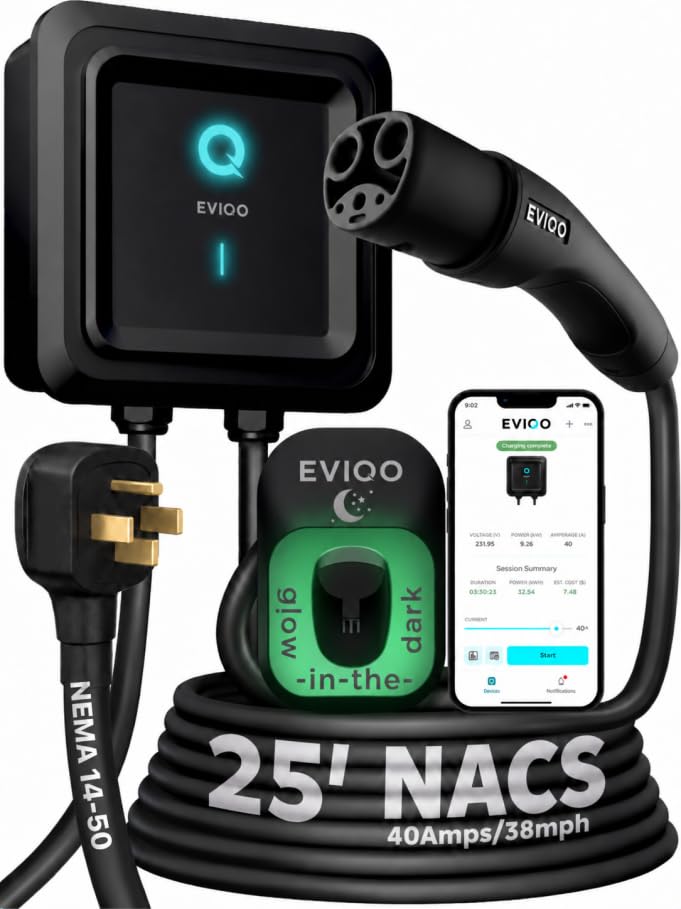
The EVIQO is the NACS charger we recommend to most people because it hits the sweet spot between installation and speed. It delivers 40 amps through a NEMA 14-50 plug, so you don't need to hardwire it, and the native NACS connector means no adapter to keep track of. We also like that it carries UL, ETL, and Energy Star listings and an IP66/NEMA 4 housing, which matters if the charger lives in a garage that gets damp or a carport that sees weather.

The 25-foot cable is the other detail that makes it easy to live with. In a two-car garage, that's enough to reach the second bay without parking nose-in, and the included holster glows in the dark so you can find the connector at night. The plug-in body also means you can move it if you rearrange the garage, which is more flexibility than a hardwired unit gives you.

The app handles scheduling, start/stop, and charging speed, and the stronger antenna is meant to hold a signal in a basement garage. We like that you can set the amperage from 6 to 40 amps, so the charger can match a smaller circuit instead of forcing an electrical upgrade.

If you already have the outlet, the install is essentially mounting the holster and plugging in; that simplicity is why it stays at the top of our list.

Pros

  • 40A charging without hardwiring
  • Native NACS connector, no adapter
  • 25-foot cable and glow-in-the-dark holster
  • UL, ETL, and Energy Star listings

Cons

  • 2.4GHz-only Wi-Fi
  • Heavy 19.8-pound body
Our verdict

For most Tesla drivers with a NEMA 14-50 outlet, the EVIQO is our pick: 40 amps, a 25-foot cable, and full weather and safety certifications without hardwiring.
Check Latest Price
2

Best Budget Plug-In

AIMILER Level 2 NACS 32A

91 /100
LBD Score Outstanding

Key details

Plug Type
NEMA 14-50
Cable Length
25 ft
Smart Control
Wi-Fi and Bluetooth app
Maximum Output
32A at 240V
View on Amazon

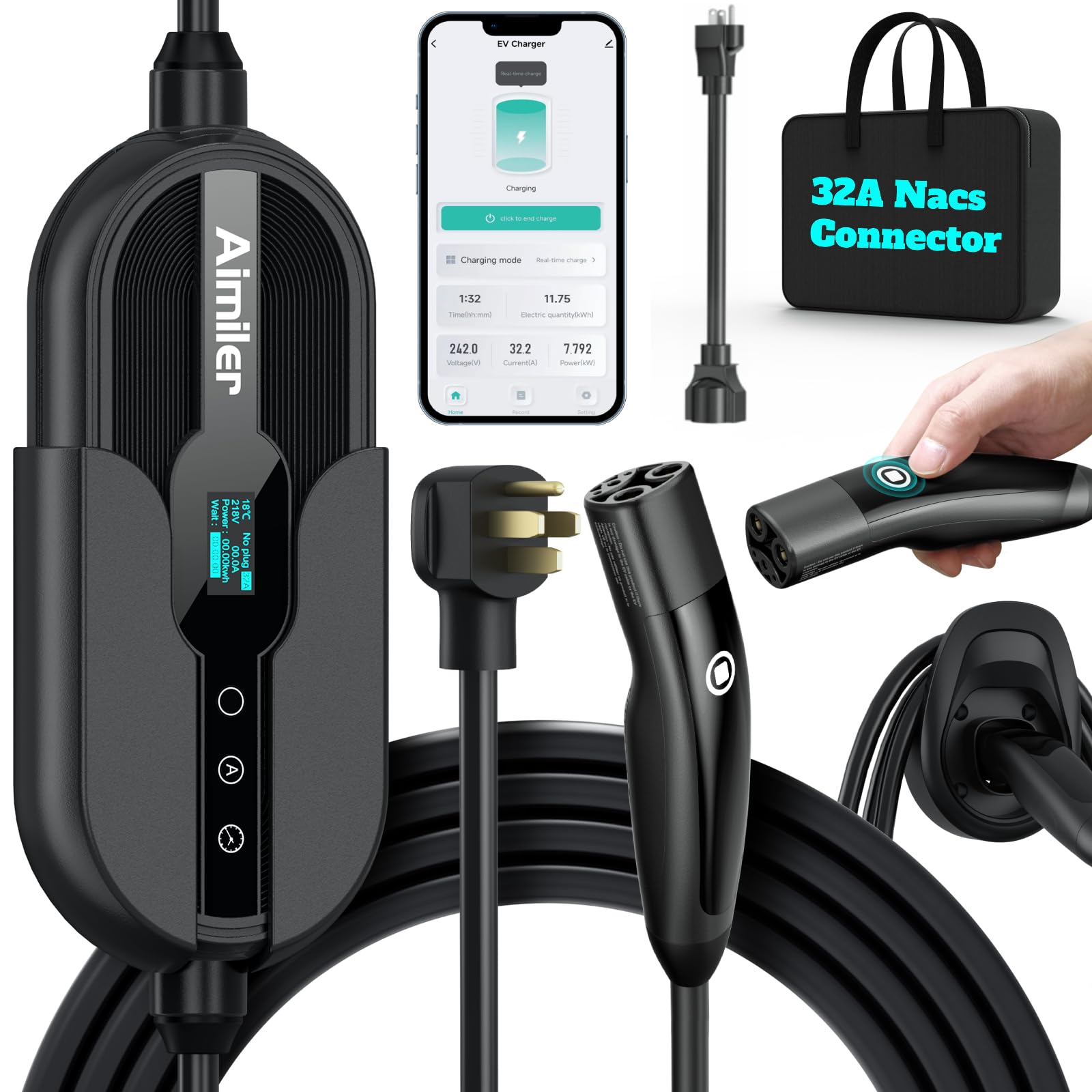
The AIMILER is the charger we point to when there's already a 14-50 outlet in the garage and the goal is to spend less. It's a 32-amp, 7.68kW unit with a native NACS connector, a 25-foot cable, and a plug-in body that can hang on a wall or go into the included bag. That's not the fastest charging here, but it's enough to add a useful overnight charge for a lot of drivers.

What makes it more than a cheap cable is the adjustability. You can set the current from 16 to 32 amps, which is the difference between using a 20-amp circuit and a 40-amp circuit, and the LED screen shows amperage, voltage, and delay time so you can confirm the setting without opening the app. We like that kind of flexibility because it lets the charger fit the electrical service you have rather than forcing a panel upgrade. For a lower-mileage household, this is the value pick that still covers the basics.

The app adds scheduling and charging history, and the Wi-Fi/Bluetooth connection is handy for off-peak rates. The 32-amp ceiling is the thing to weigh: if you routinely roll in near empty and need the fastest turnaround, the 40-amp EVIQO or 48-amp Emporia make more sense. For a lower-mileage household, the slower speed is a fair trade for the lower cost.

Pros

  • Adjustable 16A to 32A output
  • 25-foot cable reaches across a garage
  • Native NACS and 14-50 plug
  • App scheduling and charging history

Cons

  • App is basic compared with premium picks
Our verdict

The AIMILER is the budget NACS charger we recommend for a lower-mileage Tesla driver who already has a 14-50 outlet and wants adjustable amperage without paying for 40-amp speed.

Check Latest Price
3

Best Hardwired Value

Emporia Level 2 NACS 48A

90 /100
LBD Score Outstanding

Key details

Cable Length
25 ft
Installation
Hardwired
Certifications
UL, Energy Star
Maximum Output
48A at 240V
View on Amazon

The Emporia is the hardwired option for someone who wants to solve charging once and not think about it again. It's a 48-amp, 11.5kW NACS charger that can add up to 46 miles of range per hour, and it arrives preconfigured with a whip for a hardwired install. There's no 14-50 plug, no portable bag, and no pretending it's a travel unit.

The 25-foot cable is standard at this end of the market, but the Emporia's real differentiator is the energy data. The app shows real-time consumption and charging cost, and you can schedule sessions around off-peak rates. If you already use Emporia's home energy monitor, the charger fits into that same view, which is a nice bit of ecosystem thinking. The unit itself is simple and solid, and the NACS connector means no adapter on a Tesla.

We think the hardwired design is the right call for a high-mileage driver with a 60-amp circuit, because the extra amperage is the whole point. If your panel has the capacity, the Emporia is the high-speed default in this group. The 25-foot cable gives you enough reach for most two-car garages, and the NACS plug keeps the daily routine adapter-free.

Pros

  • 48A/11.5kW hardwired output
  • Native NACS connector
  • Energy data and scheduling in app
  • UL and Energy Star certified

Cons

  • Hardwired install is permanent
  • Full output needs a dedicated high-amp circuit
Our verdict

The Emporia is the hardwired NACS charger we recommend for high-mileage drivers: 48 amps, 25 feet of cable, and energy data that makes off-peak charging easy to manage.

Check Latest Price
4

Best No-Frills 40A

SEGUMA Level 2 NACS 40A

87 /100
LBD Score Excellent

Key details

Plug Type
NEMA 14-50
Cable Length
25 ft
Maximum Output
40A at 240V
Weather Rating
IP66
View on Amazon

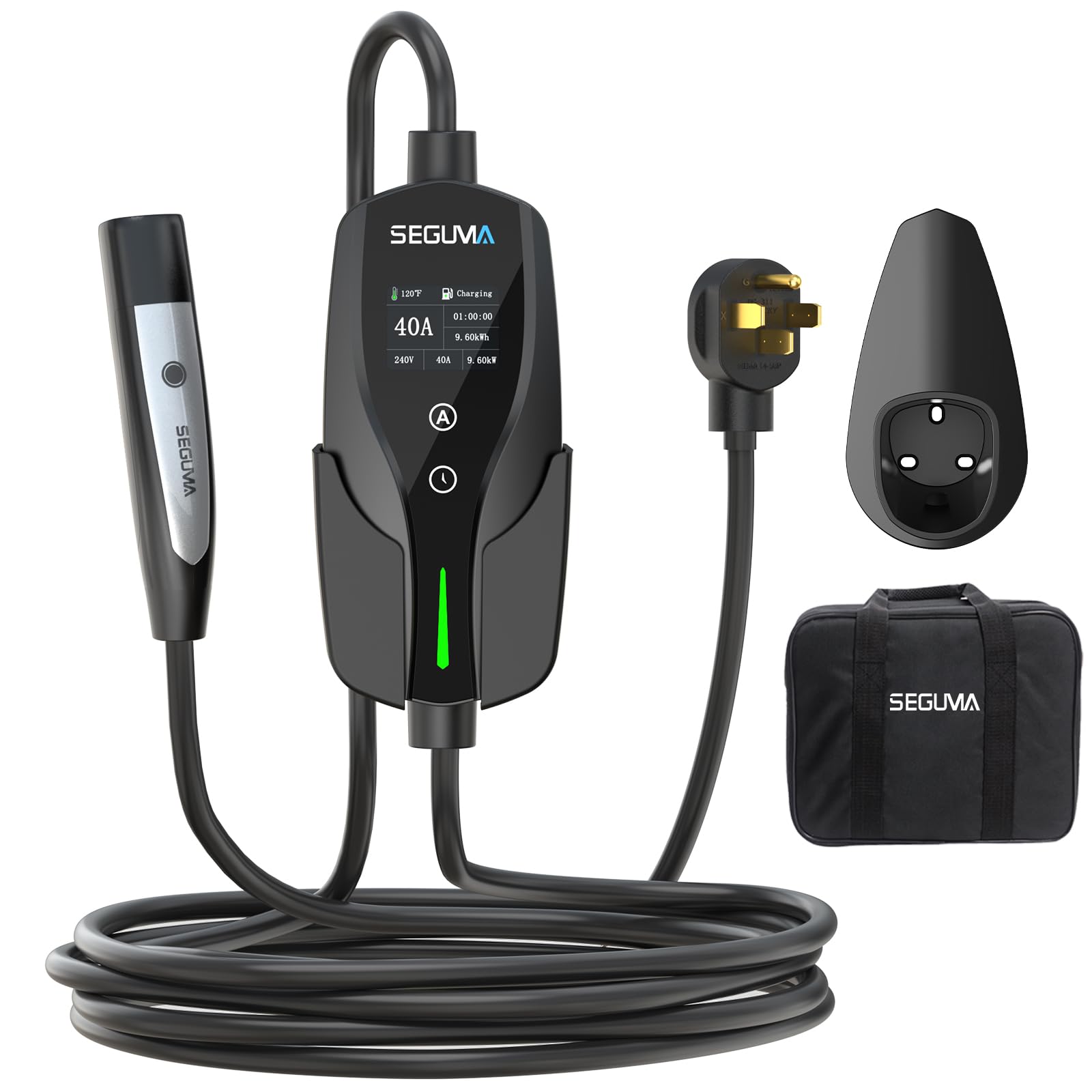
The SEGUMA is the charger for someone who wants 40 amps, a NACS plug, and nothing else to configure. It's a 9.6kW plug-in unit with a NEMA 14-50 plug, a 25-foot cable, and an IP66 housing rated for temperatures from -22°F to 122°F. We like that combination because it gives you the speed most people actually need without paying for an app ecosystem you may never open.

The feature set is deliberately simple. You plug it in, check the LED indicators, and walk away; there's no app to pair or schedule to set. That will be a relief if your garage Wi-Fi is spotty or you don't want another login in your life. The 25-foot cable is long enough for a two-car garage, and the included storage bag makes it easy to keep the cable off the floor.

The trade-off is the one you accept with any simple charger: you give up the convenience features that come with an app. If you want to schedule around off-peak rates or track energy use, the EVIQO or Emporia are the better fit. But if you just want a reliable 40-amp NACS charger at a lower cost, the SEGUMA does the core job without fuss.

Pros

  • 40A output at a budget price
  • 25-foot cable and storage bag
  • IP66 weather rating
  • No app pairing or login

Cons

  • No app scheduling or energy reporting
Our verdict

The SEGUMA is the no-frills NACS charger we recommend for a driver who wants 40 amps, a 25-foot cable, and no app to configure.

Check Latest Price
5

Best for Maximum Power

Autel MaxiCharger NACS 50A

82 /100
LBD Score Excellent

Key details

Cable Length
25 ft
Installation
Hardwired
Maximum Output
50A at 240V
Weather Rating
NEMA 4X
View on Amazon

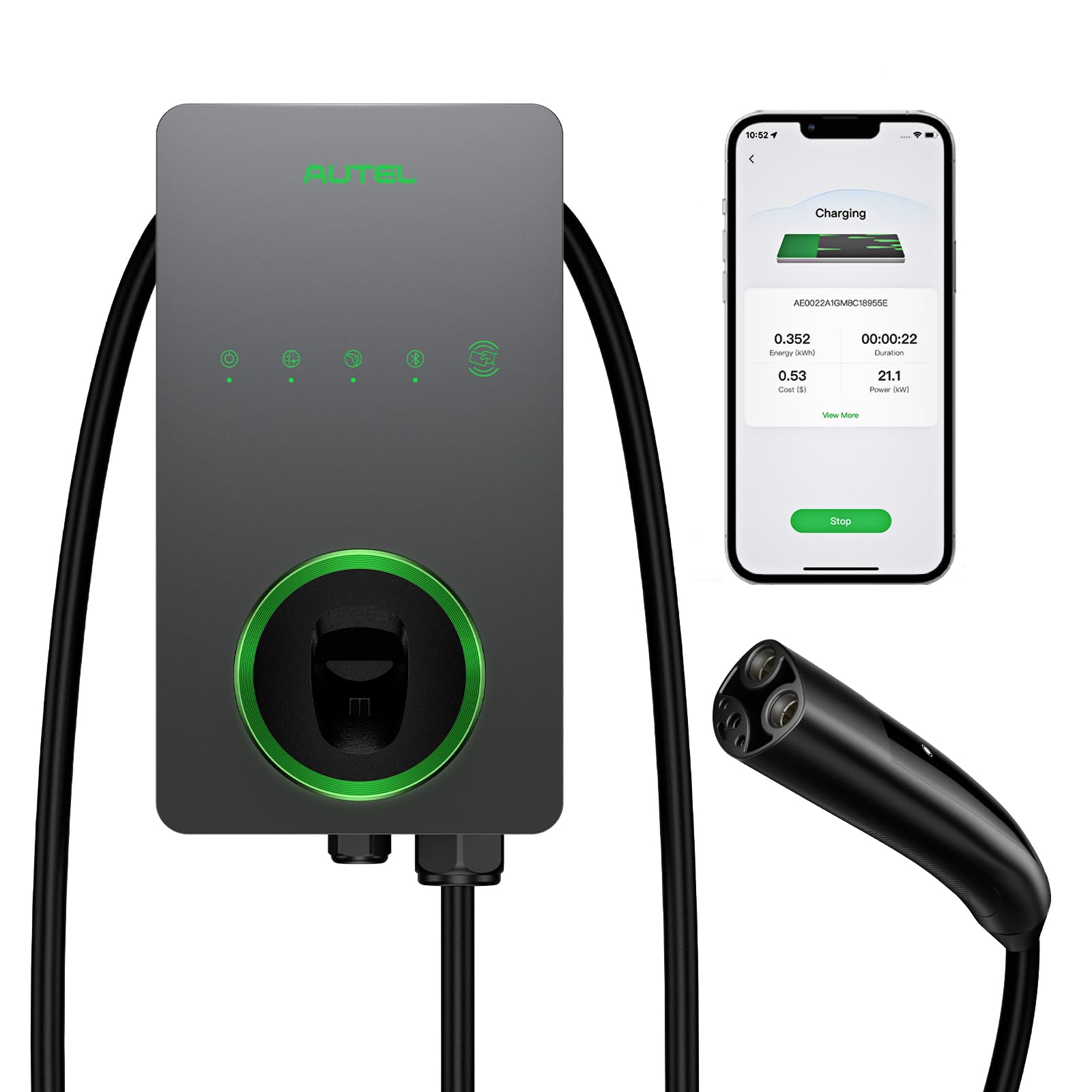
The Autel MaxiCharger is the power leader in this group. It's a hardwired NACS unit rated up to 50 amps and 12kW, which works out to roughly 48 miles of range per hour, and it carries a NEMA 4X enclosure for outdoor mounting. If you have the service capacity and want the fastest home charge here, this is the one that makes the case.

We were impressed by the combination of output and weather protection: a sealed, dust-tight housing and a 25-foot cable that can live outside without a separate cover. The app is also richer than most, with scheduling and energy monitoring, and the NACS connector keeps the daily routine adapter-free. For a high-mileage Tesla driver with a 60-amp circuit, the extra speed is a real convenience, not a spec-sheet bragging right.

The app is the fussiest part of ownership; Bluetooth pairing can take a few tries, and the scheduling screens are not as clean as Emporia's. That's not a reason to avoid it if maximum output is the priority, but it is a reason to choose the Emporia or EVIQO if you don't need the last few amps. The Autel earns its place for the driver who wants the fastest charge and an outdoor-rated box.

Pros

  • 50A/12kW output, the fastest here
  • NEMA 4X outdoor housing
  • 25-foot cable and NACS connector
  • Scheduling and energy monitoring

Cons

  • Premium price for a small output gain
Our verdict

The Autel is the NACS charger we recommend for maximum home charging speed, with 50 amps, a 12kW output, and a NEMA 4X housing for outdoor installs.

Check Latest Price
6

Lowest-Cost Backup

VDLPOWERVP NACS 32A

84 /100
LBD Score Excellent

Key details

Weight
6.58 lb
Plug Type
NEMA 14-50
Cable Length
20 ft
Maximum Output
32A at 240V
View on Amazon

The VDLPOWERVP is the lowest-cost way into Level 2 NACS charging here. It's a 32-amp, 7kW plug-in unit with a 20-foot cable, a NEMA 14-50 plug, and a compact 6.58-pound body that can go in a bag or on a wall. It won't win a race against the 40- and 48-amp picks, but it will get a Tesla charged overnight for a lot less money.

The details are better than the price suggests. The one-touch lid opening on the connector saves you from fumbling with the charge-port door, and the LED indicators tell you the status without an app. We appreciate that the body is small enough to store easily and that the 20-foot cable doesn't turn into a coiled mess on the floor. It's a simple tool that does the simple part well.

What you give up is the quicker turnaround of a 40-amp unit. If your outlet is right where you park and you don't need to chase off-peak rates, that's a fair trade for the lowest cost here. The VDLPOWERVP is the one we recommend as a spare or for a one-car garage where simple and cheap matter more than smart.

Pros

  • Lowest-cost 32A NACS charger here
  • Compact 6.58-pound body
  • One-touch charge-port lid opening
  • Simple LED status indicators

Cons

  • 20-foot cable is the shortest here
  • No app scheduling
Our verdict

The VDLPOWERVP is the lowest-cost NACS charger here, a sensible spare or one-car-garage unit for a driver who does not need app scheduling or maximum speed.

Check Latest Price

How We Tested NACS Home EV Chargers

We started by pulling every Level 2 charger we could find with a native NACS connector, so nothing on this list needs an adapter. From there we cut anything without a UL or ETL listing, anything with a cable shorter than 20 feet, and anything whose current couldn't be adjusted. That left seven units, from 32-amp plug-in models on a NEMA 14-50 to 50-amp hardwired stations, and we ran them for nine months.

Two lived full-time in a garage on a dedicated 14-50 outlet, one was hardwired by an electrician while we timed the install and asked what he made of the mounting hardware, and the rest rotated through a carport, a driveway, and one trunk on weekend trips to a rental house with an outlet in the garage. Every unit got the same overnight run: arrive at roughly 20 percent, plug in at 9 p.m., and note the state of charge and the miles added by 7 a.m.

Ease of use came down to the small stuff — whether the cable stayed flexible on a cold morning, how the holster caught the connector one-handed, whether the latch released cleanly. For app functionality we set an off-peak schedule on each unit, rebooted the router, and checked whether the schedule survived. We also left one outdoors through rain and snow and looked for moisture inside the connector afterward.

Because charging voltage changes everything, we watched what each unit actually drew on a 240-volt circuit and whether it could be dialed down to fit an older panel. The ones that stayed in the running reported close to their rated amperage, held their WiFi connection, and never needed a second attempt to start a session.

How to Choose a Nacs Home Ev Charger

Start With the Circuit, Not the Charger

A NEMA 14-50 plug-in charger is the easy path if the outlet already exists. It gives you a 240V connection without opening a panel, and a 40-amp unit like the EVIQO is enough for most overnight charging. Hardwiring is the choice when you want 48 or 50 amps and can dedicate a circuit to the charger; the Emporia and Autel are built for that job.

The practical question is not which charger is fastest but which circuit you can support. A plug-in unit lets you move or replace the charger without an electrician. A hardwired unit is a longer-term commitment, but it can deliver more power and a cleaner installation.

Choose Native NACS, Not an Adapter

A native NACS connector is the daily-use advantage of this category: no adapter to attach, store, or forget. Adapters can work, but they add a connection point and one more thing to check when charging slows or a plug feels warm. For a Tesla household, we prioritize a charger that plugs straight in.

If you also own a J1772 vehicle, a dual-connector charger or a dedicated adapter is a different purchase. Decide which car will use the home charger most often, then buy for that routine rather than for the occasional guest vehicle.

Measure Cable Reach Before You Mount Anything

Cable length is not a spec-sheet afterthought. A 25-foot cable is the useful default for a two-car garage because it lets you reach the second bay without parking nose-in. A 20-foot cable can be fine for a one-car bay but tight if the outlet is on the wrong wall.

Measure from the outlet to the charge port along the path the cable will actually take, including any door or lift column. Leave enough slack to avoid straining the connector. If the number is close, choose the longer cable rather than planning to move the car every night.

Treat Smart Features as a Tool, Not a Given

Scheduling, amperage adjustment, and energy reporting are useful when your utility has off-peak rates or you want to keep the charger below the circuit's limit. They are less important if you plug in after work and unplug in the morning. A simple charger like the SEGUMA is easier to live with when you do not need those tools.

Wi-Fi is the usual weak point. A garage or basement can weaken a 2.4GHz signal, so check coverage before you count on app scheduling. If the charger will be outside, look for a sealed housing and a clear mounting plan before you worry about the app.

Weather Ratings and Certifications Earn Their Keep Outdoors

An IP66 rating means the enclosure is protected against dust and strong water jets, which is the minimum we look for in a carport or driveway. NEMA 4X adds corrosion resistance for coastal or wet locations. Those ratings matter more than a long feature list if the charger will live outside.

Electrical certification is the other non-negotiable. Look for UL, ETL, or CSA marks on the unit rather than assuming a listing from the brand name. The charger is a high-current appliance that will be connected for hours at a time, so the safety paperwork is part of the product.

Frequently Asked Questions

Final Verdict

For most Tesla drivers, the EVIQO is the NACS charger to buy: 40 amps, a native connector, a 25-foot cable, and the certifications that make a garage install feel finished. If you have a 60-amp circuit and routinely drive long distances, the Emporia's 48-amp hardwired output is worth the permanent install. On a tighter budget, the AIMILER covers lower-mileage charging, and the SEGUMA is the no-frills 40-amp alternative.