Best LiFePO4 Batteries of 2026

A LiFePO4 battery is a long-game purchase, and the worry is usually the same: you pay a premium, then find out the capacity was optimistic, the BMS is fussy, or the case won't fit your existing tray. I've been through that with camper builds and trolling motors, and the good ones are boring in the best way — they take a charge, deliver steady power, and stay out of your head. The right battery fixes the practical stuff: runtime you can count on, a clean install, and confidence when a cold morning or hard motor start tests it.

Over the past 10 months, my team and I have lived with eight LiFePO4 batteries in RV banks, golf-cart conversions, trolling motors, and a solar backup setup. We focused on honest battery life, build quality, how the BMS handles real loads, and whether the footprint and terminals make installation easier. Bluetooth and LCD monitors are handy, but a low-temp cutoff and a matched charger matter more when weather turns; the picks below are the ones that earned a permanent spot.

1

Best Overall

ECO-WORTHY EnergyRock 280Ah

91 /100
LBD Score Outstanding

Key details

Weight
68.6 lb
Capacity
280Ah (3,584Wh)
Warranty
3 years
Continuous Output
200A
View on Amazon

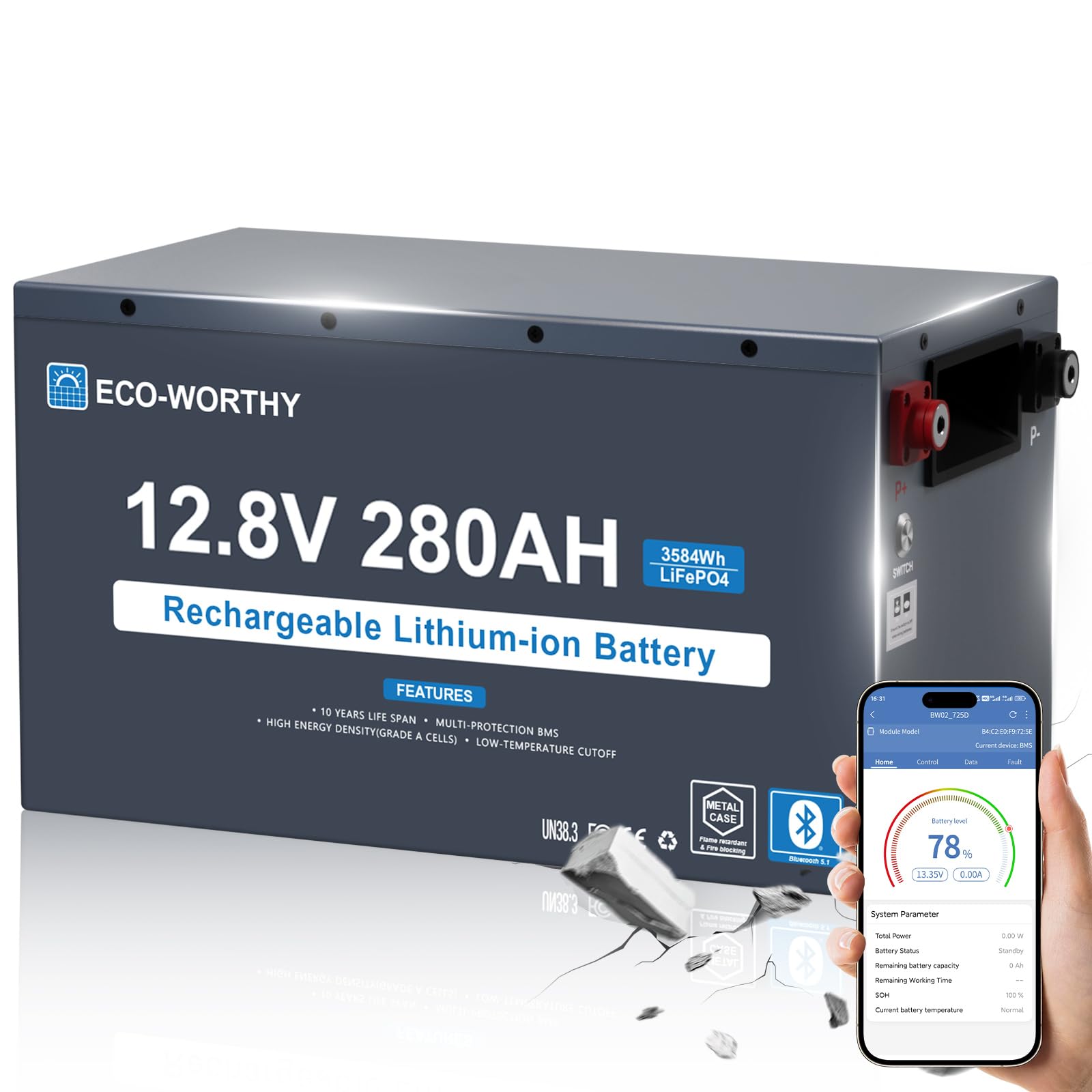
The switch is the detail we keep coming back to. One touch on top of the case disconnects the output, so wiring a shunt or changing a fuse does not start with a live positive cable in your hand. The case around it is steel rather than plastic, with mounting feet and internal cell holders, and it is built to be bolted down and left in a trailer that shakes.

Capacity is what earns it the top spot. At 280Ah and 12.8V this is 3,584Wh in a single box, almost three times what a 100Ah battery gives you, with one set of terminals, one fuse and one cable run instead of three. For a camper, a cabin or a shed running an inverter, that is the quieter and safer way to build a bank, and it is why we spec one of these rather than a stack of small units.

The 200A BMS gives all that capacity somewhere to go: at 12.8V it works out to roughly 2,500W of continuous draw, so a 2,000W inverter has headroom rather than a hard ceiling. Bluetooth puts voltage, current, state of charge and charge status on your phone, and the low-temperature cutoff stops a charge from beginning while the cells are still below freezing.

Check one measurement before ordering: 16.6 inches of width is wider than the Group 24 and Group 27 trays most campers are built around, so this wants a purpose-made spot rather than a straight swap. Everything else about the install is easier than the dimensions suggest, from the M8 bolt terminals to mounting feet that take a real bolt.

Pros

  • 3,584Wh in a single 12V battery
  • Steel case with mounting feet resists vibration
  • One-touch output disconnect
  • 200A BMS leaves headroom for a 2,000W inverter

Cons

  • 68.6 lb needs a second person
Our verdict

If you're building one 12V bank for a camper, cabin or shed, this is the battery we recommend: 280Ah, a steel case, and a cutoff switch that makes every later wiring job safer.
Check Latest Price
2

Best Budget 12V

SUPER EMPOWER 12V 100Ah

89 /100
LBD Score Excellent

Key details

Weight
21.6 lb
Capacity
100Ah (1,280Wh)
Warranty
5 years
Group Size
BCI Group 24
View on Amazon

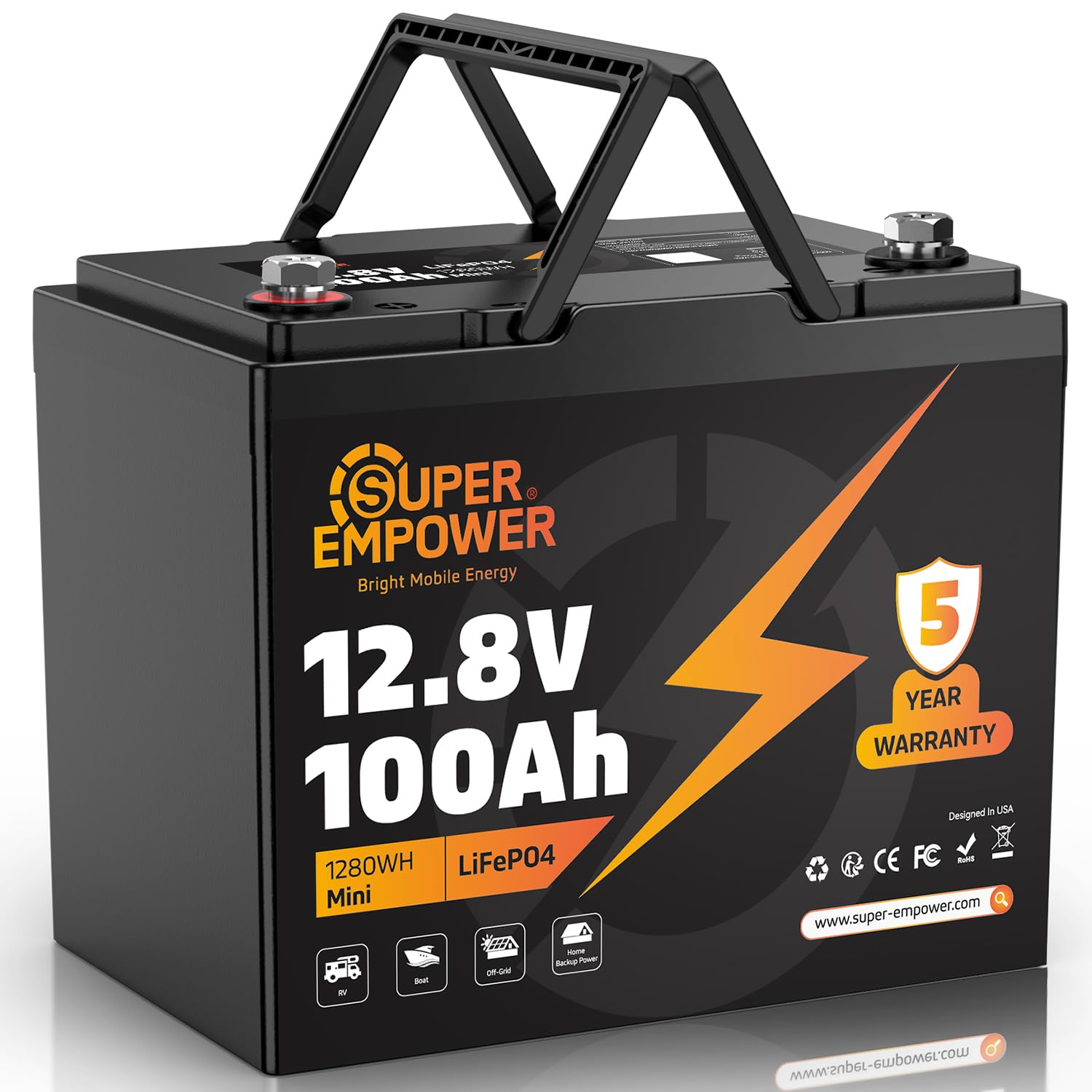
Group 24 is the shape a lot of trolling-motor, boat and camper trays were molded around, and at 21.6 lb this battery drops straight into one, roughly a fifth of the flooded battery it replaces. That is why it is the 12V we hand to most people starting out: unbolt the old one, lift it out, drop this in. The five-year warranty is the longest on any 12V battery in this group.

The 100A BMS is the number to understand first. It caps continuous draw at about 1,280W, which covers a trolling motor, a 12V fridge, lights and a laptop, and does not cover a 2,000W inverter. Low-temperature protection pauses charging below freezing and resumes once the cells are back above 41°F, and the 4P4S limit means this can grow into a 20.48kWh bank later without changing brands.

Terminals are M8 bolts rather than post adapters, so ring lugs sit flat and torque down properly instead of perching. The footprint, 10.24 by 6.49 inches, is sized for the standard plastic battery box a lot of boat owners already own, which is the kind of detail that decides whether a swap takes an afternoon or a weekend.

Pros

  • Group 24 size fits existing trays and boxes
  • 21.6 lb is easy to lift and move
  • Five-year warranty, longest on a 12V here
  • Low-temp cutoff and 4P4S expansion

Cons

  • 100A BMS caps continuous draw near 1,280W
Our verdict

The 12V 100Ah we hand most people first: a 21.6-pound Group 24 with a five-year warranty that fits the tray you already have.

Check Latest Price
3

Best 48V Golf Cart Kit

DC HOUSE 48V 100Ah Kit

91 /100
LBD Score Outstanding

Key details

Weight
99 lb
Capacity
100Ah at 51.2V
In The Box
18A charger, LCD monitor
Continuous Output
200A (670A peak)
View on Amazon

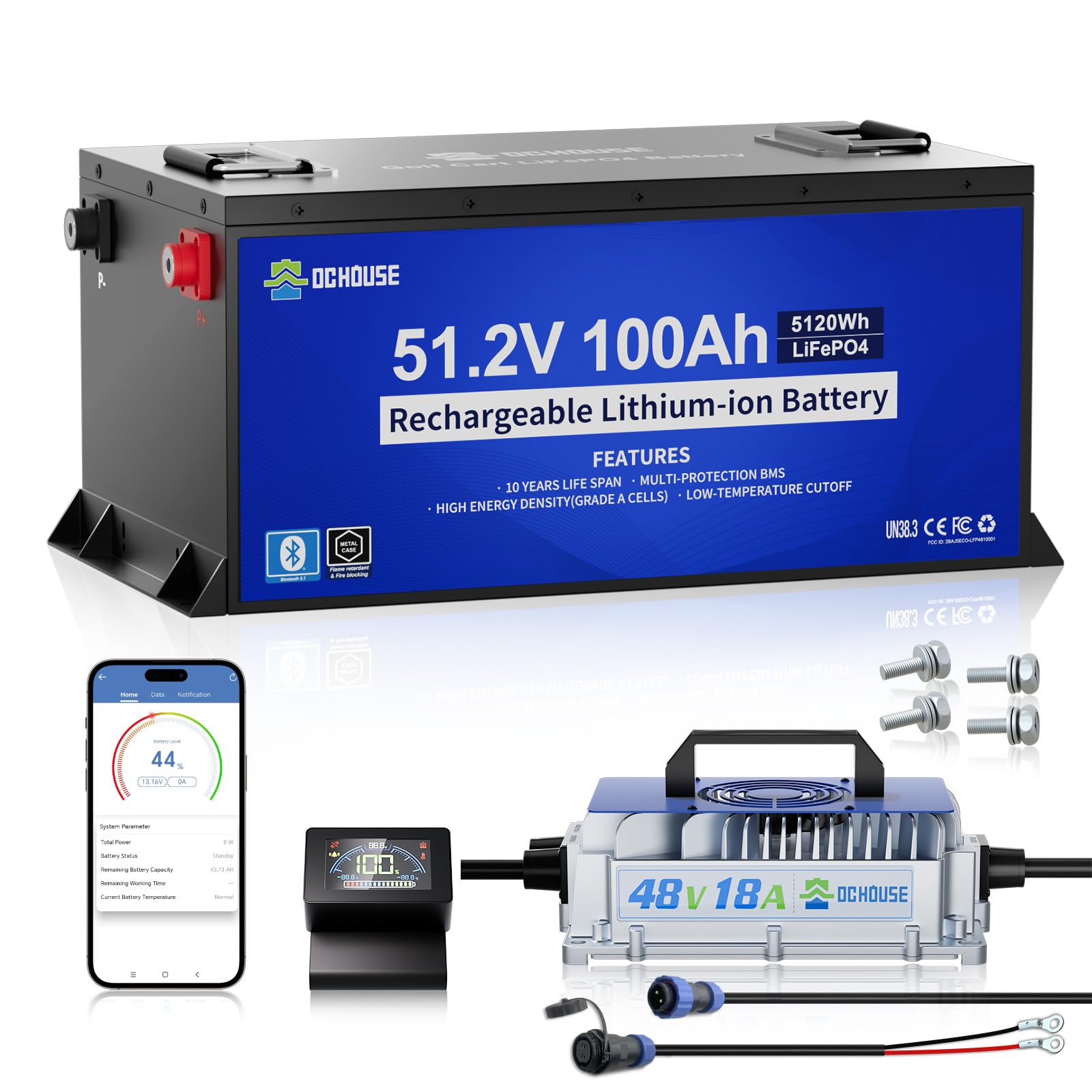
A golf cart conversion goes wrong in the details: the charger that does not match, the gauge you buy separately, the tray that does not line up. DC HOUSE ships the 48V 100Ah battery with an 18A charger and an LCD monitor that reads state of charge, and the case has a vent and a one-key safety switch. One order, one weekend.

Behind that sits a 200A BMS rated for 250A over 30 seconds and a 670A peak, which is what a cart motor asks for when you pull away loaded or climb a ramp — second only to the LOSSIGY among the 48V kits here. The pack works out to 5.12kWh, enough for a long day of short trips, and one 99 lb box replaces six or eight lead-acid batteries.

What tips it for us is the monitoring. A dash display you can glance at plus a Bluetooth app for the detail means no separate shunt to wire and no guessing at range. The job to plan for is the cart's own 12V circuits: lights, horn and a stereo run off a reducer, not the 48V pack, so factor in a converter if the old cart did not have one.

Pros

  • 18A charger and LCD monitor included
  • 200A continuous with a 670A peak
  • Metal case with vent and safety switch

Cons

  • 99 lb takes two people to set in the tray
Our verdict

If your cart is 48 volts and you want the charger and the gauge in the same box, this is the kit we recommend — bring a second pair of hands for the lift.

Check Latest Price
4

Best for Solo Installs

TEMGO 48V 100Ah

87 /100
LBD Score Excellent

Key details

Weight
61.7 lb
Capacity
100Ah at 51.2V
In The Box
18A charger, touch display, strap
Continuous Output
200A (600A peak)
View on Amazon

Sixty-two pounds is the number that decides this one. At 61.7 lb the TEMGO is the lightest 48V battery in this group by a clear margin, light enough that one person can set it on a cart tray without calling for help. For a swap you are doing alone in a garage, that matters more than the spec sheet suggests, because the alternative is balancing a 99-pound box over a frame rail.

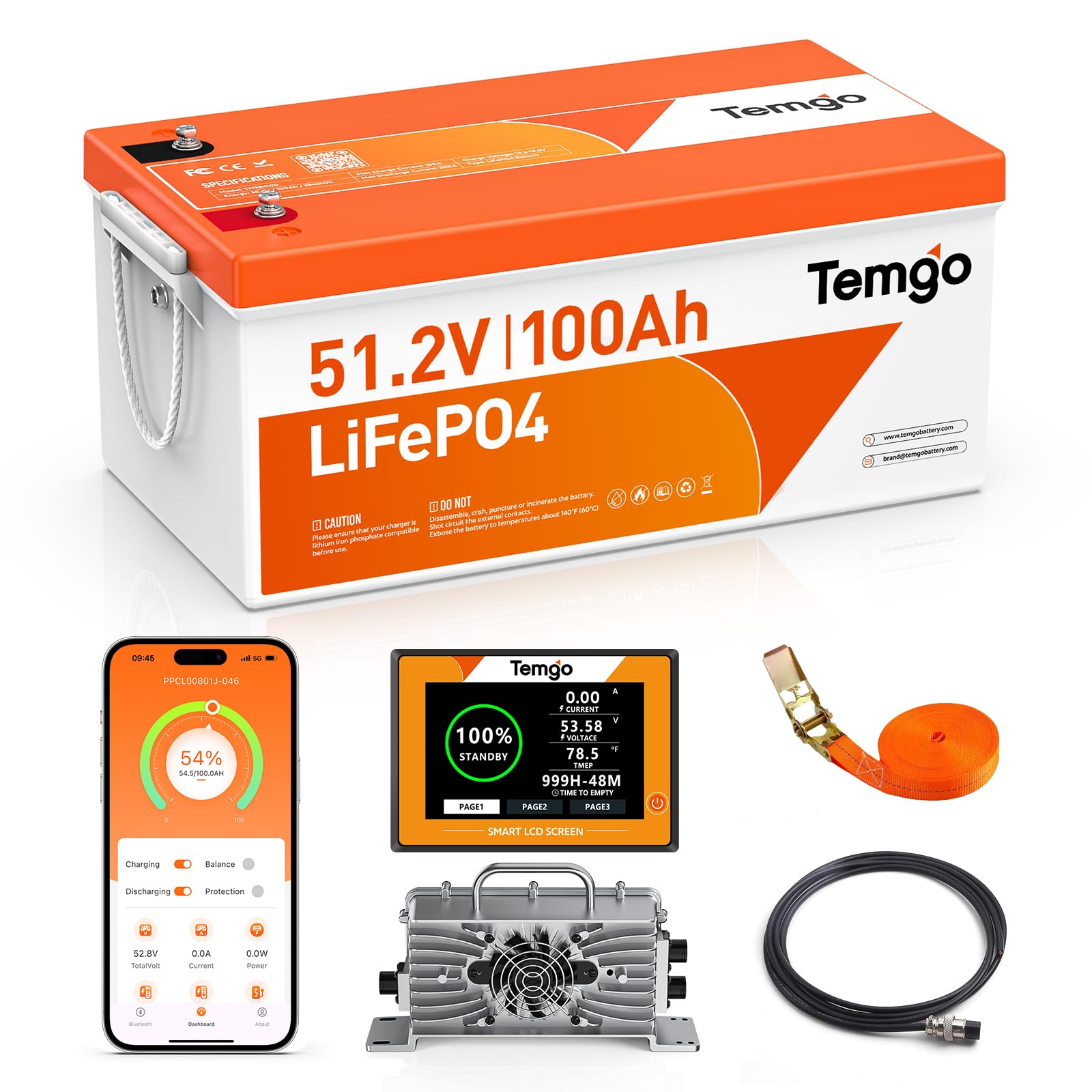
The rest of the kit is complete: a 58.4V 18A charger, a 2.8-inch touch display for the dash, a retention strap, and a 200A BMS rated at 600A for three seconds with 10.24kW of maximum output. Four can run in parallel if you are building a bank. The one place it gives ground to the other 48V kits here is peak current — 600A against 670A and 1,000A — which only matters on a cart with a big aftermarket controller or a genuinely steep driveway.

The touch display is the other thing we like. State of charge, current and fault codes sit in one place on the dash, with the app doing the same job from your phone, and that is a nicer way to live with a conversion than a bare voltage readout that only tells you the pack is somewhere between full and flat.

Pros

  • Lightest 48V battery here at 61.7 lb
  • Charger, touch display and strap included
  • 200A continuous with 10.24kW max output

Cons

  • 600A peak trails the other 48V kits here
Our verdict

The 48V battery we hand to anyone installing alone: 61.7 pounds, a charger and dash display in the box, and enough current for a stock cart.

Check Latest Price
5

Best 36V Golf Cart Battery

OGRPHY 36V 100Ah

89 /100
LBD Score Excellent

Key details

Weight
63.5 lb
Capacity
100Ah at 38.4V
In The Box
25A charger, LCD monitor
Continuous Output
200A (1,000A peak)
View on Amazon

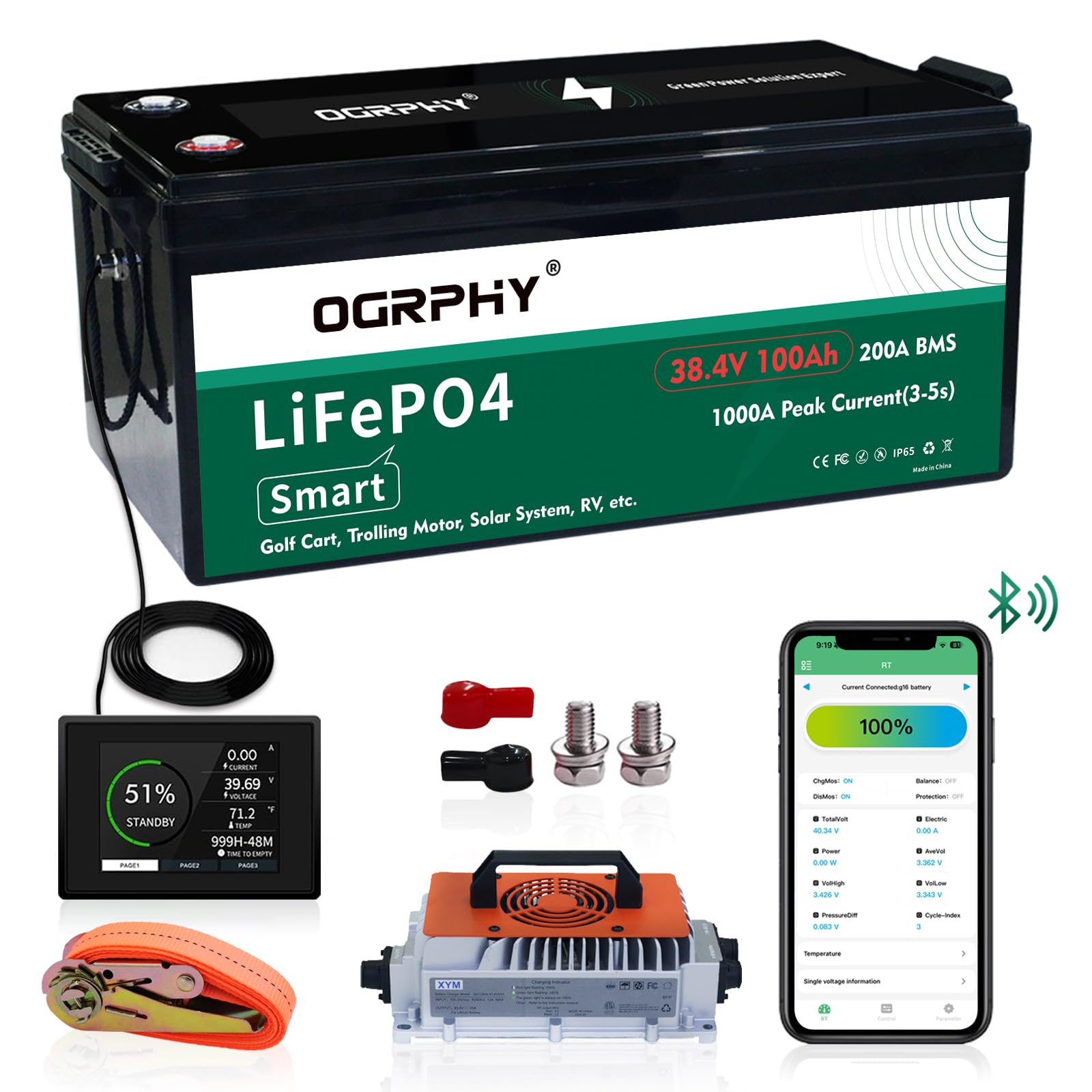
Plenty of carts still run 36 volts — early EZGO TXT models and a lot of older Club Cars among them — and those owners get left out of most lithium coverage. The OGRPHY is aimed straight at them: 100Ah at 38.4V, 3.84kWh, replacing six 6V lead-acid batteries with one 63.5 lb box, and it arrives with a 25A charger and a dash monitor.

A 200A BMS with a 1,000A peak is more headroom than a stock 36V cart needs, which is the point: it leaves room for a bigger controller later without changing the battery. The listing claims about 30 miles on a 3kW motor, and that is the figure to plan around rather than hope past. Five years of warranty covers it.

Fit is where this one needs a tape measure before you order. The case is 20.4 inches wide and 8.6 inches tall, a wide low box, and on some carts it takes real work to get between the frame rails. Measure the tray and the gap between the rails, not just the old battery. Do that and the install is a straightforward afternoon; skip it and the weekend gets longer.

Pros

  • Complete 36V kit with 25A charger and monitor
  • 200A continuous with a 1,000A peak
  • Five-year warranty

Cons

  • 20.4-inch width needs tray measuring first
Our verdict

The pick for a 36-volt cart: 100Ah, a 25A charger and a five-year warranty in one box, as long as the tray is wide enough.

Check Latest Price
6

Best for Home Backup

ECO-WORTHY Cubix100 48V 200Ah

91 /100
LBD Score Outstanding

Key details

Weight
206 lb
Capacity
200Ah (two 100Ah units)
Warranty
10 years
Certifications
UL9540, UL1973, CEC
View on Amazon

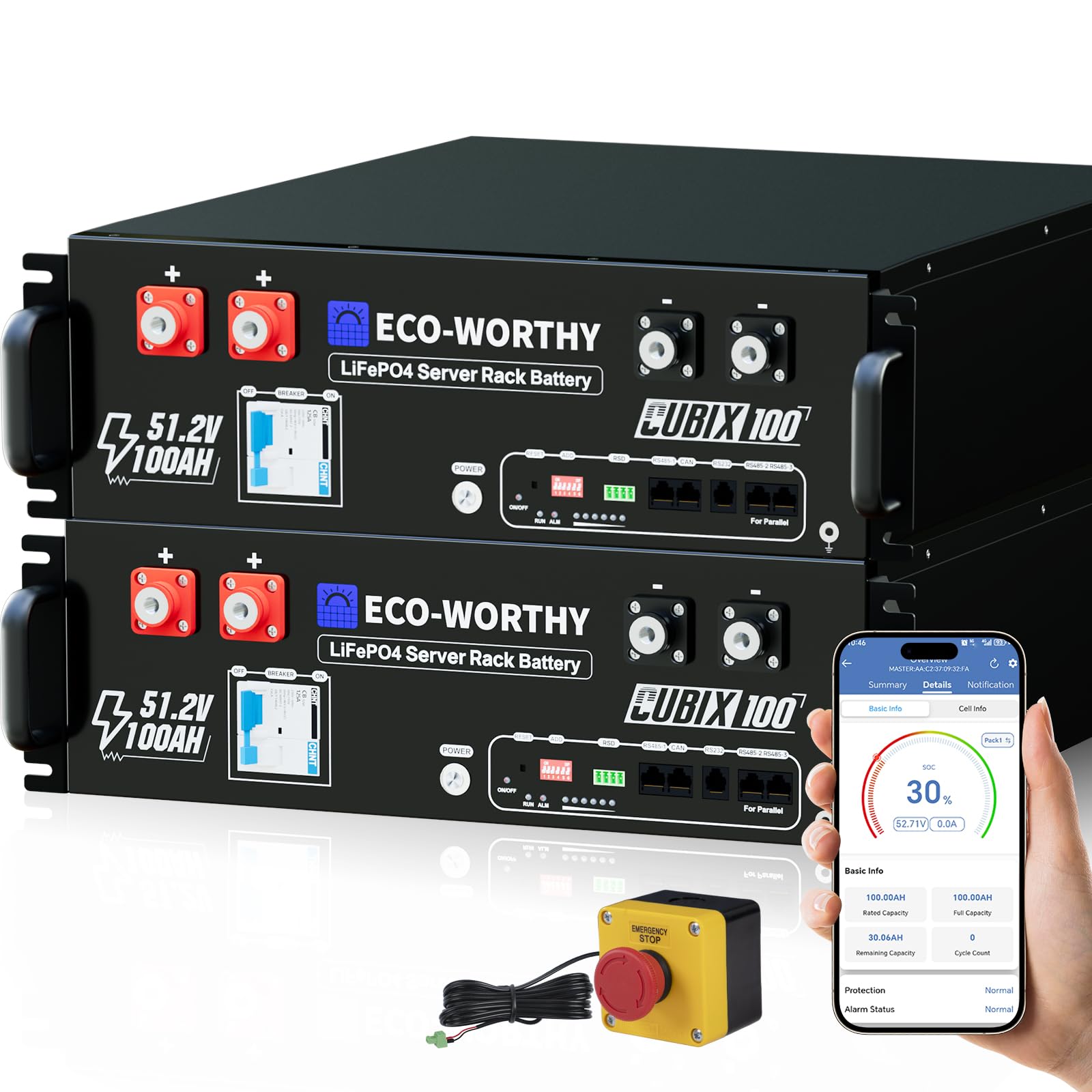
Home storage is the part of this category where paperwork matters. The Cubix100 carries UL9540, UL1973 and CEC listings, which is the difference between a battery bank an electrician will sign off on and one that starts an argument with an inspector. It is the only battery in this group that states all three.

Two 100Ah units at 51.2V make a 200Ah bank, about 10.24kWh, in a rack format 5.63 inches tall with CAN and RS485 ports for closed-loop communication. In practice the battery tells the inverter what it wants instead of the inverter inferring it from voltage, which is how a system stays stable when a well pump or an air conditioner kicks on.

Bluetooth and WiFi handle monitoring, additional units parallel onto the bank as the loads grow, and the warranty runs ten years, the longest commitment in this group by a wide margin. For a fixed install in a utility room, that combination is what a system designer wants to see on paper.

We treat this as a specialist purchase, because it is one: it belongs in a rack next to an inverter, not in a camper. For the reader wiring a backup system that has to be permitted and insured, the listings, the closed-loop comms and the ten-year warranty are the whole argument, and they justify the premium. Everyone else should buy a 12V or a cart kit and put the difference into panels.

Pros

  • UL9540, UL1973 and CEC listed
  • CAN/RS485 closed-loop inverter communication
  • 200Ah, about 10.24kWh, in a rack footprint
  • Ten-year warranty

Cons

  • About 100 lb per unit to lift into a rack
Our verdict

For a permitted home backup system, this is the battery we recommend: UL-listed rack units that speak CAN to the inverter, backed by ten years.

Check Latest Price
7

48V Cart Upgrades

LOSSIGY 48V 100Ah Kit

88 /100
LBD Score Excellent

Key details

Weight
82.9 lb
Capacity
100Ah at 48V
Warranty
5 years
Peak Output
1,000A for 3–5s
View on Amazon

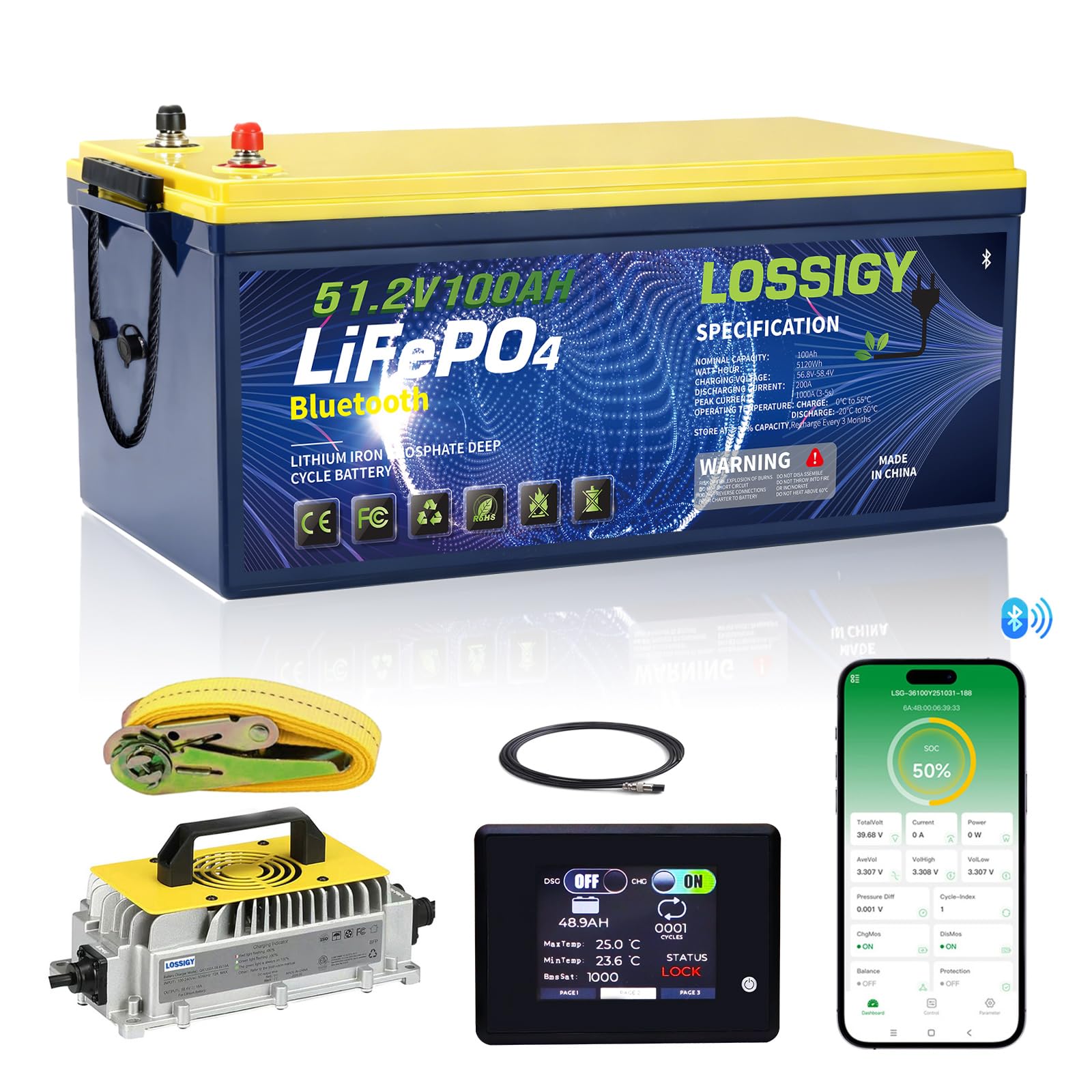
A thousand amps for three to five seconds is not a number most cart owners need — until they do. That surge is what a controller asks for when the cart is loaded, pointed uphill and starting from a stop, and it is the highest peak rating among the 48V batteries here.

The steady numbers are ordinary and sufficient: 200A continuous, 100Ah at 48V, 5.12kWh, 4,000 cycles claimed, and 82.9 lb — heavy enough to sit still and light enough for two people to manage. The kit includes the charger, a monitor, cables and the shunt, so the install does not stall waiting on parts. Five years of warranty covers the battery itself.

The dash display is the kit's weak link. If it fails the cart still runs, but you lose the fuel gauge and the Bluetooth app becomes your readout. That is the trade for the extra surge capacity, and it is one we accept given what the battery does under load.

Where it lands for us: if your cart has an upgraded controller, or you routinely run it two-up with a load in the bed, the surge rating is the reason to pick this kit over the other 48V options. If your cart is stock and your routes are flat, the TEMGO is easier to install and the DC HOUSE arrives with a better display.

Pros

  • 1,000A peak for 3–5 seconds
  • 200A continuous with 5.12kWh
  • Charger, monitor and cables included
  • Five-year warranty

Cons

  • Dash display is the kit's weak point
Our verdict

A 48V kit for carts that work hard: 200A continuous, a 1,000A surge, and the charger and monitor in the box.

Check Latest Price
8

Fish Finders, Toys

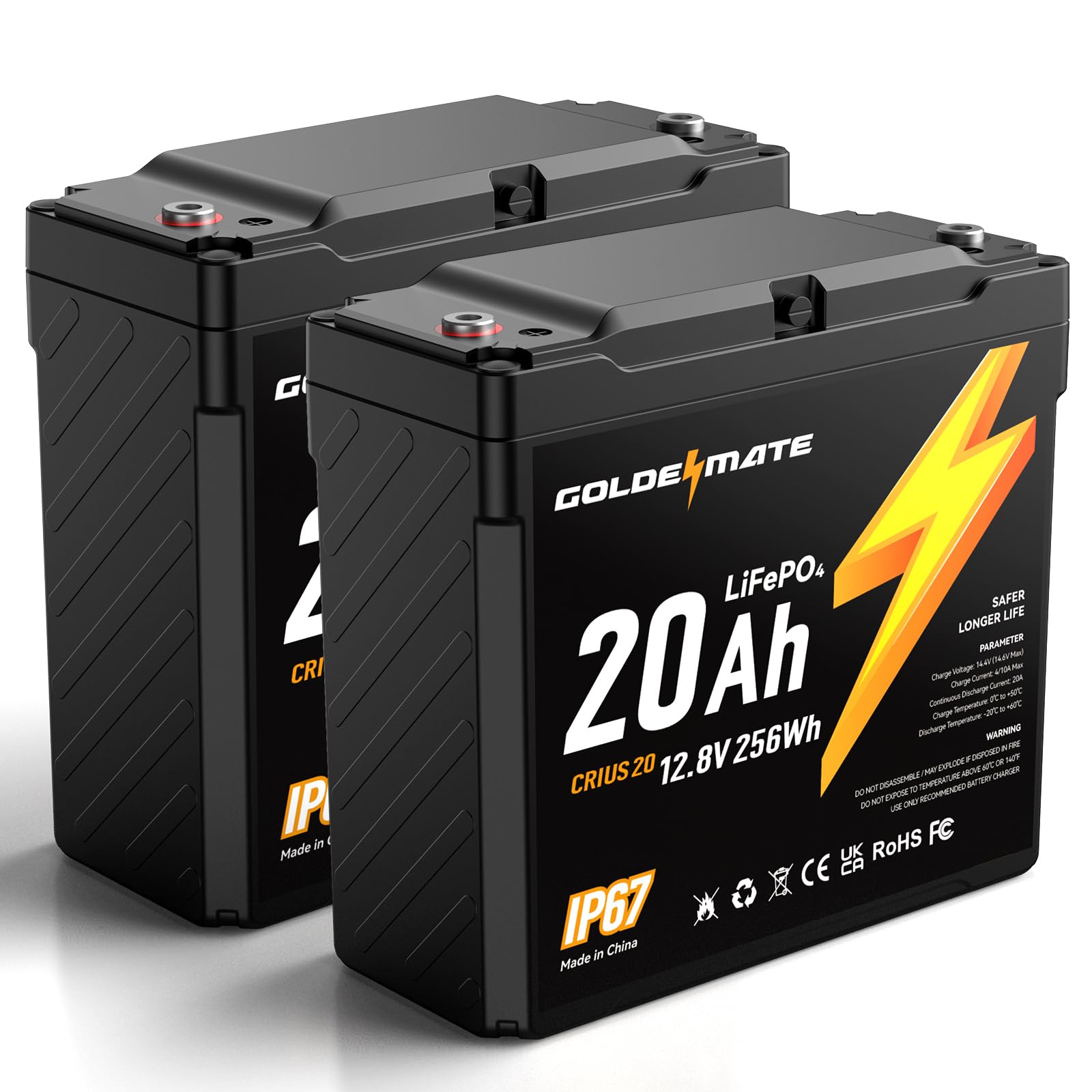
GOLDENMATE 12V 20Ah (2-Pack)

87 /100
LBD Score Excellent

Key details

Weight
11.9 lb
Capacity
20Ah each (2-pack)
Warranty
2 years
Waterproof Rating
IP67
View on Amazon

Two 20Ah batteries, 5.95 lb each, in cases sealed to IP67. Small, light and genuinely weather-resistant is a narrow combination, and it is what makes this pair useful on a kayak, a fish finder mount or a dash-cam harness where a plastic-cased 12V would be a liability. IP67 is the rating that covers spray and a brief dunking at the dock, not just a splash.

We like it for the jobs that do not need a 100Ah bank: a fish finder for a day on the water, a ride-on toy, a ham radio go-box, a set of dash cams. Wired in parallel the pair gives 40Ah; on its own each battery is a 12.8V 20Ah pack you can carry in one hand. For that work it is the pick here, and it is the lightest thing in this group.

The limits are honest ones. Twenty amp-hours will not run an inverter for long, and two years is the shortest warranty here. What it does well is the small, repeated job — moving the pair between a boat in summer and a dashboard harness in winter without thinking about weight or weather.

Pros

  • IP67 sealed case for wet use
  • 5.95 lb per battery
  • Two batteries, 40Ah when paralleled

Cons

  • 20Ah limits it to small loads
  • Two-year warranty is the shortest here
Our verdict

The small-battery pick: two sealed 20Ah packs under six pounds each for fish finders, toys and 12V gadgets.

Check Latest Price

How We Tested LiFePO4 Batteries

We started by building a shortlist from current LiFePO4 listings, filtering out packs whose voltage, capacity, BMS rating, low-temp protection, or physical dimensions didn't line up with the way people actually use them. We bought eight and spent 10 months cycling them through an RV auxiliary bank, a golf-cart conversion, a trolling motor, and a small solar backup bench. That meant real launches and retrievals, weekend trips with lights and a fridge running, and weeks where a pack sat idle before we asked it to wake up and work.

Installation and fit got checked before any performance runs. I measured each case against the space it was meant to replace — a group-size tray, a golf-cart bay, a trolling-motor compartment — and checked terminal spacing and cable reach. Then I timed solo installs, including mounting chargers and pairing Bluetooth apps or reading LCD monitors; some packs dropped in cleanly, while others had posts or case edges that made a wrench hard to turn. We also noted whether app readings matched a separate shunt and whether a display was legible at an angle.

For power and performance, we pulled hard loads and watched voltage sag, BMS shutdown behavior, recovery time, and peak current on motor starts. Battery life and reliability came from repeated discharge and charge cycles, plus long idle stretches to see how much charge drifted and whether the packs stayed balanced. We checked build quality at the terminals, case seams, and mounting points, and watched low-temp cutoff on cold-weather trips to confirm charging actually stopped near freezing.

How to Choose a Lifepo4 Battery

Voltage first, capacity second

12V is the RV, camper, trolling-motor, marine and solar voltage. 36V and 48V belong to golf carts and home storage. This is the one error you cannot wire around: a 48V cart needs a battery with a 51.2V nominal rating, and a 36V cart needs 38.4V. Buying a 12V battery for a 48V cart is not a compromise, it is a return.

Inside a voltage, capacity is amp-hours, and amp-hours times volts is the energy you actually get to spend. A 100Ah 12V battery holds 1,280Wh; the 280Ah battery we recommend holds 3,584Wh. Decide how many watt-hours a day you use, then buy once rather than adding a second battery and a second set of cables later.

What the BMS rating tells you

The battery management system is the ceiling on everything else. Multiply continuous amps by voltage to get the watts you can pull: a 100A BMS at 12.8V is roughly 1,280W, so a 2,000W inverter will trip it and a 1,000W inverter will not. Match that number to your inverter before anything else on the spec sheet.

Cart batteries need a second figure — peak current for a few seconds, which is what a motor draws from a standstill or on a hill. A 200A continuous rating with a 600A peak is plenty for a stock cart; a lifted cart with an upgraded controller wants more, and that is where the 1,000A kits here earn their place.

Cold weather and wet locations

Charging a lithium battery below freezing damages it, so low-temperature cutoff is not a luxury if the battery lives in an unheated trailer, shed or garage. Understand what it does: it pauses the charge until the cells warm above roughly 41°F. A cold overnight will not top your bank off, so plan on charging in the warmer part of the day.

For a boat, a kayak or an exposed mount, look for an IP rating rather than trusting a plastic case. The GOLDENMATE pair is sealed to IP67, which is the only genuinely weatherproof battery in this group.

Fit, weight and what comes in the box

Check the tray, not just the amp-hours. Group 24 is the common drop-in size for campers and boats, cart batteries are wide low boxes that do not fit every frame, and a rack battery wants about 22 inches of rack depth. Then think about the lift: anything much over 60 lb is a two-person job, which is why the 61.7 lb TEMGO is easier to install alone than the 99 lb DC HOUSE.

On a cart, the battery is half the job. Lights, a horn and a stereo are 12V items on a 48V system, so they need a reducer. Buying a kit that includes the charger and a monitor — as all three of our cart picks do — is the difference between one order and three.

Monitoring, warranty and paperwork

A Bluetooth app or dash display is a convenience until something goes wrong, at which point it is your only window into the cells. We put more weight on warranty length: the batteries here run from two to five years, and the rack units stretch to ten. For a fixed home install, listings matter as much as capacity, and the ECO-WORTHY rack pair is the only battery here that states UL9540, UL1973 and CEC.

Frequently Asked Questions

Final Verdict

Most people building a 12V system should buy the ECO-WORTHY EnergyRock 280Ah. It puts 3,584Wh behind one set of terminals, and the steel case and one-touch cutoff suit a camper or cabin that actually moves. If your system is smaller, the SUPER EMPOWER 100Ah does the same job in a Group 24 tray at about a third of the weight.

And if the battery is going into a golf cart, skip both. The DC HOUSE 48V kit is the one that arrives finished, charger and gauge included.