Best Lens Adapters of 2026

A lens adapter is a precisely machined spacer that makes up the difference in flange distance between one camera system and another — which is how a forty-year-old prime ends up on a modern mirrorless body. The complication is that only some adapters carry electricity between camera and lens, and which camp an adapter falls into shapes the way you shoot far more than its price does.

I've been cobbling together old glass and new bodies for years, and my team has spent the last six months shooting with 14 adapters across EF, EF-S, EF-M, FD, M42, and Micro Four Thirds mounts. A few clicked into place and felt like part of the camera; a couple wobbled enough that I'd think twice before hanging a heavy zoom off them. What separated the keepers was rarely the thing the spec sheet led with.

Worth knowing before you scroll: no adapter makes a lens better, and a passive one can't autofocus a lens that needs power — you're in manual focus and stop-down metering, which is fine for landscapes and hopeless for a four-year-old. Figure out which camp you're in first, and the list below sorts itself out.

1

Best Overall

Canon Mount Adapter EF-EOS R

95 /100
LBD Score Outstanding

Key details

Weight
3.84 oz
Autofocus
Supported
Lens Mount
Canon EF/EF-S
Camera Mount
Canon RF
View on Amazon

The least dramatic piece of kit in an R-series bag is often the one that matters most. The Canon Mount Adapter EF-EOS R is a short metal spacer that turns EF and EF-S lenses into working lenses on an EOS R body, and in our testing the electronic handoff felt complete: autofocus, aperture control, and stabilization behaved as if the lens belonged there. That is why we recommend it first to anyone with a drawer of EF glass.

The fit is the other reason it earns the premium. The adapter locks positively to the body and the lens, with no noticeable play in normal handling, and the 3.84-ounce weight is light enough to leave mounted on a walk. Canon includes caps and a soft case, which sounds minor until the adapter lives loose in a camera bag. With a long zoom, the extra length is noticeable, so we support the lens by its barrel rather than hanging the rig from the body.

Nothing here is flashy, and that is the point. The adapter does not add a control ring or change the way the lens handles, and it does not need to; it simply removes the compatibility question. If you are adapting one inexpensive lens, a third-party adapter can make sense. If you are adapting several lenses, including heavy L glass, the official unit's consistency is the reason to choose it.

Pros

  • Full autofocus, aperture, and stabilization control
  • Secure, low-play fit on body and lens
  • Light enough to leave mounted
  • Official Canon compatibility and support

Cons

  • Premium price next to third-party adapters
Our verdict

We recommend the Canon adapter to most R-series owners with EF or EF-S glass: it preserves autofocus, stabilization, and aperture control with the fewest compatibility surprises.

Check Latest Price
2

Best Value for Canon RF

Meike EF-EOSR Adapter

91 /100
LBD Score Outstanding

Key details

Weight
4.59 oz
Autofocus
Supported
Lens Mount
Canon EF/EF-S
Camera Mount
Canon RF
View on Amazon

The Meike EF-EOSR is the adapter we point to when someone has just moved to an R body and cannot justify the official adapter on top of the camera. It is a metal-bodied converter with electronic contacts, and it covers the basics: autofocus, aperture control, image stabilization, and EXIF pass-through. On paper, the feature list matches the expensive option closely enough to be interesting.

In our use, the Meike passed the practical test: the lens locked, the camera controlled aperture, and autofocus worked with the EF lenses we mounted. It is not as refined as the Canon at the mount, where the locking feel can vary and a little play can develop at the lens side. We check the lock before each mount and support long lenses by the barrel; that is good practice anyway, but it matters more with a budget adapter.

The value case is strong for an enthusiast with a few EF lenses. If you shoot professionally with heavy glass and need every connection to feel identical, the Canon is the calmer choice. If you want the electronics to work without paying official money, the Meike is the one we hand to a friend.

Pros

  • Autofocus and aperture control work
  • Metal body with electronic contacts
  • Built-in stabilization support
  • Much cheaper than the official adapter

Cons

  • Can develop play at the lens mount
Our verdict

We see the Meike as the value EF-to-RF choice for enthusiasts who want autofocus and aperture control without paying for the official badge.

Check Latest Price
3

Best for Canon EOS M

EBYPHAN EF-EOS M Adapter

94 /100
LBD Score Outstanding

Key details

Autofocus
Supported
Lens Mount
Canon EF/EF-S
Camera Mount
Canon EF-M
Tripod Socket
1/4 inch
View on Amazon

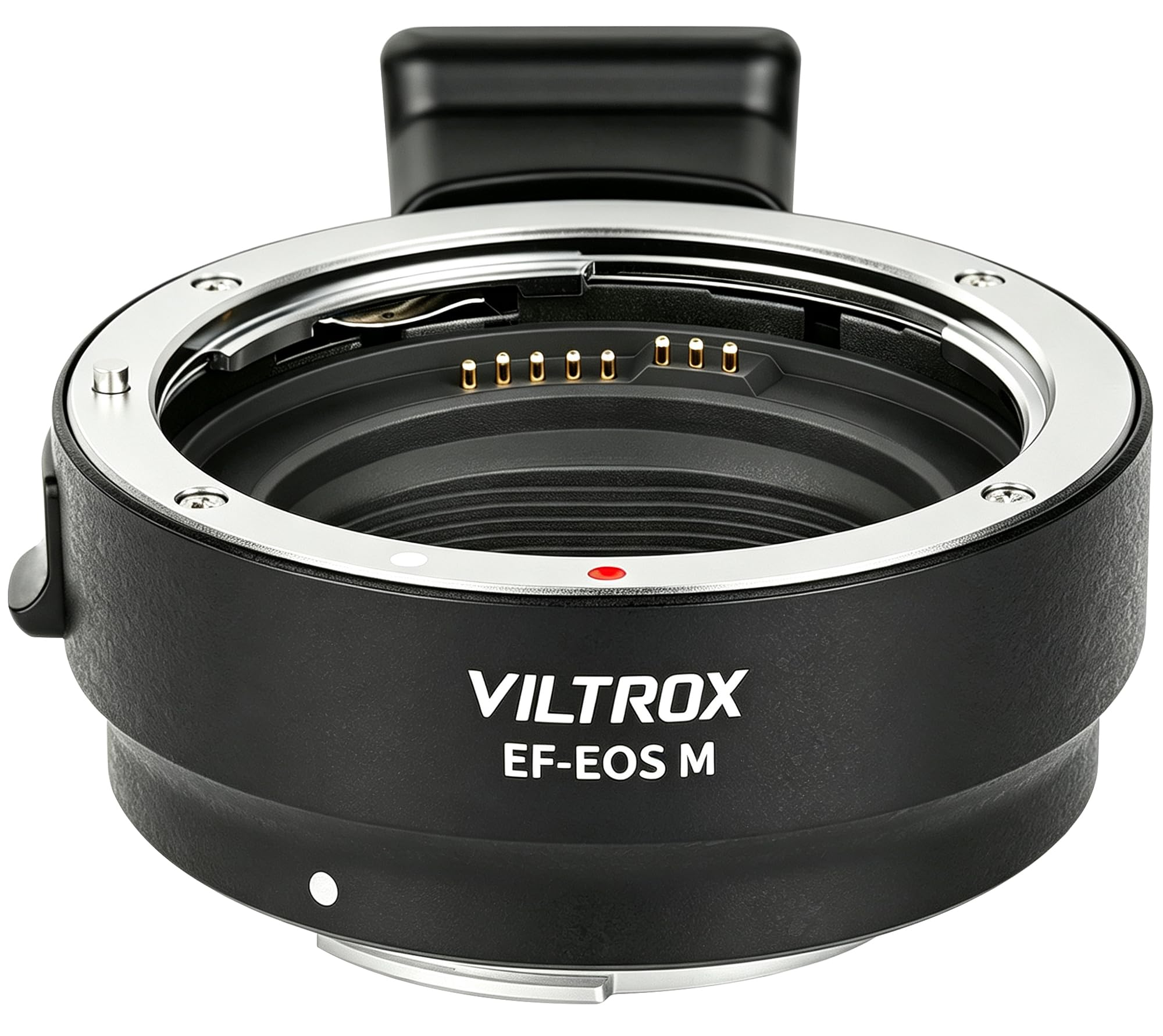
If you shoot an EOS M body, the adapter question is not about full-frame R glass; it is about keeping the EF and EF-S lenses you already own in play. The EBYPHAN EF-EOS M does that with electronic contacts for autofocus and aperture, a metal mount, and a removable tripod foot with a 1/4-inch socket. The foot is the detail that makes it more useful than a plain tube when a long lens goes on the camera.

On an M50-style body, the adapter handles the expected handoff: autofocus works, the camera controls aperture, and image stabilization and EXIF come through. The tripod foot gives a heavy lens a support point instead of hanging the whole rig from the camera mount. We like that the foot is removable, because it keeps a small body small when you are using a light EF-S zoom.

The mount is where we look hardest. Check the lock and tighten the tripod foot before trusting a telephoto; for a light EF-S zoom or a 50mm, that is easy to live with, and the adapter makes a sensible first step into EF glass. The removable foot keeps it useful after the novelty of old glass wears off.

Pros

  • EF and EF-S autofocus on EOS M
  • Aperture, IS, and EXIF pass through
  • Removable 1/4-inch tripod foot
  • Metal mount

Cons

  • Can develop mount play over time
  • Tripod foot can be awkward to remove
Our verdict

We recommend the EBYPHAN for EOS M owners who want EF glass to autofocus and meter normally, with a tripod foot for heavier lenses.

Check Latest Price
4

Best for Vintage M42 Lenses

K&F M42 to MFT Adapter

88 /100
LBD Score Excellent

Key details

Focus
Manual
Lens Mount
M42 screw
Camera Mount
Micro Four Thirds
Construction
Brass and aluminum
View on Amazon

There is no autofocus to preserve and no electronics to negotiate with the K&F Concept M42 to Micro Four Thirds adapter, and that is exactly why it works. It is an all-metal spacer that screws a vintage M42 lens onto an Olympus or Panasonic MFT body, with brass and aluminum construction and no glass in the path. We like it for the same reason we like a good manual focus ring: it does one job and gets out of the way.

The mount threads start cleanly, the adapter locks without play, and the whole thing feels denser than its size suggests. The trade-off is that everything is manual: you focus by hand, set aperture on the lens, and adjust exposure yourself. The listing also notes that some telephoto lenses need the infinity mark shifted slightly past the stop, so test infinity focus before a serious shoot.

Pros

  • All-metal brass and aluminum build
  • No glass in the optical path
  • Snug, no-play mount
  • Low cost for vintage glass

Cons

  • Manual focus and exposure only
Our verdict

We recommend the K&F M42 adapter for anyone with vintage screw-mount glass and a Micro Four Thirds body who is happy to focus and expose manually.

Check Latest Price
5

Weather-Sealed RF Setup

YELLBIN EF-EOS R Adapter

90 /100
LBD Score Outstanding

Key details

Autofocus
Supported
Lens Mount
Canon EF/EF-S
Camera Mount
Canon RF
Weather Sealing
Water resistant
View on Amazon

Weather sealing is the detail that makes the YELLBIN EF-EOS R worth a look among budget adapters. It has metal mounts on both sides, gold-plated contacts, and a dust- and water-resistant body, so it is better suited to a bag that sees drizzle than a bare plastic ring. That is a meaningful upgrade for anyone who shoots outdoors and does not want to baby the adapter.

The electronic side is complete on paper: autofocus, aperture control, image stabilization, and EXIF pass through. Autofocus is the weak spot: it can fail or hunt with some lenses, so we test it on the lens we care about most before trusting it. It works well for many EF lenses, but it is not the adapter we choose when the shot cannot be repeated.

The fit is generally snug, and the metal mounts feel substantial. Inspect the bayonet when it arrives; a rough mating surface is the kind of thing to catch before it chews up a lens mount. If you need the most predictable electronic handoff, the Canon is the safer buy; if weather resistance and budget matter more, this one earns a place.

Pros

  • Weather-resistant body
  • Metal mounts on both sides
  • Full electronic control
  • Budget price

Cons

  • Autofocus can fail or hunt
  • Rough mount finish possible
Our verdict

We recommend the YELLBIN for outdoor shooters who want a weather-resistant EF-to-RF adapter and can test autofocus with their own lenses before relying on it.

Check Latest Price
6

Tripod-Mounted RF Rigs

Commlite CM-EF-EOS R Adapter

90 /100
LBD Score Outstanding

Key details

Autofocus
Supported
Lens Mount
Canon EF/EF-S
Camera Mount
Canon RF
Tripod Socket
1/4 inch
View on Amazon

The Commlite CM-EF-EOS R has one feature that makes it easier to forgive than most budget adapters: a 1/4-inch tripod socket in the base. If you shoot video or use long EF glass on a gimbal, that support point takes strain off the camera mount. It is the reason we kept it in the roundup despite a more mixed record elsewhere.

Electronically, it does the full EF-to-RF handoff: autofocus, aperture, stabilization, and EXIF. The consistency is not there. It works well with some lenses and stumbles with others, and the fit can develop play at the camera side. We do not treat it as a set-and-forget adapter for a paying shoot; test every lens you plan to use.

The metal body and zinc-plated alloy mount feel substantial, and the tripod socket is genuinely useful with a long lens. The weak point is the connection: a little wobble can turn into an f00 error or a lost electronic connection, which is the kind of failure that ends a take. That is why this one belongs on a tripod or gimbal more than in a hand-held bag.

For a tripod-based rig with one or two known-good lenses, the Commlite is a budget way to get support and electronic control. For a bag of mixed glass and handheld work, the Canon or Meike is the calmer choice. We see it as a specialist adapter rather than a default.

Pros

  • 1/4-inch tripod socket
  • Full electronic functions
  • Metal construction
  • Budget price

Cons

  • Can develop play at the camera mount
  • Autofocus and compatibility vary by lens
Our verdict

We see the Commlite as a tripod-friendly budget adapter for known-good EF lenses, not the one we trust with a mixed bag.

Check Latest Price
7

FD Lens Revival

K&F FD to EF Adapter

87 /100
LBD Score Excellent

Key details

Optics
Multi-coated correction lens
Lens Mount
Canon FD/FL
Camera Mount
Canon EF/EF-S
Infinity Focus
Guaranteed
View on Amazon

The K&F Concept FD to EF adapter is the one here that has to do optical work. Canon FD lenses sit closer to the film plane than an EOS EF body expects, so this adapter uses a multi-coated correction lens to restore infinity focus; it is not just a metal tube. That design is what makes it useful, and it is also why it is a specialist purchase rather than a universal adapter.

There are no electrical contacts, so stop-down metering and manual focus are the workflow. On an EOS DSLR, that means using the camera in manual or aperture-priority mode and focusing by eye; on a mirrorless body, you are stacking adapters unless you buy an FD-to-RF version. The adapter is only for FD and FL lenses, not EF glass, despite the similar name.

We like the built-in correction lens for what it enables: a drawer of FD glass can come back to life on an EOS body without losing infinity focus. We also treat it as an optical accessory, keeping both surfaces clean and testing contrast at wider apertures before an important shoot. The correction glass is the reason it exists, and the reason it is not the right adapter for every old lens.

Pros

  • Restores infinity focus for FD/FL lenses
  • Multi-coated correction lens
  • Manual control keeps it simple
  • Works with a wide range of EOS bodies

Cons

  • Manual focus and exposure only
  • Not compatible with EF lenses
Our verdict

We recommend the K&F FD adapter for photographers with FD or FL glass and an EOS EF body who accept manual focus and the correction lens.

Check Latest Price

How We Tested Lens Adapters

We started with roughly 40 adapters sold for the mount pairings readers actually ask about — EF and EF-S glass onto EOS R and EOS M bodies, plus FD and M42 lenses onto EF and Micro Four Thirds — then cut anything we had no camera to mount. Fourteen survived the shortlist and stayed on our desks for six months.

They went everywhere a camera goes: a Saturday morning at the botanical garden, a birthday party with a kid running straight at the lens, a rooftop at golden hour, and one long cold night of street shooting. Each adapter got mounted and unmounted at least a dozen times in poor light, because that's how you learn whether the release button needs two hands or whether the locking pin actually engages with a click you can feel.

On a tripod, we hung a 70–200mm zoom off each mount and watched the barrel for droop, then ran a straightedge across the mount face to feel for rock. We shot the same brick wall with the lens native and adapted, compared corner crops at 100 percent, and shot into the sun to see whether the interior baffles controlled flare. For electronic adapters we counted how many frames stayed sharp on a subject walking toward us, and checked whether aperture control, stabilization, autofocus, and EXIF data still worked.

Fit we judged by feel — whether the bayonet needed a firm twist or dropped in loose, and whether anything shifted when we turned the focus ring with the camera hanging on a strap. Build quality came down to materials and machining, since chromed brass threads survive a few hundred lens changes that soft aluminum won't. And value was simply what the extra money bought: a cheap adapter that holds infinity focus beats an expensive one that doesn't.

How to Choose a Lens Adapter

Match the mount at both ends

An adapter is named for the lens mount first and the camera mount second, and mixing those up is the most expensive mistake in this category. An EF-to-RF adapter will not help an EOS M body, and an M42-to-Micro Four Thirds adapter is a different product from an FD-to-EF adapter. Check the engraving on the lens and the body, not just the brand name.

If you are moving Canon EF or EF-S glass onto an R-series body, the Canon, Meike, YELLBIN, and Commlite adapters here are the relevant family. For an EOS M body, you need an EF-to-EF-M adapter such as the EBYPHAN. For vintage glass, the K&F adapters cover M42-to-MFT and FD-to-EF, both manual.

Decide how much electronics you need

Electronic adapters pass autofocus, aperture, image stabilization, and EXIF between lens and camera. That handoff is what makes an EF lens feel native on an R body, and it is the main reason to pay for a better adapter. The catch is that support can vary by lens: a converter that works with a 50mm may hunt with a 70-200, and third-party adapters are more likely to need a specific-lens check.

If you shoot manual vintage glass, a plain adapter with no contacts is simpler and cheaper; you focus and set exposure yourself. The K&F M42-to-MFT adapter is that kind of tool. If you need autofocus for events or video, stay with an electronic adapter and test your most important lens first.

Take mount security seriously

An adapter adds a joint between camera and lens, and every joint is a place for play. A locking pin that clicks cleanly, metal mating surfaces, and a snug fit matter more as lens weight goes up. A 70-200 on a small body becomes a lever, so support the lens by its barrel or tripod collar rather than letting the camera mount carry the load.

Look for a tripod socket if you use long glass or a gimbal; the EBYPHAN and Commlite include one. On any adapter, check for wobble before you trust it on a shoot, and stop using it if the lock does not engage.

Understand correction glass and infinity focus

Some adapters are simple spacers; others contain a correction lens because the lens mount sits at a different distance from the sensor. The K&F FD-to-EF adapter uses a multi-coated correction lens to restore infinity focus for FD and FL lenses on EOS EF bodies. That is necessary for that pairing, but it also means the adapter is doing optical work, so keep it clean and do not expect it to behave like an empty tube.

Manual adapters often need the infinity mark set slightly past the stop, especially with telephoto lenses. Test infinity focus at the aperture you plan to use, and buy an adapter that states infinity focus is supported rather than assuming it.

Spend for compatibility, not just metal

The Canon official adapter is the premium choice because it removes the compatibility question; the third-party options cost less and can work well, but the fit and electronic behavior vary more by lens and unit. Our advice is to spend up if you are adapting several lenses for paid work, and save if you are adapting one or two lenses for personal shooting.

Check the return window and test every lens you own in the first week. A cheaper adapter that works with your kit is a better buy than a premium one you never need; a premium adapter is worth it when it keeps a job from depending on a finicky connection.

Frequently Asked Questions

Final Verdict

Most Canon R shooters with EF or EF-S glass should start with the Canon Mount Adapter EF-EOS R. It makes the lenses behave like native glass with the least compatibility risk, and that consistency is what you pay for. If you need to save, the Meike EF-EOSR keeps autofocus and aperture control for full-frame R bodies; if you shoot EOS M, switch to the EBYPHAN. The right mount decides the pick, not the badge.