Best Home Security Systems of 2026

The worst thing a home security system can do is cry wolf. A camera that pings your phone every time a moth drifts past the lens is worse than no camera at all, because you'll mute it inside a week. What you actually want is boring reliability: it catches the person at the gate rather than the raccoon, and the footage is sharp enough to be worth opening at 2 a.m.

We've spent the past six months living with 12 systems — solar camera kits, wired recorders, and one sensor-and-hub package — mounted on front porches, driveways, and back gates. The lesson that surprised me most is that the spec sheet barely predicts satisfaction. Picture quality matters, but so does whether the app tells you the truth, and a no-subscription system whose footage you can't easily pull up is no bargain at all.

What follows are the ones that earned their spot on the wall, from plug-in-and-done kits to setups for people who want every angle covered.

1

Best Overall

aosu D1 Classic 4-Cam Kit

86 /100
LBD Score Excellent

Key details

Power
Solar
Cameras
4
Resolution
2K (3MP)
Local Storage
32GB in base
View on Amazon

Four cameras, one small base station, and no monthly bill — that combination is why this kit sits at the top of our list. The aosuBase ships with 32GB of storage inside, enough for roughly 120 days of loop recording before the oldest footage is overwritten, so the video lives on a drive in your house instead of on somebody else's server. We have grown wary of systems that are cheap at checkout and expensive at renewal, and this one doesn't work that way.

The detail that matters more than the megapixels: the cameras talk to the base station over their own wireless link, and the base is the only piece on your home network. That takes the camera's own radio out of the equation, which is the usual reason a wireless camera goes offline and stays there. Pairing is quick — scan, name, mount — and four feeds sit on one screen in the app, so checking the driveway and the back door at once doesn't mean swiping between them.

Pan and tilt is the feature we kept coming back to. Each camera turns a full 360 degrees and swings to follow someone across the yard, so four of them cover more ground than four fixed cameras would. Resolution is 2K rather than 4K: plenty to recognize a face at the end of a walkway, not enough to read a plate at the far edge of a driveway. The solar panels detach, which is more useful than it sounds when you need to angle one into a low winter sun.

Two things to know. Motion tracking can go quiet during long stretches with nothing to follow, so widen the sensitivity and check the timeline after a week rather than trusting the auto-follow blindly. And a camera can stop taking a charge — usually the one in the least sun — which is a panel-placement problem more often than a hardware one, but it is worth glancing at each camera's battery line in the app now and then.

Pros

  • No subscription needed to record locally
  • Cameras link to the base, not home Wi-Fi
  • Pan-and-tilt tracking through 360 degrees
  • Solar panels keep the batteries topped up

Cons

  • Tracking can stall during quiet spells
  • A camera can stop holding its charge
Our verdict

The system we recommend to most houses: four solar cameras, footage stored in your own home, and no monthly bill to keep it running.

Check Latest Price
2

Best Alarm System

SimpliSafe 8-Piece Wireless System

90 /100
LBD Score Outstanding

Key details

Power
Battery
Monitoring
Optional, no contract
Kit Contents
Base station, keypad, 4 entry sensors, motion sensor, panic button
Motion Range
35 ft, 90° view
View on Amazon

For an apartment or a two-bedroom house, the question worth asking isn't which camera has the sharpest sensor — it's whether someone came through the door. That is the job this kit does. A base station, a keypad, four entry sensors, a motion detector and a panic button, all of which attach to frames and walls without wiring. Nothing here watches anything; it tells you a door opened, and then it makes a lot of noise about it.

Setup is a morning's work rather than a weekend's: plug the base in, follow the app, stick the sensors down, test each one. For a small home this is the alarm we recommend, mostly because of how the monitoring is sold. You can run everything yourself for nothing, or add 24/7 professional monitoring with no contract, and the first month comes with the kit — which means paying only for the weeks you are travelling is a genuine option.

Day to day it behaves like a good alarm should. The keypad chimes when a door opens, the entry sensors cover windows as easily as doors, and the motion detector watches 35 feet across a 90-degree spread with a stated tolerance for pets under 60 pounds. Because there is no camera in the box, there is also no footage to review afterwards — this tells you something happened, not what it looked like.

The system's real advantage shows up after installation. Sensors are inexpensive to add, the same app runs cameras and a doorbell, and a second siren covers the upstairs that the base station's 95 dB doesn't reach through a closed door. It is a kit that grows into a house rather than one you replace when you move.

Pros

  • Installs without tools or wiring
  • Optional 24/7 monitoring with no contract
  • One app runs alarms and cameras
  • Motion sensor tolerates pets under 60 lbs

Cons

  • Wi-Fi dropouts can take the base offline
  • Remote arming and cellular backup need a plan
Our verdict

An alarm kit for a small home that wants professional monitoring without a contract, and works perfectly well with no plan at all.

Check Latest Price
3

Best for Image Detail

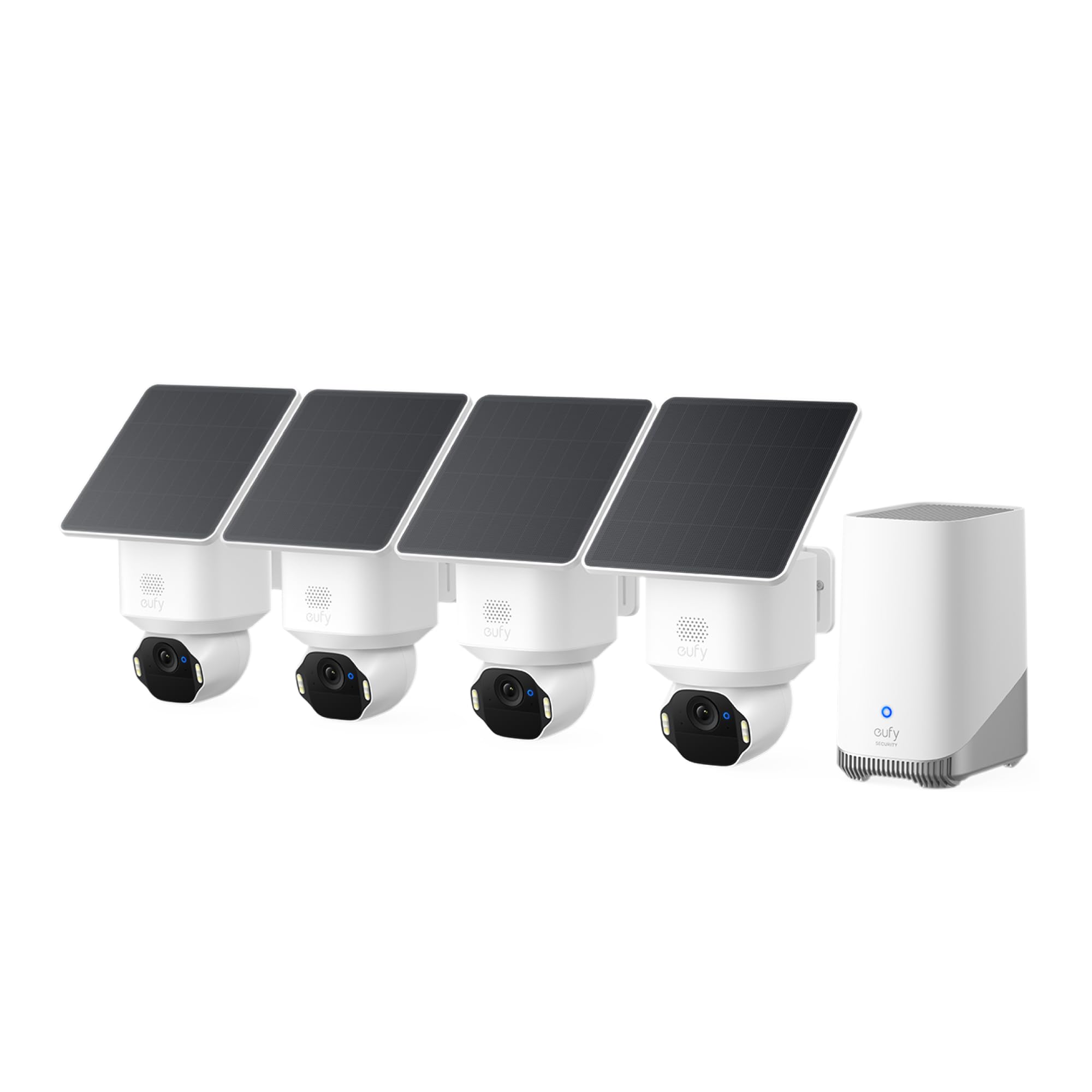
eufy SoloCam E42 4-Cam Kit

84 /100
LBD Score Excellent

Key details

Power
Solar
Cameras
4
Resolution
4K
Local Storage
Up to 16TB (HomeBase 3)
View on Amazon

Everything in this kit costs more than the equivalent elsewhere, and the question is whether the extra buys anything. It does: 4K footage is the difference between a person-shaped blur at the end of the drive and a face you would recognize in a photograph. eufy says the cameras can read a license plate at 33 feet; we didn't park a car in the street to check, but the extra pixels are obvious the first time you zoom into a still.

The other half of the value is the HomeBase 3 recorder. Local storage expands to 16TB, far more than a household will fill, and none of it needs a subscription. Set that against systems where the hardware is cheap and the archive is rented, and the premium starts to read as a down payment rather than a markup. Face and vehicle recognition run on the box in your house, not on somebody else's server.

Each camera pans and tilts through a full turn, tracks what it is following, and fires a strobe and a siren when it decides something is wrong. SolarPlus 2.0 asks for about two hours of direct sun a day to stay topped up — a modest ask for a camera on a sunny wall, an impossible one under a deep eave. We paid close attention to the battery lines during setup for exactly that reason.

The weak spot is the link between the pieces. Getting the HomeBase onto the network and keeping four cameras talking to it can take more patience than the hardware deserves, and a camera that drops off has to be added back. Motion detection can also trigger late, catching someone only as they get close, so aim the cameras at choke points — a gate, a walkway, the side of the garage — rather than at open ground.

Pros

  • 4K detail that survives zooming
  • HomeBase storage expands to 16TB
  • Pan, tilt and tracking on every camera
  • No subscription for local recording

Cons

  • HomeBase pairing can be stubborn
  • Motion detection can trigger late
Our verdict

Buy this when identifying a face or a plate at distance is the whole point and you would rather own the archive than rent it.

Check Latest Price
4

Best Wired System

ANNKE 3K Lite 8-Camera Wired System

89 /100
LBD Score Excellent

Key details

Cameras
8
Resolution
1080p
Night Vision
100 ft infrared
Pre-installed Storage
1TB HDD
View on Amazon

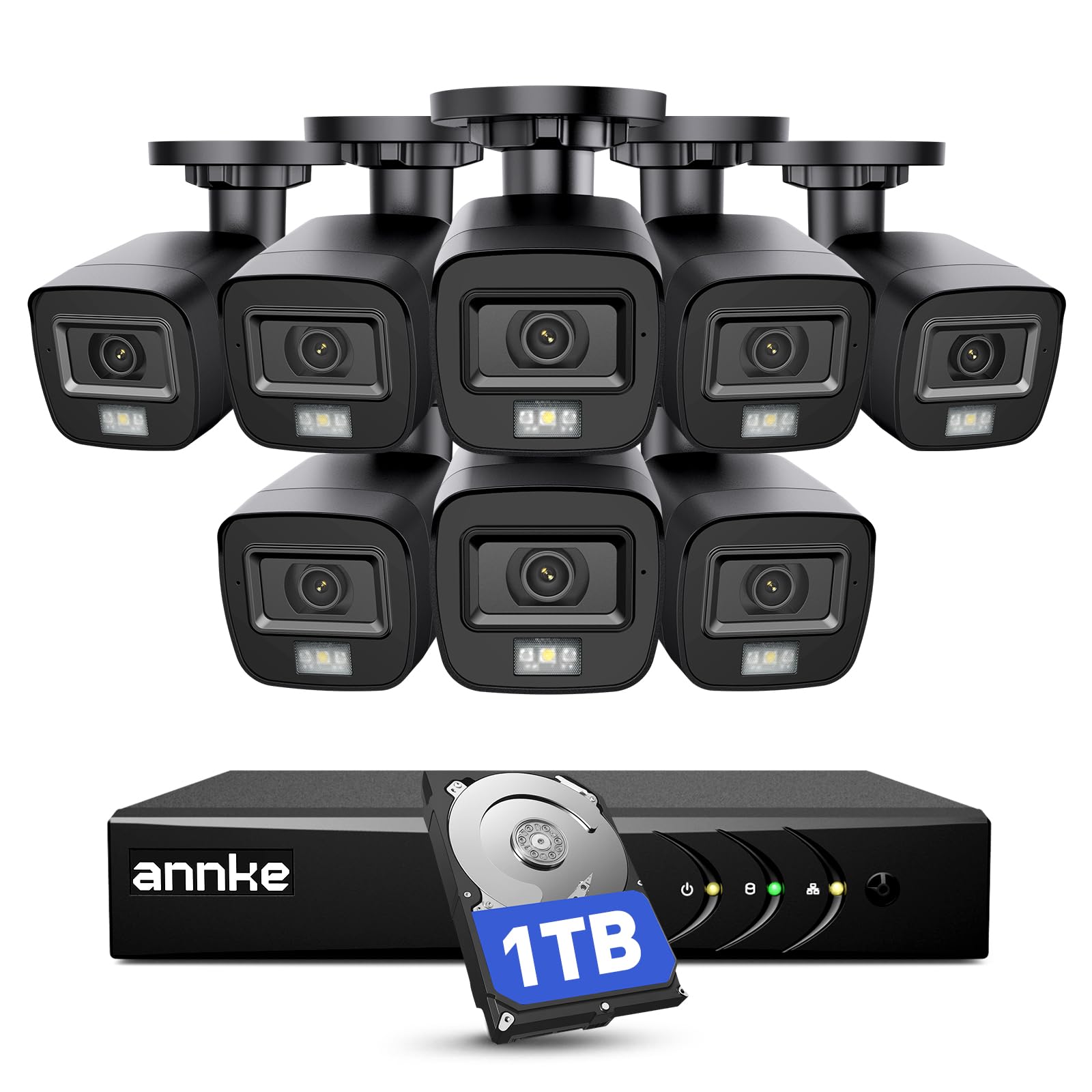
Eight cameras and a recorder with a terabyte of storage already inside — the catch is that every camera needs a cable run back to the DVR. If you are building, remodeling, or you own an attic and a drill, that is a fair trade. If you are renting, it isn't, and no amount of value fixes it.

What you get for the wiring is continuous recording. Wireless cameras wake up when something moves; this one never stops, so the thirty seconds before an event are on the drive too. The pre-installed 1TB drive holds the 24/7 stream and can be swapped for one up to 10TB if you want a longer history, and H.265+ compression stretches whatever you install further.

For anyone who can run the cables, this is the value pick of the group — eight camera angles and a recorder for less than several four-camera wireless kits here. Human and vehicle detection keeps alerts sensible, and the infrared illuminators carry about 100 feet in the dark, enough for a driveway and a back fence. Remote access is the weak link: the recorder wants a wired connection to your router, and pairing the phone app is the step where a setup stalls.

Resolution is the honest compromise. 1080p across eight cameras tells you what happened and when; it will not identify a face at the end of a long drive. And the recorder is the single point of failure — if it goes, all eight cameras go with it — so register the two-year warranty the day you install it and keep the DVR somewhere ventilated.

Pros

  • Eight cameras plus a 1TB recorder
  • Continuous 24/7 recording, not just clips
  • Human and vehicle detection
  • IP67 cameras with 100 ft infrared

Cons

  • Every camera needs a cable run
  • Remote app access can be difficult to set up
Our verdict

For anyone who can run the cables, this is the most recording per dollar here: eight cameras and a terabyte of continuous footage.

Check Latest Price
5

Best Budget Solar Kit

Gianteye 2K Solar 4-Pack

88 /100
LBD Score Excellent

Key details

Power
Solar, detachable panel
Cameras
4
Resolution
2K
Night Vision
328 ft
View on Amazon

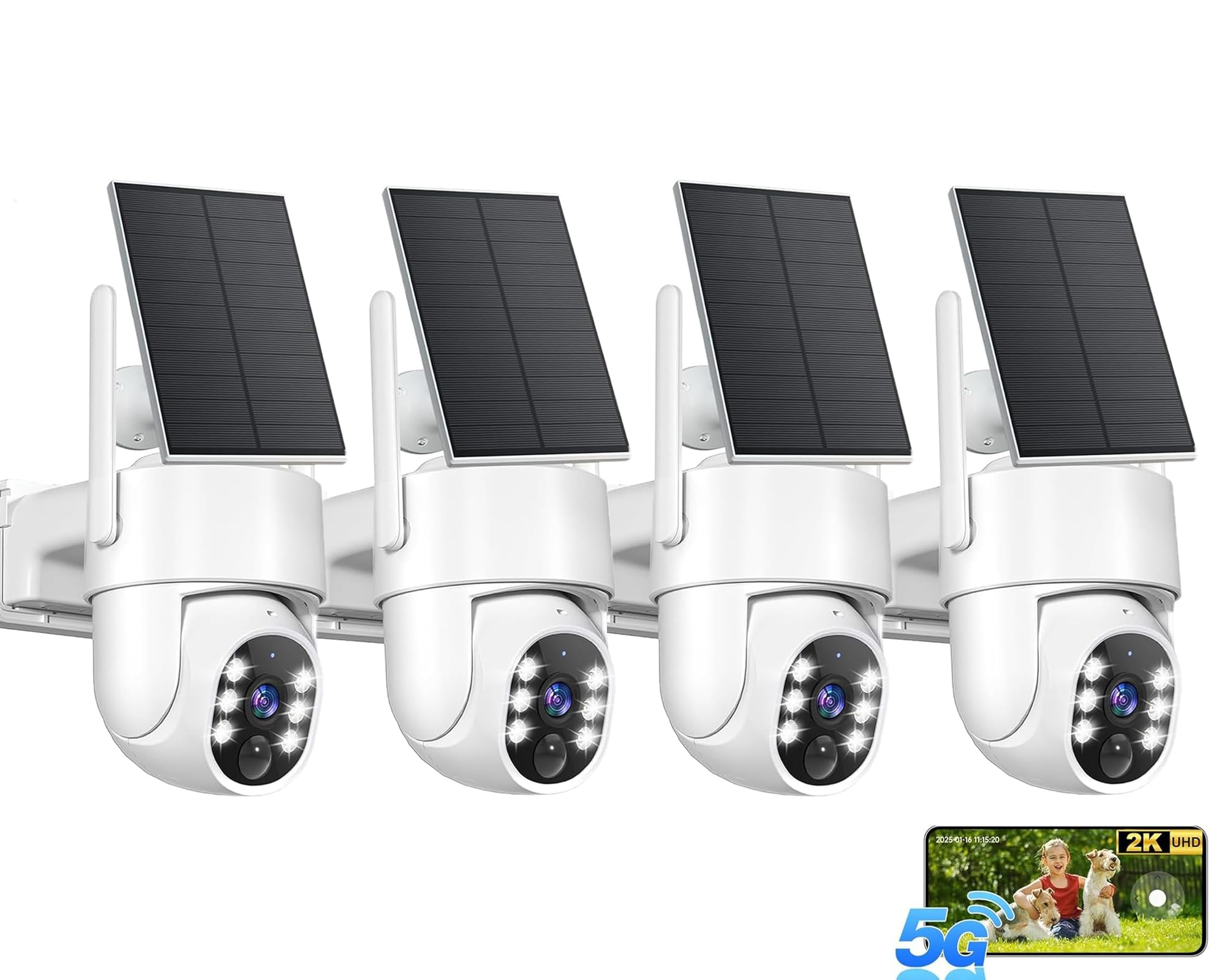
Our top pick costs about twice as much, and the honest question is what you give up by choosing this instead. Less than you would expect: four 2K cameras, pan and tilt on each, solar panels, color night vision and person detection. For a first system, or a second property where you don't want another monthly line item, this is the kit we point budget buyers toward. What you don't get is a base station, and that single difference explains most of what follows.

Setup is quick when the signal cooperates: mount, scan, name, repeat. These cameras join your home Wi-Fi directly rather than through a hub, so your router's reach becomes the project. They handle 5GHz as well as 2.4GHz, which helps in a crowded neighborhood, but a camera at the far corner of a yard can sit there refusing to connect while you wonder what is broken. Test each camera in the spot it will live before you screw the bracket to the wall.

Storage is bring-your-own. Each camera takes a microSD card and none is in the box, so add one per camera to the order — that is what keeps the no-subscription promise intact, and it is the difference between a system that works and one that keeps asking you to sign up. The solar panels detach, which makes it possible to angle them into low winter sun, and the battery percentage in the app is the number to watch for the first month.

Night vision is the pleasant surprise: the spotlight kicks in and you get color rather than the usual gray soup, and the pan-and-tilt head covers far more yard than a fixed lens. The app is busier and less polished than aosu's, and 2K will not read a plate across a street. For the money, four solar cameras that pan, tilt and record locally is a serious amount of system.

Pros

  • Four solar cameras on a budget
  • Pan and tilt on every camera
  • Color night vision with spotlight
  • No subscription if you add memory cards

Cons

  • Cameras join house Wi-Fi directly, so signal matters
  • microSD cards sold separately
Our verdict

Four solar cameras that pan, tilt and record locally for about half what our top pick costs, provided your Wi-Fi reaches the corners.

Check Latest Price
6

Lowest Entry Cost

GMK 4-Pack Camera System

83 /100
LBD Score Excellent

Key details

Power
Rechargeable battery
Cameras
4
Resolution
2K (3MP)
Field Of View
110°
View on Amazon

This is the least expensive way to put four cameras around a house, and it holds up better than that usually implies. Setup is the standout — scan a code, name the camera, done — and the app doesn't fight you. What you are not buying is a hub, a solar panel, or a subscription.

The trade is upkeep. These are rechargeable cameras with no solar panel, so every few months you will be unscrewing them, carrying them inside and plugging them in. They are 2.4GHz-only, fine for range and less fine in a crowded apartment block, and the storage lives on a card in each camera rather than in one place. Mount them within reach of a step ladder you actually own.

Picture quality is the surprise. 2K across a 110-degree view is wide enough for a driveway and sharp enough to tell you what someone was wearing, and color night vision is useful rather than a checkbox. Alerts arrive promptly, two-way talk works, and the siren gives you something to do about what you see. For a first system, a rental, or a garage you want eyes on, this is the kit we hand to someone who wants cameras this weekend without a plan.

Expect the connection to be the fussy part. The cameras can drop off the Wi-Fi and need re-adding, which is a nuisance once and a real problem when you are away and the alert never comes. Add four microSD cards when you order and keep the app updated, and this is a lot of coverage for very little.

Pros

  • Lowest-cost four-camera kit here
  • 2K video with color night vision
  • Quick setup and prompt alerts
  • No hub and no contract

Cons

  • Cameras must be taken down to recharge
  • 2.4GHz-only Wi-Fi with dropouts possible
Our verdict

The cheapest way to get four cameras watching a property, as long as you accept climbing a ladder to recharge them and a 2.4GHz-only radio.

Check Latest Price
7

Midrange Solar Kits

Vivideye 4MP 4-Cam Kit

86 /100
LBD Score Excellent

Key details

Wi-Fi
2.4GHz and 5GHz
Cameras
4
Resolution
4MP
Local Storage
128GB in base
View on Amazon

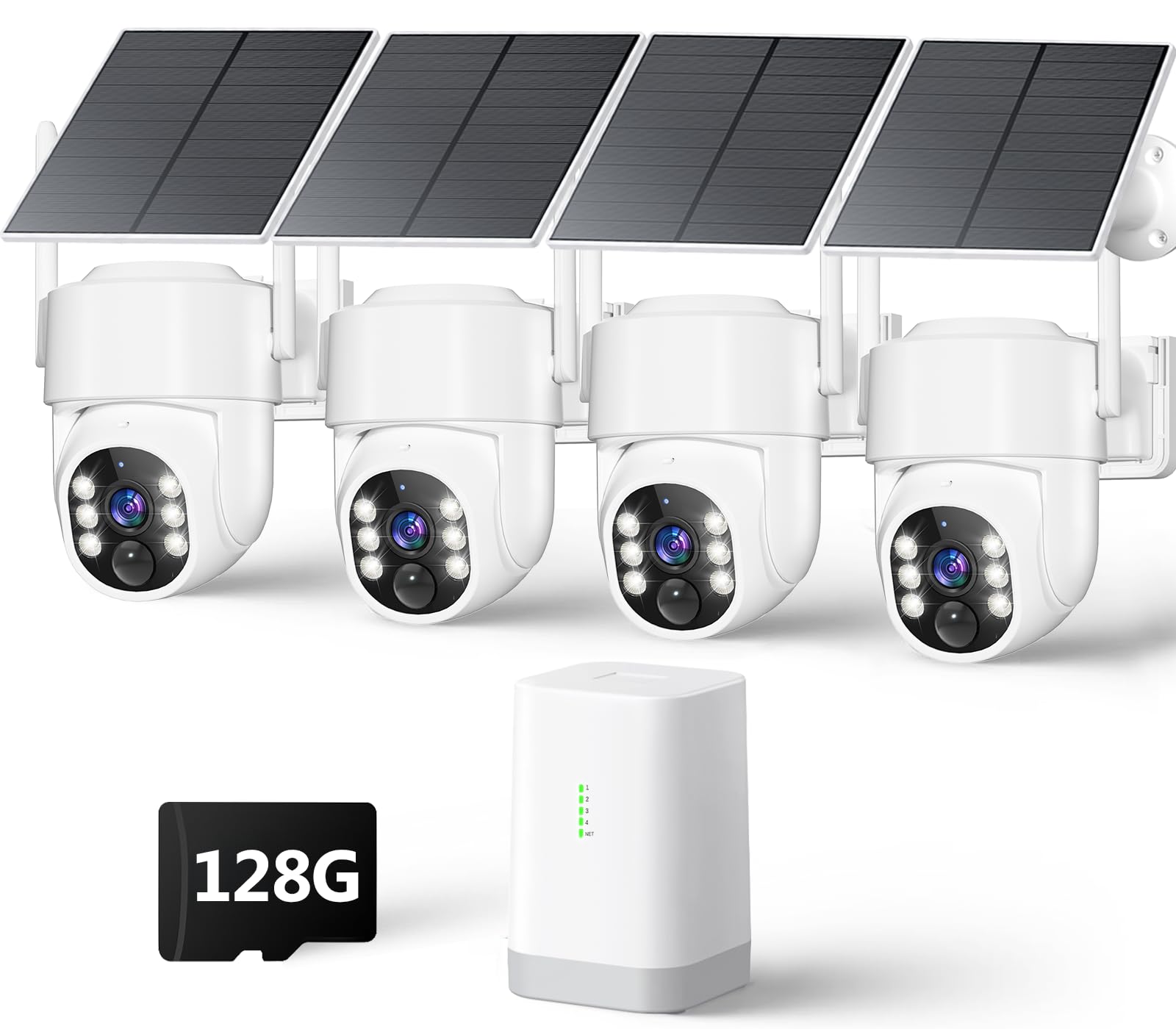
The cameras arrive already paired to the base unit, which sounds like a small thing until you have spent an evening adding four cameras one at a time. Screw them up, plug the hub in, and the system is live with 128GB of storage inside — no card to buy, no plan to activate.

On paper it is the best-specified kit in the middle of this group: 4MP color night vision, a pan-and-tilt head on each camera that turns through 360 degrees and follows people automatically, dual-band Wi-Fi 6, and an 8,000 mAh battery behind a 5W solar panel. The hub is built for four cameras, which is exactly how many come in the box, so there is no room to add a fifth later.

What we can't do is vouch for it the way we can for the aosu. There isn't the same volume of long-term use behind this one, and the early signs are good rather than proven: quick setup, clear day and night picture, alerts that arrive. If you would rather buy something with a long track record, that gap matters more than the spec sheet.

Where it earns attention is the middle of the market — more resolution and more local storage than the budget kits, without the aosu's price or the eufy's complexity. Buy it if the 128GB hub and the dual-band radio are the specifics you are after; wait a year if a longer track record is worth more to you than either.

Pros

  • Cameras arrive paired to the base
  • 128GB of local storage included
  • 4MP with 360-degree tracking
  • Dual-band Wi-Fi 6

Cons

  • Hub supports only four cameras
  • Little long-term use behind it yet
Our verdict

The best-specified kit in the middle of the market, with a 128GB hub in the box — promising rather than proven, so buy it with that in mind.

Check Latest Price
8

Large Properties

Reolink RLK16-1200D8-A

86 /100
LBD Score Excellent

Key details

Cameras
8
Channels
16 (expandable to 24)
Resolution
12MP (4512x2512)
Pre-installed Storage
4TB HDD
View on Amazon

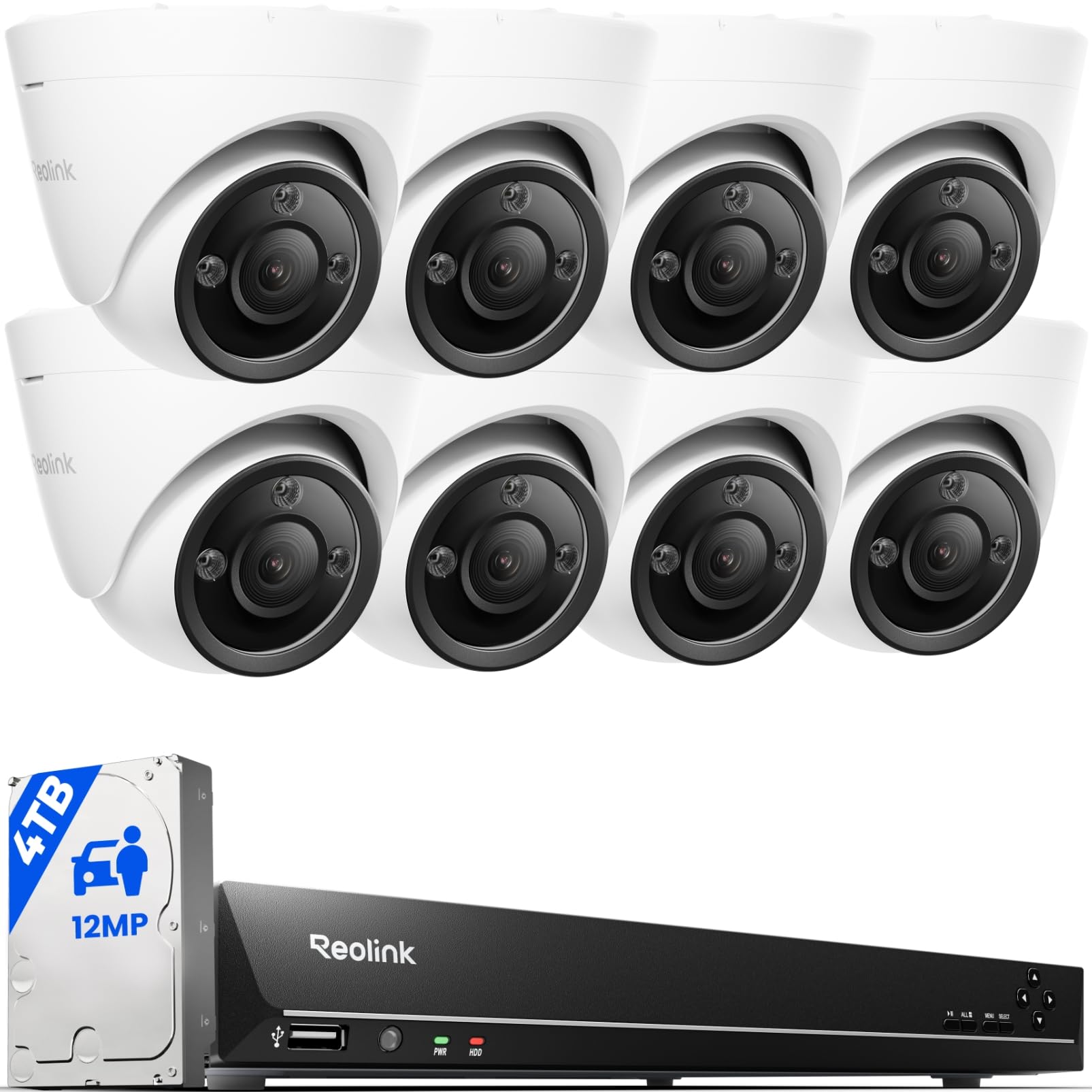
Twelve megapixels per camera sounds like marketing until you pull a still and read a face three houses down. Eight of those cameras, a recorder with a 4TB drive, and 16 PoE ports that can grow to 24 channels — this is the system for a property where good enough stopped being good enough.

It is also the most installation-heavy option here, by a wide margin. Every camera needs an Ethernet run back to the recorder, which carries power and data on the same cable; that is the elegance of PoE and also its cost, because it means eight runs, terminated, plus a ventilated shelf for a box that hums. Plan a weekend, or plan to pay someone.

Once it is up, the system is genuinely capable. Person, vehicle and pet detection cut the noise, spotlights give you color at night, two-way talk works from the app, and the recorder captures continuously as well as on motion. The 12MP sensor behind a 93-degree lens is the sharpest image in this group, and the difference shows exactly where you bought it for: someone at the far end of a driveway at two in the morning.

Two things to weigh. The cameras are built to plug into the recorder's own ports rather than a separate PoE switch, so plan the network the way Reolink designed it. And at this end of the market the recorder is a single box that can take every camera offline with it, which is why keeping the storage swappable and the firmware current matters more here than on a four-camera kit. For a large property that needs eight sharp angles, this is the system we specify.

Pros

  • 12MP detail, the sharpest here
  • 16 PoE ports, expandable to 24 channels
  • 4TB drive with continuous recording
  • Person, vehicle and pet detection

Cons

  • An Ethernet run to every camera
  • Recorder is a single point of failure
Our verdict

The sharpest system here by a distance, built for a property large enough to justify eight Ethernet runs and a recorder on a shelf.

Check Latest Price

How We Tested Home Security Systems

We started with research — spec sheets, manuals, and app-store reviews — and filtered down to 12 systems spanning the three ways people actually buy: all-in-one wireless camera kits, wired recorder setups, and hub-and-sensor packages. Anything that required a contract to view basic playback got cut, and the shortlist deliberately mixed subscription and local-storage models, since that choice shapes the cost long after setup.

One person installed each system alone, and we timed it from unboxing to the first working alert. Then we lived with them for six months on front porches, driveways, side gates, and a garage, judging picture quality the way you actually use it: could we read a face at 30 feet at dusk, make out a plate, or did the color night vision smear into grain?

Motion detection got its own week of nuisance testing. We walked, jogged, and carried boxes past each lens, then let the cameras run through windy afternoons, a dog in the yard, and headlights sweeping the driveway, tallying how many alerts were real. We timed the lag between stepping into frame and the phone buzzing, pulled the router to see what happens on a dropout, and noted whether notifications arrived during an event or hours after it.

Solar and battery units ran through a gray stretch of winter to see how fast they drained. We also logged the small things — how loud a recorder hums in a living room, whether two-way audio is intelligible or just static, and how many taps it takes to pull last night's clip without a plan.

How to Choose a Home Security System

Alarm Kits and Camera Systems Solve Different Problems

An alarm kit is sensors, a siren, and a decision about who responds. A camera system is evidence: what happened, when, and what the person looked like. Plenty of homes end up with both, but they are not interchangeable, and buying the wrong one first is the expensive mistake in this category.

If your worry is overnight intrusion, start with sensors and consider monitoring — the SimpliSafe kit covers a small house's doors, windows, and hallway without a single camera. If your worry is the driveway, the missing package, or who rang the bell at 2 p.m., buy cameras and skip the keypad.

Storage, Subscriptions, and What You Keep

The camera is the cheap part; the archive is where the money goes. Systems that store footage locally — aosu's 32GB base, ANNKE's 1TB recorder, eufy's HomeBase with room for 16TB — keep working when a plan lapses. Systems that lean on cloud storage tend to charge by the camera, every month, for as long as you own them.

Read the fine print on what stops when you cancel: remote arming, cellular backup, and person detection are the usual casualties. Our rule is to pay more upfront for local storage and treat any subscription as optional, not structural.

Wired, Wireless, and the Power Question

Wired systems are more work and more dependable: one cable per camera carries both power and data, so nothing depends on Wi-Fi. Wireless systems trade that for placement freedom plus a power problem — either a battery you recharge or a solar panel that wants a couple of hours of direct sun a day.

The trap is the word wire-free. The cameras still need brackets, a ladder, and usually a base station within range with an outlet of its own. If a camera is going somewhere you cannot reach twice a year with a ladder, make it solar.

Coverage Is About Placement, Not Camera Count

Four cameras aimed well beat eight aimed badly. Start at the doors people actually use, then the driveway, then the side gate or back fence; overlapping views matter more than a wide sweep of empty lawn. Mount cameras above head height and angled down, both to keep them out of reach and to capture faces rather than the tops of heads.

A pan-and-tilt camera covers more ground with fewer units, but a fixed camera on a choke point — a gate, a walkway, the side of the garage — catches more of what matters. Aim sweeping cameras at those pinch points rather than at open ground.

Frequently Asked Questions

Final Verdict

Most homes should start with the aosu D1 Classic. Four solar cameras, a base station that keeps your footage in your own house, pan-and-tilt coverage, and no monthly bill — it is the most complete system here for the money, and its base-station design sidesteps the Wi-Fi dropouts that show up across camera kits.

If your worry is a door opening rather than a driveway, the SimpliSafe 8-piece kit answers that for less, with monitoring you can start and stop. And if you are wiring a large property and need to identify a face at 100 feet, the Reolink kit earns every cable pull.