Best Home Battery Backup Systems of 2026

The first long outage taught me that a drawer of flashlights is not a plan. By morning the fridge is warm, the well pump is dead, and everyone is arguing over one phone charger. A home battery backup fixes that: it lives in the garage, tops itself off from the wall or the sun, and takes over the circuits you actually care about — no gas cans, no pull cord, no carbon monoxide.

Much of the decision comes down to two numbers people mix up — watts, or what a system can push out at once, and watt-hours, or how long it can keep pushing. Everything here runs on lithium iron phosphate, which shrugs off years of partial charges in a way lead-acid never did. We've spent nine months living with six of these systems, from a wheelable unit that fit in a closet to whole-home setups built to grow as you add batteries.

After the first month, the spec sheet stopped predicting much. What mattered was how each one handled a 240-volt load, how fast it refilled from the grid or a pair of panels, and whether the app answered at 2 a.m. in a storm. The picks below are the ones that held up.

1

Best Overall

EcoFlow DELTA Pro Ultra

80 /100
LBD Score Excellent

Key details

Output
7,200W, 120V/240V
Weight
293.6 lb
Capacity
12 kWh, expandable to 90 kWh
Backup Transfer
0 ms online UPS
View on Amazon

A 12 kWh battery with native 240V output and a 0 ms online UPS is the combination that makes the DELTA Pro Ultra our default for a whole-home outage. The 7,200W inverter can carry a well pump, a fridge, lights, and a few circuits without the two-unit dance some systems require, and the battery expands to 90 kWh if a week-long outage is the scenario you are planning for. That headroom is why we put it first: it solves the biggest job here with the fewest compromises.

The 0 ms transfer time matters more than the label sounds. A fridge can ride through a short switch, but a 0 ms online UPS is the spec that protects sensitive electronics and keeps clocks and routers from blinking. The included stand and casters are a practical touch; they turn a heavy unit into something you can roll into place once, rather than wrestle across the garage.

The listed recharge time is about two hours for a 6,144Wh battery, and the system accepts wall power, solar, and EV charging. That flexibility is the difference between a battery you deploy for storm season and one that sits dead because you never planned the refill. We paid close attention to the charging path because a big battery is only useful if it comes back up between outages.

The caveat is charging. The two-hour figure depends on the charging source, and charging is the area to verify early; run a full recharge and a load test before the first storm, and buy from a seller with a straightforward return path. If that check passes, the DELTA Pro Ultra is the system we reach for when the house needs to keep running, not just the Wi-Fi.

Pros

  • 12 kWh, expandable to 90 kWh
  • Native 120V/240V output at 7,200W
  • 0 ms UPS transfer
  • Included stand and casters

Cons

  • Reliability is the one thing to watch
  • 293.6 pounds needs a planned location
Our verdict

We recommend the DELTA Pro Ultra as the default whole-home battery because its 12 kWh, native 240V output, and 0 ms UPS cover the longest outages with the least fuss.
Check Latest Price
2

Best 240V Value

Jackery Explorer 5000 Plus

81 /100
LBD Score Excellent

Key details

Output
7,200W, 120V/240V
Weight
134.5 lb
Capacity
5,040 Wh, expandable to 60 kWh
Recharge
About 2 hours at 4,000W
View on Amazon

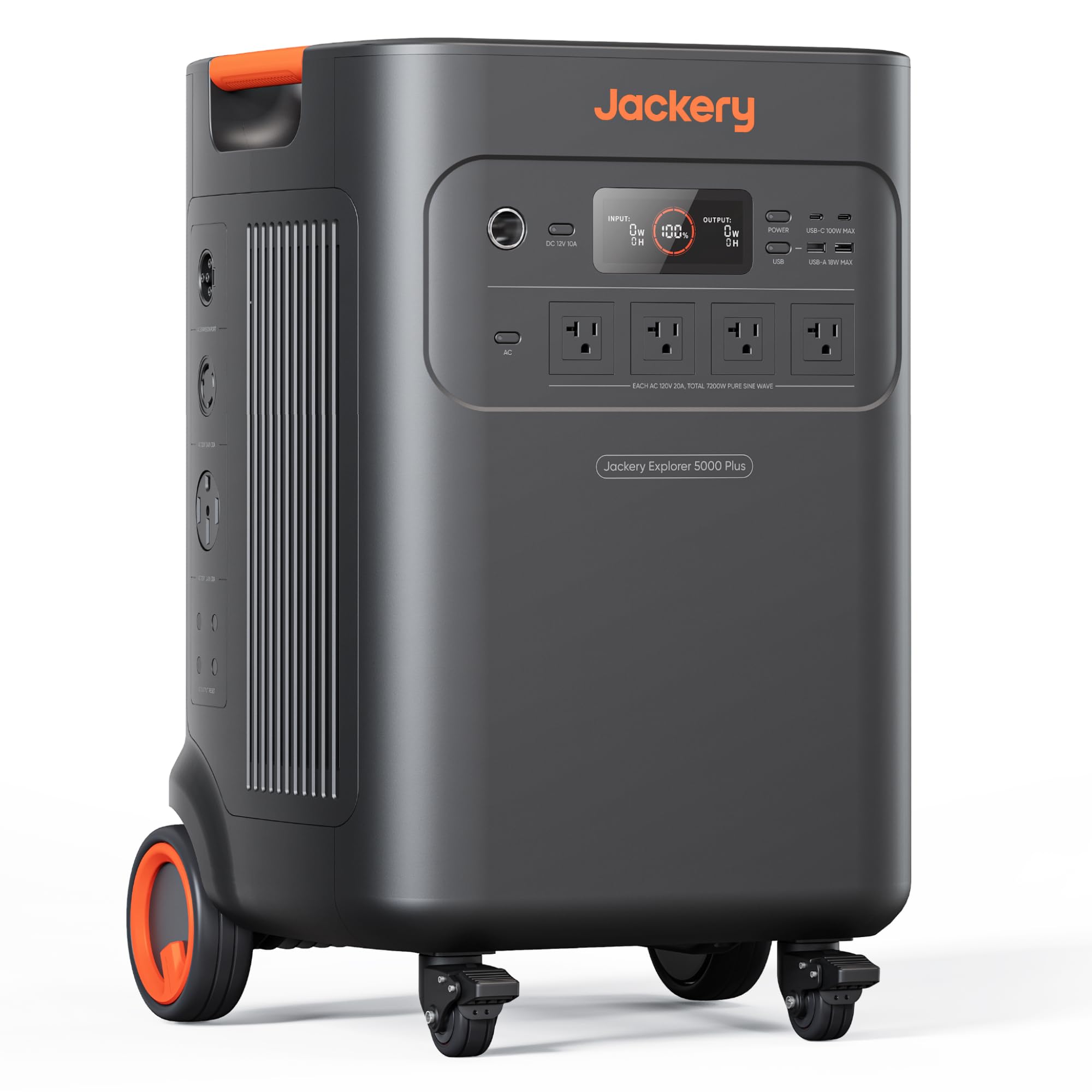
Native 240V output is the feature that separates the Explorer 5000 Plus from the smaller plug-in units here. At 7,200W continuous and 14,400W surge, it can take on a well pump or a big appliance, and the 5,040Wh battery expands to 60 kWh if one outage turns into a long one. That is a serious whole-home feature set without stepping into the top pick's capacity class.

We think this is the best 240V value in the group. It gives up capacity next to the DELTA Pro Ultra, not voltage, and the recharge time is competitive: about two hours with a high-input source. The trade is the separate Jackery 60A Smart Transfer Switch, which is what turns those outlets into backed-up circuits for up to 12 loads at 120V or six at 240V. Price that switch and the electrician into the plan before you decide the battery is the bargain.

The 134.5-pound body is movable with planning, not something to haul up a staircase alone, and the 5-year warranty is the same coverage the top pick carries. For a house that needs 240V for a pump or a shop tool but does not need 12 kWh of storage, this is the more sensible size. The 5,040Wh capacity fits a short outage around a few essential circuits; the 60kWh expansion path is for the household that expects to add batteries later.

Pros

  • Native 120V/240V at 7,200W
  • 5,040Wh expandable to 60 kWh
  • About two-hour recharge
  • 5-year warranty

Cons

  • Smart transfer switch sold separately
Our verdict

We recommend the Explorer 5000 Plus as the best 240V value here for a few essential circuits, provided you add the separate smart transfer switch.

Check Latest Price
3

Best for Essential Circuits

Jackery HomePower 3000

85 /100
LBD Score Excellent

Key details

Output
3,600W, 120V
Weight
59.5 lb
Capacity
3,072 Wh
Solar Included
2 × 200W panels
View on Amazon

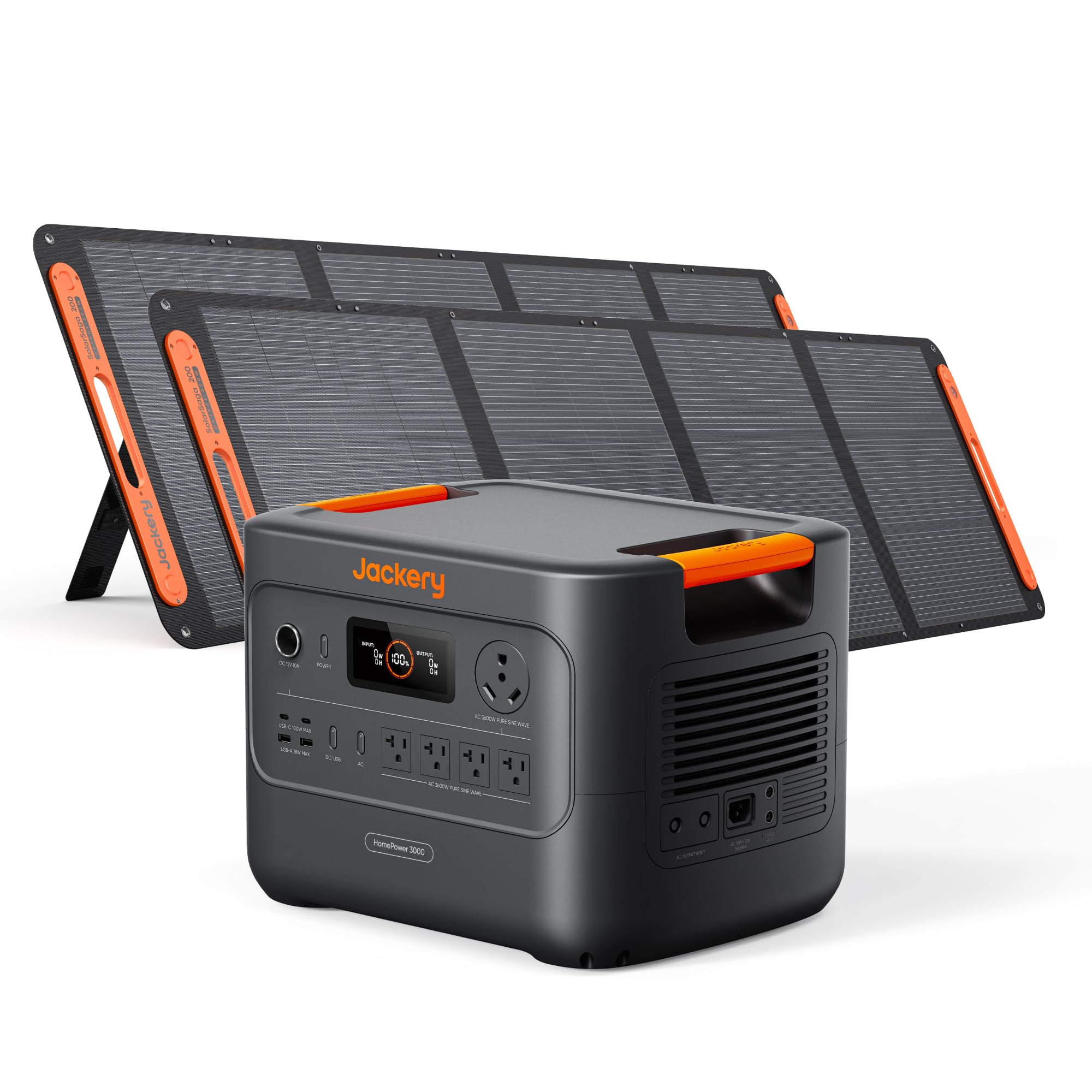
At 59.5 pounds, the HomePower 3000 is the one system here we can move between rooms without a cart. That portability is not a gimmick: it means you can keep it in a closet, carry it to the kitchen during an outage, and still have a 3,072Wh battery with a 3,600W output and a ≤20ms UPS. For an apartment or a few 120V circuits, that is the right trade.

The bundled 2 × 200W solar panels are the detail that makes this a backup plan rather than a battery. A 400W array will not refill the battery as fast as wall power, but it gives you a way to stretch an outage without buying panels later. We also appreciate the 1.7-hour hybrid recharge; a short afternoon on grid power is enough to top it back up.

What it will not do is carry a whole-house panel; this is an essentials machine, not a service-entrance replacement. The 3,072Wh capacity covers a fridge, router, lights, and phone chargers through a short outage, and the UPS switchover keeps those devices from rebooting. This is not the unit for a week-long off-grid trip unless you add panels and watch the load.

Pros

  • 59.5 pounds, the lightest here
  • Bundled 2 × 200W solar panels
  • 3,600W output with ≤20ms UPS
  • 1.7-hour hybrid recharge

Cons

  • 120V output limits it to essentials
Our verdict

We recommend the HomePower 3000 for apartment and essential-circuit backup where one person needs to move the battery and whole-home output is not required.

Check Latest Price
4

Best Budget Rack System

ECO-WORTHY 48V Home Backup

87 /100
LBD Score Excellent

Key details

Output
5,000W, 120V
Capacity
5,120 Wh
Warranty
10-year battery, 2-year inverter
Certifications
UL 1973, UL 1741, UL 9540A
View on Amazon

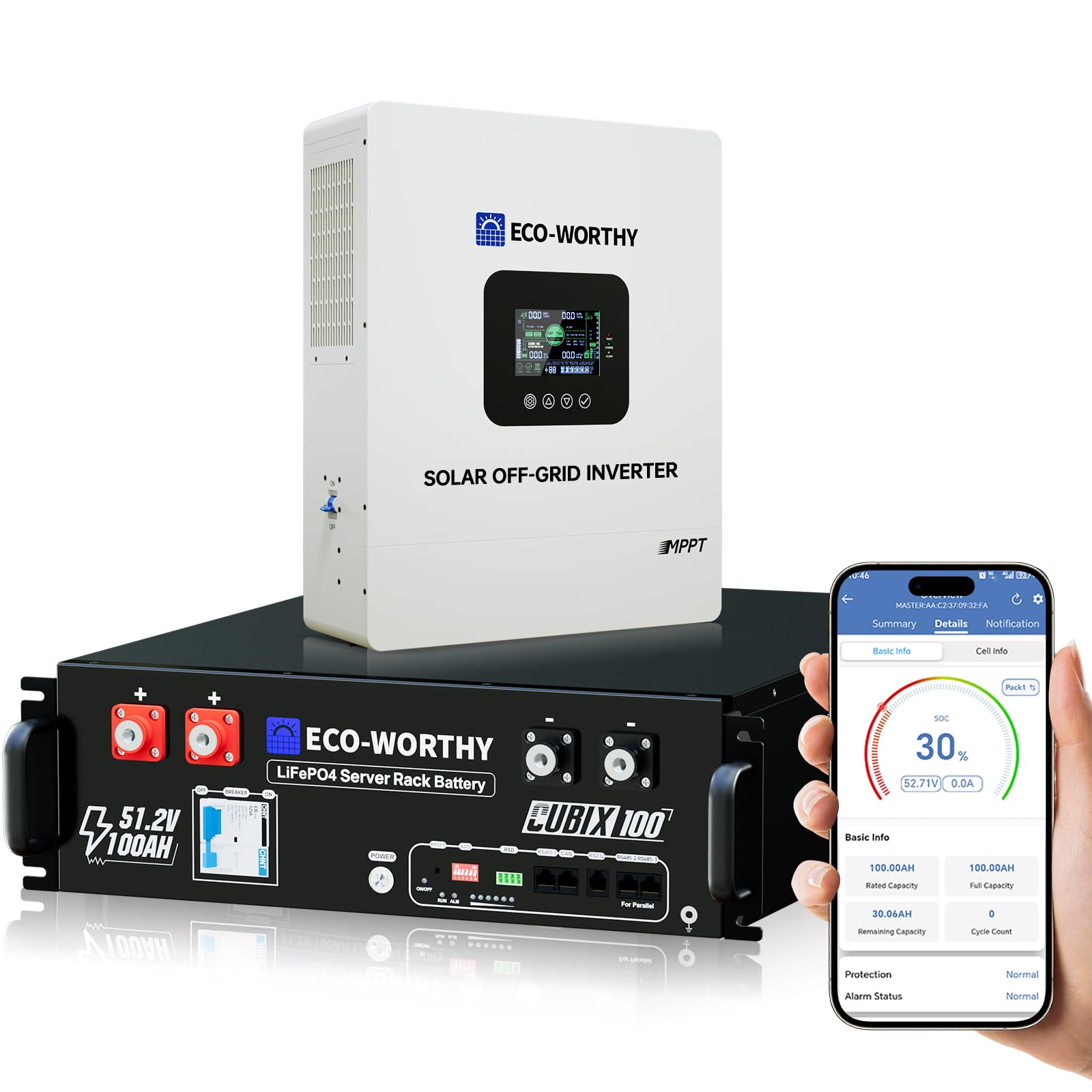
A 5,120Wh server-rack battery paired with a 5,000W inverter is a different kind of home backup: it is built for a utility room, not a kitchen counter. The UL 1973, UL 1741, and UL 9540A listings are the relevant safety credentials, because this is the system that sits closest to a fixed electrical installation. The metal rack format also makes it easier to tuck into a garage or closet than a wheeled power station.

The value is obvious once you compare the capacity and output with the packaged systems here. A single inverter gives 120V and 5,000W; the platform scales to six inverters in parallel for 30kW, but that is a planned expansion, not a plug-in upgrade. We like the 10-year battery warranty, and the rack battery is the part you expect to keep.

This is not the pick for someone who wants to wheel a battery into the kitchen. We see it as the budget route for a garage or utility-room install where the battery can live on a shelf and the circuits are planned once. The 133.9-pound package is manageable in two pieces, but it is not portable in the way the Jackery units are.

Pros

  • 5,120Wh LFP battery and 5,000W inverter
  • UL 1973, UL 1741, UL 9540A listings
  • 10-year battery warranty
  • Scales to 30kW across six inverters

Cons

  • Requires an electrician and permanent mounting
  • Inverter warranty is only 2 years
Our verdict

We recommend the ECO-WORTHY kit for a budget-conscious installed backup, provided you have an electrician and a permanent spot for rack gear.

Check Latest Price
5

RV and off-Grid

GROWATT HELIOS 3600

80 /100
LBD Score Excellent

Key details

Output
3,600W, 120V; 240V with two units
Capacity
3,600 Wh, expandable to 36 kWh
Solar Included
2 × 200W panels
Backup Transfer
15 ms EPS
View on Amazon

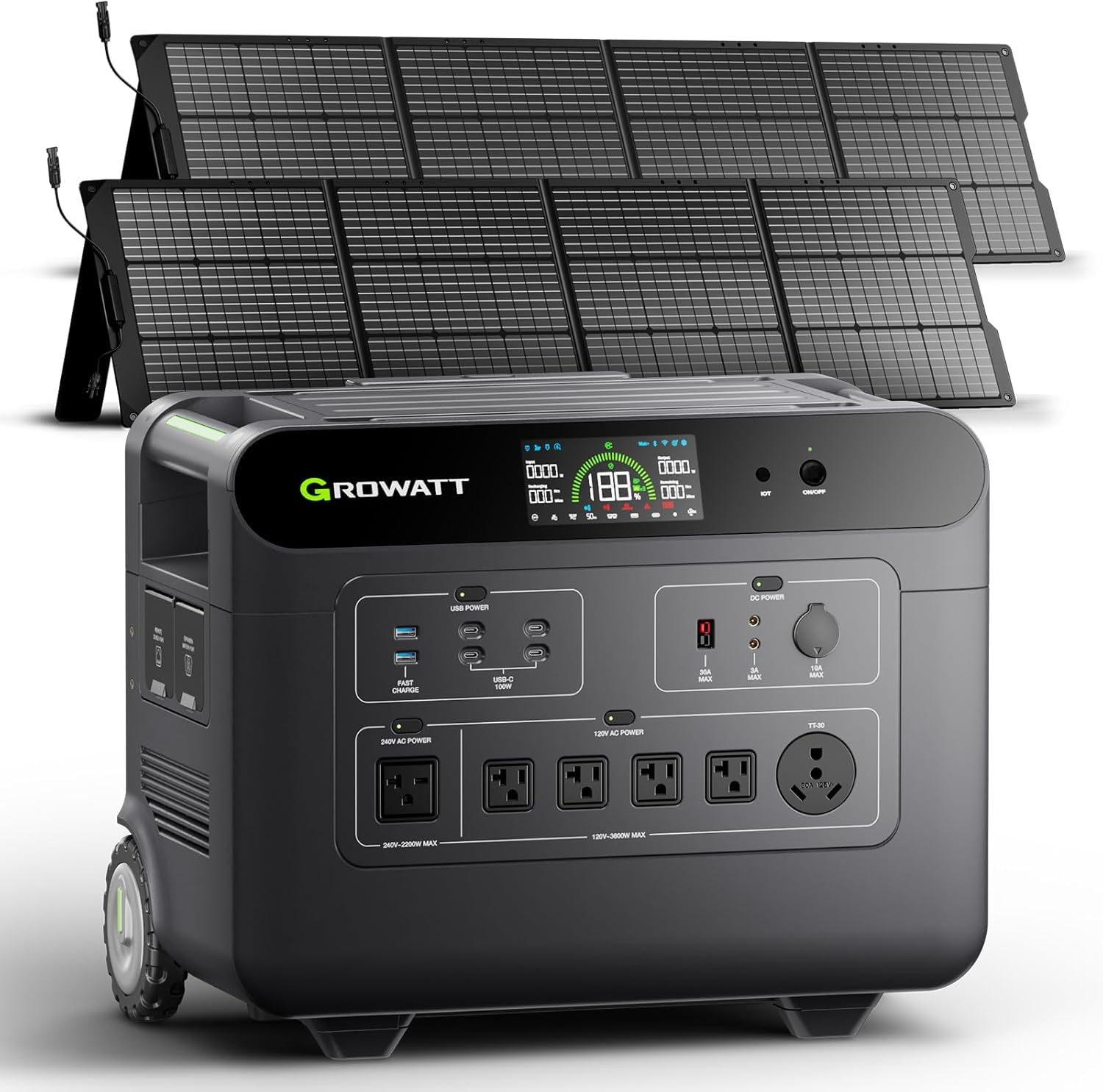
The HELIOS 3600 pairs a 3,600Wh battery with 400W of solar panels in the box, and that combination is built for a first solar setup. Set the panels outside, connect them, and the system starts charging without a separate array purchase. The 3,600W output and 15ms EPS switch are enough for a fridge, router, lights, and a few tools, and the battery expands to 36kWh if the setup grows.

We like it most as a solar-ready bundle for an RV, a workshop, or a house that wants a smaller first step into backup. Two units can be paralleled for 240V and 7,200W, and the capacity path is there. What holds it back is the app: key controls and monitoring run through it, and connectivity is the weak point. If you want a button on the box, this will annoy you.

The 16 outlets and TT-30 port make it more useful in a trailer or workshop than in a hallway closet. We don't treat it as a grab-and-go unit; it is a system you place and then live with. For a first solar backup that can travel, the bundle is the appeal.

Pros

  • 400W solar panels included
  • 15ms EPS transfer
  • Expandable to 36kWh
  • Cold-weather operation to -22°F

Cons

  • 240V requires a second unit
  • 149 pounds, so placement needs planning
Our verdict

We recommend the HELIOS 3600 when you want solar panels included and can live with 120V until a second unit arrives.

Check Latest Price

How We Tested Six Home Backup Systems Through Nine Months of Outages

A battery backup can't be fairly judged in an afternoon, so we gave these nine months and a lot of deliberate blackouts. We started by pulling together every system sold for whole-home or essential-circuit backup and cutting anything that couldn't deliver 240 volts, skipped lithium iron phosphate, or offered no way to add capacity later. That left six units, which an electrician wired into two houses through transfer switches and inlet boxes.

Then we cut the power on purpose, repeatedly. Each system ran a refrigerator and a chest freezer for a full 24 hours while we logged interior temperatures, carried a 240-volt well pump and a sump pump through an actual storm, and powered a microwave, a space heater, and a CPAP overnight. We timed every recharge from a wall outlet and again from solar panels propped against the garage, noting how much the input rate sagged in afternoon shade. We also weighed each unit on a bathroom scale, then rolled it over thresholds and up a basement stair to see where the casters gave out.

Each app went on the same phone so we could watch for lag and dropped connections, and we checked whether alerts still arrived once the home Wi-Fi was down. Once a month we topped every battery to full and re-checked usable capacity. Reliability showed up in boring places: a fan that started rattling, a screen that fogged in a cold garage, a firmware update that killed notifications for a week.

How to Choose a Home Battery Backup System

Size for the outage you expect

A 3kWh system can carry a fridge, router, lights, and a few chargers through a short outage. The 5kWh class buys more time or a second appliance, while a 12kWh unit is for multi-day coverage or a larger circuit load. We treat expandability as the smarter hedge: a smaller battery now, with a clear path to add capacity later, usually beats paying for a huge battery you rarely discharge. Check whether expansion uses the same brand's batteries and whether the extra modules are available when you need them.

Whole-home is marketing shorthand; the real question is which circuits you plan to back up. Add up the running watts, not the labels on the breaker panel.

Match output and voltage to the appliances

Continuous output is the number that matters for a well pump, a fridge compressor, or a space heater; surge is the short burst a motor needs to start. A 3,600W system like the HomePower 3000 can handle essentials, while 7,200W units such as the Explorer 5000 Plus or DELTA Pro Ultra can carry larger 240V loads. The trap is assuming every 240V system does it out of one box: the HELIOS 3600 needs a second unit for 240V. Add up the running watts of everything you want on at once, then leave headroom for startup.

Plan the connection, not just the battery

A battery with a 120V outlet is not a whole-home backup until it is connected to the circuits. Plug-in units can run cords to a fridge or router; circuit-level backup needs a transfer switch or smart panel, and that hardware is often separate. The Explorer 5000 Plus, for example, pairs with Jackery's 60A Smart Transfer Switch for up to 12 circuits at 120V or six at 240V. Transfer time also matters: 0 ms is the gold standard for sensitive electronics, while 15–20 ms is fine for most appliances. Decide whether you are buying an appliance or a small electrical project.

Treat recharge as part of the plan

An outage that outlasts the battery is the one that hurts, so look at both wall recharge and solar input. A high-input system can refill in about two hours; a 400W panel bundle is useful for stretching an outage but will not match a wall outlet. We like bundled panels for first-time buyers because they remove a separate purchase, as with the HomePower 3000 and HELIOS 3600. If you rely on solar, plan for cloudy days and check the panel voltage and connector compatibility before you count on a full recharge.

Put the weight where it can stay

These systems range from 59.5 pounds to 293.6 pounds in this group, which is the difference between carrying a battery to the kitchen and treating it as furniture. Measure the doorway, the floor space, and the clearance around the unit before delivery, and decide whether casters or a stand are included. The DELTA Pro Ultra ships with a stand and casters; the HomePower 3000 is the one we can move without a cart. A permanent rack system like the ECO-WORTHY also needs a utility-room plan, not a closet shelf you clear on moving day.

Frequently Asked Questions

Final Verdict

We recommend the EcoFlow DELTA Pro Ultra as the default whole-home system because 12 kWh, native 240V, and 0 ms transfer cover the longest outages in this group. If that capacity is more than your circuits need, the Jackery Explorer 5000 Plus keeps 240V and 7,200W for less and pairs with a separate smart transfer switch. For an apartment or a few 120V essentials, the HomePower 3000 is the easier system to live with and move. Size the battery to the circuits you will actually keep running, not the biggest number on the page.