
Best Overall
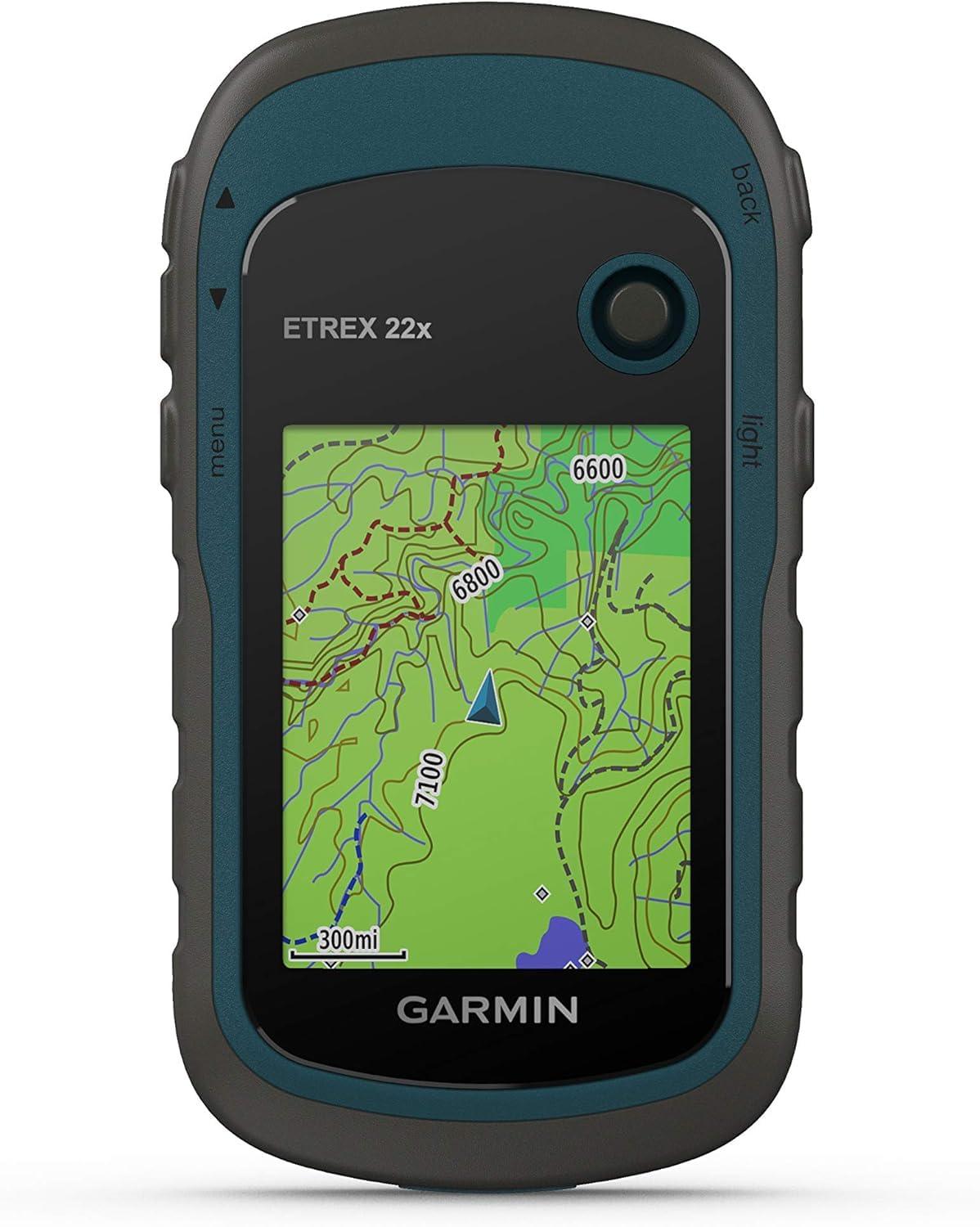
Garmin eTrex 22x
Key details
- Weight
- 4.96 oz
- Screen Size
- 2.2 inches
- Battery Life
- 25 hours
- Preloaded Maps
- TopoActive, routable
Two AA batteries, just under five ounces, and a routable topographic map that lives on the device instead of behind a cell signal: that is the whole pitch for the eTrex 22x, and it is a good one. The preloaded TopoActive map shows trails and the roads that connect them, so at a junction you can see which fork climbs and which one drops to the creek without digging a phone out of a rain shell.
That combination is why this is our default pick. On a ridge with no bars, a phone map is a picture of information; the 22x is still computing. We came to prefer its power source too, since a pair of AA batteries buys 25 hours and a fresh pair from the pack resets the clock with no wall outlet and no power bank. At 4.96 ounces and a bit over an inch thick it disappears into a hip-belt pocket, and the microSD slot lets a regional map set ride along.
Where it struggles is under a low ceiling of rock and leaves. Reception gets patchy in tight canyon bottoms and deep canopy, and the fix can lag a turn behind you. Carrying it high on a shoulder strap rather than in a pack lid is the difference between a track worth trusting and one full of spikes, and above treeline none of that applies.
Cold mornings are where the battery design earns its keep. A spare pair rides warm in an inside pocket, and swapping it takes seconds with gloves on.
Pros
- Routable TopoActive maps included, no phone needed
- 25 hours on two replaceable AA batteries
- 4.96 ounces with a microSD expansion slot
Cons
- Cramped 2.2-inch screen for map detail
- GPS and GLONASS only, no multi-band fix
The eTrex 22x is the hiking GPS we tell most people to buy: routable topo maps that live on the device, two AA batteries, and a body light enough to forget it is clipped to a strap.


