Best Foldable Drones for Travel of 2026

The worst moment in drone ownership is watching a quadcopter drift sideways over a treeline while the controller stops responding. A good travel drone is built to prevent that — it folds into a daypack, holds its position when a gust hits, and flies itself home when the signal drops. My team and I flew 11 of them over seven months to find the ones that actually do.

The number sellers print biggest is usually the least useful. Max flight time is measured hovering in still air, so a drone rated at 31 minutes might give you 22 with the camera rolling. What separates a joy from a headache is how fast it locks GPS, how the gimbal handles a slow pan, and whether the beginner modes are genuinely beginner-friendly.

Folding doesn't have to mean fragile, either. And if it's your first drone, don't compromise on the camera — you can learn to fly in an afternoon, but you can't add detail to soft footage later. The picks below sorted themselves out on those terms.

1

Best Overall

DJI Mini 4K

91 /100
LBD Score Outstanding

Key details

Range
10 km
Camera
4K, 3-axis gimbal
Weight
8.47 oz
Flight Time
31 min
View on Amazon

The number that matters most is 240 grams. That puts the Mini 4K under the 250-gram line, which means recreational flyers in the U.S. can skip FAA registration and Remote ID for this class of flight. For travel, that is not a paperwork detail; it is the difference between a drone that goes in the daypack and one that needs a pre-trip checklist. We made it our top pick because it clears that bar without giving up a real camera.

The 4K camera sits on a 3-axis mechanical gimbal, and that is the spec we care about most for travel footage. Electronic stabilization can smooth a clip, but a gimbal keeps the horizon steady when you pan or the wind pushes back. DJI also rates the Mini 4K for Level 5 wind, which is reassuring on a coastal walk or an open viewpoint. The 10 km transmission range is more than enough for the way most travelers actually fly.

The compromises are predictable. Android users need to install DJI Fly from DJI's site rather than Google Play. The 31-minute flight time is a ceiling, not a promise, so plan charges around real sessions rather than the headline. The base kit comes with one battery; the multi-battery set is the version we pack for a full day.

Pros

  • Stabilized 4K in a sub-250g body
  • 31-minute flights and 10 km range
  • Beginner-friendly GPS return and wind resistance

Cons

  • No obstacle sensing for close shots
Our verdict

The Mini 4K is the travel drone we recommend first: it packs stabilized 4K into a sub-250g body that beginners can fly without registration friction.
Check Latest Price
2

Best Premium

DJI Mini 5 Pro

87 /100
LBD Score Excellent

Key details

Camera
1-inch CMOS, 4K/60fps HDR
Weight
8.78 oz
Batteries
3 included
Obstacle Sensing
Omnidirectional, LiDAR
View on Amazon

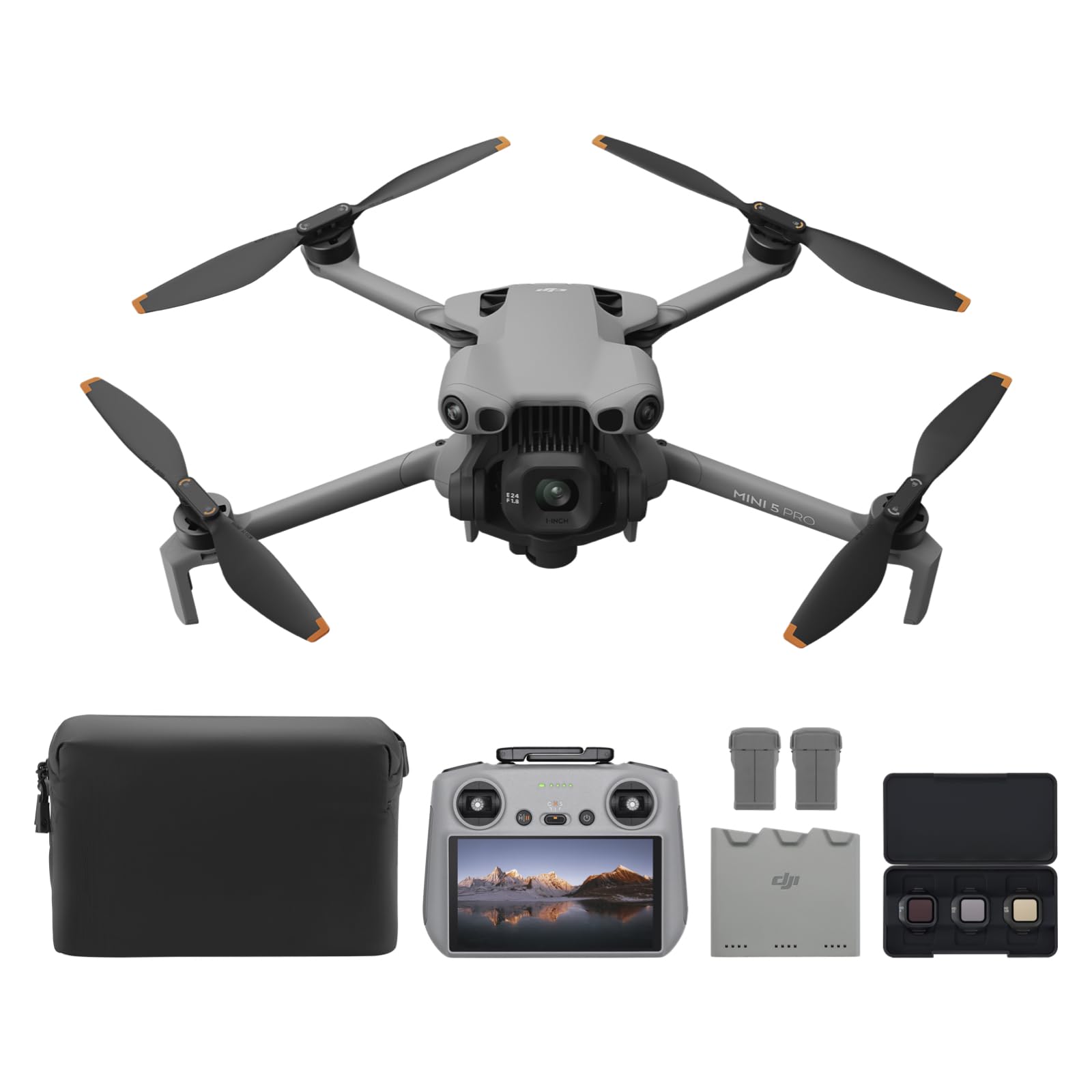
The Mini 5 Pro is aimed at the traveler who wants the best footage from a sub-250g drone. Its 1-inch CMOS sensor records 4K/60fps HDR, and the 225-degree gimbal rotation opens up vertical and overhead angles that are awkward on a travel drone. At 249 grams, it stays inside the same regulatory envelope as the Mini 4K, but the camera is in a different class.

We like the Mini 5 Pro most for low light and moving subjects. The larger sensor gathers more light, and the forward LiDAR plus omnidirectional vision sensors make it the travel drone we trust near trees, buildings, and a dark return-to-home. ActiveTrack 360 is the other feature that earns its place: it keeps a subject framed while you walk, cycle, or shoot a quick scene without a second operator.

The Fly More Combo is the version that makes sense for travel. Three batteries, a charging hub, ND filters, and a shoulder bag turn a premium drone into a kit you can live with for a trip. The 42GB of internal storage is a useful buffer if a card fills or you leave one at the hotel. The extra image quality shows up mainly in low light and demanding video, so casual clip-makers can save.

Pros

  • 1-inch sensor with 4K/60fps HDR
  • Omnidirectional obstacle sensing and LiDAR
  • 42GB internal storage
  • Three batteries in the Fly More Combo

Cons

  • Premium price relative to the rest
Our verdict

The Mini 5 Pro is the premium travel drone for shooters who want the best image in a sub-250g body, with obstacle sensing and three batteries to back it up.

Check Latest Price
3

Best Value

Potensic ATOM SE

89 /100
LBD Score Excellent

Key details

Range
4 km
Camera
4K EIS, 1/3-inch CMOS
Weight
Under 249 g
Flight Time
62 min with 2 batteries
View on Amazon

The Atom SE is the value counterpoint to our top pick. It comes with two batteries and a claimed 62 minutes of total flight time, which is the kind of kit that makes a travel drone useful rather than a single-shot novelty. At under 249 grams, it also keeps the registration question simple for U.S. recreational flyers.

The camera is a 4K EIS unit with a 1/3-inch Sony sensor. In calm light, it produces clean clips and more than enough detail for social posts and trip recaps. We prefer a mechanical gimbal for video because electronic stabilization has less headroom when the wind picks up, but the Atom SE is stable enough for the price. The 4km transmission range is fine for keeping the drone in sight.

Beginner mode and GPS return are the reasons we are comfortable recommending it to a first-time pilot. The included handbag is a small touch that matters on a trip: the drone arrives ready to pack, not as a loose collection of parts. For a first travel drone, that combination is more useful than a longer feature list. It is the one we suggest when the budget is real but the footage still matters.

Pros

  • Two batteries for 62 minutes total
  • 4K EIS camera in a sub-250g body
  • Beginner mode and GPS return
  • Carry bag included

Cons

  • EIS rather than a mechanical gimbal
  • 4 km range limits long-distance flights
Our verdict

The Atom SE is the value pick for travelers who want two batteries and a 4K camera in a sub-250g package, with EIS instead of a mechanical gimbal.

Check Latest Price
4

Best Long-Flight Kit

Ruko F11PRO 2

89 /100
LBD Score Excellent

Key details

Range
10,000 ft
Camera
6K photos, 4K/30fps, 3-axis gimbal
Weight
12.6 oz
Flight Time
70 min with 2 batteries
View on Amazon

The F11PRO 2 is the outlier in this group at 357 grams. That extra weight buys a 3-axis mechanical gimbal, a 6K photo mode, 4K/30fps video, and two batteries for a claimed 70 minutes of total flight time. The 10,000-foot control range is generous for travel, and the folding body still fits a daypack.

The gimbal is the part that matters. A mechanical gimbal keeps the horizon steady in a way electronic stabilization struggles to match, and the F11PRO 2's footage looks more composed because of it. The two-battery kit is equally practical: one battery for the morning, one for the evening, with a carrying shell case that protects the camera between stops.

We like this one for road trips and full days out, where flight time matters more than pocketability. The carrying shell case is the right kind of protection for a camera ship, and the two-battery kit means you can leave the charger in the car between stops. The dedicated remote is faster to deploy than a phone-only setup, which matters when you want a quick shot before the light changes. If you want a travel drone that feels like a camera tool rather than a gadget, this is the one.

Pros

  • 3-axis gimbal with 6K photos
  • 70 minutes across two batteries
  • 10,000 ft control range
  • Beginner-friendly auto return

Cons

  • Above the 250 g registration line
  • Bulkier than sub-250 g picks
Our verdict

The F11PRO 2 is the long-flight travel kit for road trips and full days out, with a 3-axis gimbal and two batteries, provided you accept the registration step.

Check Latest Price
5

Best Budget GPS

Holy Stone HS360S

86 /100
LBD Score Excellent

Key details

Range
10,000 ft
Camera
4K UHD, 1/3-inch CMOS
Weight
Under 250 g
Flight Time
20 min
View on Amazon

The HS360S is the budget route to GPS return, follow-me, and a 4K camera. At under 250 grams, it keeps the registration question simple, and the 10,000-foot control range is far more than most beginners need. The folding body makes it easy to transport. For a first GPS drone, those are the right priorities: the safety features do more for a new pilot than a slightly sharper lens.

The 4K camera uses a 1/3-inch CMOS sensor and records 4K UHD video, which is fine for social clips and quick memories. We see it as a learner's travel drone: it teaches you how GPS return, follow-me, and phone-based control work without asking for a premium commitment. The controller's simple phone connection is a small but welcome convenience.

Where it fits is the first-drone role: open fields, short trips, and learning the controls without risking an expensive aircraft. The 4K footage is fine for social clips, but don't expect the stills to hold up to heavy cropping. We treat it as a stepping stone, not the camera you build a trip around. For a first GPS drone, that is enough.

Pros

  • GPS return and follow-me
  • Under 250 g
  • 4K video at a budget price
  • 10,000 ft control range

Cons

  • Short 20-minute flight time
  • 8MP stills limit cropping
Our verdict

The HS360S is a low-cost way to get GPS return and a 4K camera for short travel sessions, but its 20-minute flight time keeps it out of full-day use.

Check Latest Price
6

First GPS Drone

BLINORY HK55

85 /100
LBD Score Excellent

Key details

GPS
Auto return and follow-me
Camera
4K, 90° adjustable
Flight Time
32 min with 2 batteries
Transmission
0.18 oz
View on Amazon

The HK55 puts GPS return, follow-me, waypoint flight, and a 4K camera into a folding body. It also comes with two batteries and a claimed 32 minutes of total flight time. For a traveler who wants the safety net of GPS without paying for a premium camera ship, that combination is the reason it earns a place.

The feature list is the appeal: GPS return for confidence, follow-me for hands-free clips, and two batteries for a longer session. The 4K camera has a 90-degree electrically adjustable lens, which is useful for framing without moving the drone. The 5G transmission is the right spec for a phone-based FPV view, and the folding body is easy to pack between stops.

We see the HK55 as a first GPS drone or a second drone for casual travel clips. The two-battery setup makes it easy to share a session with a friend, and the folding body slips into a backpack between stops. It is a low-cost way to practice GPS flight before moving up to a Mini 4K.

Pros

  • GPS return and follow-me
  • 4K camera and two batteries
  • Folding body packs small
  • Budget price

Cons

  • No mechanical gimbal for video
  • Build feels less robust than pricier picks
Our verdict

The HK55 is the budget GPS option for a first travel drone, with 4K video and two batteries, as long as you keep expectations modest.

Check Latest Price
7

Casual Travel Clips

Loiley X69

84 /100
LBD Score Excellent

Key details

Camera
2K HD, 90° adjustable
Carry Case
Included
Flight Time
26 min with 2 batteries
Folded Size
5 x 3 x 2 in
View on Amazon

The X69 folds to roughly 5 by 3 by 2 inches and comes with a carrying case. It records 2K video, ships with two batteries, and uses a remote or app control. On paper, it is the smallest and simplest way to get aerial clips on a trip.

The camera is a 2K HD unit with a 90-degree adjustable lens. It records short clips and stills, and the two batteries extend the session to a claimed 26 minutes total. The carrying case makes it easy to keep the drone and controller together, which is a real convenience for a casual pack.

What it lacks is GPS. There is no return-to-home, no follow-me, and no automatic safety net if you lose orientation. For a first flight in an open field, that is manageable. For travel over water or unfamiliar terrain, it is a real limitation.

We see the X69 as a casual pocket drone for short clips, first flights, and younger pilots who are ready for a real controller. It is not the one we pack when the trip's photos matter most, but it is the one we can hand to a beginner without a lengthy briefing. The lower stakes are the point.

Pros

  • Folds to pocket size with case
  • 2K camera with adjustable angle
  • Two batteries for 26 minutes
  • Easy first-drone controls

Cons

  • No GPS return-to-home
  • 2K footage lacks gimbal stabilization
Our verdict

The X69 is a casual pocket drone for short travel clips and first flights, with a 2K camera and carrying case, not a GPS camera ship.

Check Latest Price

How We Tested 11 Foldable Travel Drones

To build the shortlist, I went through specs and customer reviews for about 40 foldable drones, then cut anything that didn't fold into a case, anything that pushed past that sub-250-gram line that keeps recreational flying simple, and anything without image stabilization. That left 11 models, which we flew over seven months.

Most of that flying happened where these things actually live: stuffed in a daypack on hikes, in a carry-on for weekend trips, and at a neighborhood park at golden hour. We handed the controller to friends and family who had never flown before, timing how long a stable hover took, whether return-to-home actually landed near the pad, and how many first flights ended in a bush.

Battery claims got a stopwatch. We flew each drone until it forced a landing, camera recording, in a moderate breeze, then compared that number to the box. For camera quality we shot the same treeline and the same stretch of water on every model at the same hour and watched the footage side by side on a laptop, looking for jello, blown-out skies, and how the gimbal behaved during a slow walk. Wind performance we judged by hovering at 100 feet and noting whether the drone held its box or drifted.

Durability was cruder: folding and unfolding each arm dozens of times, carrying them loose in a bag with keys and a water bottle, and one gusty afternoon that made us nervous. We also noted how solid the hinges felt and what came in the box — spare batteries, a case, a controller worth using — because a cheap drone with no second battery isn't cheap. Transmission-range numbers we mostly ignored; you're supposed to keep it in sight anyway.

How to Choose a Foldable Travel Drone

Weight and Registration

For U.S. recreational flyers, the 250-gram line is the first practical fork. The DJI Mini 4K, Potensic Atom SE, and Holy Stone HS360S stay under it, which keeps registration and Remote ID out of the setup for this class of flight. The Ruko F11PRO 2 sits above it at 357 grams, so plan for registration and a little more bag space. If you want the least friction at the trailhead, start under 250 grams; if you want a mechanical gimbal and longer flights, accept the extra step.

Gimbal or Electronic Stabilization

A 3-axis mechanical gimbal is the feature we prioritize for travel video. It keeps the horizon steady when you pan, and it gives you more usable footage when the wind picks up. The Mini 4K, Mini 5 Pro, and Ruko F11PRO 2 use mechanical gimbals. The Atom SE and the budget picks rely on electronic stabilization, which is fine in calm light and for short social clips but has less headroom in gusty conditions. Choose a gimbal if the footage matters; choose EIS if the budget matters more.

Battery Strategy for Travel

Headline flight times are best treated as ceilings. Wind, cold, and aggressive flying all cut into them, so the number of batteries in the box matters more than a single impressive figure. Two batteries is the practical minimum for a travel drone; three is better for a full day. The Mini 5 Pro Fly More Combo includes three, the Ruko and Potensic kits include two, and the Mini 4K's single-battery base kit is the main reason to look at a multi-battery set. A charging hub also lets you top up several packs from one outlet.

Range and Obstacle Sensing

Long range numbers are less useful than they look, because most travel flying happens within visual line of sight. The Mini 4K and Mini 5 Pro list 10 km transmission, the Atom SE lists 4 km, and the budget GPS models list 10,000 feet; all are more than enough for normal travel shots. Obstacle sensing is the more valuable upgrade. The Mini 5 Pro's omnidirectional sensing and LiDAR are the strongest safety net here. If you plan to fly near trees, buildings, or people, pay for sensing; if you stay in open fields, you can save.

Packability and Setup

Folding arms are only half the packability story. Check the folded shape, the case, and how many steps it takes to get airborne. The Mini 4K and Mini 5 Pro fold into a compact block, the Ruko comes with a carrying shell case, and the Loiley X69 includes a case in its budget package. A gimbal protector and a dedicated slot for batteries make a difference on a trip. The controller matters too: a phone-based setup is packable, but a dedicated controller is faster to deploy.

Frequently Asked Questions

Final Verdict

The DJI Mini 4K is the travel drone we recommend to most people. It combines stabilized 4K, a sub-250g body, and beginner-friendly controls in a package that is easy to pack and easy to live with. If image quality is the priority, the Mini 5 Pro's 1-inch sensor and obstacle sensing justify the premium. If you want two batteries and a lower entry point, the Potensic Atom SE is the value alternative. Start with the Mini 4K unless one of those needs is decisive.