Best Film Cameras of 2026

Film is the rare purchase where you pay for the photo before you know whether you got one. A camera that miscounts frames, leaks light around the door, or reads a bright sky as a gray one turns a twenty-dollar roll into a donation. What a good one actually buys you is predictability.

I've shot film on and off for years, and over the past six months my team and I put 12 cameras through ordinary life: pocketable point-and-shoots, used SLRs that arrived with lenses attached, and a couple of bodies that looked great until the first roll came back. The split is rarely about features. It comes down to how the camera focuses, whether the meter tells you the truth, and whether the thing still works after a season rattling around in a bag.

One thing nobody tells a first-time buyer: most of these ship without film or batteries, so budget for the first roll before you budget for a strap. The picks below are the ones I'd hand to a friend heading out on a road trip, a wedding, or just a Tuesday.

1

Best Overall

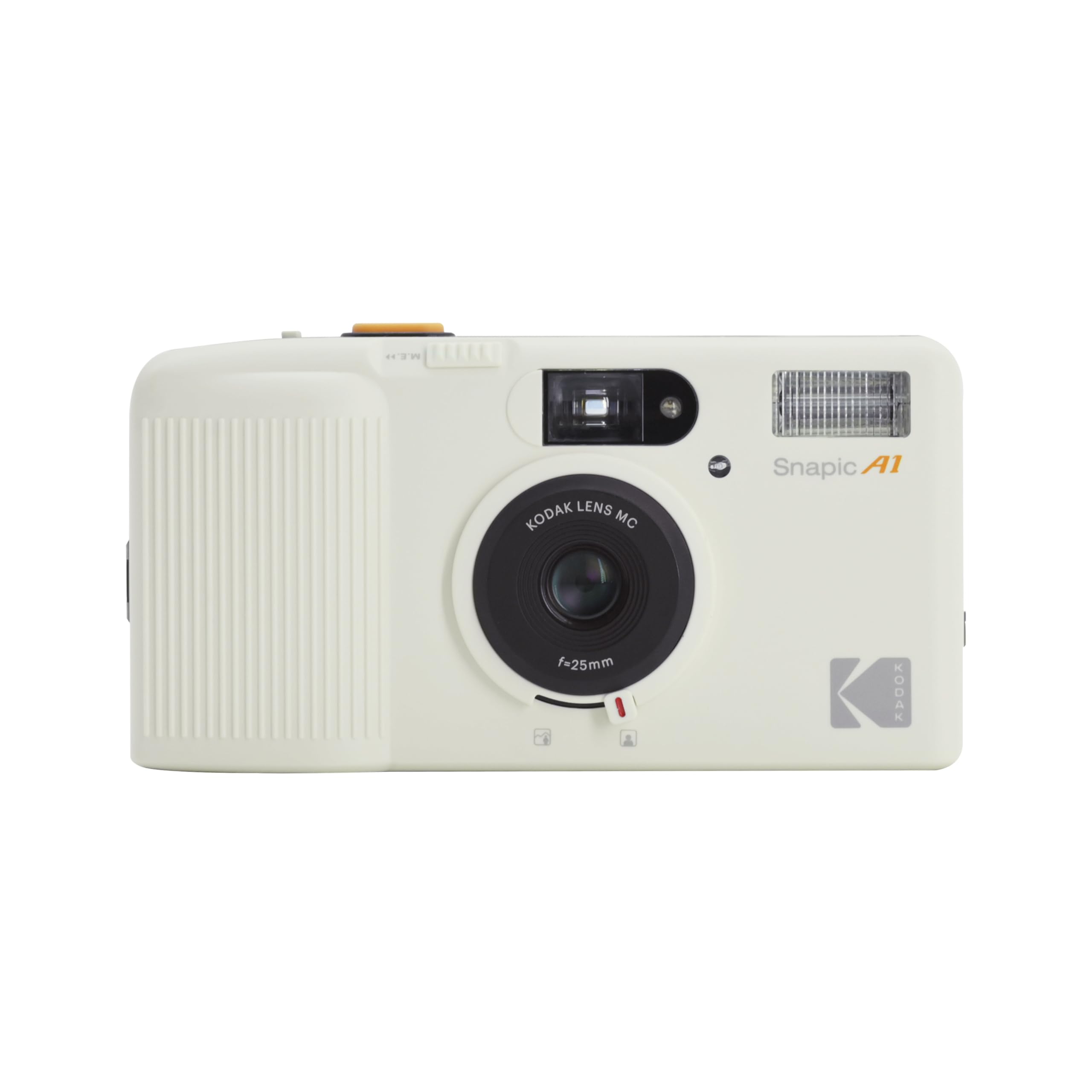
Kodak Snapic A1

88 /100
LBD Score Excellent

Key details

Focus
2-zone
Weight
4.13 oz
Film Format
35mm
Maximum Shutter Speed
1/100 sec
View on Amazon

Glass is the reason this one sits at the top. The Snapic A1's lens uses three elements, which is the difference between negatives that hold detail and the soft, smeary look you get from the single plastic optic in a disposable. It's also brand new, so there's no decades-old shutter to gamble on, and it loads standard 35mm film like everything else here.

What we appreciated most after living with it is how little there is to get wrong. A two-zone focus switch covers near and far, exposure is automatic, and the flash fires by itself with red-eye reduction, so you can hand the camera to someone else and still get the frame back. The multiple-exposure control is the bonus we didn't expect at this level: it stacks two scenes on a single frame without any darkroom work.

A 1/100-second top shutter speed is the catch. It's a camera for daylight and for flash, and anything moving quickly will smear. There's no manual exposure mode either, so you can't watch what aperture does to a portrait the way the AE-1 lets you. Neither gap costs the casual shooter anything — the whole appeal here is that the camera decides — but if you're buying your way into photography rather than into snapshots, this isn't the body that teaches you.

At 117 grams it disappears into a jacket pocket, and it runs on a single AAA. Neither the battery nor a roll of film is in the box, so put both in the same order. There are cheaper cameras in this guide and there are cameras that do considerably more, but for a first roll neither is as forgiving.

Pros

  • Three-element glass lens holds detail
  • Fully automatic exposure and flash
  • Multiple exposure for layered frames
  • 117 g body slips into a pocket

Cons

  • 1/100 sec top shutter speed limits action
  • No manual exposure control
Our verdict

We recommend the Snapic A1 as the camera to buy if you want to start shooting film this week: a new body, a real glass lens, and automatic everything, with none of the risk a used camera carries.

Check Latest Price
2

Best Classic SLR

Canon AE-1

84 /100
LBD Score Excellent

Key details

Weight
2 lb
Lens Mount
Canon FD
Film Format
35mm
Exposure Modes
Manual, shutter-speed-priority
View on Amazon

Two pounds of chrome and black leatherette, before you add a lens. The AE-1 is the heaviest camera here and the only one that feels like an instrument rather than a gadget: a focal-plane shutter, a metal body, and dials that click into place instead of a menu you scroll.

Shutter-priority is the mode we kept returning to. You set the speed, the meter picks the aperture, and after a roll you understand what 1/125 does to a moving subject in a way no article explains. Switch to manual and both settings are yours. The included 50mm f/1.8 is fast enough to shoot indoors on 400-speed film without flash, and the FD mount takes wide-angle and telephoto lenses once the 50 stops being enough.

This is a renewed camera with a 90-day warranty, not a new one, and a body of this age can arrive with a shutter that sticks or a meter that reads off. The defense costs one cheap roll: shoot it, develop it, and look hard at the frames in the first week, while the warranty still covers you. There's also no autofocus and no aperture-priority mode, so focus is by hand and your exposure choice is shutter speed or nothing.

For the right buyer that's the point. Turning a focus ring until the subject snaps in slows you down enough to think about the frame, and the shutter-priority automation covers the ones you don't want to think about. The weight is the tell: this is a camera you handle deliberately, and it rewards that.

Pros

  • FD mount opens up wide to telephoto
  • Shutter-priority auto plus full manual
  • TTL metering reads through the lens
  • Included 50mm f/1.8 lens

Cons

  • No autofocus and no aperture priority
  • Two pounds before you add a lens
Our verdict

For learning exposure by hand, we point people to the AE-1: metal body, FD lenses, and shutter-priority automation for the frames where the light is moving faster than you are.

Check Latest Price
3

Best Budget Half-Frame

Kodak EKTAR H35

87 /100
LBD Score Excellent

Key details

Flash
Built-in
Weight
3.53 oz
Film Format
35mm half-frame
Frames Per Roll
About 72
View on Amazon

Seventy-two frames from a 36-exposure roll is what sells this camera. Half-frame puts two pictures on each 35mm frame, so the roll you bought once comes back with twice the images — and since film and processing are the expenses that keep coming, doubling what one roll gives you is the most useful thing an inexpensive camera can do.

We liked it best as a daylight, walk-around camera. It's focus-free, which means one working distance is baked into the lens: middle distance and beyond stay sharp, close subjects go soft, and there's nothing to adjust before you shoot. The flash switches on by turning the silver ring around the lens, a mechanical quirk we came to like because you can feel the setting without raising the camera to your eye.

The price of the doubled frame count is negative size. Each image is half as large, so enlargements show grain sooner and low light gets muddy — indoors, use the flash. It also weighs about as much as a bar of soap, which is exactly why it goes in a bag on days when the SLRs stay home.

Five colors, none of them pretending to be vintage, and the film and AAA battery both come separately. Buy a roll with the camera and there's nothing left between you and a finished first roll but an afternoon.

Pros

  • About 72 frames per 36-exposure roll
  • 100 g pocket-size body
  • Built-in flash for indoors and night
  • Five color options

Cons

  • Focus-free lens softens close subjects
  • Film and AAA battery sold separately
Our verdict

We think the H35 is the best value here: half-frame doubles your frames per roll, and there's nothing to set before you shoot.

Check Latest Price
4

Best Autofocus SLR

Canon EOS Rebel G

85 /100
LBD Score Excellent

Key details

Focus
Autofocus
Lens Mount
Canon EF
Lens Included
35-80mm zoom
Film Speed Range
ISO 100-3200
View on Amazon

Autofocus is the line between this camera and the AE-1. The Rebel G's wide-area AF point finds the subject and locks, which is the difference between catching a kid mid-run and getting a very sharp patch of grass where the kid was a second earlier.

It doesn't feel like a vintage camera to shoot, and we mean that as praise. There's an LCD panel, a mode dial with 11 exposure settings, a built-in flash that fills shadows outdoors, and a 35-80mm zoom already mounted, so your first roll is about composition instead of settings. The automation is why this is the one we hand over without a briefing.

The zoom stops at 80mm. That covers portraits and everyday carry and stops short of wildlife or a tightly compressed street shot, and the EF mount is the fix — any Canon EF lens fits the body. If you already own glass from a Canon DSLR, this is the camera here that uses it.

What surprised us is how much the automation changes the pace: with focus and exposure handled, we finished rolls faster than with either manual camera here, and finishing rolls is how the pictures get better. It's the least romantic camera in this guide and the one most likely to come home with something worth keeping.

Pros

  • Wide-area autofocus locks on subjects
  • 35-80mm EF zoom included
  • 11 exposure modes plus built-in flash

Cons

  • Zoom tops out at 80mm
Our verdict

For moving subjects and Canon EF glass already on the shelf, we reach for the Rebel G: autofocus, a built-in flash, and a zoom, for less than the AE-1 costs.

Check Latest Price

How We Tested the Best Film Cameras

We built the shortlist from manufacturer spec sheets, resale listings, and the film forums where people actually complain about what breaks. Anything with a dead meter, a battery you can no longer buy, or a price that only made sense without a lens got cut. That left 12 cameras: focus-free compacts, zone-focus models, and used SLRs sold with a lens attached.

Testing ran six months. Each camera lived in a jacket pocket or a canvas tote and came out for the same kinds of days — a Saturday walk, a birthday in a dim kitchen, a cold morning at a trailhead, a long drive with the windows down. We loaded a roll and shot the same backlit, shaded, and indoor scenes with each one, then bracketed a stop over and under to see whether the meter's advice matched the negative we got back.

After developing, we read the scans for grain, color, and whether focus landed where we aimed it. We timed how long loading took in the field, felt for gritty film advance, checked frame spacing across the roll, and ran a flashlight around the film door to catch tired light seals. Each camera also went to someone who had never shot film, and we watched where they hesitated.

Portability we judged by actually carrying the things — pocket, bag, or strap only — and weighing them loaded. Reliability meant three rolls minimum per camera with no jams. And because value depends on more than sticker price, we tallied what it cost to keep shooting: batteries, a strap, and film.

How to Choose a Film Camera

How Much Control Do You Want?

An automatic point-and-shoot handles exposure and focus, so the only thing you decide is when to press the shutter; the Snapic A1 is our favorite version of that. An SLR puts shutter speed, aperture, and focus in your hands, and the AE-1 softens the learning curve with shutter-priority automation for the frames you don't want to fuss over. If you can't yet say whether you want to study exposure, start automatic. A camera you actually carry beats one that gives you homework.

Full-Frame or Half-Frame

Half-frame cameras put two pictures on each 35mm frame, so a 36-exposure roll yields about 72 shots — exactly what the EKTAR H35 does, and the reason film goes twice as far. The catch is negative size: each image is half as large, so grain appears sooner in enlargements and low light gets muddier. Shoot often and share online, and half-frame is a gift. Print large or shoot in the evening, and pay for full-frame.

Focus Systems, From None to Autofocus

Focus-free cameras have a single working distance built in: middle distance and beyond come out sharp, close subjects go soft, and there is nothing to adjust. Zone focus, like the Snapic A1's two-position switch, adds a setting for nearer subjects. Manual focus on an SLR is the most precise and the slowest. Autofocus, as on the Rebel G, is what you want for anything that moves. Match the system to your subjects rather than to the spec list — a fixed lens isn't a flaw on a camera built for snapshots.

Flash and Shutter Speed Decide Where It Works

Plenty of inexpensive point-and-shoots top out around 1/100 second with no aperture control, which makes them daylight cameras; indoors, the flash does all the work. Check that a flash is built in and can be switched on deliberately rather than firing whenever it feels like it. Want available light indoors? You need faster film or a faster lens, not a slower shutter speed.

New, Renewed, or Vintage

A new camera arrives with a warranty and nothing to troubleshoot. A renewed body, like both Canons here, arrives with a limited warranty measured in months and decades of use behind it. That's how you get an SLR with interchangeable lenses for point-and-shoot money, but treat the first week as an inspection: shoot a cheap roll, develop it, and study the frames before the return window shuts. Read what the warranty covers and how long you have before you load the first roll.

Frequently Asked Questions

Final Verdict

The Snapic A1 is the film camera we recommend to most people: new, glass-lensed, and automatic enough that a first roll comes back with pictures on it. Pay more only when the reason is specific — the AE-1 if you want to learn exposure on dials and a metal body, the Rebel G if autofocus and a shelf of Canon EF lenses matter more than feel.

Choose the EKTAR H35 if the cost of film is what would keep you from shooting often. Doubling the frames per roll is the cheapest way to shoot more, and shooting more is the only thing that reliably improves the pictures.