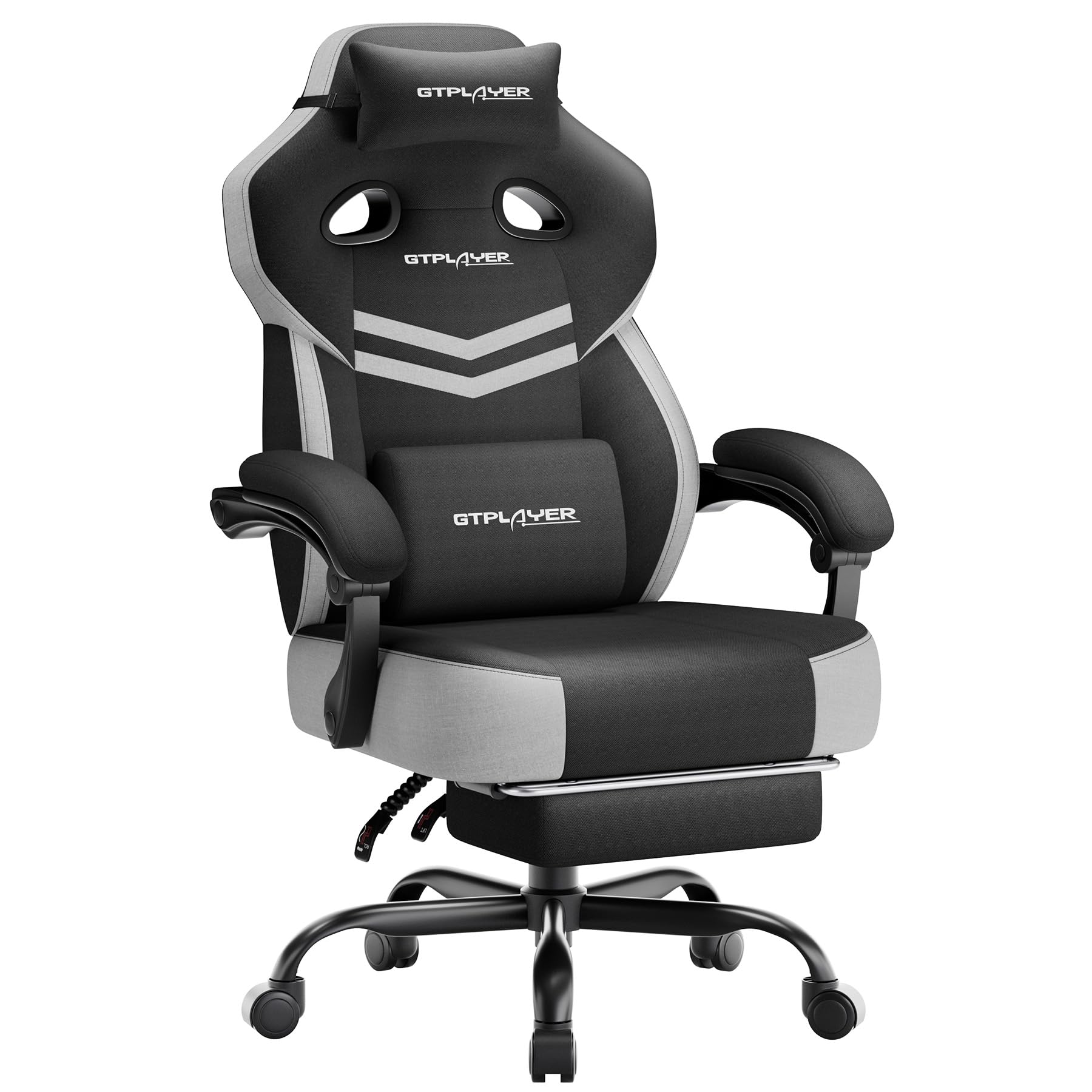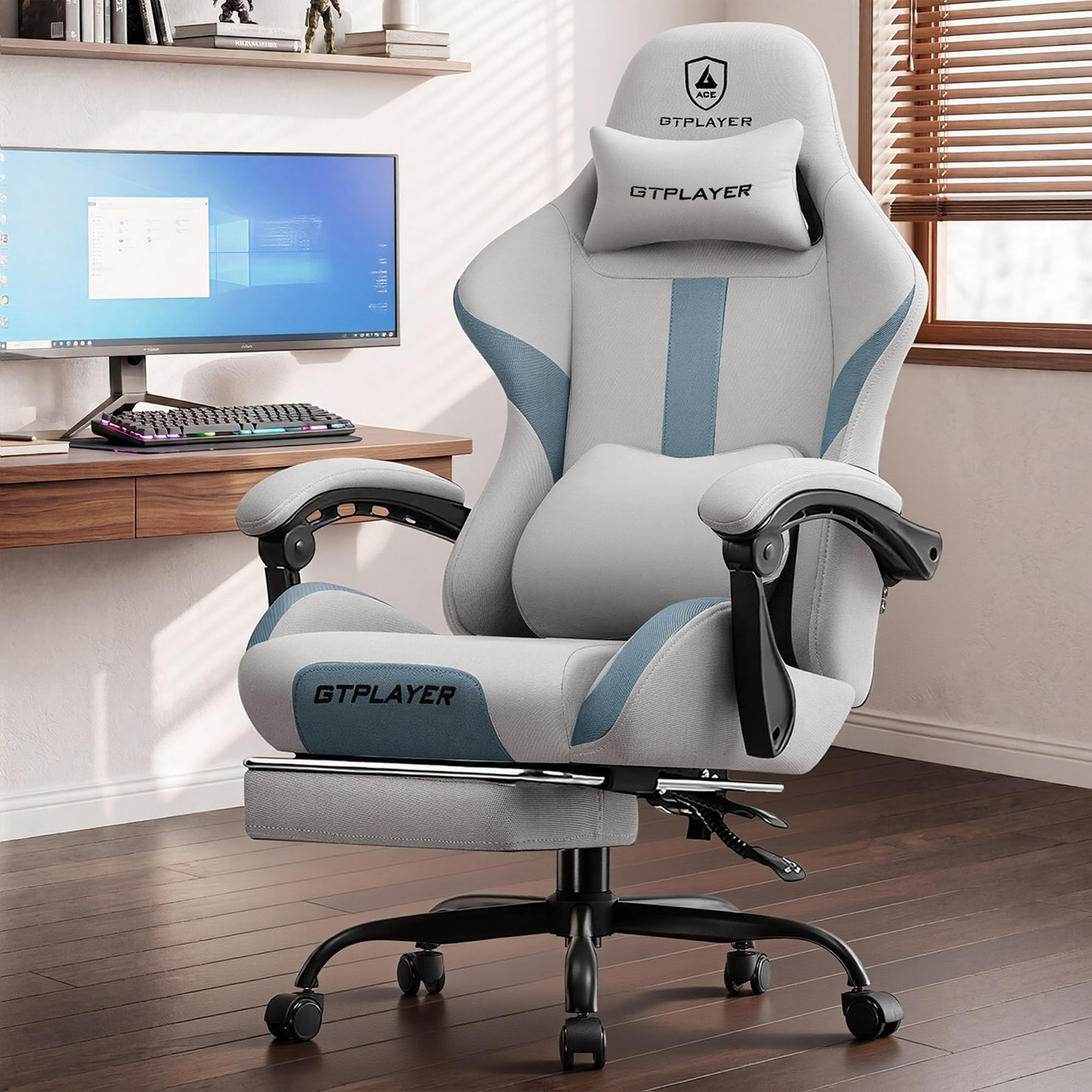
Best Fabric Gaming Chairs of 2026

Swapping a faux-leather gaming chair for a fabric one is the kind of change you notice within a week and then can't un-notice. My old bucket seat had started flaking onto the carpet and, worse, it turned into a sauna by the second hour of a summer workday. Fabric breathes, it doesn't squeak or stick when you shift your weight, and it stays quiet during a late-night session. That's the real fix here: a chair you can sit in for a full workday and then keep sitting in after dinner.

We've spent the past six months with a dozen fabric chairs, from wide-seat models built for bigger frames to recliners with flip-out footrests to pared-down ergonomic designs. A few things I picked up along the way: lumbar support built into the backrest works nothing like a strap-on pillow, and the pillow is usually behind your shoulder blades by hour three. A footrest is either a genuine upgrade or a shin-bruising afterthought, depending on how it folds. And "fabric" covers a lot of ground — a breathable woven back and a plush upholstered seat feel like two different climates.

Not every chair here suits every body, which is the point. Our testers ranged from 5-foot-2 to 6-foot-4, and a seat that made one of us sigh with relief gave another a numb tailbone by lunchtime. The picks below are the ones that held up across all of it — over months of daily use, not a first impression.

1

Best Overall

LUCKRACER N-GT905

90 /100
LBD Score Outstanding

Key details

Armrests
Sync-adjust
Upholstery
High-airflow fabric
Seat Cushion
Integrated spring padding
Weight Capacity
350 lb
View on Amazon

Our top pick is also the least expensive chair in this guide, which is not the pairing we expected when we started comparing. The N-GT905 is rated to 350 pounds, puts a spring layer under the foam instead of one slab of padding, and wraps the whole thing in a high-airflow fabric rather than a coated one. For most people shopping fabric first, those three facts settle the decision.

The fabric is what we kept coming back to. It has a knit texture rather than a printed pattern, and it doesn't go slick and warm against your back the way coated upholstery does after an hour. The spring layer underneath gives the seat a little movement when you shift your weight, and both the headrest and the lumbar pillow come in the box rather than as extras. A retractable footrest pulls out when you want to lean back.

What you give up at this price is armrest independence. They move with the backrest as you recline rather than staying put, which is exactly right when you're leaning back and less useful if you want your elbows locked at one height against a fixed desk; the Corsair's four-way arms handle that job instead. Everything else here reads as a chair built for heavier sitters rather than one that merely tolerates them, and that is the recommendation.

Pros

  • 350-pound rating at a budget price
  • High-airflow knit that stays cool
  • Spring cushion spreads weight instead of bottoming out
  • Sync-adjust armrests and a pull-out footrest

Cons

  • Lumbar support is a loose pillow, not built in
Our verdict

We send most shoppers here: a 350-pound rating, a spring seat and a knit that stays cool, for less than any other chair in this guide.

Check Latest Price
2

Best Recline Range

Misolant Fabric Gaming Chair

87 /100
LBD Score Excellent

Key details

Recline
90°–155°, lockable
Footrest
Retractable
Upholstery
Fabric
Seat Cushion
Memory foam over springs
View on Amazon

The backrest travels from 90 to 155 degrees and holds wherever you stop it, which is the most useful thing about this chair. Upright for work, partway back for a controller, and most of the way down when the footrest comes out. It reclines further than anything else in this guide, and the lock is what makes the range usable: you can stop at 120 degrees and stay there instead of fighting spring tension.

The seat backs that up. A spring layer sits under memory foam, so the cushion gives when you sit and comes back rather than flattening into a dent, and the fabric is a soft quilted knit with a bit of surface texture to it. We also like that the lumbar pillow adjusts in height, which means the curve lands where your lower back actually is rather than where a fixed strap happens to fall. The head pillow lifts off entirely if you'd rather not have one.

The one setup note is space. At full recline this chair needs real clearance behind it, so it's a poor fit for a desk wedged into a corner or a setup against a wall. Assembly runs about half an hour according to the manual, and a second person makes the backrest bolts considerably easier to line up.

Pros

  • Locks at any angle from 90 to 155 degrees
  • Spring layer under memory foam
  • Height-adjustable lumbar pillow

Cons

  • Vibration lumbar pillow buzzes, it does not massage
  • No published weight capacity to check
Our verdict

Buy this one if you want to lie back: nothing else here reclines to 155 degrees and holds the angle while you sit in it.

Check Latest Price
3

Best Built-In Lumbar Support

Razer Iskur V2 X

84 /100
LBD Score Excellent

Key details

Lumbar
Built-in arch
Recline
Up to 152°
Armrests
2D
Weight Capacity
299 lb
View on Amazon

The Iskur V2 X fixes the thing that annoys us about most gaming chairs: the lumbar support is molded into the backrest, so there's no pillow to lose, re-strap, or shove back into place mid-session. It's an arch that meets your lower back the moment you sit down, and after a few weeks of daily use it became the detail we stopped thinking about, which is the highest compliment support furniture can get.

The seat base is sculpted with reduced side edges, which lets you sit off-center or pull a leg up without a bolster digging into your thigh. The fabric is plush rather than technical, closer to a microfiber than the woven knits on the Misolant, and it doesn't squeak against a shirt. Recline goes to 152 degrees, and the whole thing sits on a metal frame.

At just over 50 pounds this is the heaviest chair here, so moving it between rooms is a two-hand job rather than something you drag one-handed. The price puts it in premium territory where the Corsair competes on arms and frame. What you're paying for is the backrest: a lumbar shape that is part of the chair rather than an accessory clipped to it.

Pros

  • Built-in lumbar arch, no pillow to adjust
  • 152-degree recline over a widened seat base
  • Plush fabric that stays cool to sit on

Cons

  • Armrests adjust in only two directions
  • Seat foam runs firm and creaks can develop
Our verdict

The pick for a bad lower back: a molded lumbar arch you never adjust, in a chair heavy enough to stay where you put it.

Check Latest Price
4

Best Midrange Pick

GTPLAYER LR008

87 /100
LBD Score Excellent

Key details

Frame
FSC-certified wood
Recline
90°–135°
Seat Cushion
Pocket springs
Weight Capacity
300 lb
View on Amazon

GTPLAYER certifies the wood in this chair's seat and frame through the Forest Stewardship Council, which is an odd thing to lead with until you notice how few chairs at this price tell you what the seat pan is made of at all. It's the detail that made us take the rest of the build seriously.

The seat uses individually pocketed springs under the foam, the same idea as a decent mattress, and the fabric is a tight breathable weave treated to resist heat and abrasion. Both pillows come off, which matters if you'd rather use your own lumbar roll or sit without one, and the footrest retracts under the seat when you aren't using it. Recline runs from 90 to 135 degrees.

What struck us across our sessions is how little the chair asks of you. No pillow to reposition, no lever to hunt for, nothing creaking at the seat joint when you lean forward. For a midrange chair that's the entire point: it should disappear under you, and this one mostly does.

Pros

  • Pocket-spring seat with a breathable weave
  • FSC-certified wood seat and frame
  • Removable headrest and lumbar pillows

Cons

  • Recline tops out at 135 degrees
  • 300-pound rating, below the big-and-tall picks
Our verdict

Our midrange pick: pocket springs, a certified wood frame and a fabric that shrugs off heat, with no adjustment fuss to learn.

Check Latest Price
5

Best Armrest Adjustment

Corsair T3 Rush

83 /100
LBD Score Excellent

Key details

Frame
Embedded steel
Armrests
4D
Weight Capacity
265 lb
Seat Height Travel
100 mm
View on Amazon

The T3 Rush has the narrowest, most deeply contoured backrest in this guide, and that single fact decides who should buy it. The bolsters pull your shoulders inward and the seat is shallow, which suits a smaller frame and pushes back against a broad one. If you have wide shoulders or a heavy build, this is the wrong chair in this set; if you don't, it's the best-built one here.

What you're paying for is the frame and the arms. There's steel in the base and the backrest rather than plastic brackets, the gas lift is a class 4 unit, and the armrests move in four directions, up and down, side to side, forward and back, plus a swivel, which is more range than anything else on this page. Seat height travels 100 mm, about four inches, so it covers a wide span of desk heights.

The fabric is a soft matte exterior that doesn't slide against a shirt, and both the neck cushion and the memory foam lumbar pillow are wrapped in microfiber. Those are small comforts, but they're the ones you notice on hour three. At the top of the price range here, it's the chair for someone who wants to set everything up correctly once and then stop thinking about it.

Pros

  • Four-way armrests go in every direction
  • Steel in the base and backrest
  • 100 mm of seat height travel

Cons

  • 265-pound rating, the lowest here
  • Recline stops at two set positions
Our verdict

The best-built chair here for a smaller frame, and the only one where you can put the armrests exactly where your desk wants them.

Check Latest Price
6

Wider Frames

GTPLAYER GTP408

87 /100
LBD Score Excellent

Key details

Recline
90°–125°
Upholstery
Linen weave
Overall Width
26 inches
Weight Capacity
350 lb
View on Amazon

At 26 inches across, this is the widest chair in the guide, and width is the number to check first if you've spent years squeezing into a standard gaming chair. GTPLAYER rates it to 350 pounds and to a seated height of 6 feet 3 inches, and the extra room shows up where you need it, across the seat.

The upholstery is a linen weave rather than the smooth knits on most of the chairs here, and the open texture moves more air, which is worth having if you run warm through a long session. The armrests are linked, so they track the backrest as you lean, and the footrest pulls out from under the seat. The foam is high-density and the base is metal, with casters meant to stay quiet on hard floors.

The seat runs firm, which is what a 350-pound rating needs but not what everyone pictures when a listing promises sofa-like softness. If you want to sink into something at the end of the day, this isn't that chair; if you want a wide, stable platform that won't wallow under you by month six, it is. That trade is the whole reason it earns a place here.

Pros

  • 26-inch width, the widest in this guide
  • Linen weave moves more air
  • 350-pound rating for frames up to 6 feet 3 inches

Cons

  • Recline stops at 125 degrees
  • Armrests can work loose over time
Our verdict

Worth a look if standard gaming chairs feel cramped: the widest seat here, a 350-pound rating, and a linen weave that breathes.

Check Latest Price

How We Tested Fabric Gaming Chairs

We built our shortlist from about 40 fabric-upholstered chairs sold by major retailers, then filtered out anything without an adjustable seat height, a published weight capacity, or a return policy worth relying on. That left 12 chairs, each assembled, moved into a home office, and used for six months by testers ranging from 5-foot-2 and 130 pounds to 6-foot-4 and 280 pounds.

Assembly happened solo, on a timer, with the hardware laid out and the instructions followed to the letter. We noted which chairs needed a second person to line up the backrest bolts, which labeled their screws, and whether the chair was usable within the hour. Then they went into rotation for full eight-hour workdays, evening gaming sessions, and at least one six-hour weekend marathon, plus a couple of warm afternoons with the windows open to see how the fabric handled heat.

To judge cushioning, we sat for three hours straight and logged where pressure built — tailbone, thighs, shoulder blades — then checked the next morning whether the foam had recovered or stayed flattened. Sturdiness got rougher handling: rocking side to side, leaning all the way back in the recline, tipping onto two wheels, and rechecking the gas lift and armrests for wobble months later. Built-in lumbar curves went head-to-head with strap-on pillows, each repositioned and then checked an hour on, and every footrest was folded out mid-session to see whether it locked, sagged, or clipped a shin.

Durability showed up in the details — snags, pilling, dust collecting in the weave — so we looked over every seat after a few weeks of daily use and again at the end. Value came down to what each chair delivered for the money, and a wide seat with a heavy-duty base counted for more than a massage motor nobody switched on twice.

How to Choose a Fabric Gaming Chair

Fabric Covers Several Different Materials

Under the fabric label you'll find smooth knits, open-weave linens, plush microfiber, even corduroy, and they behave differently against your back after two hours. Open weaves move the most air; tight knits feel softer but hold warmth. The trap sits in the listing itself: a chair can be sold as fabric while its bolsters or seat carry a coated finish. Buy the variant whose name and material field say fabric, and if the listing lists leather alongside it, ask which surfaces you actually touch before you order.

The Seat Cushion Decides Your Third Hour

A padded-looking backrest tells you nothing about the seat pan, which is where the money goes. Cheap chairs use a single foam slab that compresses within months; better ones layer a spring pack under the foam so your weight spreads instead of bottoming out on the frame. Seat depth across the chairs here runs roughly 19 to 21 inches, and you want about two inches of clearance behind your knees. If the front edge presses into your thighs, the seat is too deep for you, whatever the weight rating says.

Weight Rating and Seat Width Are Separate Numbers

Ratings in this set run from 265 to 350 pounds, and that number says nothing about whether the seat is wide enough to sit in comfortably. A high rating on a narrow bucket seat still pinches at the hips. Measure the seat pan between the bolsters on a chair you already like, then compare; the widest option here is 26 inches across. And treat the rating as a structural limit rather than a promise about how long the gas lift or the arm bolts will last.

Adjustment: Arms, Recline, Lumbar

Armrests range from fixed pads to four-way arms that move up, sideways, forward and through a swivel. If your desk is a fixed height, arm adjustment matters more than recline, because your elbows have to land near the desk surface. Recline is the other split: 125 degrees is enough to lean, 155 is enough to lie back, and a lock at intermediate angles is what makes a long recline usable for anything other than sleeping. A built-in lumbar arch beats a strap-on pillow only if the arch lands where your back needs it.

What Wears Out First

Gas lifts, armrest bolts, casters and footrest hinges fail before upholstery does. Re-tighten every bolt after the first week and again every few months; most wobble is a loose fastener rather than a cracked frame. A gas lift with a stated class rating is worth preferring to an unrated one. Footrests are for reclining, not for standing on or shoving the chair across the room, and treating one that way is how the bracket bends.

Frequently Asked Questions

Final Verdict

The LUCKRACER N-GT905 is the chair we point most people to. It carries the highest weight rating here, uses a spring layer under the foam instead of a single slab, and wraps it in a knit that stays cool, all for less than anything else in this guide.

If leaning all the way back is the point, the Misolant locks at up to 155 degrees and beats everything here on recline. If your arms are the problem because the desk is a fixed height, the Corsair's four-way armrests are the fix, provided the narrow backrest suits your frame.