Best Electric Scooters Under $500 of 2026

Every scooter in this price range advertises the same two numbers: 19 mph and 25 miles. Neither survives contact with a hill, a headwind, and a rider wearing a backpack. What actually separates a good sub-$500 scooter is duller than that — whether the deck flexes under you, whether the brakes feel like brakes, and whether the stem is still tight and quiet after a few hundred miles. Get it right and a two-mile errand becomes the best part of your day.

Solid tires are standard here, so flats aren't the headache — cracked pavement is, and at this price your money goes further on a bigger tire and a stiff deck than on motor wattage. My team rode eight scooters for six months on commutes, hill climbs, and grocery runs, and the ones that won stayed tight, quiet, and foldable one-handed at a train door. Below are the ones I'd buy again with my own money, sorted by the rider each suits best.

1

Best Overall

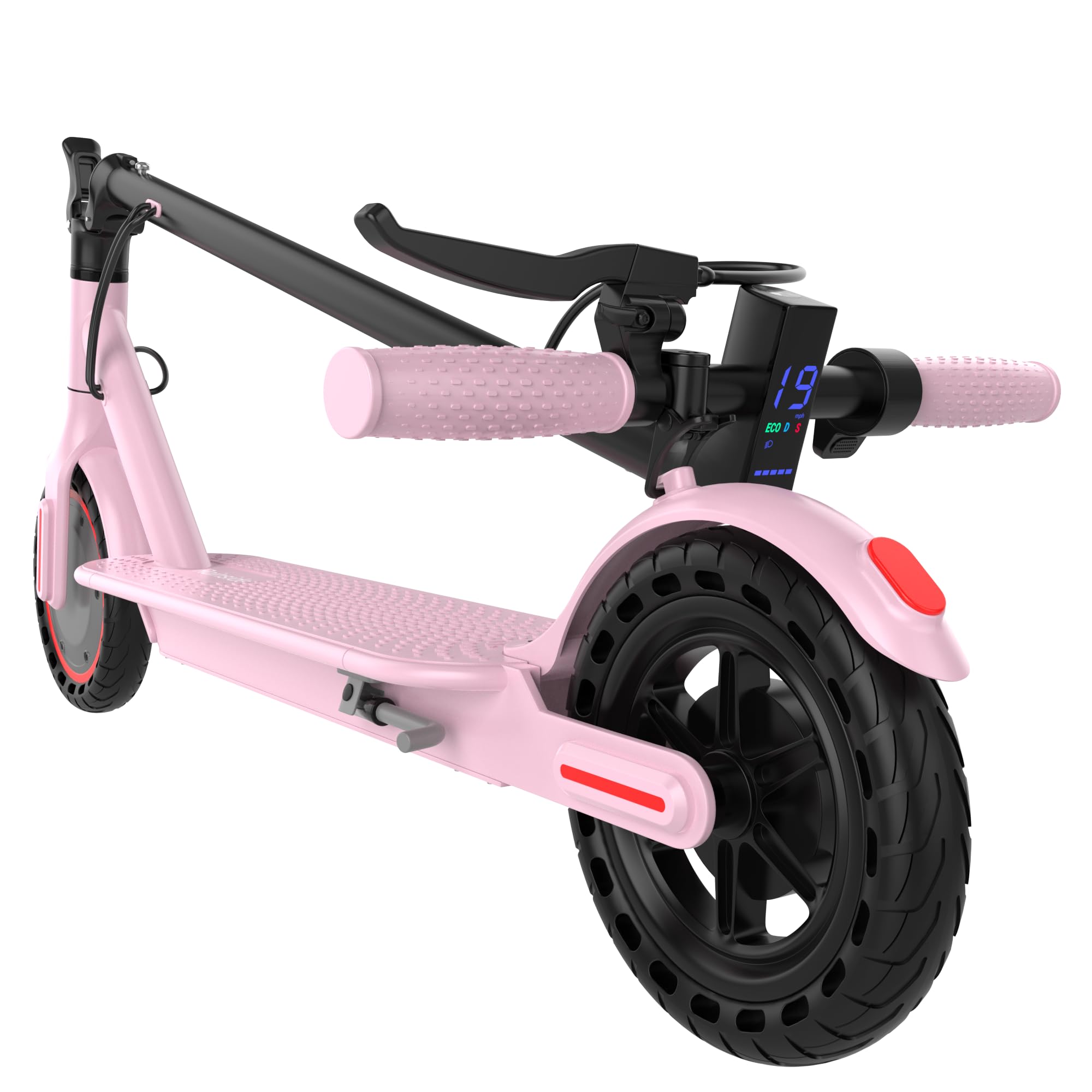
Hiboy S2 Pro

88 /100
LBD Score Excellent

Key details

Tires
10-inch solid
Weight
35.9 lb
Claimed Range
Up to 25.6 miles
Motor And Top Speed
500W, 19 mph
View on Amazon

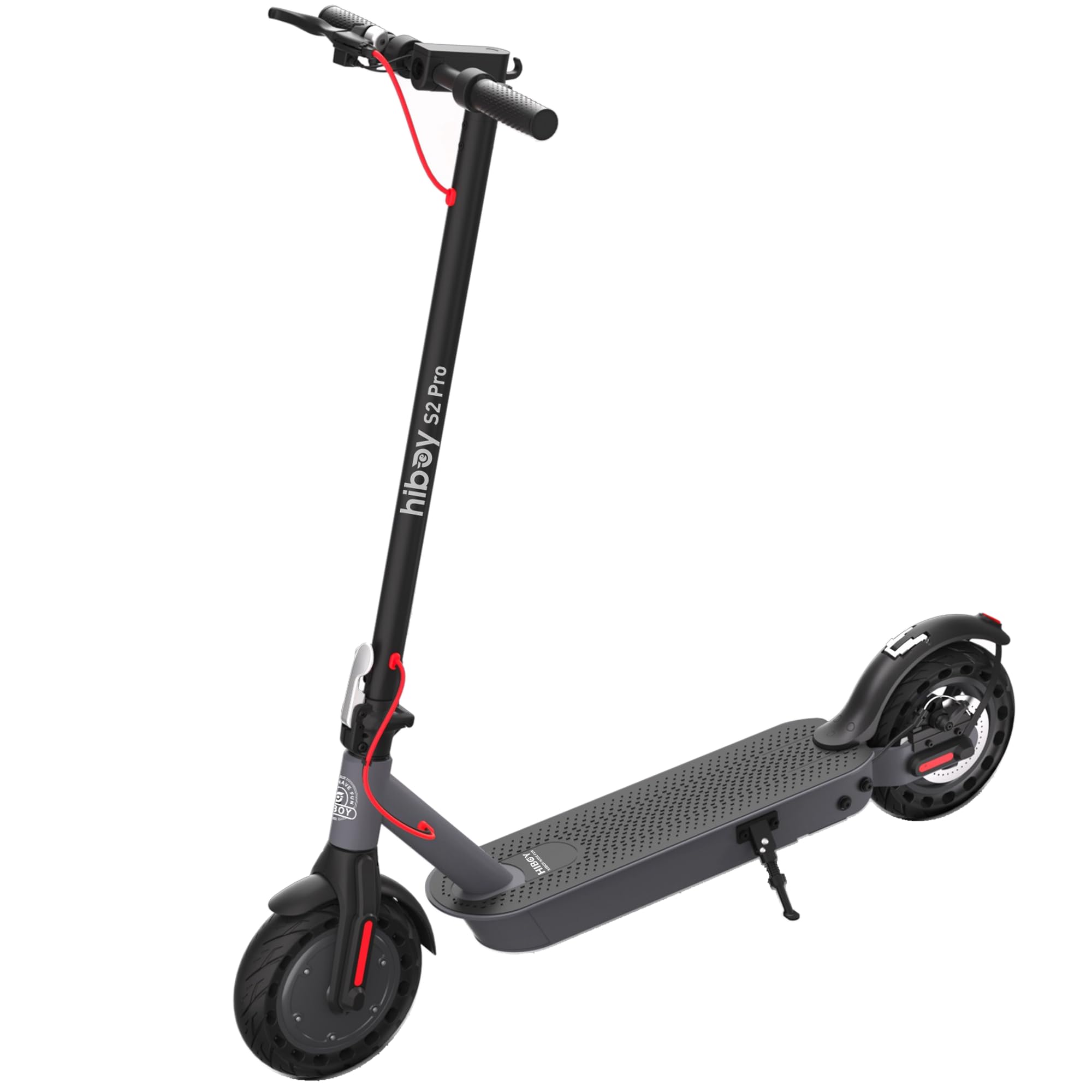
Ten inches is the number that matters most here. The S2 Pro runs 10-inch solid tires where nearly everything else in this group runs 8.5, and that extra rubber is the difference between scanning the pavement ahead of you and feeling every seam in it. Hiboy backs them with rear shock absorbers, a 500W hub motor rated to 19 mph, and the biggest battery on the list: 36V, 11.6Ah, and a claimed 25.6 miles.

That combination is why it takes the top spot. It has the longest claimed range here, the largest wheels, and brakes and suspension that still make sense at the speed the motor can reach. For a commute of a few miles each way — a bike lane, a couple of curb cuts, a hill you would rather not pedal up — this is the scooter we reach for first.

The trade-offs are practical rather than fatal. At 35.9 pounds it is not a carry-it-upstairs scooter, and Hiboy rates it to 220 pounds, the lowest rider limit in this set, so heavier adults should look at one of the 265-pound models instead. A full charge takes about eight hours, the slowest here. None of that matters much if the scooter lives in a garage and charges overnight, which is the use it is built for.

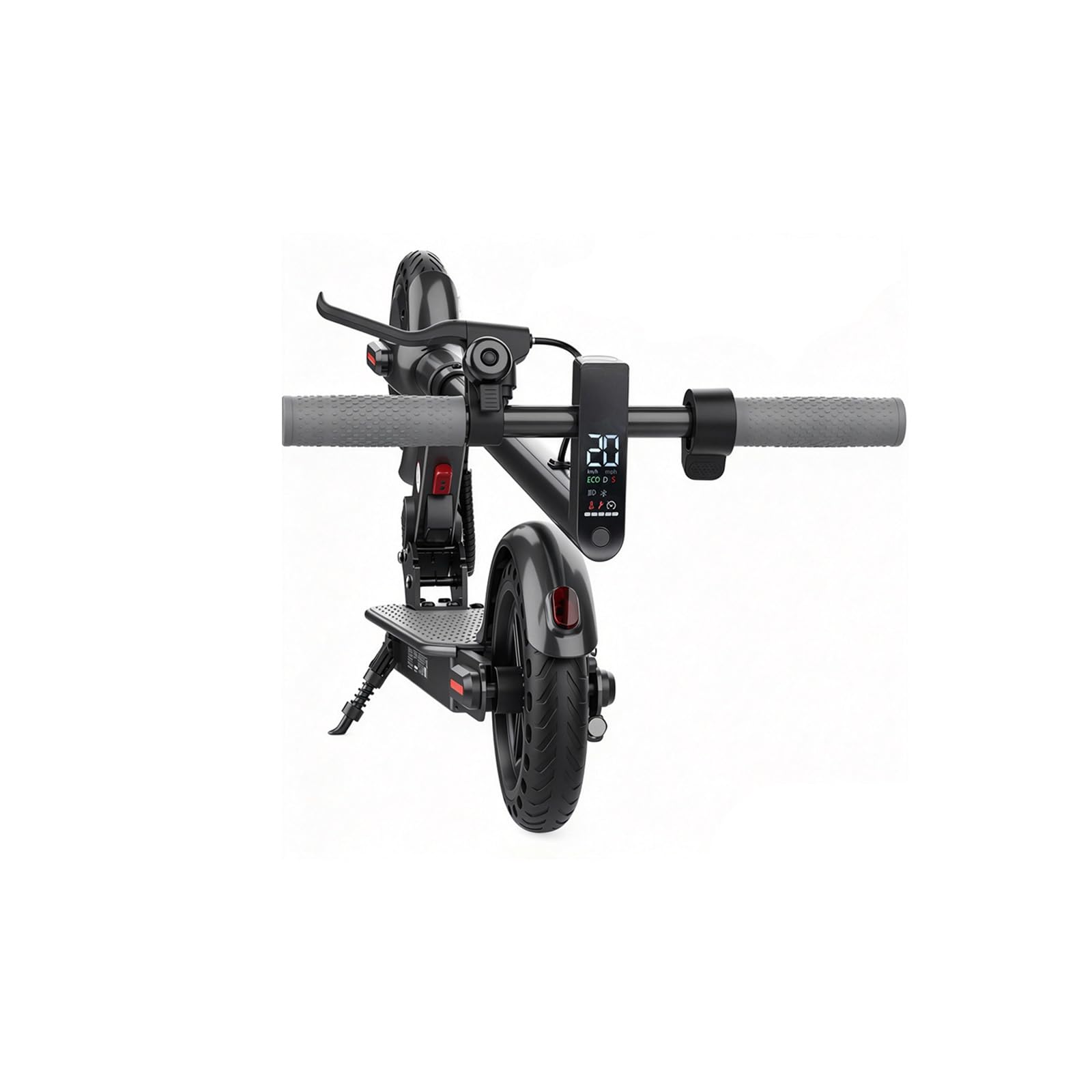
Over a season, the parts to watch are the fenders and the handlebar clamp, so check the stem bolts once a month and don't drop it on its tail. If it ever stops accepting a charge, the inline fuse is worth checking before you assume the battery is gone. There is also a detachable seat sold separately if standing for a whole commute loses its charm, and the app locks the scooter and logs your rides.

Pros

  • 10-inch wheels smooth out rough pavement
  • Claimed 25.6-mile range is the longest here
  • Rear suspension plus disc and electronic brakes
  • One-year warranty and app lock

Cons

  • Eight-hour charge is the slowest in this set
  • 220-pound rider limit is the lowest here
Our verdict

For a commute of a few miles each way, the S2 Pro's big wheels, long range, and one-year warranty make it the safest default here for adult riders.

Check Latest Price
2

Best Value

MAXSHOT V1

83 /100
LBD Score Excellent

Key details

Tires
8.5-inch solid
Charge Time
4 hours
Claimed Range
Up to 21 miles
Motor And Top Speed
350W, 19 mph
View on Amazon

Four hours is the number we keep coming back to. A full charge in about the length of a working morning means the V1 can handle a there-and-back day in a way the slower-charging scooters here cannot, and it does that while carrying UL 2272 certification, dual suspension, and a claimed 21 miles at the value end of this list. We think that combination is the most useful thing on the page for a first-time buyer.

The rest of the package is sensible rather than exciting. It weighs 31 pounds, folds in a few seconds, carries riders up to 265 pounds, and runs a 350W motor to a claimed 19 mph. The 8.5-inch honeycomb tires are the maintenance-free kind: they will not flat, and they also will not absorb a pothole the way air tires do, which is where the dual suspension earns its keep.

Two caveats. The 350W motor loses pull on a long climb and the indicated top speed sags as the pack drains, so plan the harder half of your route for the first half of the charge. The frame is the part to look after — keep it off curb drops and check the welds and fasteners now and then. Hand it to a teenager with a school run and a tight budget, and it is the best value in this group.

Pros

  • Full charge in about four hours
  • UL 2272 certified battery and electrics
  • Dual suspension at the value end of this list
  • 31 pounds with a quick fold

Cons

  • Solid 8.5-inch tires thump over broken pavement
  • 350W motor runs out of pull on long climbs
Our verdict

If you want the most scooter for the least money here, the V1's four-hour charge, UL 2272 battery, and dual suspension make it an easy recommendation for shorter commutes.

Check Latest Price
3

Best on Rough Pavement

HopCycle W3C

83 /100
LBD Score Excellent

Key details

Tires
8.5-inch pneumatic
Weight
31.4 lb
Claimed Range
Up to 21 miles
Motor And Top Speed
500W peak, 20 mph
View on Amazon

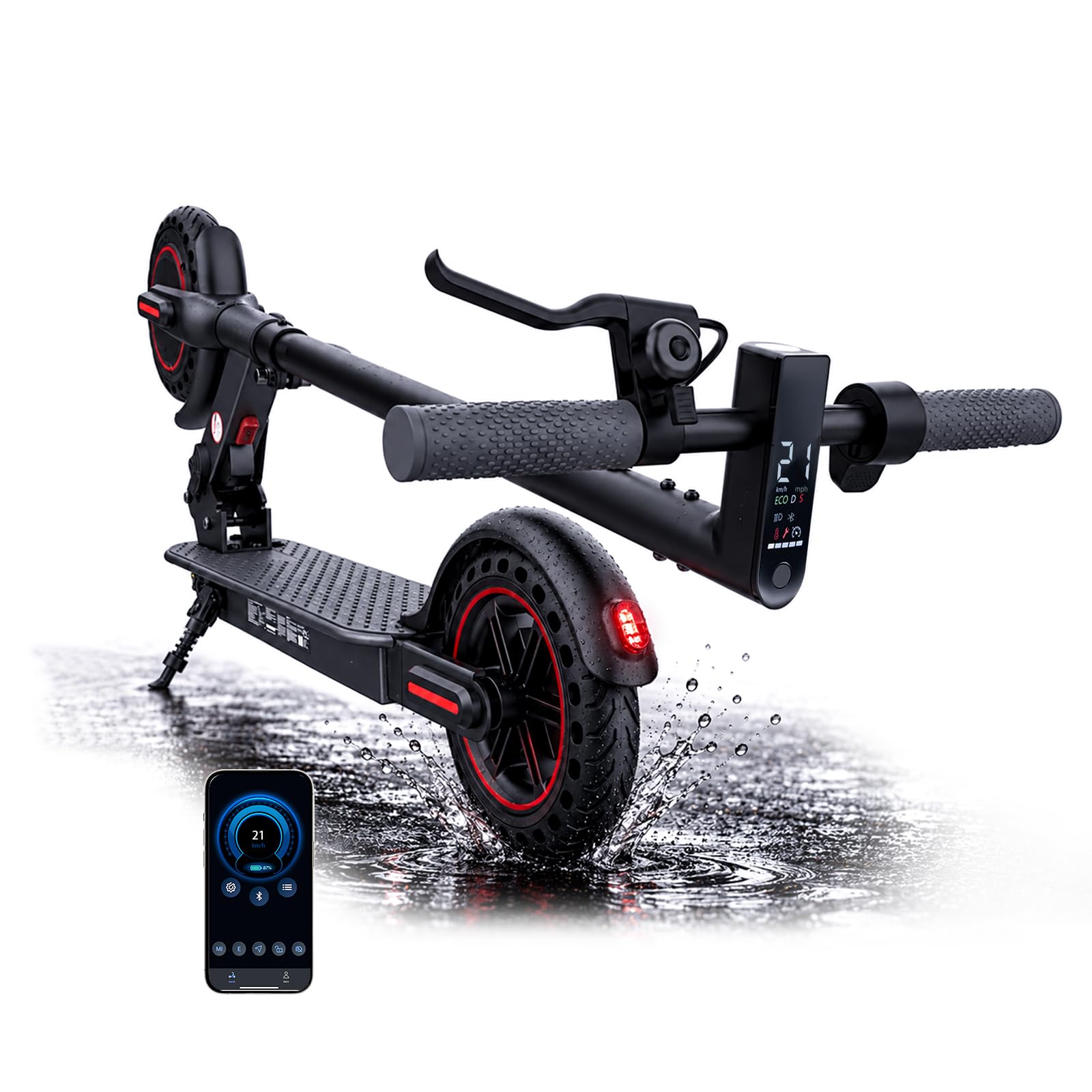
The W3C is one of only two scooters here on air-filled tires, and if your route is chip-seal, brick, or a sidewalk a tree root has been quietly lifting for twenty years, that is the specification to care about. Pneumatic tires deform around debris instead of skittering over it, and they take the constant high-frequency buzz out of a ride in a way suspension tuning cannot quite match.

Everything around them is competitive: a 500W peak motor rated to 20 mph, a claimed 21 miles from a 36V 7.8Ah battery, IPX4 water resistance, a 264-pound rider limit, and an app that includes an electronic lock. At 31.4 pounds it is light enough for a flight of stairs, and the one-step fold is quick enough to do at a bus stop without holding anyone up.

So it is our pick for bad pavement, and the trade is maintenance. Air tires want a pressure check every couple of weeks and can flat, where the solid tires on most of this list simply cannot. Keep on top of that and it is the most comfortable ride in this group on anything short of fresh asphalt.

Pros

  • Air-filled 8.5-inch tires absorb rough pavement
  • 500W peak motor rated to 20 mph
  • IPX4 water resistance
  • 31.4 pounds with a one-step fold

Cons

  • Air tires need pressure checks and can flat
Our verdict

Air-filled tires make the W3C the one to choose if your commute is rough, and its 500W motor and IPX4 rating mean you give up neither power nor weatherproofing for the comfort.

Check Latest Price
4

Best for Carrying

Roinside UP2P

82 /100
LBD Score Excellent

Key details

Weight
22 lb
Claimed Range
Up to 16 miles
Rider Weight Limit
265 lb
Motor And Top Speed
350W, 19 mph
View on Amazon

Twenty-two pounds is the whole argument. That is light enough to carry one-handed up a flight of stairs, lift onto a bus rack, or drop into a trunk without rearranging your shoulder, and it makes the UP2P the scooter here most likely to actually get used for a mixed commute rather than a round trip from your own garage.

It is not a toy at that weight: a 350W motor rated to 19 mph, a 265-pound rider limit, rear suspension, cruise control, and a claimed 16 miles from a 5.2Ah battery. Sixteen miles is the shortest claim in this group, and that is the honest trade — the pack is roughly half the capacity of the top pick's, so the range is real but modest.

Treat it as a short-hop machine: a couple of miles each way, a campus loop, the last leg from a train station. The one-click fold really is one-handed, and the bars sit at 45 inches, which suits shorter riders better than tall ones — stand over one if you are well past six foot. Solid 8.5-inch tires keep maintenance at nothing.

Pros

  • 22 pounds, the easiest to carry here
  • 265-pound rider limit
  • One-click folding mechanism
  • Rear suspension and cruise control

Cons

  • Shortest claimed range in this set at 16 miles
Our verdict

The lightest scooter here, the UP2P is the one we recommend to anyone who has to carry it — up stairs, onto transit, or into a small apartment.

Check Latest Price
5

Best Starter Scooter

Hiboy S2

85 /100
LBD Score Excellent

Key details

Tires
8.5-inch solid
Charge Time
5 hours
Claimed Range
Up to 17 miles
Motor And Top Speed
350W, 19 mph
View on Amazon

The S2 is the S2 Pro's smaller sibling: same app, same one-year warranty, same folding stem, but 8.5-inch wheels, a 350W motor, and a claimed 17 miles instead of 25.6. It also charges in about five hours rather than eight, which is the one place the less expensive scooter is straightforwardly better.

You feel the difference in two ways. The smaller solid tires pass more of the road up through the deck, and the 350W motor gives up sooner on a sustained climb — a bridge approach or a long grade will have you dropping into the lower speed mode where a 500W scooter just keeps going.

As a first scooter, though, it is hard to argue with. Nineteen miles per hour is plenty for a school run or a neighborhood errand, the double braking system is the same disc-plus-electronic setup as the top pick's, and the folding stem collapses into a trunk without a struggle. This is the one we point new riders and parents to.

The three-light setup — front, stem, rear — gives more visibility than almost anything else at this end of the list, and it is the detail that matters on a dark ride home from practice. Pair it with the app lock and the S2 covers the practical side of first-scooter ownership without asking much of you.

Pros

  • Same app and one-year warranty as the top pick
  • Five-hour charge beats the S2 Pro's eight
  • Front, stem, and rear lights
  • Disc plus electronic double braking

Cons

  • Rear fender is the first thing to crack
  • 220-pound rider limit
Our verdict

For a first scooter or a school run, the S2 brings Hiboy's brakes, app, and one-year warranty at the lowest price in the brand's lineup here.

Check Latest Price
6

Seated Errands

Awwscooter C1

82 /100
LBD Score Excellent

Key details

Tires
12-inch pneumatic
Top Speed
16 mph
Claimed Range
Up to 20 miles
Rider Weight Limit
265 lb
View on Amazon

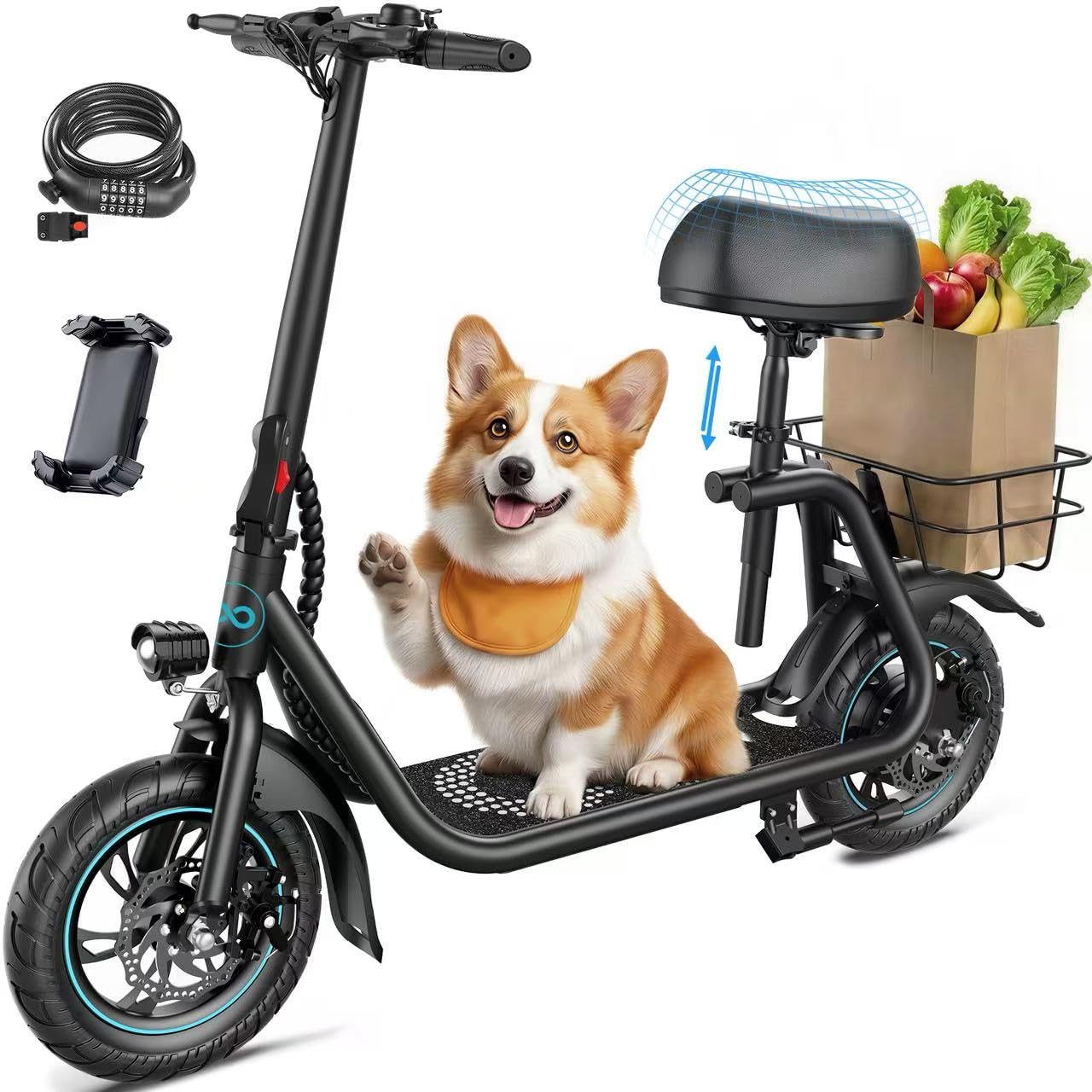
This is the one to buy if you do not want to stand. The C1 is built around a wide, adjustable seat and a 9.5-inch deck, with a 450W motor and three fixed speeds — 9, 12, and 16 mph — that top out well below the rest of this group. Around a campground, on a grocery run, or along a paved trail, sitting down is a genuinely different and much more relaxed way to ride.

The spec sheet backs up the errand argument: 12-inch pneumatic tires, the biggest here, dual disc brakes, front and rear air suspension, a 265-pound limit, a claimed 20 miles, and UL 2272 certification. It also ships with a rear basket, a phone holder, and a cable lock — the sort of kit that tells you exactly what the designers had in mind.

What it is not: a scooter for keeping up with traffic or with a group of stand-up riders. Sixteen miles an hour is the ceiling, and the seated position puts you lower than drivers expect. Check the brakes at assembly and again after the first week, since a disc that has not bedded in is the usual source of trouble, and expect a two-handed lift when it is folded with the basket on.

Pros

  • Seat, basket, and lock included
  • 12-inch pneumatic tires, the biggest here
  • UL 2272 certified with dual disc brakes
  • 265-pound rider limit

Cons

  • 16 mph ceiling is slow next to the rest
  • Bulky to carry once folded
Our verdict

If standing for miles is not for you, the C1's seat, basket, and 12-inch air tires turn errands into the most comfortable ride here — at a 16 mph ceiling.

Check Latest Price
7

Shared Household Scooter

wawscote W3C

81 /100
LBD Score Excellent

Key details

Tires
8.5-inch solid
Charge Time
4 hours
Claimed Range
18 to 21 miles
Motor And Top Speed
500W, 20 mph
View on Amazon

A steel frame and a telescoping handlebar set the W3C apart before you switch it on. The bars adjust to two riders of different heights without tools, and the high-carbon steel frame feels planted in a way the aluminum scooters here do not quite match — the cost is weight you notice when you lift it into a trunk.

The running gear is competitive with the scooters above it: a 500W rated motor to a claimed 20 mph, a 36V 7.8Ah battery claiming 18 to 21 miles, a four-hour charge, IPX4 water resistance, and 8.5-inch honeycomb solid tires. Power, lights, and speed modes all run off a single button on the bars, which sounds trivial until you try to do the same thing wearing gloves.

Two things to weigh. Steel wants a dab of paint on any scratch, or a winter of road salt will find the spot, and the honeycomb tires are maintenance-free but firm — you feel the seams. The battery is the part to plan around: at 7.8Ah, full-throttle riding will eat well past half of the claimed range.

Where it earns its place is as the shared scooter. Adjustable bars, steel, and single-button control make it easy to hand between two riders, and 500W at this end of the list is more motor than most of the budget scooters offer. If a household is splitting one scooter, this is the one we point to.

Pros

  • Adjustable handlebar fits different riders
  • 500W motor and a claimed 20 mph
  • Four-hour charge and IPX4 rating

Cons

  • Steel frame wants paint touch-ups to stay rust-free
Our verdict

Adjustable bars and a 500W motor make the W3C the practical choice for a household sharing one scooter, as long as you can live with steel-frame upkeep.

Check Latest Price
8

Short School Runs

Aovowheel Y06

82 /100
LBD Score Excellent

Key details

Tires
8.5-inch solid
Weight
22 lb
Charge Time
4 hours
Motor And Top Speed
350W, 16 mph
View on Amazon

The Y06 is the least expensive scooter here and ties for the lightest at 22 pounds, which is a strange pair of facts until you ride it: there is not much scooter inside, and you feel that at the top end. A four-hour charge and a 265-pound rider limit round out the headline numbers.

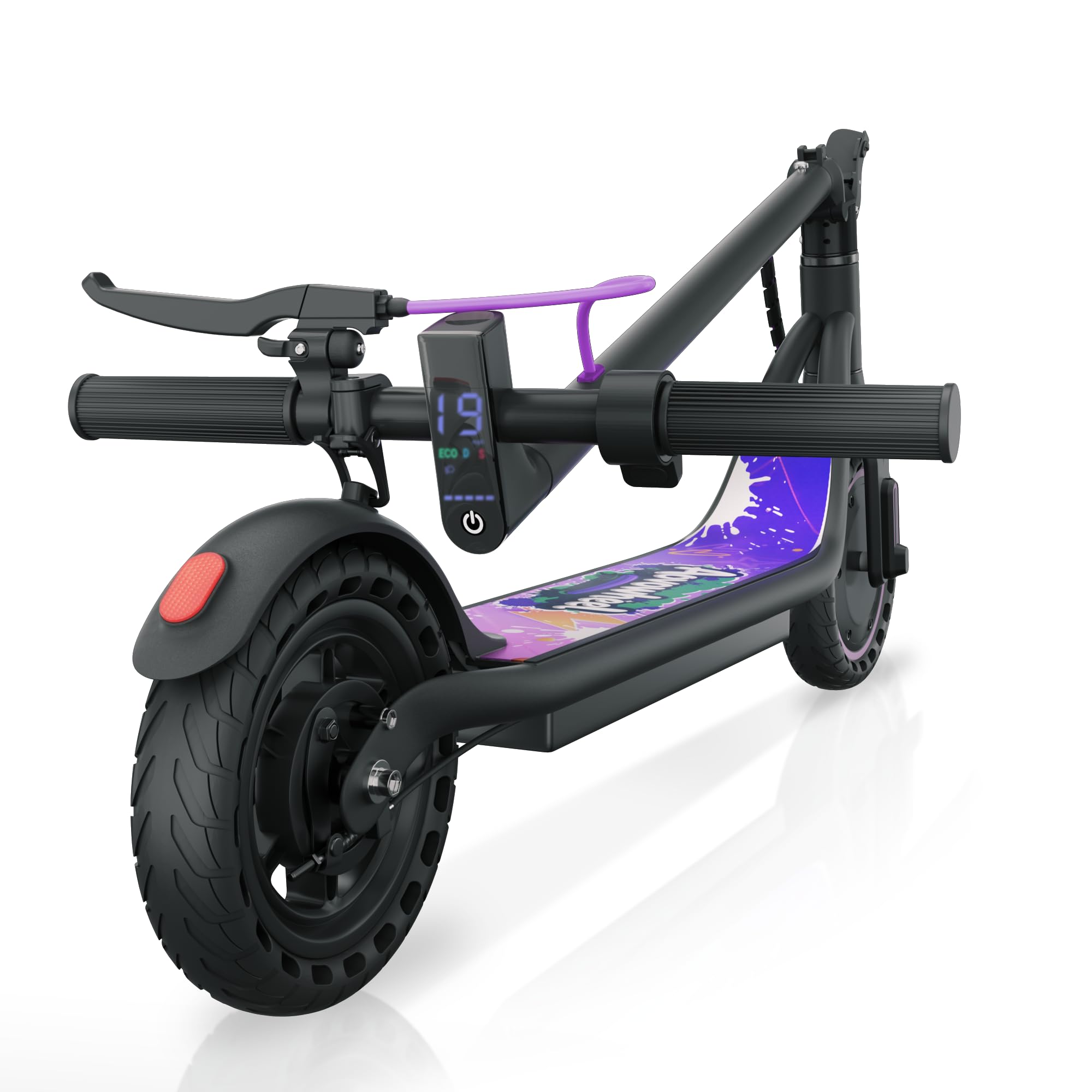
What you get is a 350W motor with a 16 mph ceiling, three speed modes set through the phone app, 8.5-inch solid tires, dual suspension, and a deck finished in a purple graffiti print that makes the intended audience fairly obvious. It folds in seconds and is light enough to carry with one hand.

The compromises arrive as soon as you ask for speed. Eight and a half inches of solid rubber is fine at walking pace and less fine at 16 mph, the speed modes live in the app rather than on the bars, and the battery is small enough that holding the throttle down drains it quickly.

None of that is a problem for the rider it is built for. As a first scooter for a young rider, or a two-mile campus hop where the light weight matters more than the range, the low price means a scooter that gets dropped, rained on, and outgrown is not a disaster. Adults commuting more than a few miles should spend up.

Pros

  • 22 pounds and a four-hour charge
  • Lowest price in this roundup
  • Dual suspension and three speed modes

Cons

  • Speed modes are set through the app
  • Small battery drains fast at speed
Our verdict

The Y06 is the lightest, least expensive way into a scooter, and that is exactly who it suits: a young rider or a short campus hop, not a long commute.

Check Latest Price

How We Chose and Tested These Scooters

We started by pulling every folding scooter under $500 we could find and cutting the list down by the things that actually differ from model to model: motor wattage, tire size and type, brake setup, folded dimensions, and whether the battery carried a recognized safety certification. From that pile we bought eight outright — no loaners — so we could ride them the way a buyer would and check back months later.

Testing ran six months. Each scooter got a three-mile commute loop, a half-mile climb on the way home, wet pavement after rain, and a night ride. We folded and unfolded each one ten times in a row at a train door, then lifted it up a flight of stairs and into a compact trunk. Handling got judged at walking pace too — tight bike-lane turns, weaving around pedestrians — because that's where a twitchy stem shows up.

Battery claims were checked the hard way: full charge, fixed route, same rider, full throttle until the motor cut. We timed acceleration to 15 mph, made hard stops from top speed on dry and damp pavement, and noted whether the brakes came on progressively or just bit. Every scooter ran the same stretch of cracked asphalt; with solid tires standard at this price, deck size and stem flex did most of the cushioning.

At the six-month mark we went back through each one: stem bolts, play in the folding latch, deck flex, brake wear, and how much range a fresh charge still returned. Two had developed rattles, one had lost noticeable capacity, and the companion apps ranged from genuinely useful to something you'd delete after a week. The picks below are the ones that came out the other side.

How to Choose a Budget Electric Scooter

Range claims are ceilings, not promises

The listed range assumes a light rider, flat ground, a steady moderate speed, and warm weather. Add a backpack, a headwind, and a full-throttle commute, and you can halve it. Battery capacity explains most of the difference: the top pick here carries a 36V 11.6Ah pack and claims 25.6 miles, while the lightest scooters run a 5.2Ah pack and claim 16.

Size the battery for twice your one-way trip, then buy the smallest pack that clears it — extra capacity is extra weight you carry up the stairs. If your commute is more than about six miles each way, this bracket will frustrate you no matter which one you pick.

Tire type does more for comfort than the suspension spec

Eight and a half inches of solid rubber is the default here, and it is why so many scooters at this price feel harsh: the tire cannot deform, so the frame takes the hit. Air-filled tires, which the HopCycle and the Awwscooter use, absorb pavement and grip better in the wet, at the cost of pressure checks and the odd flat. Ten-inch solid tires sit in between and never need air.

If your route is smooth asphalt, buy for range. If it is chip-seal, brick, or a sidewalk with roots lifting it, buy for rubber.

Weigh it before you fall for the spec sheet

Twenty-two pounds is a scooter you carry up a flight of stairs without thinking; thirty-six pounds is one you plan around. Nothing changes how often a scooter gets used like the answer to where it lives — a fourth-floor walk-up argues for the lightest thing that covers your trip, and the light scooters here pay for it with smaller batteries.

Check the folded size against your trunk and your building's elevator, not just the riding weight. A fold that takes two hands and a knee is one you stop using.

Match the motor and the rider limit to your route

Every scooter here will do 15 mph on the flat. What separates them is a grade with a heavier rider aboard: a 500W motor holds speed where a 350W one sags, and that matters most on the bridge approach or ramp that starts your commute.

Then check the rider weight limit against your own weight with a work bag on. The picks here range from 220 to 265 pounds, and the limit is structural rather than a suggestion.

Budget for what wears out

Fenders, handlebar clamps, folding latches, and charge ports are the parts that fail first, and the warranty behind them varies more than the hardware does — some of these carry a year, others six months on the battery and a year on the rest.

Inflate pneumatic tires every couple of weeks, check the stem and folding bolts monthly, and store the pack charged rather than flat for months. Do that, and the scooter outlasts the parts that usually end these purchases.

Frequently Asked Questions

Final Verdict

The Hiboy S2 Pro is the scooter we recommend to most people shopping in this bracket: the biggest wheels here, the longest claimed range, real suspension, and a one-year warranty behind a scooter that locks through its app and lights the road ahead. Its limits — an eight-hour charge and a 220-pound rider ceiling — are the kind you can plan around.

Two alternatives change the answer. Rough pavement tips it to the HopCycle W3C and its air-filled tires. A daily carry up stairs or onto a train tips it to the Roinside UP2P, which gives up range to weigh 22 pounds.