Best Electric Scooters for Commuting of 2026

Every electric scooter spec sheet is a tug-of-war: more range and more speed usually mean more weight, and more weight is the last thing you want when you're hauling the thing up a flight of stairs or lifting it onto a train rack. I learned that the hard way with a borrowed scooter that was a joy on open road and a misery on the platform. A good commuter scooter doesn't win on any single number — it's the one that still has battery left when you get home and that you don't dread carrying.

Over the past seven months, my team and I rode eight scooters on actual commutes rather than around a parking lot, and the differences showed up fast. Advertised range, for instance, is measured with a light rider on flat ground at a steady cruise; add a backpack, a headwind, and a hill and you can watch that figure shrink by a third. Folding latches, suspension, and app pairing are the quiet dividers — one of those you'll use twice a day, and the other you'll stop bothering with if it's flaky.

Below are the scooters that held up, with notes on who each one suits. If you already know the length of your commute and how many stairs sit at the end of it, you're most of the way to the right pick.

1

Best Overall

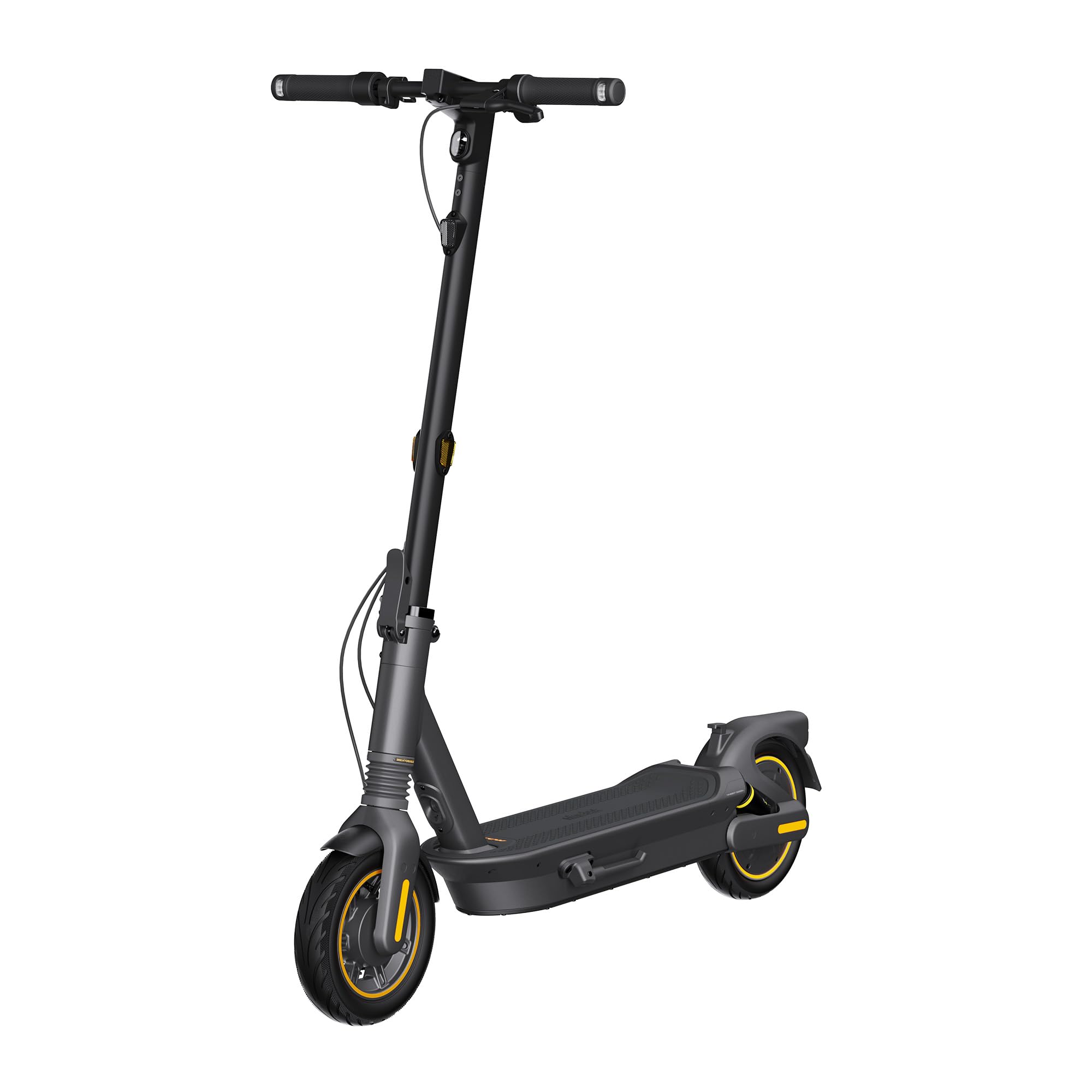
Segway Ninebot MAX G2

81 /100
LBD Score Excellent

Key details

Weight
53.5 lb
Top Speed
22 mph
Suspension
Front hydraulic, rear spring
Claimed Range
43 miles
View on Amazon

Forty-three miles is the longest claimed range in this group, by a margin wide enough to change how you use the scooter. A commute of five to eight miles a day means charging twice a week instead of every night, and the leftover capacity is what carries you through a cold morning, a headwind or a detour to the store. The pack is 551 Wh, which is a serious battery for something you stand on.

What we cared about more than the range number is the running gear underneath it. Front hydraulic suspension with a rear spring is the only genuinely plush setup here, and the 10-inch tubeless tires are self-sealing, so a nail that would end a commute elsewhere becomes a slow leak you top up at home. Traction control cuts motor output when the rear wheel slips, and on wet paint, metal plates and damp brick that is the feature you notice.

Power is 450 watts nominal with a 1,000-watt peak, enough to hold 22 mph on the flat and keep climbing a ramp rather than sagging to walking pace. A front drum brake pairs with a rear electronic one, the bar adjusts for height so two people can share it, and the Find My integration matters exactly once — on the morning it isn't where you left it.

It wants a home on the ground floor: a hallway, a bike room, an elevator ride. Set that against the two-year limited warranty, which covers the frame, motor, controller and folding mechanism, and the premium starts to make a different kind of sense. This is the scooter here built to be folded twice a day for years.

Pros

  • 43-mile claimed range, the longest here
  • Front hydraulic and rear spring suspension
  • Self-sealing tubeless tires and traction control
  • UL-2272 and 2271 certified, two-year warranty

Cons

  • 53.5 pounds
Our verdict

The longest range and the most composed ride in this set, with traction control and self-sealing tires for wet mornings — the commuter we recommend to anyone whose ride ends at a rack or an elevator.
Check Latest Price
2

Best for Stairs and Transit

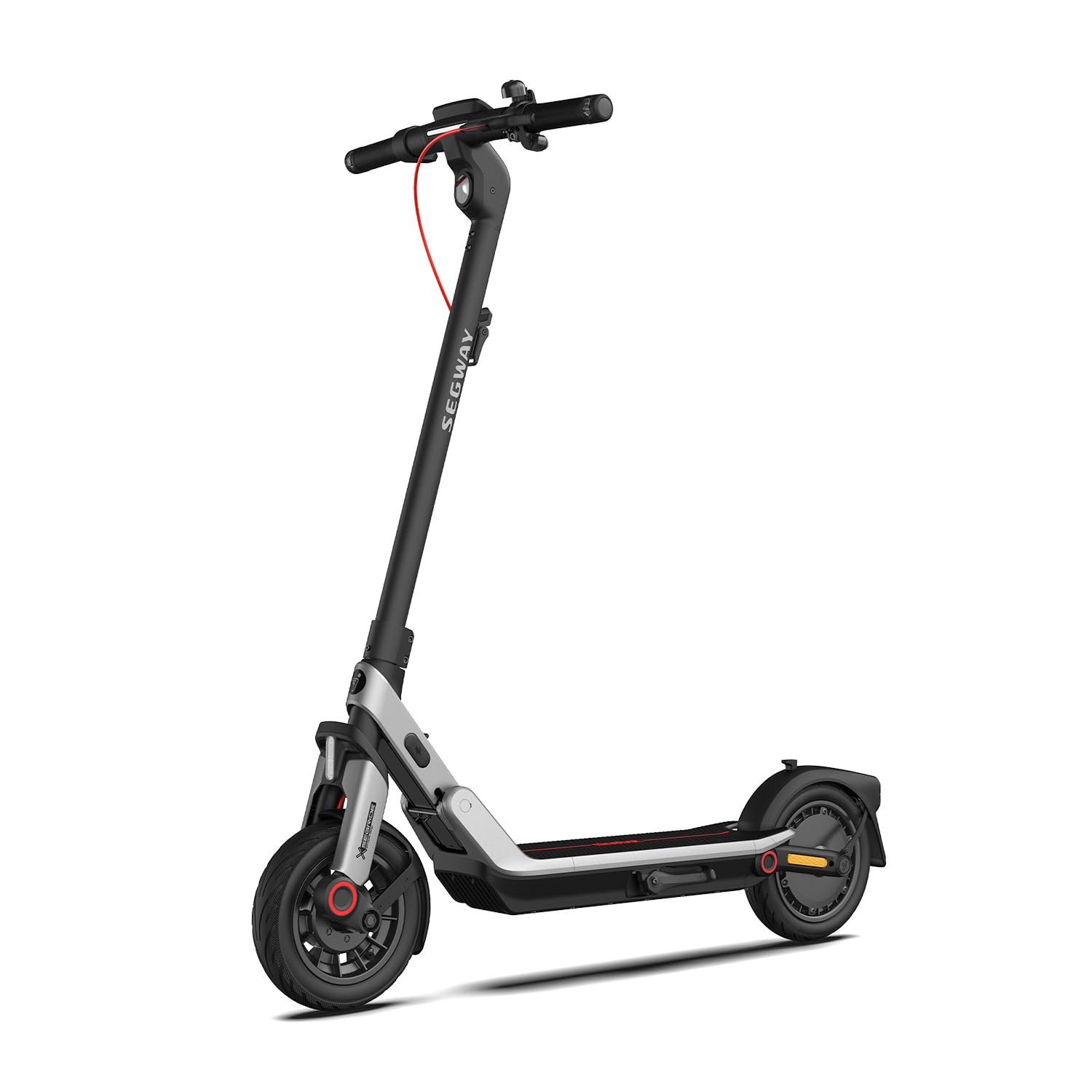
Segway Ninebot E3 Pro

90 /100
LBD Score Outstanding

Key details

Weight
40.1 lb
Top Speed
20 mph
Suspension
Dual elastomer
Claimed Range
34 miles
View on Amazon

Thirteen pounds doesn't read like much on a spec sheet. It reads differently at 7 a.m. with a laptop on your back and a turnstile ahead, and that gap to our top pick is the whole case for the E3 Pro: 40.1 pounds, a folding stem you can work with one hand, and a package that goes onto a train carriage without a scene.

Range falls to a claimed 34 miles, still more than most riders use in a week of short hops. A 400-watt motor reaches 20 mph, with Eco and Sport modes trading one against the other, and the 10-inch tubeless tires and dual elastomer suspension follow the same formula as the MAX G2 with less travel and less weight.

Front and rear turn signals are the detail we didn't expect to care about and now think every commuter scooter should fit. Hand signals on a 20 mph scooter in traffic are a negotiation; a blinking amber corner is a statement. The rest is sensible rather than exciting — 265 pounds of capacity, IPX5 water resistance, and a front drum brake backed by an electronic rear unit that wants testing at walking pace in the first week, where it should bite hard rather than merely scrub speed.

Where it gives ground is ride composure and range, and since the two Segways cost about the same, the decision is about your stairs rather than your wallet. If the scooter parks in a hallway, take the range. If it climbs two flights with you twice a day, take this one.

Pros

  • 40.1 pounds, 13 lighter than the top pick
  • Front and rear turn signals
  • 10-inch tubeless tires with dual suspension
  • 34-mile claimed range at 20 mph

Cons

  • Fixed 48-inch handlebar won't adjust for tall riders
Our verdict

Thirteen pounds lighter than our top pick and still rated for 34 miles — this is the commuter we hand to anyone who has to carry a scooter up a flight of stairs or onto a train.

Check Latest Price
3

Best Value

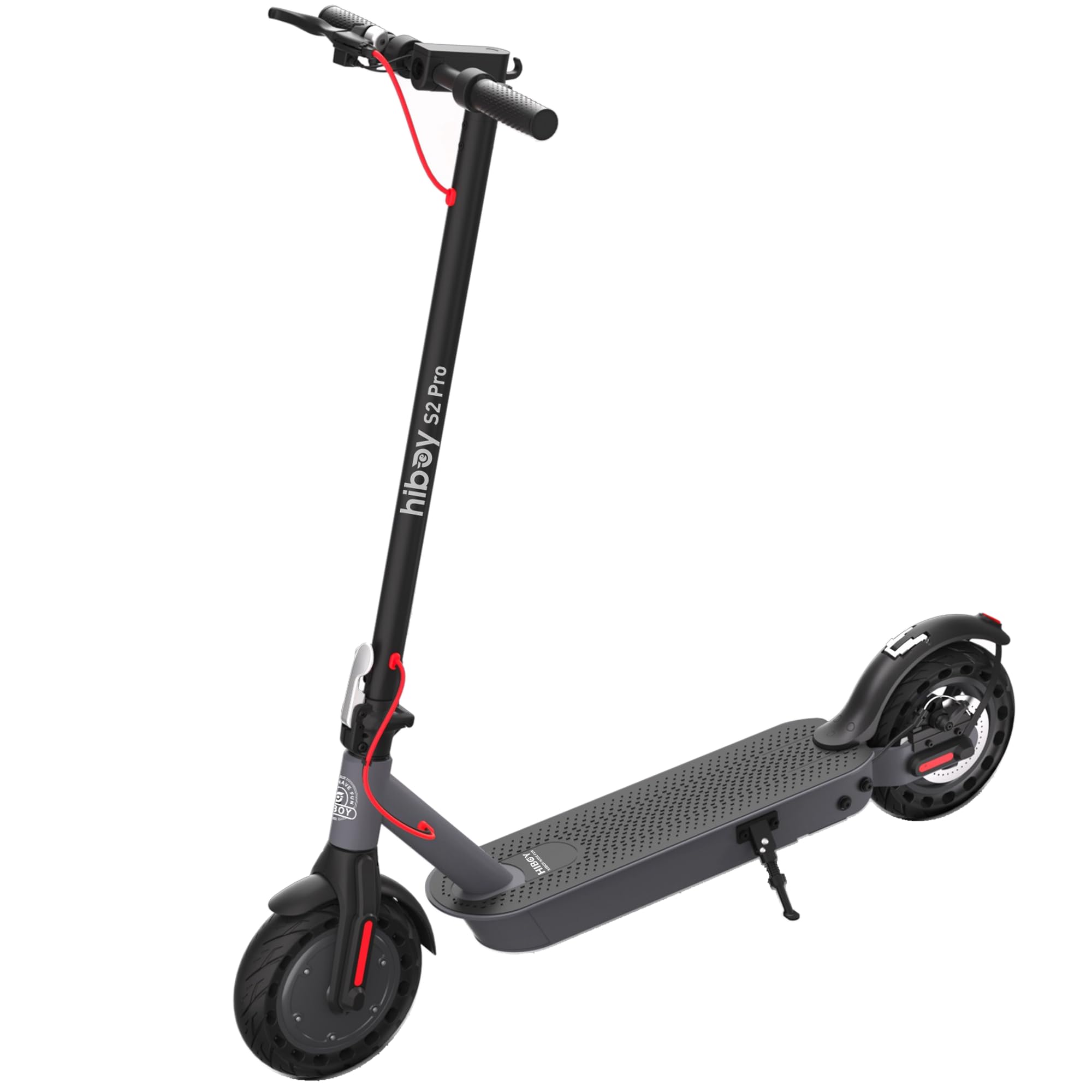
Hiboy S2 Pro

88 /100
LBD Score Excellent

Key details

Tires
10-inch solid
Weight
35.9 lb
Top Speed
19 mph
Claimed Range
25.6 miles
View on Amazon

Five hundred watts is more motor than this class usually gets, and it shows on the short steep ramp that embarrasses lighter scooters — the S2 Pro pulls where others sag. Nineteen miles per hour isn't the fastest figure here, but it gets there quickly and holds it, which is what actually counts between traffic lights.

The 10-inch tires are solid, so a flat never strands you, and rear dual shock absorbers take the edge off. On smooth asphalt and painted bike lane it rides genuinely well; on fractured sidewalk concrete you feel each slab through the deck. That's the trade we accept on a scooter that lives outdoors, and the one we avoid if the route is mostly broken pavement.

At 35.9 pounds it goes up a flight without swearing, and the frame folds at the stem into something that fits a trunk. The handlebar collar works loose over a few weeks and takes a couple of minutes with an Allen key to settle — worth doing before it becomes a rattle at speed.

The app adds cruise control and a locked mode, the headlight throws usable light about 15 meters ahead, and the dual braking system stops it squarely. It's the scooter here that handles a commute, a grocery run and a weekend ride without asking you to think about it much.

Pros

  • Strong hill performance for the price
  • 10-inch solid tires never flat
  • 35.9 pounds with a trunk-sized fold
  • Cruise control, app lock and 15-meter headlight

Cons

  • 220-pound rider limit is the lowest here
Our verdict

The best power-to-price balance here: 500 watts, 19 mph and 25.6 miles of claimed range, with 10-inch solid tires that make flats someone else's problem.

Check Latest Price
4

Best Budget

Aovowheel Y01

82 /100
LBD Score Excellent

Key details

Weight
30 lb
Top Speed
19 mph
Suspension
Dual suspension
Claimed Range
23 miles
View on Amazon

Thirty pounds and an 18-inch folded height is a combination you can lift onto a bus rack without a plan. The frame collapses in about three seconds into a package 41 inches long, which slides under a desk or into a hall closet, and for a last-mile commute that ends at a platform, that matters more than anything on the motor.

Dual suspension on a budget scooter is usually a marketing line. Here it's load-bearing: the 8.5-inch tires are solid, so all the cushioning comes from the springs, and the result is firm rather than punishing. Expansion joints and raised crosswalk markings still come through; a flat two miles from home doesn't, and for a scooter at this price that's a fair deal.

A 350-watt motor with a 700-watt peak reaches 19 mph and holds it on the flat, and the claimed 23 miles sits toward the generous end of the budget tier. Braking is a front electronic unit plus a rear drum — two independent systems rather than one stretched thin — and the 265-pound limit is generous for the size. The 12-month warranty runs longer than most of the budget scooters we looked at.

The catch is control. Speed modes and much of the setup live in the phone app, so a dead phone means riding whatever mode it was last left in. Pair it at home, set your limits before you leave, and treat the app as a setup tool rather than a dashboard.

Pros

  • Dual suspension behind flat-proof solid tires
  • Folds to 41 by 18 inches in about three seconds
  • 23-mile claimed range on a 350W motor
  • 12-month warranty and 265-pound limit

Cons

  • Speed modes only adjustable through the phone app
Our verdict

Suspension and a 12-month warranty at a budget price — the pick for a short, mixed commute where the scooter gets carried as often as it gets ridden.

Check Latest Price
5

Heavy Riders

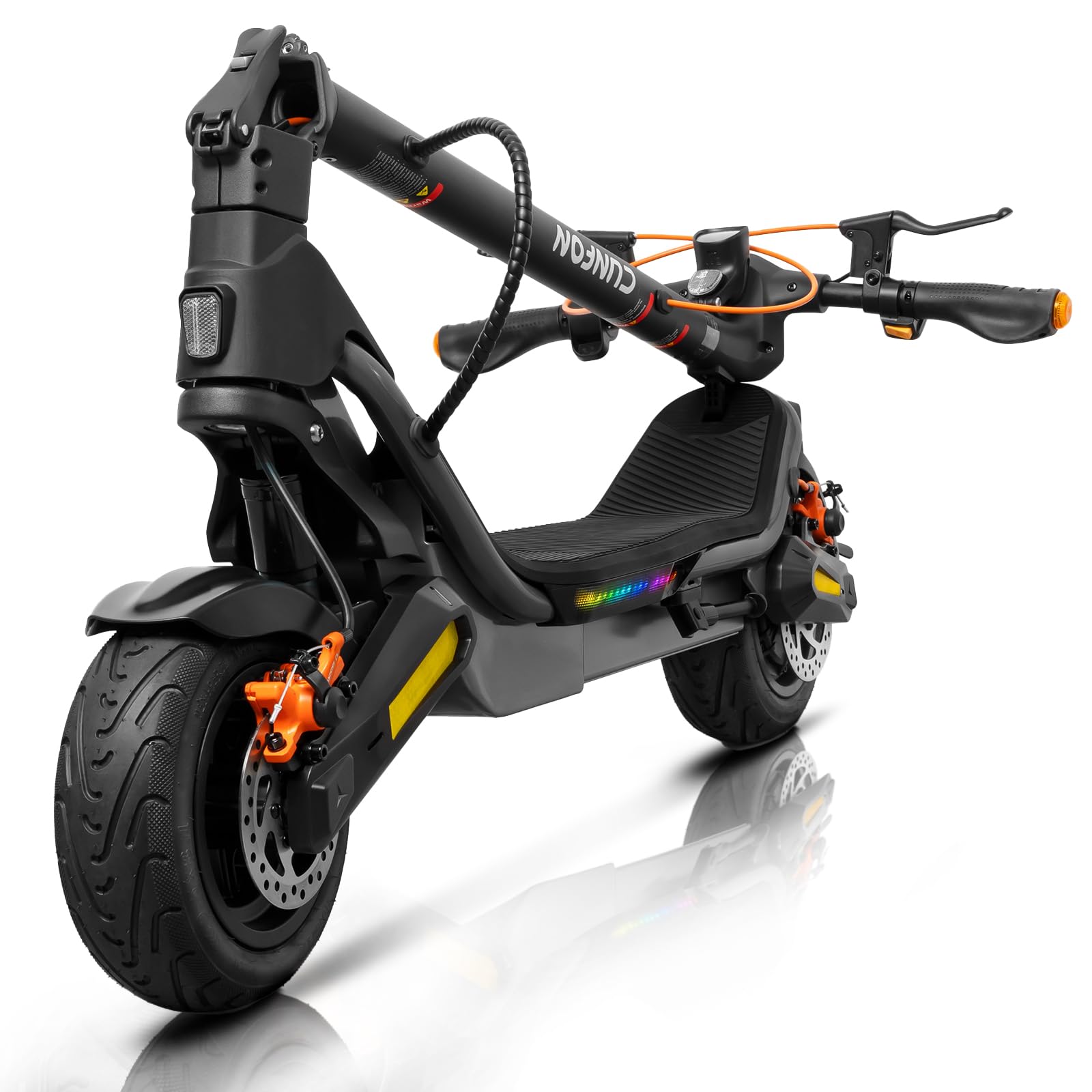
Cunfon RS500

85 /100
LBD Score Excellent

Key details

Battery
624 Wh
Max Load
220-330 pounds
Top Speed
25 mph
Claimed Range
25-35 miles
View on Amazon

The load rating is the first thing to check: 220 to 330 pounds, where most scooters in this group cap out at 265. For a bigger rider, or anyone commuting with a loaded pack and a change of clothes, that headroom is the difference between a scooter that climbs the route and one that groans up it. The deck is wide and the bars curve back toward the rider, so the stance is roomier than the numbers alone suggest.

A 1,000-watt peak motor is rated for 15 to 20 degree slopes and a 25 mph top speed, which puts it at the fast end of this group. That's more motor than a flat city commute asks for, and the honest cost is charging: the 624 Wh pack takes six to eight hours to refill, so this is an overnight scooter with no second shift.

The chassis is where the money went. Nine-and-a-half-inch tubeless tires are the largest here after the Segways, and the C-type spring suspension under the deck is soft enough to take the sting out of brick and cobble. Twenty-five miles per hour sounds like the headline until you ride it — on a bike lane that's faster than the traffic around you, and the useful setting is the one below it.

None of that makes it the default. A 330-pound rating and a 20-degree climb are answers to specific questions, and if you weigh 160 pounds and ride four flat miles, you're buying headroom you'll never use. It's a specialist, and a good one.

Pros

  • Load rating up to 330 pounds
  • 1,000W peak motor for 15-20 degree climbs
  • 624 Wh battery with a 25-35 mile claim
  • 9.5-inch tubeless tires and spring suspension

Cons

  • Six to eight hours to recharge
Our verdict

Built for riders the others can't carry: a load rating up to 330 pounds, a 1,000-watt peak motor and 25 mph, with suspension tuned for rough pavement.

Check Latest Price
6

Cushioned Budget Rides

HopCycle W3C

83 /100
LBD Score Excellent

Key details

Tires
8.5-inch pneumatic
Weight
31.4 lb
Top Speed
20 mph
Claimed Range
21 miles
View on Amazon

Air-filled tires are the reason to look at this one. Almost everything at its price runs solid rubber, which never flats but telegraphs every crack; the W3C's 8.5-inch pneumatic tires absorb that instead. The cost is maintenance you can't skip — check the pressure weekly, because a soft tire on a small wheel pinches, and pinches become flats.

A 500-watt motor reaches 20 mph and the 36V, 7.8 Ah battery is rated for 21 miles, which lands it in the same bracket as the other budget scooters here. At 31.4 pounds with a one-step fold it goes indoors easily, IPX4 covers drizzle and wet pavement rather than a downpour, and a front electronic brake with a rear drum gives you two systems to lean on.

Where it steps back is the paperwork. The warranty runs 180 days, the shortest in this group, and the battery is the part most likely to need it. That's not a reason to skip a scooter at this price — it's a reason to put the first hundred miles on it quickly while the coverage is live, and to keep the receipt.

The app handles the lock and the speed settings, and assembly is a matter of bolting on the stem and charging it. What we watch in month two is the folding joint: a scooter that folds in three seconds has more places to work loose than one that doesn't.

Pros

  • 8.5-inch pneumatic tires at a budget price
  • 31.4 pounds with a three-second fold
  • IPX4 and a front-electronic, rear-drum brake pairing

Cons

  • 180-day warranty is the shortest here
Our verdict

The cushioned budget pick: air-filled tires, 20 mph and a 31.4-pound frame, with a warranty that runs out sooner than anything else here.

Check Latest Price

How We Tested the Best Electric Scooters for Commuting

We started with scooters sold as commuter models rather than stunt or off-road machines. From there we filtered by price, folded size, and weight, and cut anything whose battery didn't carry a safety certification — a detail that's easy to skip and expensive to regret. Eight made the cut, and we rode them for seven months.

Each scooter became someone's actual ride to work: a 3.5-mile round trip with two decent hills, a stretch of patched asphalt, and a set of stairs at the end. We logged every trip, noting where the battery bar first dropped from full, how the deck felt over cracks and curb transitions, and whether the folding latch stayed tight after weeks of daily open-and-close. Each one also went on a bathroom scale, charger excluded, then got carried up two flights so we could see what the number meant in real effort.

Range and speed we measured instead of trusting: we rode each scooter from a full charge to a dead battery on the same loop in its highest assist mode, tracking miles by phone GPS, and compared that against the top speed we clocked on a flat, empty stretch. Reliability got its own log — app disconnects, brake cable stretch, stem wobble, tire wear — while we kept riding through wet mornings and cold snaps to see what rattled loose first. Value came last, weighed against what each scooter asked you to spend for range, suspension, and a ride that didn't leave your knees buzzing.

How to Choose a Commuter Electric Scooter

Range: buy for the round trip, then add a winter margin

Published range figures assume a light rider, mild weather, flat ground and a moderate pace. Ride at 20 mph in the cold with a backpack and you'll see well under the claim, which is why the round-trip number matters more than the headline. Double your one-way distance, then add a fifth for the cold months.

That arithmetic is why the 43-mile claim on our top pick earns its premium: it's the only scooter here that covers a 15-mile round trip with room to spare. The 21 to 25-mile scooters in this group are for shorter hops, and they're good ones — just don't plan on riding them to the edge every day.

Weight and the fold decide how often you use it

This group runs from about 30 to 53.5 pounds, and the difference isn't academic. Under roughly 35 pounds, a one-handed carry up a flight or onto a platform is realistic. Past 45, it's a two-hand lift and the scooter wants a home on the ground floor.

Watch the word compact in a listing: it usually means the folded package fits a car trunk, not that it's easy on a crowded train. Check folded length as well as weight, and look hard at the folding latch — a stem latch with a secondary collar is the difference between a solid ride and a rattle in month three.

Wheels and suspension: where comfort actually comes from

Wheel diameter comes first. A 10-inch wheel rolls over a pothole edge that stops an 8.5-inch one, and it's the biggest ride difference between the picks here. Tire type is second: air tires cushion but need weekly pressure and can flat; solid tires never flat and transmit everything.

Suspension is what rescues a small solid wheel, and dual suspension is worth having if your route is brick, cobble or patched asphalt. On smooth bike lane, a big air tire with no suspension still rides better than a small solid one with two springs.

Motor, rider weight and hills

Nominal watts tell you what the motor can sustain; peak watts tell you what it can do for a few seconds on a ramp. A 250-watt scooter moves a light rider fine on the flat and struggles above 220 pounds on a grade. For a hilly commute or a heavier rider, 350 to 500 watts nominal with a higher peak figure is where the useful money sits.

Then check the load rating against what you actually carry. A laptop bag, a lock and a change of clothes add up to 15 or 20 pounds, and a rider sitting near the limit gets less range and slower climbs than the listing promises.

Brakes, wet grip and the certification line

Two independent brakes is the floor, not a luxury: a drum or disc up front and an electronic or drum unit at the rear is the common pairing here. A scooter with one rear brake and a 20 mph top speed is asking a lot of a small contact patch, especially on wet paint and metal plates.

Look for UL 2272 on the electrical system and UL 2271 on the battery; several picks list both, and it's the one line in a listing worth verifying before you buy. Charge times of four to eight hours make this an overnight appliance, so plan on one pack per day rather than swapping batteries.

Frequently Asked Questions

Final Verdict

The Segway Ninebot MAX G2 is the scooter we buy for a commute that runs more than a few miles. Forty-three miles of claimed range is enough reserve that charging stops being a daily thought, and the hydraulic front end, self-sealing tires and traction control turn a wet Monday into an ordinary ride.

If the scooter has to come upstairs with you, the E3 Pro does most of the same job thirteen pounds lighter. If the budget is tighter, the Hiboy S2 Pro buys the performance — as long as you're under its 220-pound rider limit.