Best Electric Fans of 2026

Every fan promises powerful and quiet; almost none deliver both. Push most models to high and you get a rattling wind tunnel. Drop them to the setting you can actually sleep through and the airflow barely reaches the foot of the bed. That gap is what I went looking for, since a fan is one of the few things you run all night, every night, and small annoyances compound.

We ran 14 fans for six months — towers for bedrooms, pedestals for living rooms, clip-on and handheld models for desks, tents, and workshops. We measured airflow and loudness, then lived with them: overnight on low, through hot afternoons. Speed count and wattage tell you less than the shape of the air column — a narrow jet from a small circulator can feel stronger across a room than a wide, gentle sweep from a tower.

What separates the good ones is boring: whether the oscillation actually covers the room, whether the timer holds, whether the remote works from bed, and whether it still runs quietly next summer. Some picks below are built for sleeping, some for moving serious air, a couple for throwing in a bag.

1

Best Overall

DREO Pedestal Fan

95 /100
LBD Score Outstanding

Key details

Speeds
8
Airflow
1000 cfm
Noise Level
28.2 dB
Height Range
38–42 in
View on Amazon

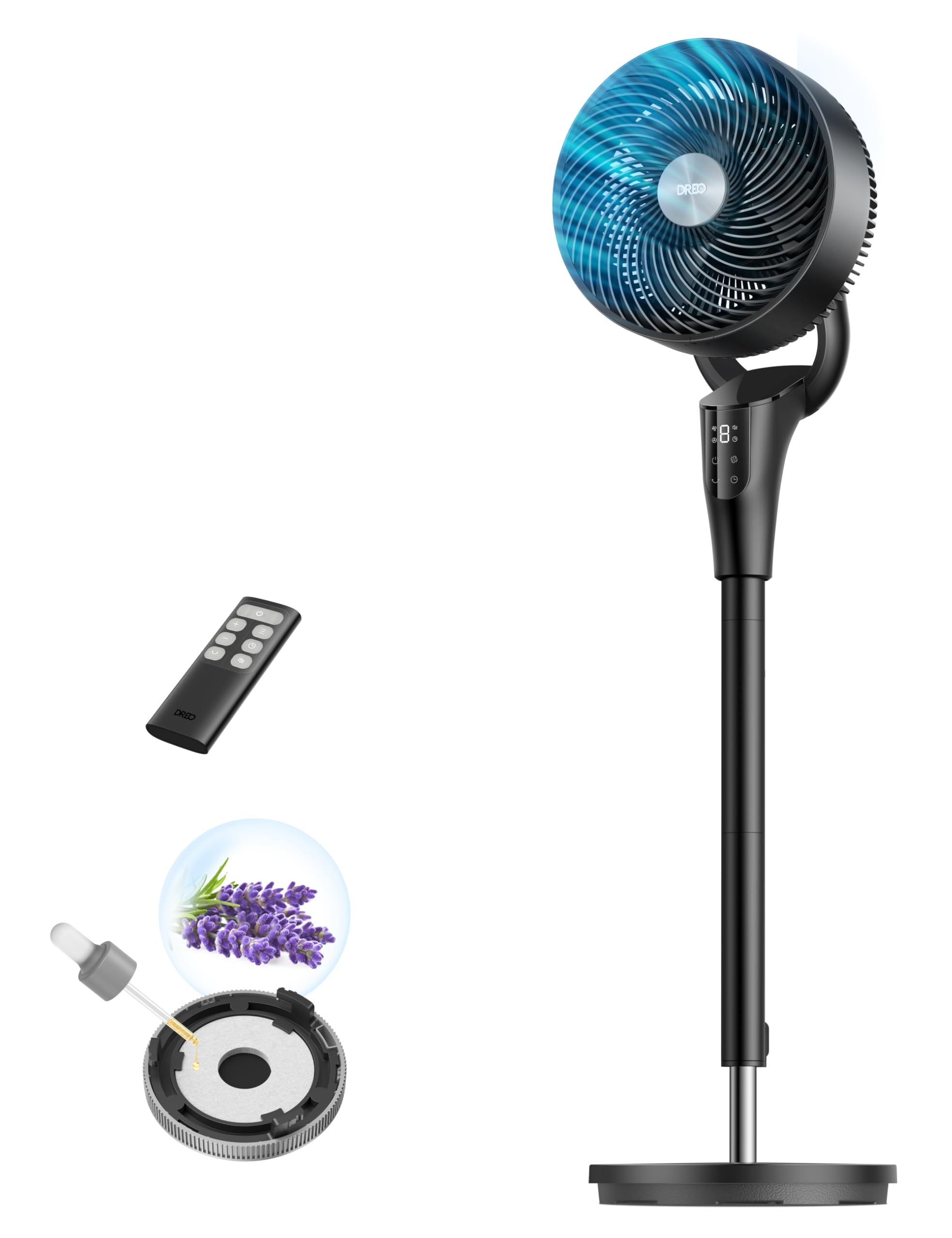
The first thing we noticed about the DREO pedestal fan is how little floor space it takes for a fan that stands 42 inches tall. The base is compact, the head tilts through 105 degrees, and the height moves between 38 and 42 inches, so we could aim it at a bed, a sofa, or a standing desk without moving the whole fan. That combination is why it is our top pick: it covers a room like a pedestal fan but tucks into a corner like a tower.

Airflow is the reason to choose it over a table fan. DREO rates it at 1,000 cfm, and the eight speeds let us pick a gentle breeze for sleep and a much stronger stream for a stuffy afternoon. The 90-degree oscillation sweeps across a bed or seating area, and the natural and sleep modes change the feel rather than just the volume. We kept it on low overnight and found the 28.2 dB claim believable in a quiet room, though high speed is naturally more audible.

The controls are sensible for a bedroom fan. The remote handles power, speed, mode, oscillation, and the eight-hour timer, and the display dims enough that it did not glow across the room. We also liked that the grille comes apart for cleaning; dust on blades is the usual reason a fan starts to feel weak, and this one is easier to keep ahead of than a sealed tower.

If you only need a breeze on one person at a desk, this is more fan than you need; the Honeywell HT-900 is the smaller, cheaper answer. For a bedroom, a living room, or any space where the air has gone stale, the DREO's reach and adjustability are worth the extra floor space.

Pros

  • Moves up to 1,000 cfm with eight speeds
  • Adjusts from 38 to 42 inches tall
  • 90-degree oscillation and 105-degree tilt
  • Quiet 28.2 dB low setting for bedrooms

Cons

  • Costs more than basic pedestal fans
Our verdict

For most rooms, this is the electric fan we recommend first: it moves serious air, adjusts from 38 to 42 inches, and stays quiet enough for sleep.

Check Latest Price
2

Best Tower Fan

DREO Tower Fan

93 /100
LBD Score Outstanding

Key details

Height
42 in
Speeds
9
Airflow
1397 cfm
Noise Level
28 dB
View on Amazon

A tower fan earns its floor space only if it can push air past the couch, and the DREO DR-HTF009 does that better than most of the slim fans we tried. It stands 42 inches tall, so the airflow leaves above bed level instead of blowing across your knees, and the 90-degree oscillation covers a wide arc without turning the whole unit.

Where it won us over was the control range. Nine speeds and four modes sound like overkill until you use the sleep mode and the remote from bed; the low settings are the ones that matter at night, and this fan stays quiet there. DREO rates it at 28 dB and 1,397 cfm, and we found the low end genuinely unobtrusive while the top end still moved air across a living room. The 12-hour timer is long enough for an overnight run, and the remote is simple enough to use without looking.

The 42-inch height is the one thing to check before buying: it puts the airflow where you want it in a bedroom, but it will not disappear into a low windowsill or a tight corner. If floor space is tight, the Levoit tower is the smaller alternative.

Pros

  • Nine speeds and four operating modes
  • 28 dB low-speed operation for sleep
  • 42-inch tower saves floor space
  • 12-hour timer and remote included

Cons

  • Costs more than the Levoit tower
Our verdict

The best tower fan here for bedrooms: nine speeds, a genuinely quiet low setting, and a remote that saves getting out of bed.

Check Latest Price
3

Best Small Fan

Honeywell TurboForce HT-900

93 /100
LBD Score Outstanding

Key details

Speeds
3
Weight
2.6 lb
Airflow
185 cfm
Mounting
Tabletop or wall
View on Amazon

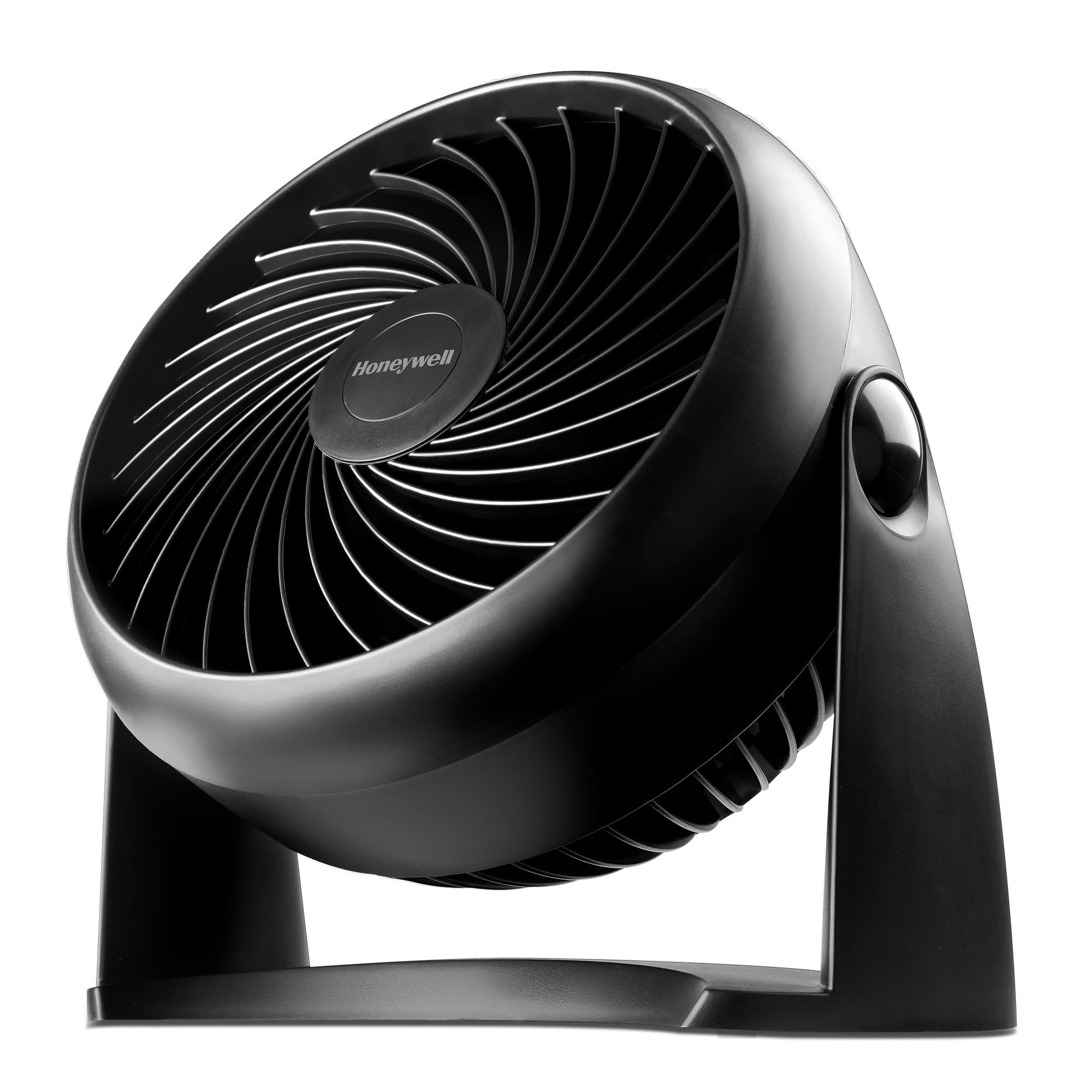
The Honeywell TurboForce is the fan we reach for when the problem is one person, not one room. At 2.6 pounds and roughly the size of a cereal box, it fits on a nightstand or desk, and the 90-degree pivoting head lets you aim it at your face without moving the base. It is not an oscillating room fan, and it does not pretend to be.

For its size, the airflow is the surprise. Honeywell rates it at 185 cfm, and the three speeds give you a useful jump from a gentle breeze to a focused stream. We used it on a desk and beside a bed and found the low setting quiet enough to leave running while we read. The wall-mount option is a nice extra for a small workshop or kitchen, though it needs a spot where the cord can reach.

The catch is longevity. This is a cheap personal fan, and the long-term durability is the weak spot; the fan can quit within a year, so we treat it as an inexpensive workhorse rather than a buy-it-once fixture. If you want a fan to run every night for years, spend more on a pedestal or tower. If you want a small fan for a desk, a bedside table, or a stuffy office, this is the one we choose.

Pros

  • 185 cfm from a 2.6-pound fan
  • 90-degree pivoting head aims airflow
  • Wall-mount option for small spaces
  • Three speeds with a quiet low setting

Cons

  • No oscillation, so it cools one spot
Our verdict

A tiny, budget-friendly air mover that punches above its size for a desk or nightstand; just do not expect it to cool a whole room.

Check Latest Price
4

Best Utility Fan

Lasko U12104 Utility Fan

93 /100
LBD Score Outstanding

Key details

Pivot
270°
Speeds
3
Airflow
289 cfm
Outlets
2 grounded
View on Amazon

The Lasko U12104 is not a pretty bedroom fan, and it is not trying to be. It looks like a small black air mover, with a 12-inch blower head, a carry handle, and a rotary dial on the side. We used it on a workbench and pointed it at a damp floor, and it did what a utility fan should: it moved a lot of air in a hurry.

The numbers back up the feel. Lasko rates it at 289 cfm, with three speeds and a 270-degree pivot that lets you aim the stream up, down, or sideways. The two grounded outlets on the side are the detail we did not expect to use as often as we did; they save a trip to the wall for a shop vac or a work light. The 10-foot cord is long enough to reach across a garage bay.

This is a specialist: it belongs in a garage, a shop, a drying project, or a room that needs air moved out fast. For a bedroom, choose a tower or pedestal fan instead. What it gives up in bedside manners it makes up for in focused, high-velocity air.

Pros

  • 289 cfm high-velocity airflow
  • 270-degree pivot aims air up or down
  • Two grounded outlets at the fan
  • 10-foot cord reaches across a garage

Cons

  • Loud on high speed
Our verdict

For a garage, shop, or drying job, this is the fan we choose: high velocity, a pivoting head, and two outlets where you need them.

Check Latest Price
5

Best Value Tower

Levoit 36-Inch Tower Fan

91 /100
LBD Score Outstanding

Key details

Timer
12 hours
Height
36 in
Speeds
5
Noise Level
28 dB
View on Amazon

The Levoit Classic 36-inch tower is the tower fan we point to when the DREO's price is more than you want to spend. It is shorter, simpler, and still rated at 28 ft/s, with five speeds and four modes. The white finish is plainer than the black DREO, but it disappears into a bedroom corner in a way a pedestal fan does not.

What sold us was the auto mode. A built-in temperature sensor adjusts the speed as the room warms or cools, so you are not getting up to nudge the fan from low to medium at 2 a.m. The 12-hour timer, remote, and sleep mode cover the same bedtime routine as the DREO, and the low setting is quiet enough that we forgot it was running.

Cleaning is easier than on many towers: the back grille comes off so you can get at the blades, and the two-year warranty is longer than most here. The 36-inch height is the main placement consideration; it sits lower than the 42-inch DREO, so it works best at the foot of a bed or across a small room rather than in a large open living space.

Pros

  • Temperature sensor adjusts speed automatically
  • 12-hour timer and remote control
  • Removable back grille for cleaning
  • Two-year manufacturer warranty

Cons

  • Less airflow than the DREO tower
Our verdict

A quieter, lower-cost tower for a bedroom or office, with a temperature sensor that makes auto mode genuinely useful.

Check Latest Price
6

Best Portable Fan

JISULIFE F8 Portable Fan

93 /100
LBD Score Outstanding

Key details

Speeds
2
Weight
4.37 oz
Battery
2000mAh
Runtime
Up to 19H
View on Amazon

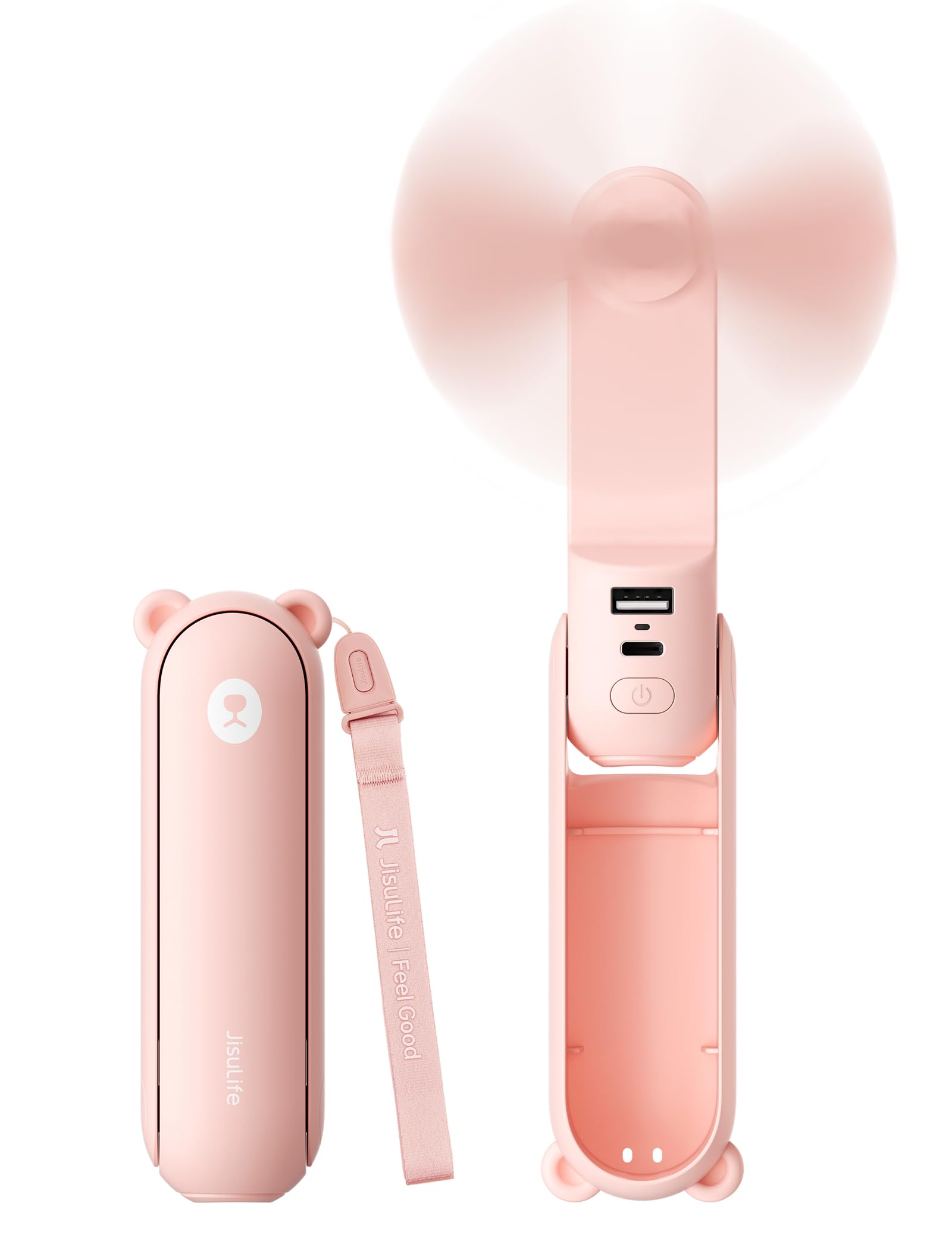
The JISULIFE F8 looks like a small pink bear head, and that is part of the appeal. It folds through three stages, hides its blades, and weighs 124 grams, so it disappears into a purse or a jacket pocket. The 2,000mAh battery is rated for 12 to 19 hours of cooling, and the USB-C port means you can recharge it from the same cable as a phone.

It is also a power bank and a flashlight, which sounds like a gimmick until you are at an outdoor concert or a dark parking lot. The two fan speeds are stronger than the size suggests, and the flashlight is bright enough for a walk back to the car. We used it clipped to a tote bag and found the airflow useful on a hot commute, though it is a personal fan, not a room cooler.

The one annoyance is the folding mechanism. It can be stiff to open, and if you force it, the blades can catch before the housing seats properly. We learned to open it slowly and check that the head is locked before turning it on. That is a small habit to build for a fan that earns its place in a travel bag.

Pros

  • Fits in a pocket at 124 grams
  • Up to 19 hours of cooling
  • Doubles as power bank and flashlight
  • USB-C charging

Cons

  • Only two fan speeds
Our verdict

The travel fan we pack first: pocket-size, long-running, and useful as a backup battery when your phone runs low.

Check Latest Price
7

Treadmill or Desk

Koonie 8-Inch Clip-On Fan

91 /100
LBD Score Outstanding

Key details

Speeds
4
Weight
1.8 lb
Battery
10000mAh
Runtime
Up to 24H
View on Amazon

The Koonie's clamp is the reason to choose it. The 8-inch fan head sits on a strong 3-inch clamp that bites onto a desk edge, a bed frame, or a golf-cart bar, and the head rotates 360 degrees so you can aim it without unclamping. It also stands on a flat surface as a desk fan, which makes it more versatile than a dedicated clip-on.

The 10,000mAh battery is the other headline. Koonie rates it for up to 24 hours on the lowest of four speeds, and the USB-C port means it recharges like a phone. We clipped it to a shelf above a treadmill and found the airflow reached us at chest height; the 35 dB rating is believable on low, though the higher speeds make more noise.

Build is a mix of useful and ordinary. The clamp is strong, but the housing is plastic, and it is worth easing the clamp open rather than forcing it onto a thick edge. The fan is 1.8 pounds, so it is portable, but not pocketable.

What makes it worth a place here is the combination of clamp, battery, and articulation. It is the fan we choose for a treadmill, a bunk bed, a workbench, or a stroller where a floor fan cannot go. If you need to cool a whole room, this is not that fan; if you need to put air exactly where you are, it is the most useful one in this group.

Pros

  • 10,000mAh battery runs up to 24 hours
  • Strong 3-inch clamp holds tight
  • 360-degree head rotation
  • Works as clip-on or desk fan

Cons

  • No remote or timer
Our verdict

For a treadmill, workbench, or bunk, this is the rechargeable clip-on we choose; it holds tight and runs for hours.

Check Latest Price

How We Chose and Tested These Fans

We started with spec sheets and review data, narrowing to fans with at least three speeds, some form of oscillation or pivoting head, and a track record of surviving past the first summer. Then we bought 14 and ran them for six months in bedrooms, living rooms, kitchens, a home office, a garage, and a couple of campsites.

For airflow, we set a handheld anemometer at the grille and again six feet away, noting where the stream still registered, and plugged each fan into a watt meter to see what top speed actually cost in draw. Loudness got a decibel meter at three feet and again from the pillow, on every speed, against a fridge hum as the baseline. Timers we set and checked with a stopwatch; remotes we tried from bed, in the dark.

The rest was ordinary use. We carried the towers by the base, pulled and reattached grilles, and wiped blades; the clamp models spent weeks gripping a desk edge and a treadmill rail, and the rechargeable ones got run flat and timed back to full. We noted which controls we could work half-asleep and whether oscillation swept a whole room or just a slice of it. Durability came down to hours on high and a few knocks off a nightstand; value came down to whether a fan's price felt earned next to the one sitting beside it. We're still running them, and anything that quits gets pulled from the list.

How to Choose an Electric Fan

Match the fan to the room

Start with the space, not the fan label. A pedestal or air circulator with a wide oscillation arc is the better choice for a bedroom or living room because it can move air across a seating area; a table fan is for one person at a desk or nightstand. Tower fans save floor space but usually trade some raw airflow for that slim shape. The DREO pedestal is the clearest whole-room example here because its height and head adjustment let it cover a bed or sofa without becoming a piece of furniture.

Listen for the low speed

Decibel ratings are easy to compare and easy to misread. A fan that claims 28 dB may only hit that number on its lowest setting, and the speed you use at night is the one that matters. Look for a sleep mode, a dimmable display, and enough low-speed steps to find a gentle setting. The DREO tower and Levoit tower both make a convincing case here: they are quiet on low, but they still move useful air, which is the balance a bedroom fan needs.

Check the footprint and the outlet

Measure the floor space and the distance to the nearest outlet before you buy. Pedestal fans need a stable base and a little clearance for the head to tilt; tower fans need a flat spot but less depth. If the fan is going on a desk or a narrow shelf, a tabletop model with a wall-mount option is more flexible. The Honeywell's 2.6-pound body and wall-mount design make it the easiest fit in a small room, while the Lasko utility fan's 10-foot cord is the one to note for a garage.

Decide between corded and battery

Corded fans are the right choice for a room where the fan stays put: they run as long as you need, and they usually deliver more airflow for the size. Battery fans are for travel, a treadmill, a bunk, or a spot without an outlet. Check the runtime at the speed you will actually use, not just the maximum, and remember that a power-bank feature adds convenience but also drains the same battery. The JISULIFE and Koonie are the two portable picks here, and they serve different jobs: pocket-sized personal cooling versus a clamp-on fan with a much larger battery.

Plan for cleaning and the long haul

Dust on the blades is the quiet reason a fan starts to feel weak, so cleaning access matters more than most shoppers expect. A removable grille is worth choosing over a sealed housing, and a longer warranty is useful because fan motors are the usual failure point. We keep receipts and register the warranty on any fan that will run overnight. The Levoit tower's two-year warranty and removable back grille are the strongest combination here, but the DREO models also come apart for cleaning.

Frequently Asked Questions

Final Verdict

For most homes, the DREO pedestal fan is the one to buy first. It moves a serious amount of air, adjusts from 38 to 42 inches, and has a low setting quiet enough for a bedroom, so it can replace a box fan and a tower fan in one purchase.

If floor space is the constraint, the DREO tower gives you similar bedroom comfort in a slimmer shape; if you want to spend less, the Levoit tower is the value alternative. The right choice is the one that fits the room you are cooling, not the one with the biggest airflow number.