Best Electric Bikes for Heavy Riders of 2026

A bike rated for 250 pounds and one rated for 400 can look identical in the photo. The difference shows up on a hill, with a loaded rear rack, at about 12 mph. I ride at around 240 pounds, and the e-bikes that felt wrong under me were never the slow ones — they were the flexy ones, where the stem creaked and the brakes needed a fistful of lever to scrub off speed. What you want is a bike that feels unhurried with you, your gear, and a week of groceries aboard.

The spec sheet doesn't settle it. Sellers shout about peak motor wattage, but torque and gearing decide whether you clear a climb from a standstill, and the frame rating and brakes decide how you feel coming back down. Battery life is the other number people misread: a big removable pack only helps if it lifts out easily to charge indoors and the range holds up with the motor working hard. We spent 10 months on eight e-bikes and weighed each against its price — the picks below are the ones that carried the weight without complaint.

1

Best Overall

Funhang EB-S1

87 /100
LBD Score Excellent

Key details

Motor
500W, 1,000W peak
Battery
48V 13Ah, removable
Bike Weight
70 lb
Max Rider Weight
330 lb
View on Amazon

Funhang prints a 330-pound maximum rider weight on the EB-S1, and that number is why it tops this list. It matches the highest rating in the group and undercuts every other bike that matches it, with a high-carbon steel frame and 26 x 4.0-inch fat tires underneath. When a heavier rider asks what to buy, this is the easy answer: a bike that has committed to a limit in writing.

The motor is the honest compromise. Five hundred watts rated, 1,000 peak, and 66.6 Nm of torque pull a 250-pound rider along rolling roads without drama; on a grade that keeps going, you will be in the lowest gear pedaling with it rather than cruising on throttle. The 20 mph top speed is a feature as much as a limit — it keeps the bike inside the class most states treat as a bicycle.

Two things we did not expect at the price: a rear rack rated to 60 pounds, and UL 2849 certification on the electrical system. The rack is the one that changes your week. Most bikes here list a rack and say nothing about what it holds, and 60 pounds covers a serious grocery run.

The 48V 13Ah pack is where the budget shows. Funhang claims 30 to 35 miles, and a heavier rider leaning on the throttle lands well under that, so plan charging around the shorter figure and the bike does everything you need. Front suspension takes the edge off broken pavement; the rough stuff still reaches you.

Pros

  • Published 330-pound rider rating
  • Rear rack rated to a full 60 pounds
  • UL 2849 certified electrical system
  • 26-inch fat tires on a steel frame

Cons

  • No rear shock, so rough roads reach you
  • 70 pounds to lift and store
Our verdict

If you want one heavy-duty e-bike to buy and stop researching, this is it: a published 330-pound rating, fat tires and a real rack at the lowest price in the high-capacity group.
Check Latest Price
2

Best for Steep Hills

Jasion EB5 MAX

88 /100
LBD Score Excellent

Key details

Motor
2,000W peak
Tires
26 x 4.0 in
Battery
48V 15Ah, 720Wh
Claimed Range
65 mi assist / 35 mi throttle
View on Amazon

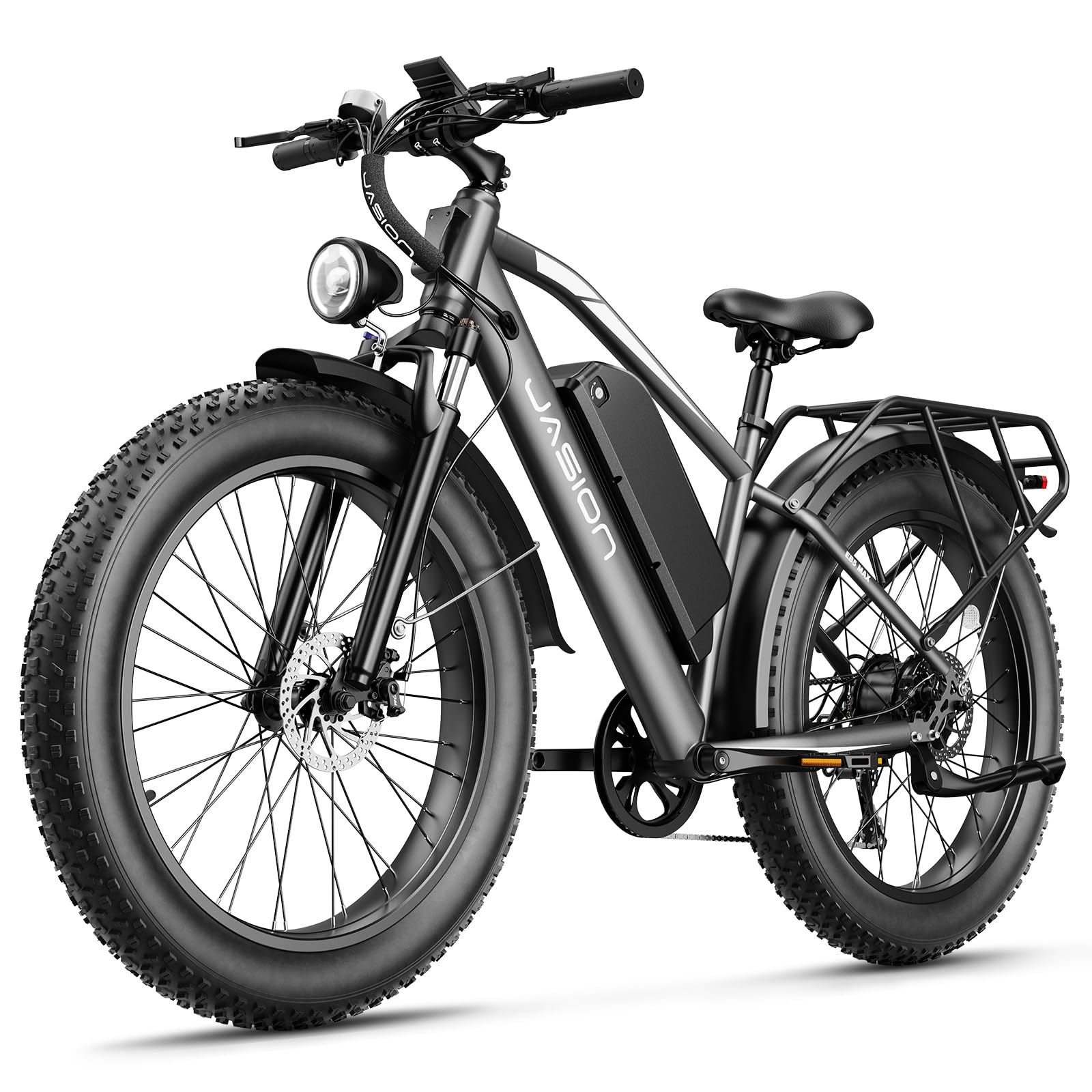
The EB5 MAX is the pick for a rider whose route has a hill in it. Jasion leads with 2,000 watts of peak power and backs it with a 720Wh battery, 26 x 4.0-inch fat tires and a 7-speed drivetrain; with a 240-pound rider aboard it still pulls past 30 mph on the flat, and the brakes hold their end on the descents. What we keep coming back to is the motor, which is the difference between finishing a climb and walking it.

What Jasion does not publish is a maximum rider weight, and in a guide built around that number it is the one thing to nail down before you order. Ask the seller directly if you are near or over 300 pounds, and get the answer in writing. The 26-inch wheels, steel frame and rear rack suggest a bike built for the load, but a suggestion is not a rating.

Elsewhere the spec reads like someone was thinking about big riders: front suspension, fenders, a color display, cruise control and a rack. It swallows a 6-foot-3 rider without complaint, and the reach to the bars suits a long torso. The cost is mass. This is a heavy machine to wheel around a garage, and Jasion does not list a bike weight either, so you are planning a rack purchase half blind.

Pros

  • 2,000W peak motor for steep climbs
  • 720Wh pack with a 65-mile assist claim
  • Fits riders over six feet
  • Rear rack, fenders, lights and cruise control included

Cons

  • No published maximum rider weight
  • Front suspension only, no rear shock
Our verdict

Buy this one if your rides include real climbs and you can get the missing rider weight rating confirmed by the seller first.

Check Latest Price
3

Best Dual-Motor Off-Roader

PUJH PU3

78 /100
LBD Score Very Good

Key details

Brakes
Dual hydraulic disc
Motors
Dual, 8,000W total
Battery
60V 20Ah, 1,200Wh
Max Rider Weight
330 lb
View on Amazon

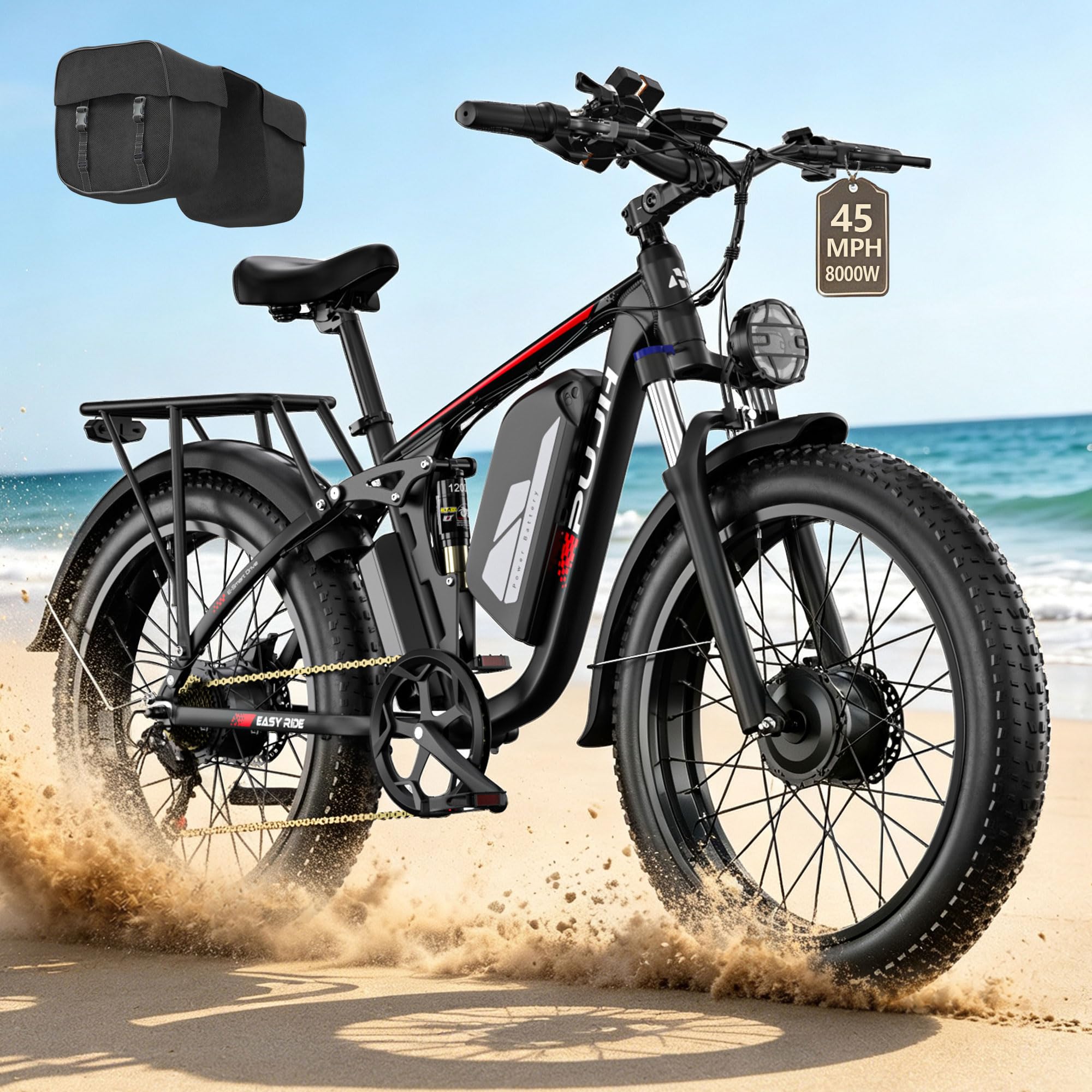
Dual motors, 8,000 watts between them and 220 Nm of claimed torque make the PU3 the most powerful bike here by a wide margin. It is rated to 330 pounds and built to carry that load over ground the rest of this group only nods at — dirt, gravel, snow, trail.

The parts that matter for a heavy rider are the ones underneath the headline. Full suspension — front fork, rear shock and seat springs — plus 24 x 4.0-inch fat tires keep a 250-pound rider planted when the surface turns bad, and dual hydraulic disc brakes are what you want on a long descent with a loaded rack behind you.

It also ships with a kit that suggests someone thought past the sale: a spare inner tube, spare brake pads, a pump, a phone holder and a lock, plus turn signals and a 9-watt headlight. Plenty of bikes in this group arrive with less in the box, and the spare tube is the item you will actually use.

The 60V 20Ah pack is the largest here at 1,200Wh and the range claim runs to 110 miles; run both motors and it drains quickly, so single-motor cruising is what makes the big numbers real. At 82.7 pounds it is also the heaviest thing on this page. Test both motors and the throttle on day one, before the first long ride.

Pros

  • Full suspension front, rear and seat
  • Dual hydraulic disc brakes
  • 1,200Wh battery with a 110-mile claim
  • Spare tube, pads, pump and lock included

Cons

  • 82.7 pounds, the heaviest bike here
  • Dual-motor mode drains the battery fast
Our verdict

Choose the PU3 if you ride off pavement with cargo and want dual motors, full suspension and hydraulic brakes under a 330-pound rating.

Check Latest Price
4

Best for Long-Distance Rides

Rideplux EB5 Mini

83 /100
LBD Score Excellent

Key details

Motor
4,000W peak
Tires
19 in knobby
Battery
48V 27Ah
Max Rider Weight
330 lb
View on Amazon

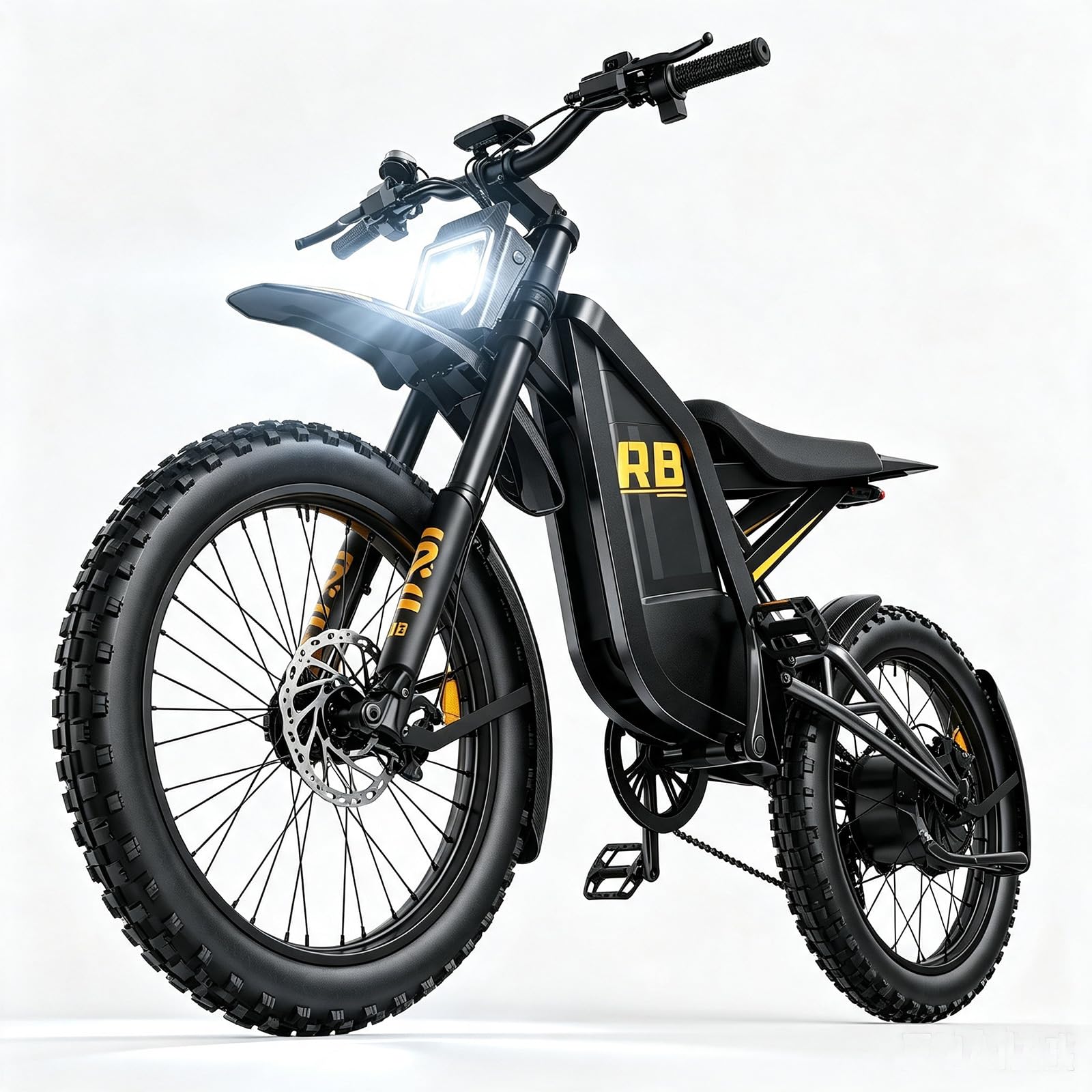
Here is what the EB5 Mini is not: a bicycle you will enjoy pedaling. Nineteen-inch motocross tires, a double-crown fork with a thru-axle and a 5-speed drivetrain put it closer to a small motorcycle, and the pedals are there for legality and for limping home on a flat battery. Judge it on those terms and nothing else here is quite like it.

The numbers are serious. A 4,000-watt peak motor with 220 Nm, 35 mph, a 35-degree climbing claim, dual hydraulic discs, turn signals, and a 48V 27Ah pack that carries the longest range claim in this group at 150-plus miles in pedal assist. Rider weight is rated to 330 pounds, which is the point — it is a lot of machine for a big rider who wants to keep up with traffic.

Where it earns its place is the combination of capacity and grunt: a 330-pound rating bolted to a motor that will not notice a hill. Where it gives ground is everything bicycle-shaped. You ride it rather than pedal it, the 19-inch knobby tires are a size you order rather than pick up locally, and it is a wide, heavy thing to store. If the destination matters more than the exercise, this is the one.

Pros

  • 4,000W peak with a 330-pound rating
  • 48V 27Ah pack and a 150-mile assist claim
  • Dual hydraulic brakes and turn signals
  • Street legal with pedals and full lighting

Cons

  • Pedals are for legality, not real pedaling
  • 19-inch knobby tires are a specialty size
Our verdict

Buy the EB5 Mini if you want range, grunt and a 330-pound rating and you have no interest in pedaling for exercise.

Check Latest Price
5

Best Budget Commuter

Funhang EB-C1

86 /100
LBD Score Excellent

Key details

Motor
500W, 1,000W peak
Battery
48V 374.4Wh, removable
Bike Weight
61.5 lb
Max Rider Weight
300 lb
View on Amazon

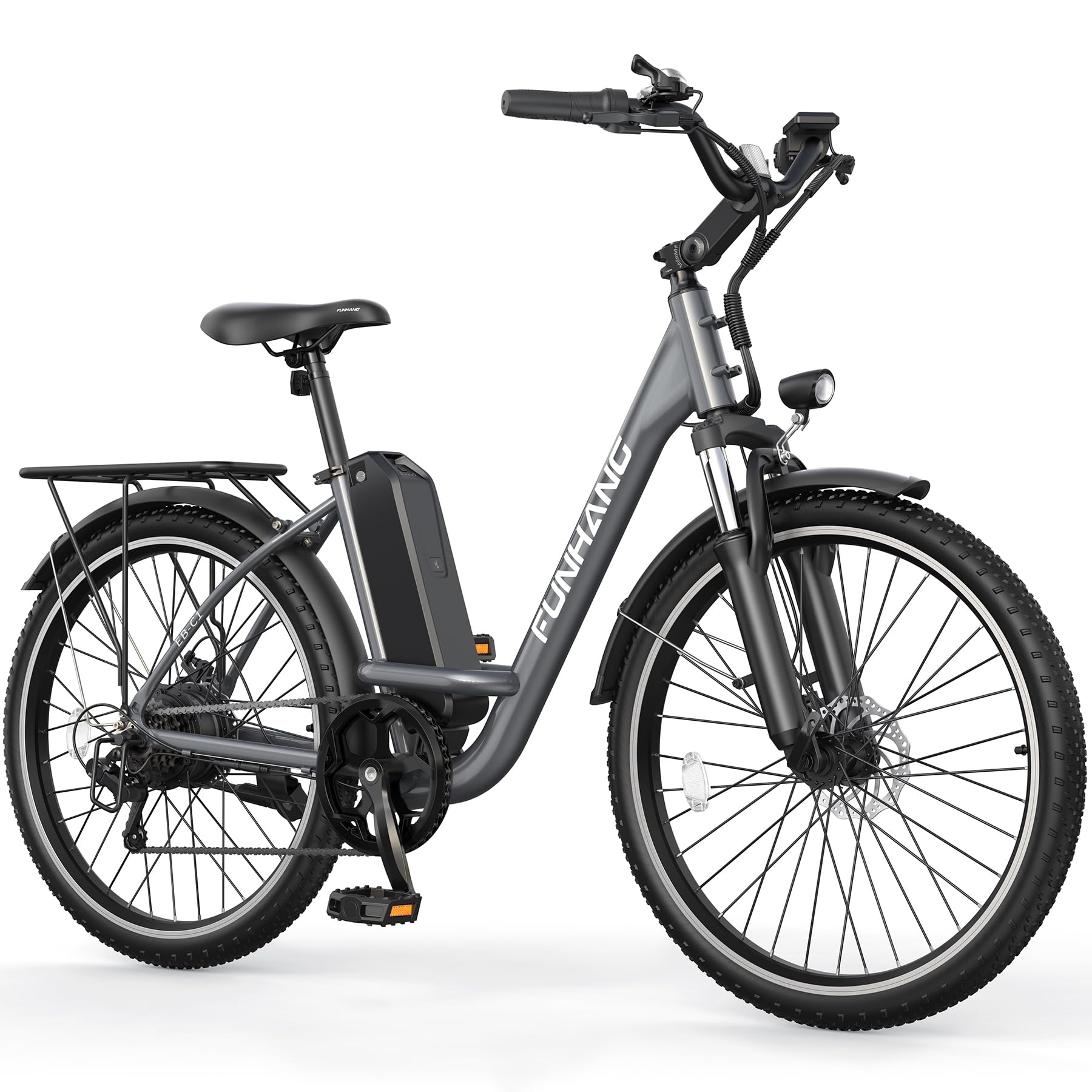
At 61.5 pounds, the EB-C1 is the only bike on this page you can reasonably lift onto a car rack or carry up a short flight of steps, and for a lot of riders that decides it. It is a 26-inch city bike rather than a fat-tire trail machine, rated to 300 pounds, with a high-carbon steel frame and 1.95-inch tires.

The drivetrain is modest and honest: 500 watts rated, 1,000 peak, 55 Nm, a 20 mph top speed, 7 speeds and five ride modes. Front suspension, fenders, lights, a rear rack and an adjustable stem are all included, along with UL 2849 certification on the electrical system. The adjustable stem is the piece we appreciate most, because it lets a taller or broader rider raise the bars instead of hunching over them.

The 48V 374.4Wh pack is the smallest here, and that is the trade. For a commute of a few miles each way it is plenty; plan a 20-mile day and you want the bigger pack on the EB-S1 instead. Assembly is the pleasant surprise — about 20 minutes with the tools in the box, most of it spent getting the handlebars where you want them.

Pros

  • 61.5 pounds, the lightest bike here
  • Adjustable stem and seat for taller riders
  • Rack, fenders, lights and UL 2849 certification
  • 300-pound rider rating at a budget price

Cons

  • Small 374.4Wh battery limits range
  • 300-pound rating is the lowest here
Our verdict

Buy the EB-C1 if you need a 300-pound-rated commuter you can actually lift onto a rack, and your rides are short.

Check Latest Price
6

Fat-Tire Trails

EOEOTWO E01

84 /100
LBD Score Excellent

Key details

Tires
26 x 4.0 in
Battery
48V 15Ah, 720Wh
Bike Weight
72.8 lb
Max Rider Weight
330 lb
View on Amazon

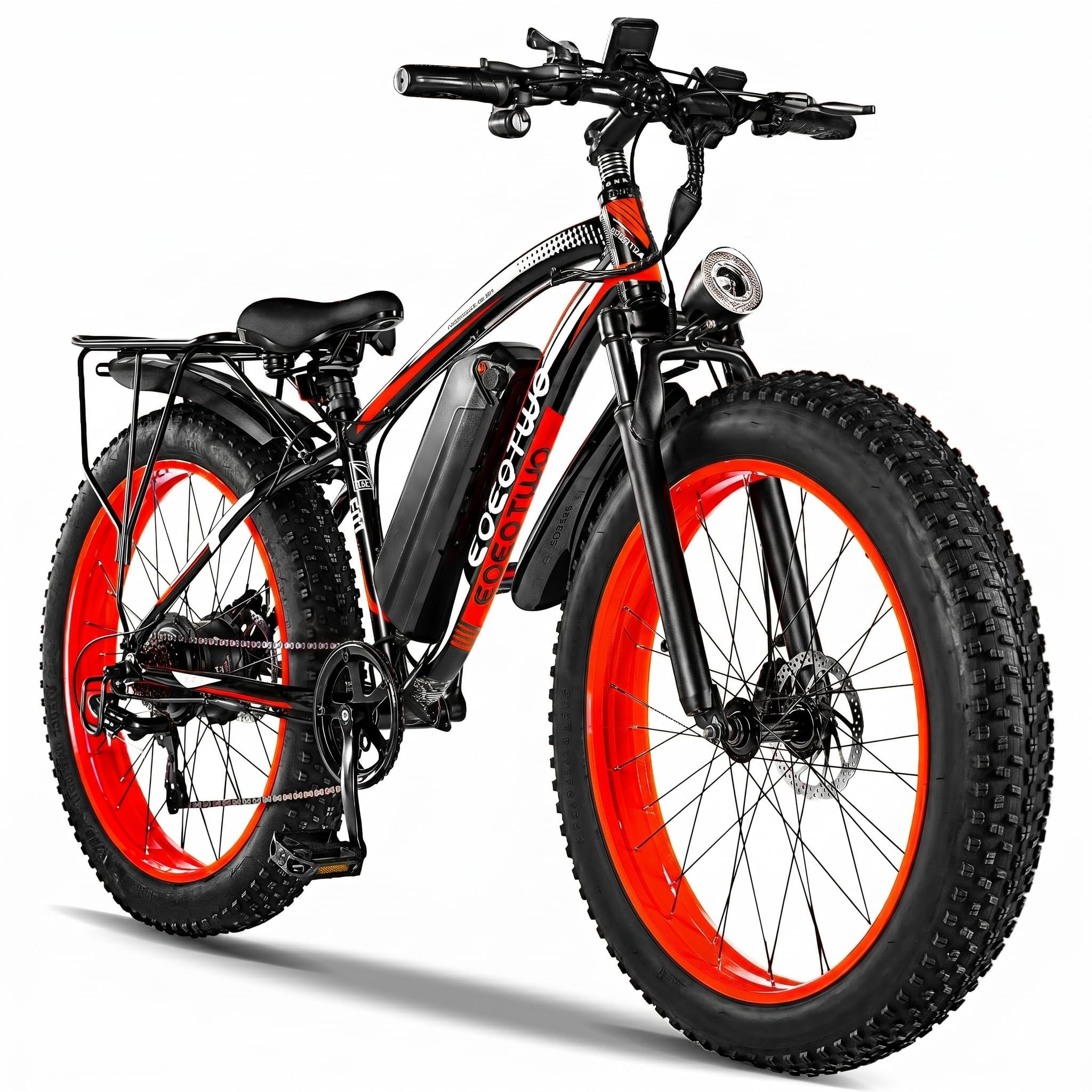
Most of the bikes here use steel frames; the E01 is aluminum, and that difference is the reason to look at it. Add 26 x 4.0-inch fat tires, a 330-pound rider rating and an SGS-tested UL 2849 electrical system, and you have a fat-tire bike that will not rust through a salty winter.

The rest of the spec is conventional in a good way: a 48V 15Ah, 720Wh pack with a 60-mile claim, a 7-speed twist-grip drivetrain, five ride modes including walk assist, front suspension, and a stated minimum rider height of 5 foot 6. Nothing here is exotic, and for a bike you are going to lean on with a load, that is reassuring.

Where it makes sense is as the trail-capable alternative to the Funhang EB-S1: same 330-pound rating, same fat tires, a bigger battery, and a frame that survives winter. What it gives up is the price advantage and the rear shock, and at 33 kg it is still a lot of bike to move around.

Power can cut out mid-ride on individual bikes. If it happens, reseat the battery in the frame and check the connectors before assuming the worst, and keep the one-year warranty paperwork in one place so a claim does not stall.

Pros

  • Aluminum frame resists corrosion
  • 330-pound rider rating
  • 720Wh battery with a 60-mile claim
  • SGS-tested UL 2849 electrical system

Cons

  • Front suspension only, no rear shock
  • 33 kg is heavy even in aluminum
Our verdict

Consider the E01 if you want the top pick's 330-pound capability in a rust-proof aluminum frame with a bigger battery, and can live without a rear shock.

Check Latest Price

How We Tested the Best E-Bikes for Heavy Riders

We started with the listings. Bikes with a published weight capacity that looked optimistic for the frame and wheels came off the list, as did anything whose brakes seemed under-specced for the load it claimed to carry. From there we kept a spread of prices, wheel sizes, and motor setups, and gave weight to frames with UL 2849 certification, since that's a safety claim a shopper can actually verify.

Eight bikes arrived in boxes. Three testers, ranging from about 210 to 310 pounds, each assembled one alone with only the included tools, timing the build and noting where the instructions stalled. After the first week I went back over every stem, seat post, and axle bolt with a torque wrench, then checked spoke tension and wheel trueness — a wheel that's fine under a 150-pound rider can start pinging under a heavier one.

Most riding happened on a 2.1-mile loop with a 9 percent grade at the end, run in the highest assist setting so the motor worked as hard as it would for a loaded commuter. We did hill starts from a dead stop in the lowest gear, descended with 35 pounds of water strapped to the rack while watching how much lever travel it took to stop, and drained each battery on the same loop to compare real range against the claim. Packs came out and went back in one-handed, or they didn't.

Ride quality got the long treatment: broken pavement, chip seal, gravel, and a full grocery run, with notes on creaks, saddle discomfort, and how much the fat tires smoothed out at lower pressure. We also counted what actually shipped in the box, since fenders, racks, and lights change the value math.

How to Choose an Electric Bike for a Heavy Rider

The Weight Rating Comes First

Almost every bike here publishes a maximum rider weight between 300 and 330 pounds, and that figure — not the frame shape or the tire size — is the one to check first. It covers you plus whatever you are carrying, so a 330-pound rating with a loaded backpack and a full rack is really a 310-pound rider on board.

Racks have their own limits, separate from the rider rating; Funhang rates the one on the EB-S1 to 60 pounds. A missing rating is not proof a bike is fragile, but it is a question to put to the seller in writing before you order, especially if you are near or above 300 pounds.

Rated Watts, Peak Watts, and What Actually Climbs

Two numbers describe an e-bike motor: the continuous rating and the peak it can hold briefly. Peak is the one on the box and the one that means least on a long climb. Torque in newton-meters is the better guide to whether a bike will haul 250 pounds up a grade, which is why the EB-S1's 66.6 Nm tells you more than a headline wattage does.

Headline figures do not compare across brands. A bike advertising 8,000 watts across two motors and one advertising 500 watts rated are measuring different things, so treat a big number as a hint about intent rather than a spec you can rank. If your route has a sustained climb, buy peak power and torque together.

Battery Size and Honest Range at 250 Pounds

Capacity in watt-hours tells you more than a range claim. A 374.4Wh pack is a short-hop battery, 720Wh is a real commuter, and the 1,200Wh pack on the PUJH is touring territory. Advertised range assumes a lighter rider in low assist on flat ground, so plan around roughly half the claim until you have your own numbers.

A removable, lockable pack matters if you park outside or live upstairs, and every pick here has one. Range is the number most likely to disappoint on any of these bikes, and it usually traces back to rider weight, throttle use and hills rather than a defective battery.

Brakes, Tires and Frames That Carry the Load

At 250 pounds plus, brakes stop being a detail. Mechanical discs work, but hydraulic discs ask less of your hands and resist fade on long descents, which is why the PUJH and the Rideplux run them and why we notice when a heavy-duty bike does not.

Tire volume is the other suspension. Four-inch fat tires at low pressure smooth broken pavement and grip loose ground, at a cost in range; 1.95-inch city tires roll easier and transmit more. Steel frames are cheaper and heavier, aluminum will not corrode through a salty winter, and 26-inch wheels roll over curbs better than 20-inch ones.

Living With 60 to 85 Pounds

Every bike here is heavy — 61.5 pounds at the light end, 82.7 at the top — and that weight lands on you every time you lift it onto a rack, up a step, or into a garage. Check your carrier's per-bike rating rather than its total: a rack rated for two 35-pound bikes is not a rack for this class of machine.

Assembly is straightforward on the picks here, but budget time to check brake alignment, derailleur indexing and every frame bolt before the first real ride. A torque wrench and a monthly spoke check are cheap insurance on a bike carrying this much load.

Frequently Asked Questions

Final Verdict

For most heavier riders, the Funhang EB-S1 is the bike to buy. It publishes a 330-pound rating, rolls on 26-inch fat tires, carries a rack rated to 60 pounds, and costs less than every other high-capacity pick here. The trade is a 500-watt-rated motor and front-only suspension.

If long, steep climbs are part of your week and the budget stretches, the Jasion EB5 MAX is the upgrade — just get its rider weight rating in writing before you order. Riders who mostly commute on pavement and have to lift the bike should look at the EB-C1 instead: 61.5 pounds and 300 pounds of capacity for the least money here.