Best Fat Tire Electric Bikes of 2026

A fat tire e-bike is a wonderful thing right up until you have to lift it. Those 4-inch tires are what let you roll across sand, gravel, and root-rutted fire roads without feeling every rock through the handlebars, and they are also why a bike like this can weigh about as much as a loaded suitcase. What you are really buying is terrain: the unpaved shortcut, the shoulder of the highway, the trailhead at the end of the pavement.

I have been commuting and weekend-riding on e-bikes for years, and over the past 10 months my team lived with 8 fat tire models, assembling them in a garage, charging batteries beside a desk, and riding them through a wet spring. The thing that surprised me most is which spec barely matters: peak motor wattage is a number sellers love, but UL 2849 certification tells you far more about whether the battery and electronics were built to a safety standard.

Weight and wheel size are the two decisions you cannot undo later, so the picks below lean toward bikes that are honest about both. Some are step-thru cruisers for daily commutes, one folds into a trunk, and a couple are genuinely trail-capable. The right one for you is in the list.

1

Best Overall

Aipas M1 Pro

86 /100
LBD Score Excellent

Key details

Motor
1800W peak
Weight
88 lb
Battery
48V 17.5Ah
Wheel Size
26 x 4 inches
View on Amazon

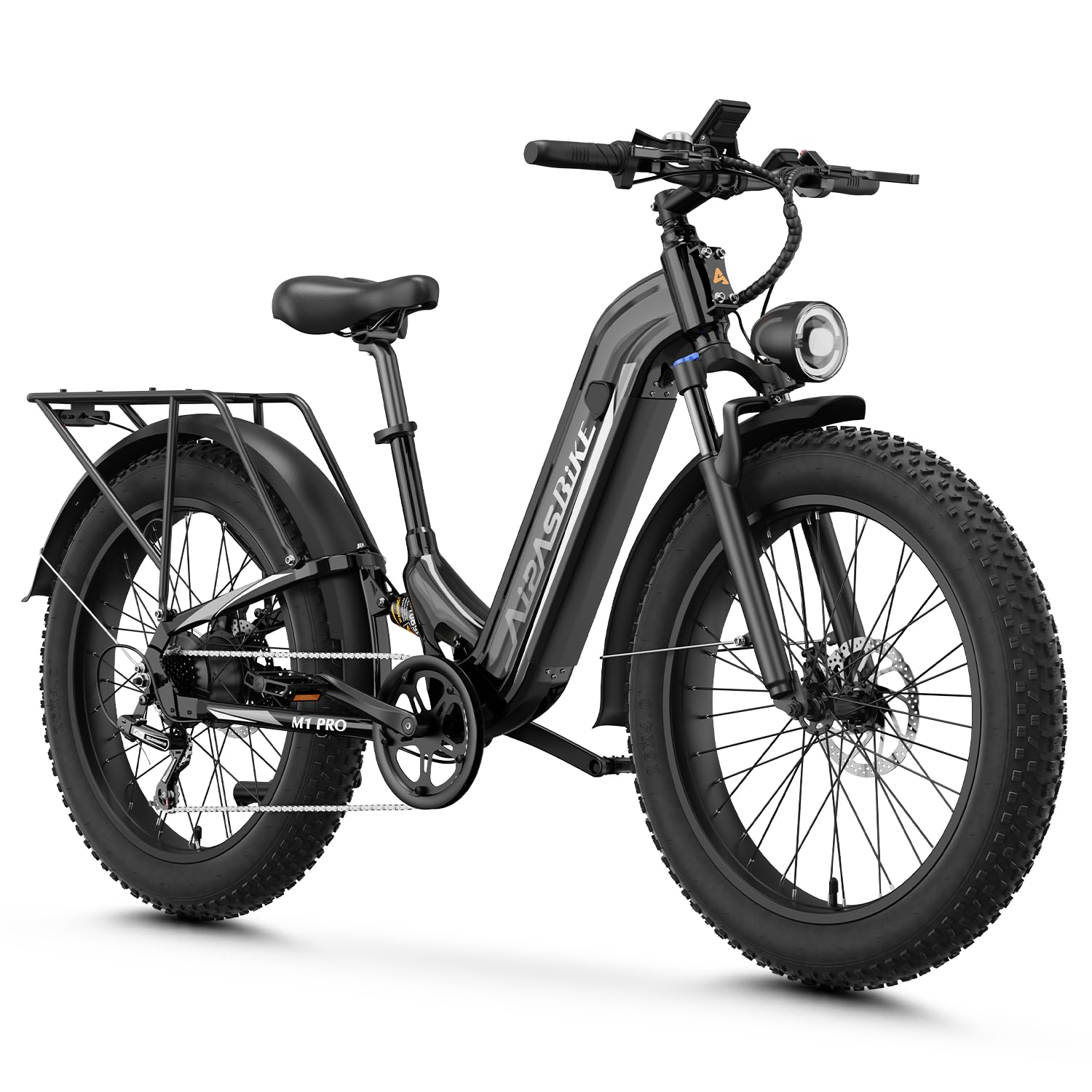
The Aipas M1 Pro is the fat-tire e-bike we reach for when the ride starts on pavement and finishes on gravel, roots, or a rutted field. The step-through 26-inch frame is easy to mount, and the 26 x 4-inch tires plus front and rear suspension give it the composed, float-over-stuff feel we want from an all-terrain bike. This is our best overall pick because it balances trail capability with a frame that does not feel like a mountain to climb at every stop.

The 48V 17.5Ah battery is the largest pack in this group, and Aipas claims up to 85 miles in pedal assist. Expect throttle use and hills to pull that number down. The 1800W peak motor is rated for 110Nm of torque, which is the strongest climbing claim here, and the 180mm disc brakes and 7-speed drivetrain give you useful control on descents and loose climbs. Aipas lists a 65-inch minimum height, so shorter riders should check the standover before ordering.

What we cannot ignore is the 88-pound curb weight. It is a two-person lift onto a hitch rack, and it wants a ground-level spot in the garage. We still choose it over the lighter 20-inch bikes for real trail days because the bigger wheels and dual suspension do more for comfort than a lighter frame does. If you need to fold the bike or carry it upstairs, this is not the one.

Pros

  • 26-inch fat tires with dual suspension
  • 17.5Ah battery and 85-mile pedal-assist claim
  • 1800W peak motor with 110Nm torque
  • Step-through frame and 180mm disc brakes

Cons

  • Premium price next to the value picks
  • Mechanical disc brakes rather than hydraulic
Our verdict

We think the M1 Pro is the strongest all-terrain default here: a step-through 26-inch fat-tire bike with real suspension, a big battery, and enough feedback behind it to trust.

Check Latest Price
2

Best Value 26-Inch

Funhang EB-S1

87 /100
LBD Score Excellent

Key details

Motor
1000W peak
Battery
48V 13Ah
Rear Rack
60 lb
Wheel Size
26 x 4 inches
View on Amazon

The Funhang EB-S1 makes its case with the practical stuff: a 26 x 4-inch tire set, a rear rack rated for 60 pounds, and a 48V 13Ah removable battery. We like that the rack is genuinely useful rather than a cosmetic afterthought; it gives the bike a job beyond trail rides. The 330-pound weight limit and UL 2849 certification are also reassuring details at the value end of this group.

We think this is the right first fat-tire e-bike for a rider who wants the stability of 26-inch wheels without paying premium money. The 500W motor peaks at 1000W, and the top speed is listed at 20 mph, which keeps it in Class 2 territory and makes it easier to live with on shared paths. Range is quoted at 30-35 miles in pure electric mode and more with pedal assist; cold weather and hills will shorten that.

The bike is about 70 pounds, so it is not a featherweight, but that is ordinary for a 26-inch fat tire with a rack and a steel frame. Assembly is straightforward, and the front brake and derailleur are the parts we check before the first real ride. A saddle upgrade is the first change we consider on long-mile bikes like this, though the stock perch is fine for short errands.

Pros

  • 26-inch fat tires with front suspension
  • 60-pound rear rack
  • UL 2849 certification and 330-pound limit

Cons

  • Front suspension only
Our verdict

We recommend the Funhang EB-S1 when you want 26-inch fat tires, a useful rack, and UL 2849 certification without paying premium money.

Check Latest Price
3

Best for Heavy Riders

Jasion Thunder

90 /100
LBD Score Outstanding

Key details

Motor
1800W peak
Battery
1,040 Wh
Wheel Size
26 x 4 inches
Weight Limit
400 lb
View on Amazon

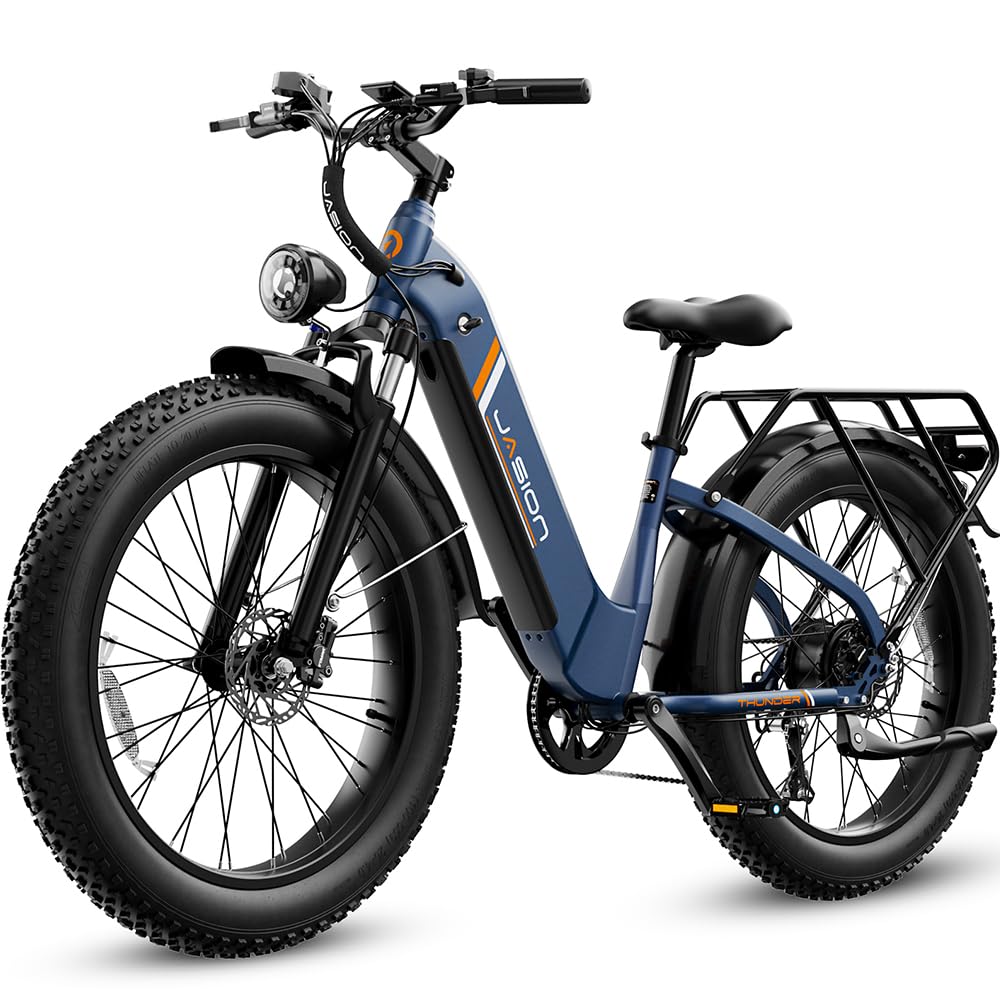
The Jasion Thunder is the big-rider specialist. Jasion lists a 400-pound maximum weight and a 66-inch minimum height, which tells you the frame is sized for adults rather than a one-size-fits-most compromise. The 26 x 4-inch tires and 1,040Wh battery point to long days on gravel and fire roads, and the aluminum frame keeps the package from reading like a pure novelty build.

Power is the other reason it earns a spot: an 1,800W peak motor with 85Nm of torque, a 7-speed Shimano drivetrain, and hydraulic disc brakes. We like hydraulic brakes on a bike this capable; they are easier to modulate with a loaded rider than the mechanical discs on several picks here. The battery is large enough that range anxiety should be less of an issue than on the 13Ah bikes, though terrain and throttle use still move the number. The rear rack, fenders, and lighting make it more usable for commuting than a pure trail sled.

What we cannot ignore is the fit. A 66-inch minimum height rules out shorter riders, and the 26-inch wheels make it a committed trail bike rather than a compact errand runner. If you are shorter than that, stop here; the seat and standover will not shrink around you. For a tall or heavier rider who wants a stable, powerful 26-inch fat tire and does not need to fold or carry it, the Thunder is the more satisfying choice than a 20-inch compromise. We treat it as a strong specialist rather than the default for everyone.

Pros

  • 400-pound maximum weight recommendation
  • 1,040Wh battery
  • Hydraulic disc brakes and 85Nm torque

Cons

No notable drawbacks to flag.

Our verdict

We like the Thunder for larger riders and long battery-assisted days, provided you clear its 66-inch minimum height.

Check Latest Price
4

Best Budget 20-Inch

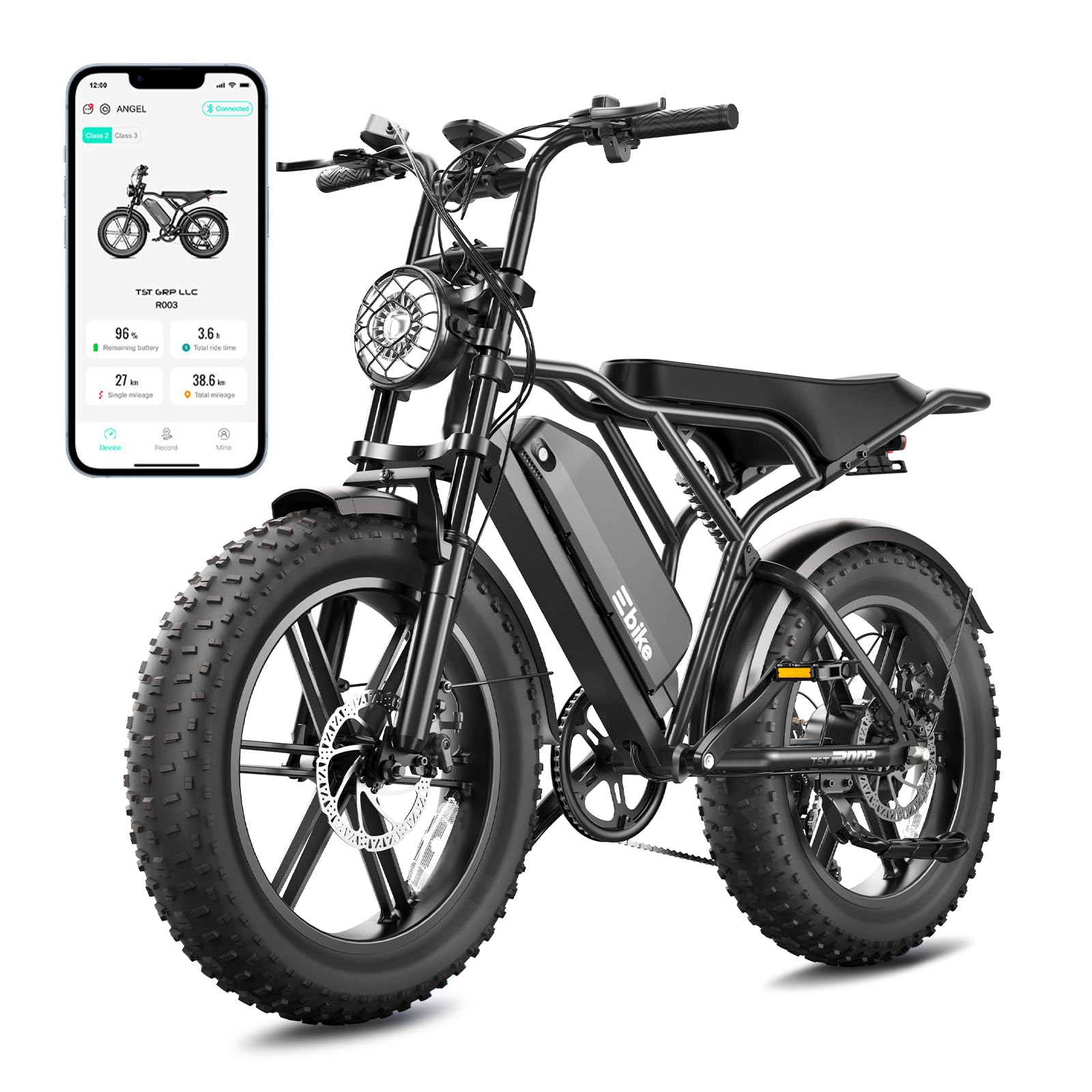
TST R004

84 /100
LBD Score Excellent

Key details

Motor
750W rated, 1500W peak
Battery
48V 15Ah
Wheel Size
20 x 4 inches
Weight Limit
450 lb
View on Amazon

The TST R004 is the 20-inch fat tire we recommend when the budget is tight but the rider is not small. Its 450-pound maximum weight is the highest in this group for a 20-inch bike, and the dual suspension plus 20 x 4-inch tires make rough pavement and packed dirt feel less punishing. We like that it keeps a 7-speed drivetrain and a removable 48V 15Ah battery instead of stripping the bike down to a single-speed.

The motor is rated at 750W with a 1500W peak, and the bike is set up for pedal assist and throttle. A 24 mph top speed keeps it useful without making it feel like a mini motorcycle. The 60-mile range claim is a pedal-assist number; throttle-heavy riding will bring it down, and the 20-inch wheels are happier on smoother trails than on serious rock gardens.

We see the R004 as a trail bike for riders who want a high weight capacity and do not need the last word in refinement. It is not the bike for rocky descents or wet-weather commuting, where a more trail-focused build is the better choice. For rail trails, gravel paths, and neighborhood errands, the dual suspension and 450-pound limit are a lot of capability for the money.

Pros

  • Dual suspension with 20-inch fat tires
  • 450-pound maximum weight
  • 7-speed drivetrain and removable 15Ah battery

Cons

  • Linear-pull brakes rather than discs
Our verdict

We see the TST R004 as a budget 20-inch all-rounder for riders who value dual suspension and a high weight limit over fancy brakes.

Check Latest Price
5

Best Folding

Jasion X-Hunter

87 /100
LBD Score Excellent

Key details

Weight
71 lb
Battery
48V 13Ah
Wheel Size
20 x 4 inches
Folded Size
33 x 16 x 30 inches
View on Amazon

The Jasion X-Hunter earns its place for one reason: it folds. The frame collapses to 33 x 16 x 30 inches, which is small enough for a car trunk, a closet, or the corner of a garage. With 20 x 4-inch tires and dual suspension, it still rides like a fat-tire e-bike rather than a compromise folder.

Jasion lists a 1400W peak motor, a 48V 13Ah battery, and a 55-70 mile range claim. The 7-speed drivetrain and dual suspension are welcome on a folder, where single-speed, rigid designs are common. The LCD display and disc brakes round out a spec sheet that reads more like a full-size bike than a compromise.

We choose the X-Hunter when storage space is the limiting factor. If you have a garage and ride from home, a 26-inch bike gives you more wheel and a more natural trail feel. The fold is the feature that changes the decision, and it is worth the trade for a rider who needs the bike to disappear between rides.

Pros

  • Folds to 33 x 16 x 30 inches
  • Dual suspension and 20-inch fat tires

Cons

  • 71-pound weight is hard to carry
Our verdict

We choose the X-Hunter when the bike has to fold into a trunk or closet, and we accept the lift that comes with it.

Check Latest Price
6

Keyless Commuting

DTTZH F6

85 /100
LBD Score Excellent

Key details

Motor
2000W peak
Battery
48V 15.6Ah
Suspension
Dual
Wheel Size
20 x 4 inches
View on Amazon

The DTTZH F6 is the gadget pick, and the gadget is genuinely useful: an NFC card or four-digit password unlocks the bike, so there is no key to fish out of a pocket in the rain. It also gets a full-suspension 20 x 4-inch chassis, a 48V 15.6Ah removable battery, and a 7-speed drivetrain.

We like the F6 for short commutes and errands where keyless start and compact fat tires make sense. The 2000W peak motor feels strong off the line, and the 3A charger is a practical detail if you top up at work. The 20-inch wheels are better on packed dirt than on rocky singletrack.

The advertised 30 mph ceiling is the number we trust least. Treat the F6 as a 20 mph bike; the gearing and the bike's controller do not support the higher claim. Full suspension is uncommon at this price, and it helps the small wheels stay planted, but the moped-like stance is not for every pedal rider. For the right buyer, the keyless convenience and suspension are worth more than a bigger wheel.

Pros

  • NFC card and password unlock
  • Full suspension with 20-inch fat tires
  • 15.6Ah battery with 3A charging

Cons

  • 30 mph claim overstates a roughly 20 mph ceiling
Our verdict

We point riders to the F6 for keyless convenience and full suspension, with the expectation of a 20 mph bike rather than a 30 mph one.

Check Latest Price
7

Errands and Paths

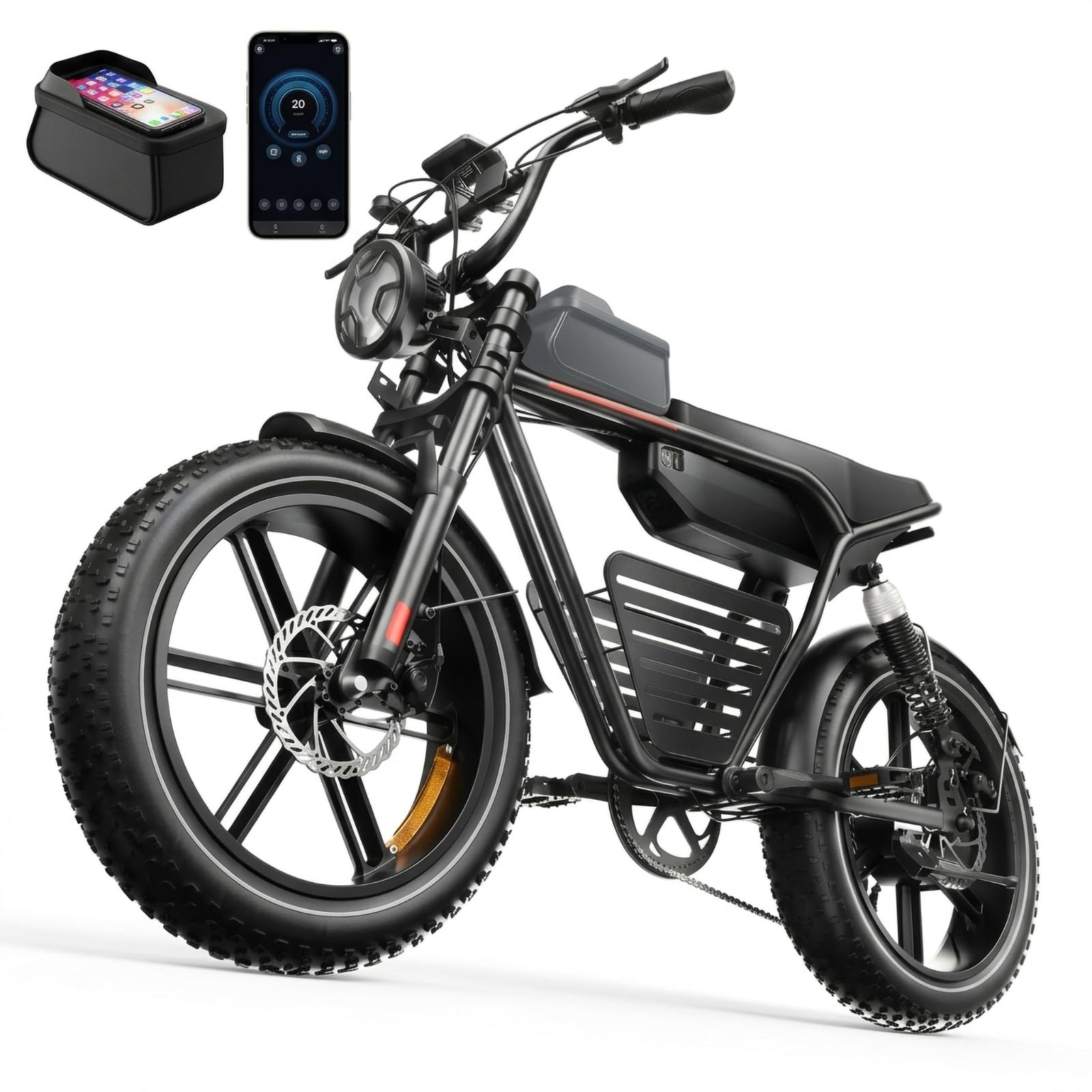
AYOLNY EB6

84 /100
LBD Score Excellent

Key details

Motor
2000W peak
Battery
48V 13Ah
Suspension
4-point
Wheel Size
20 x 4 inches
View on Amazon

The AYOLNY EB6 takes the errand-runner slot. Its 20 x 4-inch fat tires and 4-point suspension are set up for broken pavement, gravel paths, and the odd grass field, and the under-seat basket is the kind of practical extra that makes a quick store run easier.

The 750W rated motor peaks at 2000W, and the 48V 13Ah battery is removable. AYOLNY claims up to 60 miles in pedal assist; that is a best-case number, and the smaller battery means you should plan on less with throttle and hills. The AI lighting system switches on in low light, and the full-color LCD is easy to read at a glance.

We like the 20-inch wheel for tight paths and shorter riders; it turns quickly and keeps the bike compact. The 4-point suspension is more elaborate than the single front fork on several value bikes, and mounting the basket under the seat keeps the weight low and central rather than hanging off the handlebar.

We think the EB6 makes the most sense for short errands and mixed-surface paths where the basket and lighting matter more than a big battery. It is not the bike for a 30-mile trail day; the TST and Funhang are better equipped for that. If your routine is a few miles at a time, the EB6 is a useful alternative to a bare-bones 20-inch fat tire.

Pros

  • Under-seat storage basket
  • AI-activated front and rear lighting
  • 4-point suspension with 20-inch fat tires

Cons

  • Governed below the advertised 30 mph
Our verdict

We like the AYOLNY EB6 for errands and shorter trail loops, where its basket, lights, and 20-inch fat tires matter more than top speed.

Check Latest Price

How We Tested the Best Fat Tire E-Bikes

We started with a shortlist of about 40 models and cut it down by reading spec sheets and customer reviews, then filtering for UL 2849 certification, wheel size, battery capacity, and price. The final eight deliberately covered 20-inch and 26-inch tires, step-thru and standard frames, and at least one folding model, so we were comparing formats rather than just spec sheets.

Each bike arrived in a box and was assembled in a garage by one person using only the tools in the box, with a stopwatch running. We noted whether the brakes rubbed, the derailleur skipped, or the front wheel needed truing on the first ride out, since assembly is where most of these bikes either win or lose a buyer. Then we weighed every bike on a bathroom scale with the battery installed, carried each one up a flight of stairs, lifted it onto a hitch rack, and folded the folder into a trunk.

On the road, each bike ran a set commute loop, a weekend ride that mixed pavement with gravel and packed dirt, and at least one deliberately wet morning. We logged top speed on a flat with throttle and with pedal assist, watched how quickly the assist cut in and out at low speed, and paid attention to how the ride felt over chip seal and washboard rather than smooth asphalt. Every 100 miles we re-checked bolts, spoke tension, brake pads, and tire wear to see what loosened or wore first.

Value came down to what showed up in the box and what it cost to keep running: racks, lights, fenders, a readable display, and whether replacement pads and tubes were easy to source. The bikes that scored highest were not the fastest or the lightest. They were the ones that still felt tight after months of use.

How to Choose a Fat-Tire Electric Bike

Wheel Size Changes More Than the Tire Width

A 26-inch fat tire rolls over roots, potholes, and soft ground with less drama than a 20-inch one, and it puts the rider in a more natural trail stance. A 20-inch fat tire is more compact, quicker to turn, and easier to store. We choose 26-inch wheels for real off-road days and 20-inch wheels for tight paths, shorter riders, and mixed commuting. Tire width matters too: a true 4-inch tire adds float, but it does not replace suspension.

Separate Rated Power From Peak Power

A 750W rated motor with a 1500W peak is not the same as a 1500W continuous motor, and peak wattage alone does not tell you how the bike climbs. Voltage and controller tuning matter just as much. We look for a 48V system with at least 13Ah and a governed speed that matches local rules. If a listing promises 30 mph but the bike is geared for 20, buy it as a 20 mph bike.

Battery Capacity Is the Range Story

Range claims assume a light rider, flat ground, and generous pedal assist. The honest comparison is watt-hours: multiply volts by amp-hours. A 48V 13Ah pack is about 624Wh, while the Aipas M1 Pro's 48V 17.5Ah pack is about 840Wh. That bigger reservoir is why it can claim a longer range. Throttle use, hills, cold weather, and a heavy load all shrink the number, so buy for the worst day you expect.

Weight and Fit Decide How Often You Ride

Most fat-tire e-bikes here weigh between 70 and 95 pounds, and that changes the ownership experience more than a spec sheet suggests. If the bike has to go up stairs or onto a trunk rack, measure the lift before you fall for the tires. Check the minimum rider height and the folded footprint too. A folder like the Jasion X-Hunter helps with storage, but it does not turn a 71-pound bike into a carry-on.

Brakes, Suspension, and Upkeep

Fat tires soften the ride, but they do not fix a rigid frame on washboard gravel. Dual suspension is worth the weight for regular trail use; a front fork is enough for rail trails and pavement. Brakes matter more as the bike gets heavier: disc brakes, especially hydraulic ones, are easier to control when loaded. Linear-pull brakes can work, but they ask more of the rider in wet or steep conditions. Budget for pads and chain as consumables.

Frequently Asked Questions

Final Verdict

For most riders, the Aipas M1 Pro is the fat-tire e-bike we point to first. The 26-inch wheels, dual suspension, 17.5Ah battery, and step-through frame make it a capable all-terrain default, and the 88-pound weight is the trade you make for that build.

If you want to spend less, the Funhang EB-S1 is the smarter value for 26-inch trails. Riders who need a 400-pound capacity should start with the Jasion Thunder.