Best Circular Polarizing Filters of 2026

A circular polarizer is the one filter I still bother screwing onto a lens. It cuts glare off water and glass, pulls color out of foliage, and gives a blue sky some shape instead of a flat wash. The catch is that a bad one makes everything look slightly off — a color cast, soft edges, or a ring that fights your fingers every time you rotate it.

Over eight months, I tested 14 circular polarizing filters, from budget options to premium glass, and the differences showed up fast. Fit matters more than shoppers expect: a filter that binds on the threads or sits too proud on a wide-angle lens becomes a hassle every time you pack your bag. I also compared value for money, because a polarizer should earn its spot in your kit, not just live in its case. The keepers rotated smoothly, held color neutral, and stayed sharp when I zoomed in — the ones below are the picks I'd hand to a friend, with notes on where each one makes sense.

1

Best Overall

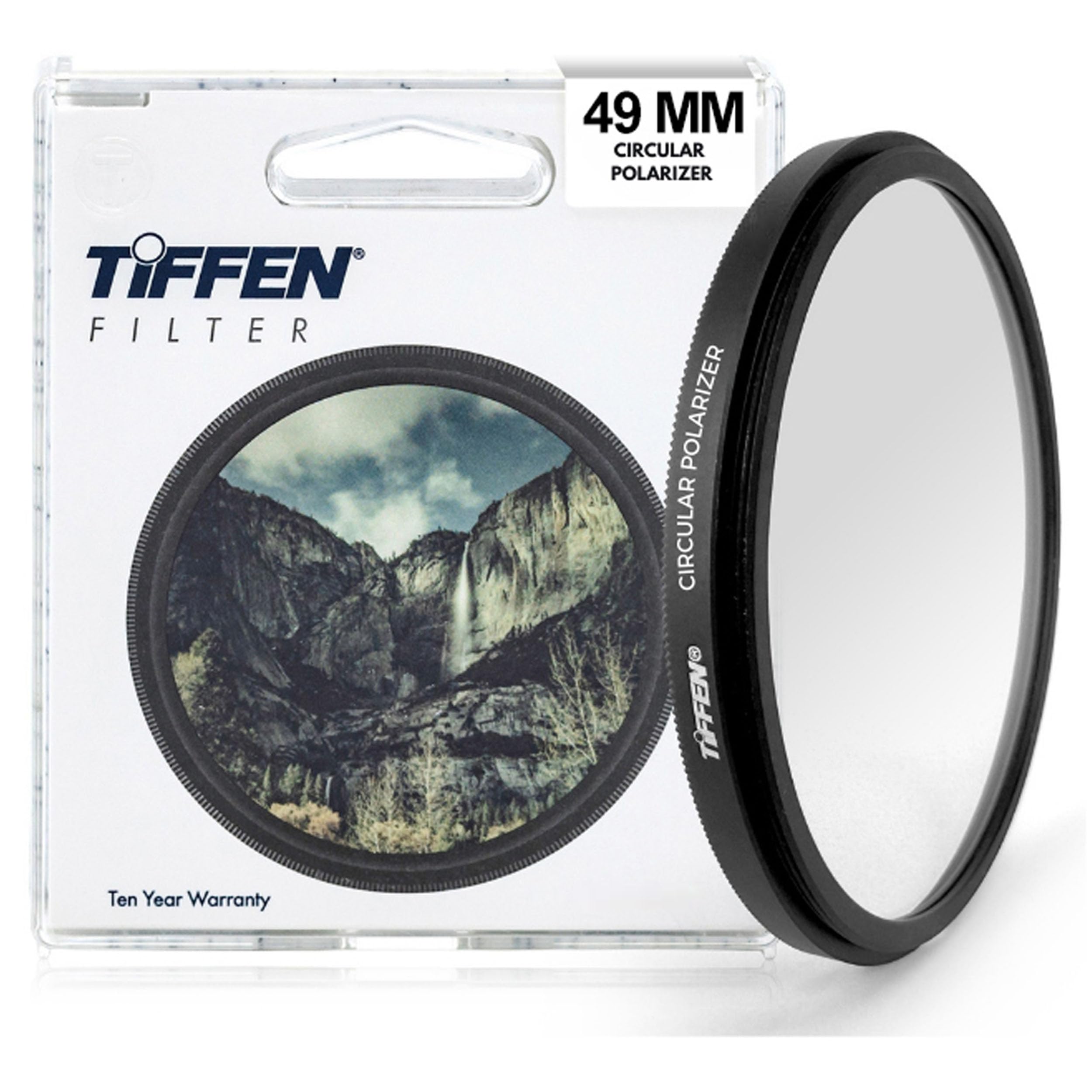
Tiffen 49mm Circular Polarizer

93 /100
LBD Score Outstanding

Key details

Glass
Schott B270
Coatings
Multi-layer ColorCore
Warranty
10 years
Thread Size
49mm
View on Amazon

Plenty of polarizers cost more than this one and do not do a better job in the light most of us actually shoot in. Tiffen builds the 49mm from Schott B270 glass with a multi-layer ColorCore coating, packs it in a padded pouch, and backs it for ten years. That combination is why it earns the top spot here: nothing else in this guide is a better deal on a per-photo basis.

What it does is the whole point of a polarizer. Glare slides off water, glass and wet asphalt, blue sky deepens instead of going flat, and the color that comes through reads natural rather than tinted — the thing you notice most when a cheap filter gets it wrong. Because it is a circular polarizer, autofocus and metering behave normally on DSLRs and mirrorless bodies alike, and we could not see a sharpness penalty in the files.

The compromises are mechanical. The ring needs a firm, deliberate twist to move and does not glide like the premium filters here; the upside is that the setting stays exactly where you put it between shots. The front thread is fussier about lens caps too — a couple of ours sat loosely and one would not grab at all — which is worth knowing if you rely on a cap rather than a hood.

None of that touches the pictures. On a lens you shoot outdoors, this is the filter we leave mounted through autumn and take off for interiors, and the money you save goes toward the glass that actually resolves the image.

Pros

  • Cuts glare and deepens skies reliably
  • Schott B270 glass holds image sharpness
  • Ten-year manufacturer warranty
  • Budget price for the optical quality

Cons

  • Coating is not rated water-resistant
Our verdict

Our pick for most people: it cuts glare and deepens blue skies with no sharpness penalty we could see, at a price that leaves room for the lens.

Check Latest Price
2

Best for Color Accuracy

Breakthrough X4 CPL 77mm

87 /100
LBD Score Excellent

Key details

Glass
Schott B270 Superwhite
Coatings
MRC16 nano
Warranty
25 years
Thread Size
77mm
View on Amazon

Twenty-five years is a long time to stand behind a piece of glass that lives in a camera bag, and Breakthrough laser-engraves a serial number into the frame of every X4 so it can do exactly that. Under the guarantee sits Schott B270 Superwhite glass, MRC16 nano coating and a weather-sealed frame — the specification list of a filter built to be used hard.

What you are buying is neutrality. Most polarizers push a yellow-green cast that has to come out in editing; the X4's pitch is a flat transmission curve, and in our files it needed noticeably less correction than the cheaper filters here. Sharpness held up too, which is the quieter thing inexpensive polarizers steal. If you shoot architecture, products, or landscapes you plan to print, that is the difference between a filter and another edit.

In the hand it feels like the money: a solid frame, an evenly damped ring that stays where you set it. The notches are shallow, though, and breaking the filter loose from a lens after a week in a bag took a deliberate grip. That is a small annoyance on a lens you leave it on and a real one if you swap filters constantly.

Pros

  • Color-neutral glass needs little correction
  • Sharpness holds up in the files
  • 25-year guarantee with engraved serial number
  • Weather-sealed for foul conditions

Cons

  • Premium price against the midrange picks
Our verdict

Buy it when the color in your files matters more than the price of a filter — nothing else here comes out of the camera this neutral.

Check Latest Price
3

Best for Low Light

Hoya NXT Plus 77mm CPL

89 /100
LBD Score Excellent

Key details

Frame
Low-profile aluminum
Coatings
10-layer HMC
Thread Size
77mm
Filter Factor
1.7x
View on Amazon

A polarizer always costs exposure, and the number that tells you how much is the filter factor. Hoya rates the NXT Plus at 1.7x, which sits under the one stop most polarizers take, and wraps it in a 10-layer HMC coating with a waterproof top coat.

That is the reason to pick this one. When the light is going and you are shooting handheld, keeping a fraction of a stop means a lower ISO or a faster shutter without giving up the polarizing effect — and the effect itself is strong and even, with reflections off water and car paint dropping away and blue skies deepening without going purple. The top coat earns its keep as well: spray beads and wipes off in one pass, which is more than we can say for the budget filters here.

The low-profile aluminum frame stayed out of the corners on a 77mm wide zoom, and it is slim enough that stacking another filter on top would be pushing your luck. On a lens you use for travel and landscapes, this is the one to leave mounted and forget about until the sun comes out.

Pros

  • Under a stop of light loss
  • Waterproof top coat wipes clean
  • Low-profile frame avoids vignetting

Cons

  • Costs as much as the priciest filters here
Our verdict

Take this one when the light is thin: it costs you less exposure than anything else here, and the top coat shrugs off spray.

Check Latest Price
4

Best for Wide-Angle Lenses

K&F Concept True Color 82mm

91 /100
LBD Score Outstanding

Key details

Glass
Japanese optical glass
Coatings
28-layer Nano-X
Thread Size
82mm
Reflectivity
0.1%
View on Amazon

An 82mm thread usually means a fast wide zoom, which is the hardest place to put a polarizer: the corners show any vignetting, and the front element is big enough that a color cast shows across the whole frame. The K&F True Color is built for exactly that job — titanium coating for neutrality, 0.1% reflectivity to keep halos down, Japanese optical glass, and 28 Nano-X layers that shed water. In our shots it delivered on all of it, with natural color and clean corners at the wide end.

It is also the easiest of these to live with. The ring turns smoothly and holds its position, the frame stays slim enough that we stopped thinking about vignetting, and reflections off paint and glass disappeared without the whole image going flat. Where the budget filters make you choose between glare control and color, this one simply does both.

The build is the other half of the story: a solid metal frame, threads that start cleanly, and a coating that wipes down without streaking. It is the filter to keep on a 16-35 or a 24-70 f/2.8 and stop thinking about.

Pros

  • True-color glass with no yellow cast
  • 0.1% reflectivity keeps halos down
  • Smooth ring that holds its setting
  • 28-layer coating sheds water

Cons

  • Only listed in an 82mm thread
Our verdict

If your wide zoom takes 82mm filters, this is the one we screw on and leave there: neutral color, a smooth ring, no corner trouble.

Check Latest Price
5

Best Midrange

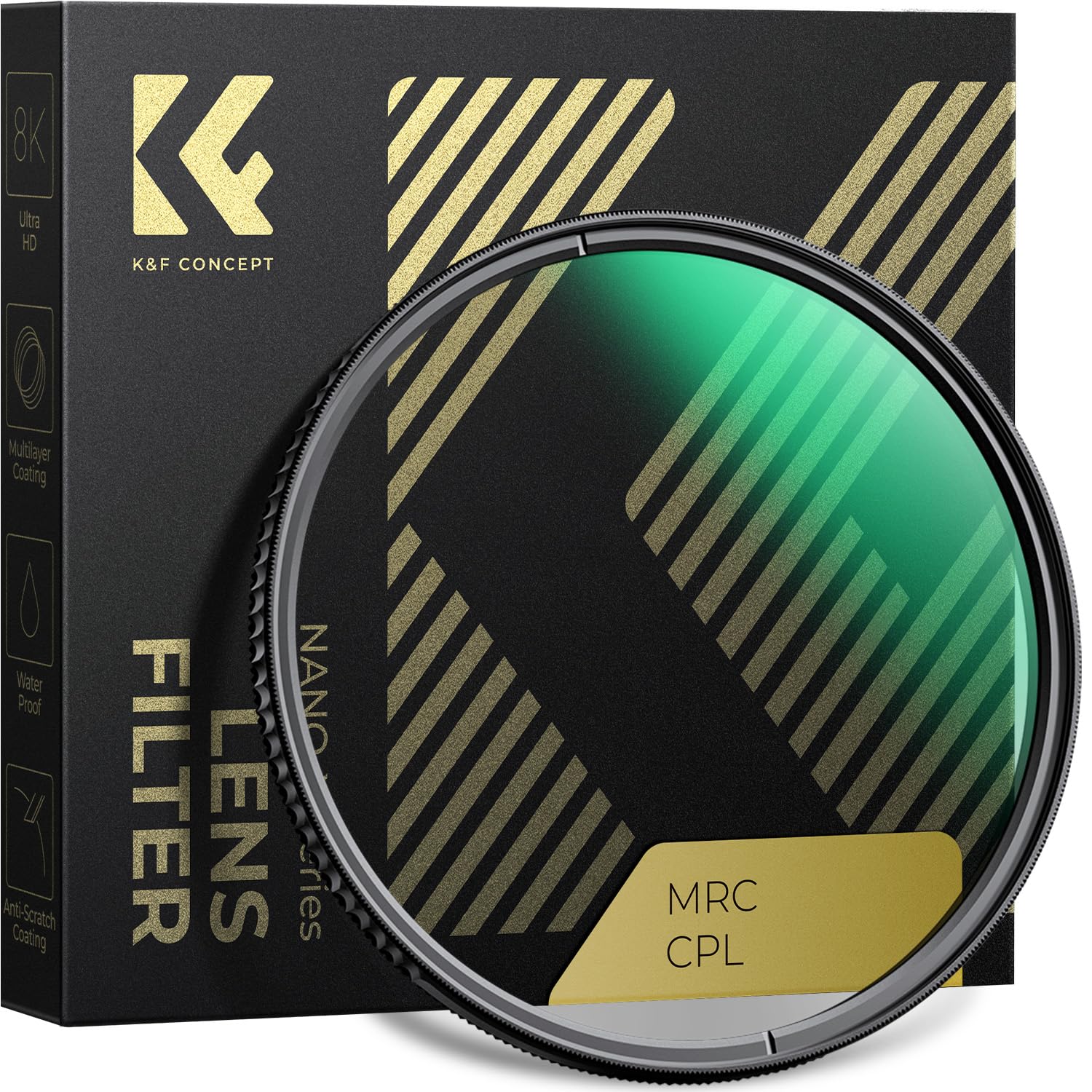
K&F Concept Nano-X 55mm

92 /100
LBD Score Outstanding

Key details

Frame
5.3mm ultra-slim
Coatings
28-layer multi-coating
Thread Size
55mm
Water Resistance
Waterproof
View on Amazon

The Nano-X line is where K&F stops making a cheap filter and starts making a good one. On the 55mm you get 28 multi-layers on both sides, hydrophobic and oil-repellent coatings, and an aluminum-magnesium frame that feels like a machined part rather than a stamped ring.

Optically it earns its keep. Glare off water and car paint drops away, the sky deepens without a cast we could see, and sharpness held up in the files where a weak filter usually shows its hand. The 5.3mm frame also keeps it out of the corners on a wide lens, which is the reason to pay for a slim ring in the first place.

Two things keep it off the top of this list. The coating is good but not quite in the class of the NiSi or the Breakthrough when you shoot into a low sun, and the ring takes a firm hand to turn, which is fine on a tripod and less so when you are working one-handed. Neither shows up in the image.

For most people that is the right trade. It does the two jobs a polarizer exists for without asking you to spend like a professional, and it is the filter we keep on a walk-around zoom without a second thought.

Pros

  • Sharp, contrasty results for the price
  • Hydrophobic 28-layer coating
  • 5.3mm frame suits wide lenses
  • Solid aluminum-magnesium build

Cons

  • Base ring can seize on the lens thread
Our verdict

The best balance of price and optical quality here: coated glass that holds sharpness without the premium markup.

Check Latest Price
6

Best for Video and Stacking

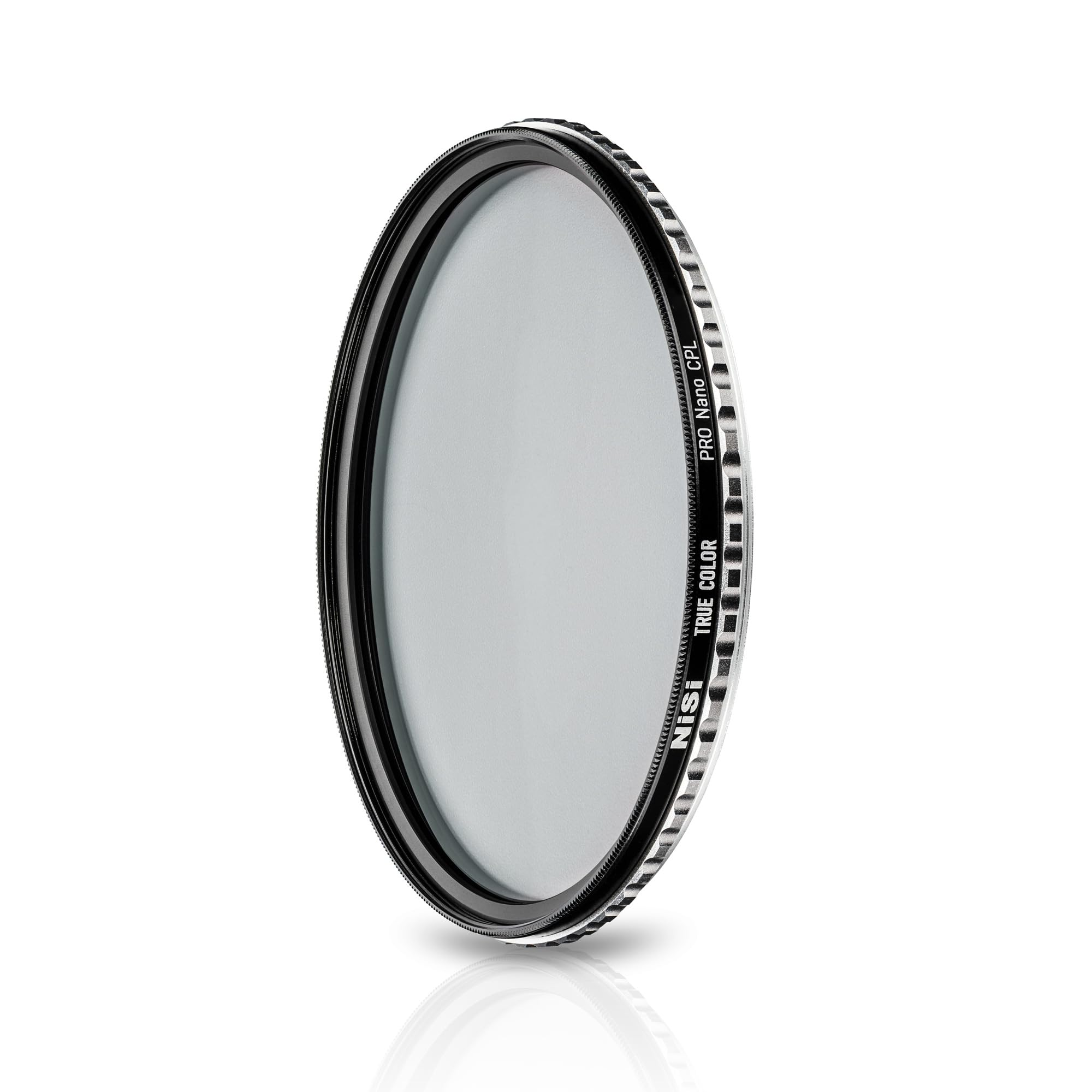
NiSi True Color CPL 67mm

90 /100
LBD Score Outstanding

Key details

Weight
1.23 oz
Coatings
Pro Nano
Edge Seal
CINE seal
Thread Size
67mm
View on Amazon

Most polarizer listings talk about coatings. NiSi's True Color adds something you cannot see from the front: a blackened edge, which the company calls CINE seal, that stops light bouncing around inside the filter's own rim. That matters when you stack a polarizer in front of an ND, or when the sun sits just outside the frame.

On a 67mm lens it behaves the way premium glass should. Reflections come off windows and water cleanly, colors stay where they were, and the ring turns with just enough resistance to fine-tune rather than overshoot. We would shoot video through it without worrying about flare creeping in on a pan, which is not true of every filter here.

The warranty is the sore point: twelve months against Breakthrough's 25 years is a thin promise for a filter at this level, and it is the one thing that gives us pause. Otherwise this is the polarizer to leave on a 67mm landscape zoom and forget about.

Pros

  • Sealed edge limits flare and ghosting
  • Neutral color straight out of camera
  • Smooth, fine-adjustable rotation

Cons

  • Premium price for a 67mm filter
Our verdict

For a 67mm lens you shoot landscapes or video with, this is the filter we choose: sealed edges, natural color, no flare creeping in.

Check Latest Price
7

Best Budget

Amazon Basics 72mm CPL

91 /100
LBD Score Outstanding

Key details

Weight
1.12 oz
Rotation
360°
Thread Size
72mm
Mount Material
Plastic
View on Amazon

If you have never shot with a polarizer, this is the least expensive way to find out what one does to your pictures. The Amazon Basics 72mm screws onto the lens, the frame turns a full circle, and the effect — deeper skies, glare sliding off water and glass — shows up in the viewfinder before you take the shot.

For a first filter that is most of what you need. It cut reflections on wet rocks and shop windows as well as we expected, it is light enough that you forget it is on the lens, and the price means you can experiment without worrying about a scratch.

What you give up is consistency. Color comes through a touch cool and can need a nudge in editing, and the effect is stronger in the middle of the frame than at the edges in some shots. Sharpness is fine for screen viewing and less so if you print big, which is the honest limit of a filter at this level.

Where it earns its place is as an audition. Buy it, shoot with it for a month, and you will know whether polarization belongs in your bag. If it does, the Tiffen does the same job more cleanly for a little more; if it does not, you have spent almost nothing finding out.

Pros

  • Cheapest way to try a polarizer
  • Deepens skies and cuts reflections
  • Rotates a full 360 degrees

Cons

  • Plastic mount instead of metal
  • Not rated water-resistant
Our verdict

A cheap, honest first polarizer: it does the trick, shows its limits in the color and the mount, and costs almost nothing to try.

Check Latest Price
8

Ultra-Wide Full Frame

B+W Master Kaesemann 77mm

85 /100
LBD Score Excellent

Key details

Coatings
MRC nano
Thread Size
77mm
Polarizer Type
Kaesemann high transmission
Full-Frame Coverage
Down to 17mm
View on Amazon

Kaesemann is the word to look for if you shoot in heat, humidity or at altitude: the polarizing foil is sealed at the edges so it cannot delaminate when conditions change. B+W's Master version pairs that with MRC nano coating and a thin black knurled mount, and the company rates it for full-frame use down to 17mm without vignetting.

On a 77mm wide zoom it behaves like professional glass. Shooting toward a low sun, flare and ghosting stayed controlled in a way the budget filters here cannot match, and the ring is geared finely enough that setting the effect feels like adjusting a lens rather than a filter. Nothing about it feels fragile.

Whether it is worth it depends on how you shoot. For ultra-wide work in rain, spray or a hot car, the sealed foil and the knurled mount are the reason to spend, and the images give you nothing to apologize for. In kinder conditions the Breakthrough and the Hoya do the same job for less, which is the honest case against it.

Pros

  • Sealed Kaesemann foil resists humidity
  • Rated clean down to 17mm full frame
  • MRC nano coating controls flare

Cons

  • One-year warranty on a premium filter
Our verdict

Buy it if you shoot ultra-wide in bad conditions and want the sealing and the mount, not if you expect the warranty to match the price.

Check Latest Price

How We Tested 14 Circular Polarizers

We started with a shortlist built from spec sheets, owner reviews, and the features that repeat across this category: multi-layer coatings, water-repellent top coats, and low-profile frames for wide lenses. I narrowed it to 14 filters in the thread sizes I actually shoot, from budget options to premium glass, and used each one over eight months.

Testing happened outdoors, where polarizers do their real work: bright midday skies, reflective water, store windows, wet foliage, and car glass. I mounted each filter on the same lenses, checked whether it seated cleanly and came off without binding, then rotated the ring with one finger while watching a reflection shift in the viewfinder. I noted whether the ring turned smoothly or grabbed, and whether the filter sat so tall that it clipped the corners of a wide-angle frame.

For image quality, I shot the same scene with and without each filter, then zoomed in on center and edge details to see if contrast held or fine texture went soft. Polarization got its own check: I rotated each filter to maximum effect over water and glass and looked at whether the glare actually dropped or just turned hazy. Color was judged against a neutral gray card; the best kept whites white and greens natural instead of cooling the whole frame.

At the end, I scored value for money by comparing build quality, coating performance, and how pleasant each filter was to use against the rest of its price band, not by price alone. The ones that earned a recommendation were the filters I stopped thinking about — smooth to turn, neutral in color, and sharp enough that I forgot they were there. We'll keep using them as lenses change, and update if a filter stops holding up.

How to Choose a Circular Polarizing Filter

Match the thread size before anything else

Every filter here screws into one diameter, marked on the lens barrel or under the cap next to a ø symbol, and the sizes in this guide run from 49mm to 82mm. A 67mm filter will not fit a 72mm lens however good it is, so measure before you shop — it is the one decision you cannot undo later.

If your lenses differ, buy for the largest and use step-up rings on the rest. A ring is inexpensive, stacks safely, and lets one good polarizer serve three lenses instead of three mediocre ones serving one each.

What the extra money actually buys

Cheap polarizers fail in three ways: they soften the image, they push a color cast, and their coatings smear rather than wipe. More money buys better glass and more layers — Tiffen's multi-layer ColorCore coating at the budget end, 28 and 30 layers on the K&F filters, MRC16 nano coating on the Breakthrough.

If you shoot into the sun or near salt spray, the water-repellent top coats on the Hoya and the K&F True Color are worth paying for. If you correct color in every file anyway, a midrange filter gets you most of the way there.

Count the light you will lose

A polarizer costs exposure, and the filter factor tells you how much: 2x is one stop, 4x is two, and the Hoya's 1.7x is the lightest here at just under a stop. That matters handheld at dusk, or when you are chasing something that moves.

If you mostly shoot from a tripod, ignore the number and put the money into glass and coatings instead.

Slim frames, vignetting and the grip trade-off

Thin frames exist for wide lenses — the K&F Nano-X is 5.3mm — and the lower that number, the less chance of dark corners at the wide end. The trade is grip: a very thin ring is harder to turn with cold fingers and gives a lens cap less to bite on, which is the most common complaint about slim filters.

If you shoot with a hood or plan to stack a polarizer in front of an ND, check the clearance before you commit. Stacking two filters on a wide lens is how vignetting gets in even when neither filter is thick.

How the ring feels matters more than you think

The polarizer ring has to turn smoothly enough to fine-tune and hold firmly enough not to drift between frames. Stiff rings make you set the effect once and leave it; loose ones move when you brush the lens.

We prefer a ring with some resistance, which is why the smoothly damped rings on the Breakthrough and the K&F True Color feel like money well spent. If you shoot one-handed or in gloves, weigh this more heavily than the coating specification.

Frequently Asked Questions

Final Verdict

Our default is the Tiffen 49mm. It does the two things a polarizer exists for — cutting glare and deepening color — without costing you sharpness, and it does it for less than almost anything else in this guide. Buy it first, shoot with it for a season, and you will know exactly what polarization does for your pictures.

If your files go to clients, the Breakthrough X4 is the upgrade worth making: the most color-neutral glass here, with 25 years of cover behind it. And if you shoot handheld in failing light, the Hoya's 1.7x filter factor buys you more than either.