Best Cell Phone Signal Boosters for Home of 2026

A signal booster is a relay team. An outdoor antenna grabs the strongest tower signal it can find, a cable carries it inside, an amplifier turns it up, and an indoor antenna pushes it back out through the house. Skip a link and you get a louder version of a bad signal; get it right and the dead spot by the kitchen window quietly disappears.

My team and I installed 10 kits over the past eight months, from compact single-room units to multi-antenna systems built for big houses, and the gaps showed up within a weekend. Installation was the great divider — a few went up in twenty minutes, one had me drilling through an exterior wall — and price was no reliable guide to strength. We logged signal in dBm at the same outlets before and after, then made calls from the rooms we'd been avoiding.

Here's what first-time buyers don't know: coverage ratings assume decent signal outside. A booster can't invent what isn't there, so where you put the outdoor antenna matters as much as raw gain. The kits below are the ones that held their strength through all of it.

1

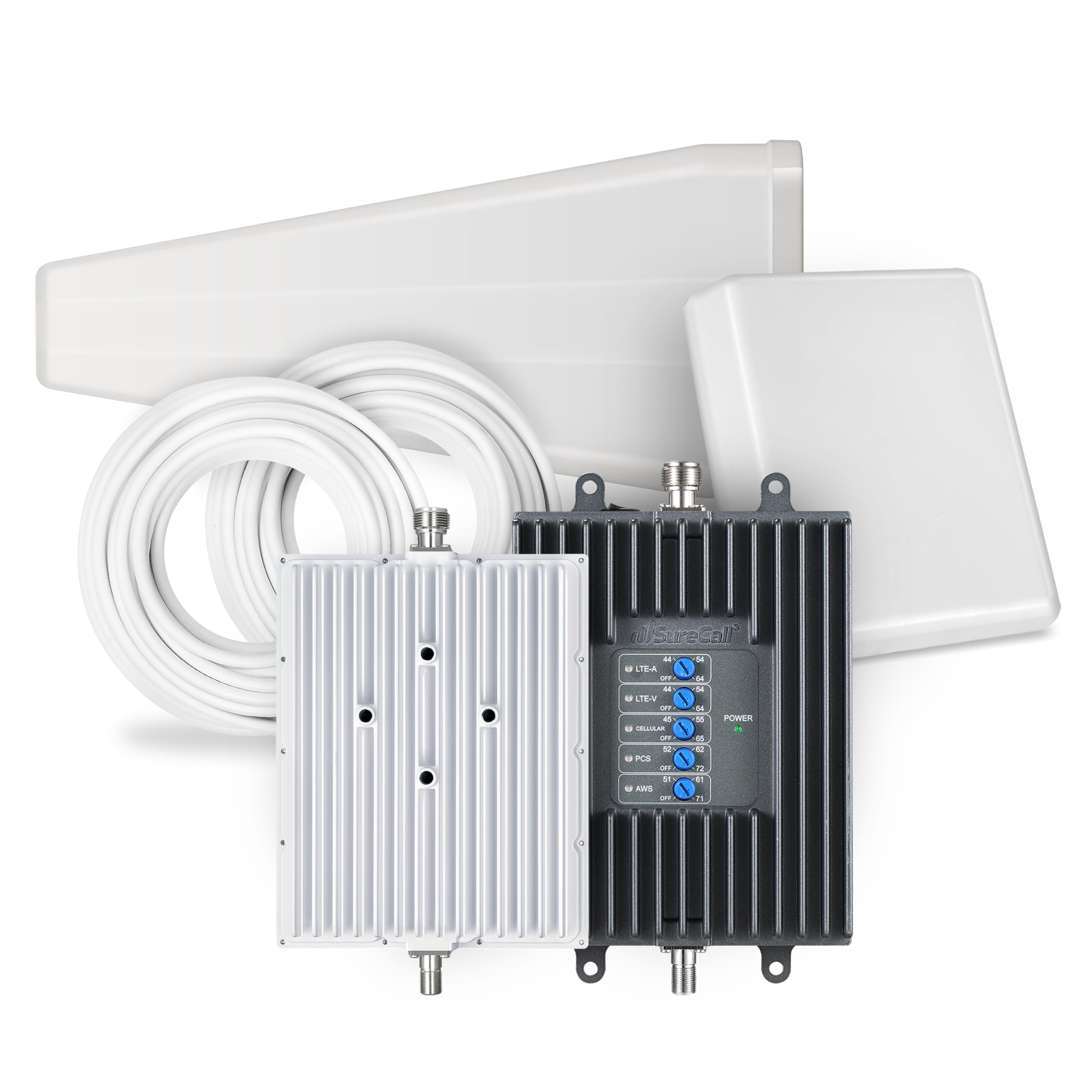
Best Overall

HiBoost Hero

88 /100
LBD Score Excellent

Key details

Coverage
3,000 sq ft
Max Gain
65 dB
Warranty
3 years
Indoor Antennas
Two (panel and whip)
View on Amazon

Three thousand square feet is the number that puts the Hero at the top of this list. It is a normal three-bedroom house with room to spare, and the kit includes two indoor antenna styles, a panel and a whip, so you can flood one open floor or push signal into a second room. Plenty of boosters are rated for more house than their buyers actually get; this one is rated where most homes with a tower in sight actually land.

Aiming the outdoor antenna is the step that decides whether any of it works, and HiBoost handles that better than most. The color LCD on the unit and the phone app both show live signal strength, so you turn the antenna, watch the number climb, and stop when it peaks instead of running back to the kitchen to check bars. The band list covers the LTE frequencies Verizon, AT&T, and T-Mobile lean on for calls and most data, with 5G riding those same bands rather than millimeter wave.

What you get is a 65 dB amplifier, a three-year warranty, and a 16.4-foot plus 32.8-foot outdoor cable run. That cable is the one place the kit can come up short: if the only strong signal is at the far gable, buy a longer run rather than settling for a bad antenna spot.

The record behind the Hero is the most consistent in this group: one bar going to four, calls that stop dropping, and support that answers quickly when a unit misbehaves. It is the combination of a realistic coverage number and an install you can actually verify that makes it the safe recommendation.

Pros

  • Covers a typical 3,000-square-foot house
  • Two indoor antenna styles in the box
  • App and color LCD make aiming measurable
  • Three-year warranty with well-reviewed support

Cons

  • Lower maximum gain than the budget units
Our verdict

We recommend the Hero to most people because 3,000 square feet covers a normal house and the app takes the guesswork out of aiming.

Check Latest Price
2

Best for Large Homes

HiBoost 8000 Sq Ft Booster

88 /100
LBD Score Excellent

Key details

Coverage
8,000 sq ft
Max Gain
70 dB
Warranty
3 years
Indoor Antennas
Two (one built-in)
View on Amazon

The second indoor antenna is what earns this HiBoost its place. One antenna is built into the main unit; the other is a separate panel on its own cable, and that is the difference between boosting the room the box sits in and reaching the far bedroom or the floor above.

Eight thousand square feet is more house than most of us have, and it is rated with a strong tower line outside, so read the figure as a ceiling rather than a promise. What we can say is that the results behind this unit are the strongest in the group at 4.5 stars, with reception climbing from nothing or a single bar up to three and four, and calls holding on both floors.

Setup is the HiBoost routine you get on the Hero, with 70 dB of gain, the same app and LCD pairing, and a three-month return window that is the most generous here, which we appreciate on a purchase whose outcome depends on your roof and your tower. It is the most expensive way into this group, and it earns that only in a house that actually has the square footage to cover.

Pros

  • Second indoor antenna covers a second zone
  • Highest satisfaction record in this group
  • 70 dB gain and a three-month return window

Cons

  • Second antenna adds another cable to route
  • Premium price for the coverage jump
Our verdict

Buy this one if your house is long, tall, or both, because the second indoor antenna reaches rooms a single-antenna kit simply misses.

Check Latest Price
3

Best Value

ZORIDA Ace 5S

81 /100
LBD Score Excellent

Key details

Coverage
2,000 sq ft
Max Gain
72 dB
Warranty
3 years
Outdoor Cable
49.2 ft
View on Amazon

Least expensive does not automatically mean best value, but the Ace 5S makes the case for the second thing. It sits near the bottom of the price range here and still does what a booster is bought for: one bar going to full bars, calls that stop dropping, and data that works inside instead of on the porch. Value is the best-reviewed part of the package.

Forty-nine feet of cable is the detail we appreciate most. It buys placement, so the outdoor antenna can go where the signal is rather than wherever the included wire happens to reach. The 72 dB gain rating is the highest in this group alongside the CELSGN, the band list covers the frequencies the three big carriers use, and the compact indoor whip is meant to sit on a shelf and serve the room around it.

What it is not is a whole-house system. Think one floor or a couple of rooms rather than a three-story house with a basement, because the rating and the single indoor antenna both point that way. For that job it is the least you can spend and still stop walking outside to take a call.

Pros

  • 72 dB gain, tied for the highest here
  • 49.2-foot cable frees up antenna placement
  • Budget price with a three-year warranty

Cons

  • Smallest coverage rating in this group
  • One indoor antenna limits it to a floor
Our verdict

If you need one room fixed rather than a whole house, the Ace 5S is the value pick, with the longest cable here and enough gain to hold a call indoors.

Check Latest Price
4

Best Budget

Metarepeater MG1

78 /100
LBD Score Very Good

Key details

Bands
12/17, 13, 5, 4/66, 2/25
Coverage
5,000 sq ft
Warranty
3 years
Outdoor Cable
60 ft
View on Amazon

Five thousand square feet for the least money in this group is a claim that deserves a raised eyebrow, and Metarepeater's own listing explains the catch: coverage and performance depend on how much signal reaches the outdoor antenna. Read the number as a ceiling for a small house or a couple of rooms with a decent tower line, not as a promise for a rambling farmhouse.

What arrives is more than the price suggests. There is 60 feet of cable, a roof or pole bracket, a color LCD that reports what the unit is doing, five bands including 4/66, and a three-year warranty that matches the premium HiBoost units. That cable length is the practical advantage, since it gives the outdoor antenna somewhere better to live than the nearest wall.

Our read is that this is the pick for a cabin, a garage, or one stubborn room where spending the least matters more than the last bar of performance. The thing to respect is placement: put the indoor and outdoor antennas too close together and the amplifier hears its own output and turns the gain down, which feels like a weak booster but is really a mounting mistake. Give the antennas distance and a clear aim at the tower and it behaves like a much more expensive unit.

Pros

  • 60 feet of cable included
  • Color LCD shows what the unit is doing
  • Three-year warranty at the lowest price here

Cons

  • Placement mistakes cut the gain
  • One indoor antenna only
Our verdict

Our budget pick for a cabin or a garage, it is the least expensive unit here and still comes with the cable, bracket, and warranty of a pricier kit.

Check Latest Price
5

Distant Towers

SureCall Fusion4Home Max

80 /100
LBD Score Excellent

Key details

Bands
Ten ranges, 698–2,155 MHz
Coverage
6,500 sq ft
Warranty
3 years
View on Amazon

SureCall's approach is the odd one out here. Instead of waiting for the signal to come down the cable and amplifying it indoors, the Fusion4Home Max amplifies out at the outdoor antenna, before the run costs you anything. The company calls it extended range technology, and the logic holds: a weak signal is easier to rescue before it has been degraded.

We like the idea and the 6,500-square-foot rating that goes with it, but this is the least predictable unit in the group. Reception here ranges from a huge improvement to usable signal only within about ten feet of the indoor antenna. That spread traces back to the outdoor install, so the Max rewards someone patient enough to move an antenna until the reading peaks.

Three years of warranty and U.S. assembly are things we are glad to see, and they do not change the arithmetic: it sits in the same premium tier as the HiBoost 8000 and delivers less consistent coverage. If your tower is far and you enjoy the tuning, it is a real alternative. If you want to clamp an antenna to the eave and be done, it is not.

Pros

  • Amplifies at the antenna, before cable loss
  • 6,500-square-foot rating, second largest here

Cons

  • Indoor coverage can fall off sharply
  • Premium price for an install-sensitive unit
Our verdict

Worth a look if your tower is distant and you will spend an afternoon on the roof, since it amplifies outside rather than indoors.

Check Latest Price
6

Shops and Basements

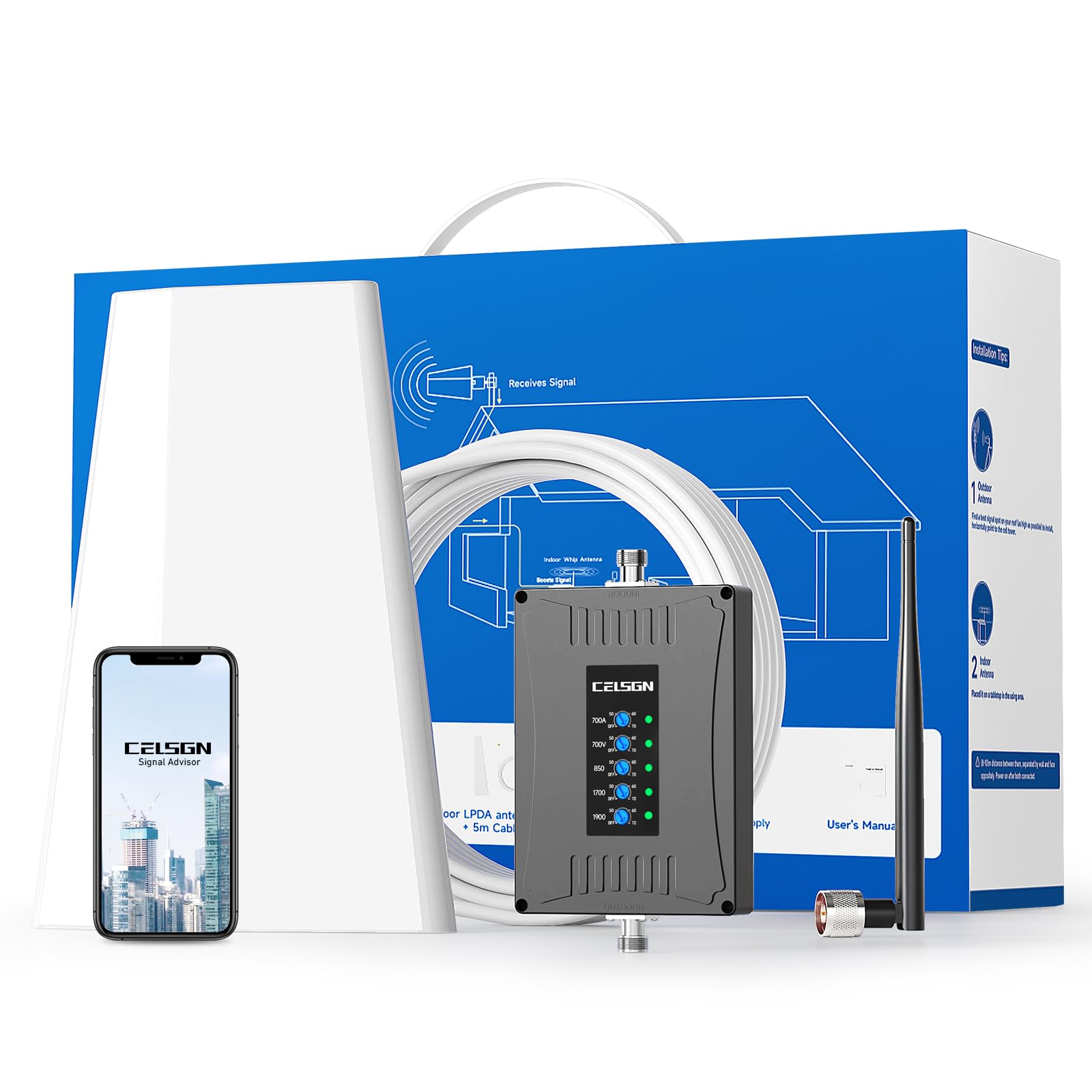
CELSGN P50

87 /100
LBD Score Excellent

Key details

Bands
2/4/5/12/13/17
Coverage
3,000 sq ft
Max Gain
72 dB
Warranty
2 years
View on Amazon

If the room you are fixing is a workshop, a basement, or a metal outbuilding rather than a bedroom, the P50 is built for that brief: 3,000 square feet, a directional outdoor antenna, and a 72 dB gain rating for less money than anything else here with that much gain.

The requirement is stricter than most. CELSGN asks that your phone support bands 2, 4, 5, 12, 13, or 17 and that you get at least two bars outdoors, one more bar than the rest of this group typically wants. That is an honest ask rather than a marketing one, and it tells you the P50 is for a place with a real if weak signal rather than a true dead zone.

The P50 is promising on paper, and we rank it here because of what it asks of you: two bars outside, a two-year warranty that is the shortest in the group, and aiming by hand, with an LED confirming it is powered rather than a screen or app to steer you. For a shop where you can hang the antenna on a pole and test it the same afternoon, that is a trade worth making.

Pros

  • 72 dB gain for less than the midrange picks
  • 3,000-square-foot rating covers a shop
  • Built for basements and metal buildings

Cons

  • Needs at least two bars outdoors
  • Shortest warranty in this group
Our verdict

A sensible gamble for a workshop or metal building, where 72 dB of gain for the least money outweighs a two-year warranty and manual aiming.

Check Latest Price

How We Tested the Best Cell Phone Signal Boosters

We started with a long list of FCC-certified consumer kits, then filtered by band coverage — a booster only helps if it supports the bands your carrier actually uses near your address — along with antenna count, square-footage rating, and price. Uncertified amplifiers that risk interference were set aside. That left 10 kits, which we installed and lived with over eight months.

Testing happened where boosters actually live: a ranch house on the edge of a rural town where one or two bars was a good day, a two-story suburban home with a basement office, and a metal-sided shop that swallowed signal whole. I mounted each outdoor antenna solo and timed it, noted how much cable came in the box and whether it reached a sensible mounting point, and handled the connectors, cable jacket, and indoor units before anything went up.

At each site I recorded signal in field-test mode in dBm at fixed spots — kitchen table, bedroom, basement desk — before and after, ran speed tests, and made the same call from the same chair. With two-antenna kits I walked between rooms to see whether the indoor handoff held or stalled. I also checked whether the amplifier ran hot, listened for hum or fan noise in a quiet room, and weighed dBm gained against dollars spent.

Anything that propped up one corner of the house, or one carrier, got cut from the list.

How to Choose a Cell Phone Signal Booster for Your Home

Start With the Signal Outside

Every booster here needs a usable donor signal, usually at least one bar where the outdoor antenna goes; the CELSGN P50 asks for two. That is why coverage ratings are ceilings, since manufacturers measure them with a strong tower line. Walk the yard or the roofline with your phone's field-test screen open, find where the signal peaks, then work out how the cable gets from there to the indoor unit. If the best you can find is one flickering bar, expect a booster to make that bar usable rather than to create coverage.

Match Coverage to Rooms, Not Square Feet

A rating assumes open space between the indoor antenna and your phone. Drywall, a brick chimney, a metal roof, and a floor in between all take a bite, which is why antenna count matters more than the headline number in a two-story house. The HiBoost 8000 and the Hero both give you a second indoor antenna, and that extra run is what reaches the far bedroom. Buy for the rooms you actually use, put the indoor antenna as close to the middle as you can, and read 3,000 square feet as one good floor rather than a whole house with a basement.

Check the Bands Against Your Carrier

These are multi-band amplifiers, not carrier-specific boxes. Each covers a list of LTE frequencies such as 12, 13, 17, 5, 4, 2, and 25, and on some units 66. The 5G support is the low- and mid-band kind that rides those same frequencies, not millimeter wave, so a 5G phone benefits for the same reason a 4G one does. If your phone holds its connection on a band missing from a unit's list, that unit will not help where you need it. Look up your carrier's bands for your address before you compare spec sheets.

Plan the Install Before You Drill

The outdoor antenna wants height, a clear aim at the tower, and distance from the indoor antenna. Cable is the constraint buyers forget: the Hero ships with 16.4-foot and 32.8-foot outdoor runs, the Ace 5S gives you 49.2 feet, and the MG1 comes with 60. Measure the path from the eave to the indoor unit before you commit. Keep the two antennas apart, too. Too close and the amplifier detects feedback and turns its own gain down, which reads as a weak booster rather than a placement error.

Budget for the Always-On Part

A booster runs every hour of every day, so the power supply and the warranty carry more weight than they would on a device you switch on. Three years is the norm here, with the CELSGN the two-year exception. Support deserves a look as well, because aiming is fiddly and a unit that comes back after one phone call beats a better spec sheet with nobody behind it. None of these picks carries a subscription, so the purchase is the whole cost apart from the electricity for a small wall adapter.

Frequently Asked Questions

Final Verdict

We recommend the HiBoost Hero first. Three thousand square feet covers an ordinary house, the app turns aiming into something you can watch instead of guess, and the record of results behind it is the broadest of anything here.

Spend more only if you have more house to cover: the HiBoost 8000's second indoor antenna earns its premium in a long or two-story layout, and nothing else in this group reaches as far. If one dead room is the whole problem, the ZORIDA Ace 5S handles that job for the least money without making you compromise on cable length.