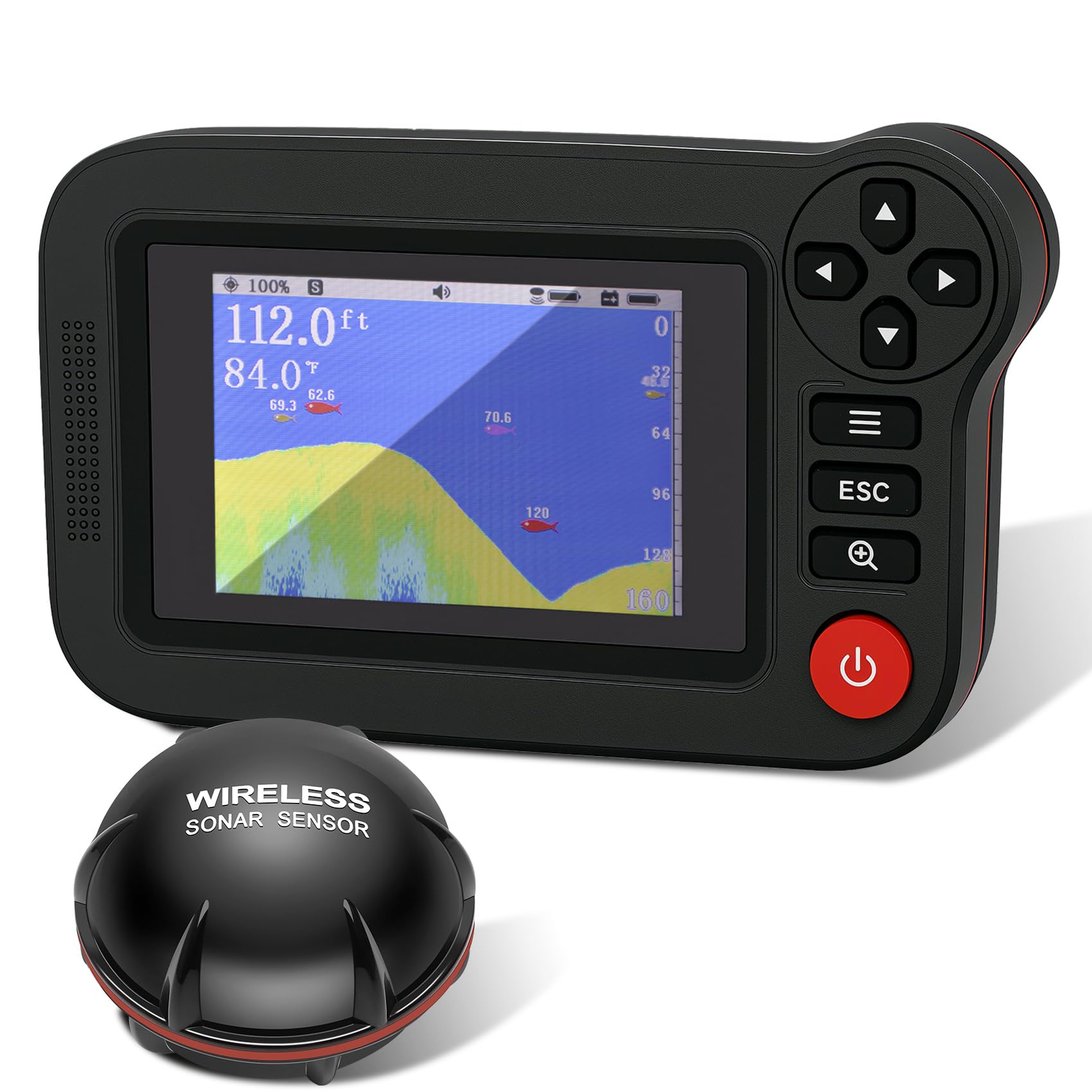
Best Castable Fish Finders of 2026

A fish finder you tie to your line and throw in the lake sounds like something sold in the back of a magazine. Then one marked a brush pile I'd been casting past for years. What a castable unit fixes isn't gadgetry — it's fishing blind: depth, bottom contour, and a picture of what's under your bait, with no transducer cable or boat battery.

The catch is that they vary in what they actually tell you. Some are phone-only, some carry a display, and a few add GPS so you can mark a school and return to it. I've used them from the bank, off a kayak, and through the ice, and the ones worth carrying keep a signal, hold a charge, and read depth closely enough to trust. We fished 14 over six months; what separated them had less to do with specs than with how little they got in the way.

One thing first-timers overrate is screen size — believable depth and fish marks matter more. The picks below are the ones we kept reaching for.

1

Best Overall

Garmin Striker Cast

88 /100
LBD Score Excellent

Key details

Weight
2.65 oz
Sonar Modes
2-D and ice flasher
Tether Length
20 ft included
Wireless Range
Up to 200 ft
View on Amazon

The first thing we judge a castable finder on is how quickly it stops being a gadget and starts being a tool, and the Striker Cast gets there inside a few minutes: install the free app, pair, tie the 20-foot tether to the lug, and cast. That tether is the part we appreciate most. It's in the box, it's long enough for a real cast, and it means a bad knot or a hooked fish doesn't end the trip. The carrying bag ships with it too, which sounds trivial until you've fished a loose unit out of a tackle box for a season.

What earns it the top spot is how little it asks of you. The 2-D view gives you depth, bottom hardness, and fish returns; flasher mode covers ice and any stationary bait; and both stream to a phone or tablet from up to 200 feet away. Nothing here needs a manual. Depth and temperature are the readings you can build a plan on, while the fish returns are a hint about what's down there rather than a promise.

It isn't flawless. Inside about three feet of water the returns go mushy, so this is a tool for the water past the drop-off rather than the margin at your feet. The app link can also drop well short of the claimed 200 feet when the float is far out, worth watching before you trust a reading at distance. And hours of bright screen will flatten a phone, so a small power bank earns its place in the bag.

Pros

  • Pairs and casts within minutes of unboxing
  • 20-foot tether and carry bag included
  • 2-D and flasher modes cover open water and ice
  • Streams to a phone from up to 200 feet

Cons

  • No built-in mapping on this version
Our verdict

We recommend the Striker Cast to almost everyone: it pairs in minutes, reads depth and fish from a dock, kayak, or ice hole, and leaves money for tackle compared with the mapping units here.
Check Latest Price
2

Best for Mapping

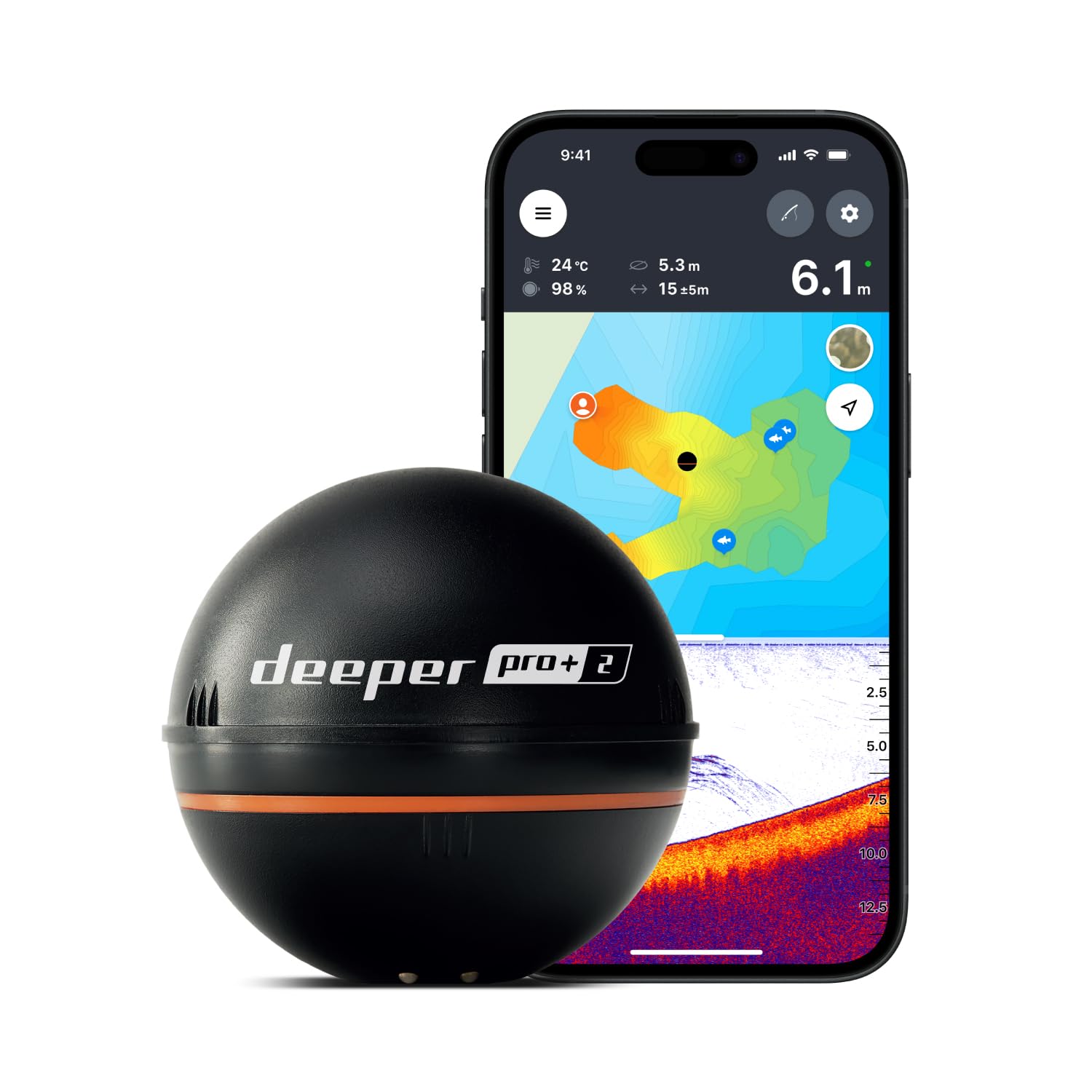
Deeper PRO+ 2

83 /100
LBD Score Excellent

Key details

Weight
3.2 oz
Beam Widths
Wide, mid, narrow
GPS Mapping
Built-in, bathymetric
Maximum Depth
100 m
View on Amazon

At 3.2 ounces the PRO+ 2 is the easiest cast of this group. It flies on ordinary tackle, and the neoprene pouch and attachment bolts in the box let you rig it to a heavy rod or a light one. That weight matters more than it sounds: a finder you can throw 60 yards without changing rods is one you actually reach for, instead of leaving home because it needs its own setup.

Beam control is what separates it from the phone-only crowd. Wide covers water quickly when you're scouting a new lake, while the mid and narrow beams tighten the cone onto one piece of structure, with target separation down to 0.4 inches on narrow. Add the built-in GPS and the Fish Deeper app and you can walk a bank, cast, and build a contour map of the bottom as you go.

We think it's the best of this bunch for anyone who fishes the same unfamiliar lakes more than once, because the maps save to the app and get more useful every trip. It costs more than the Striker Cast, and it asks you to accept a link that can drop when the float is well out, plus bottom readings that turn vague over soft muck. Charging is quick over USB-C, which is the one part nobody has to think about.

Pros

  • Three beam widths for scouting or fine detail
  • Built-in GPS builds contour maps from shore
  • 3.2-ounce body casts on ordinary tackle
  • Charges quickly over USB-C

Cons

  • Soft bottom and cover can read as fish
  • Some app features sit behind a paid subscription
Our verdict

We reach for the PRO+ 2 on unfamiliar water: three beam widths, a 330-foot depth range, and contour maps you build yourself from the bank.

Check Latest Price
3

Best Handheld Display

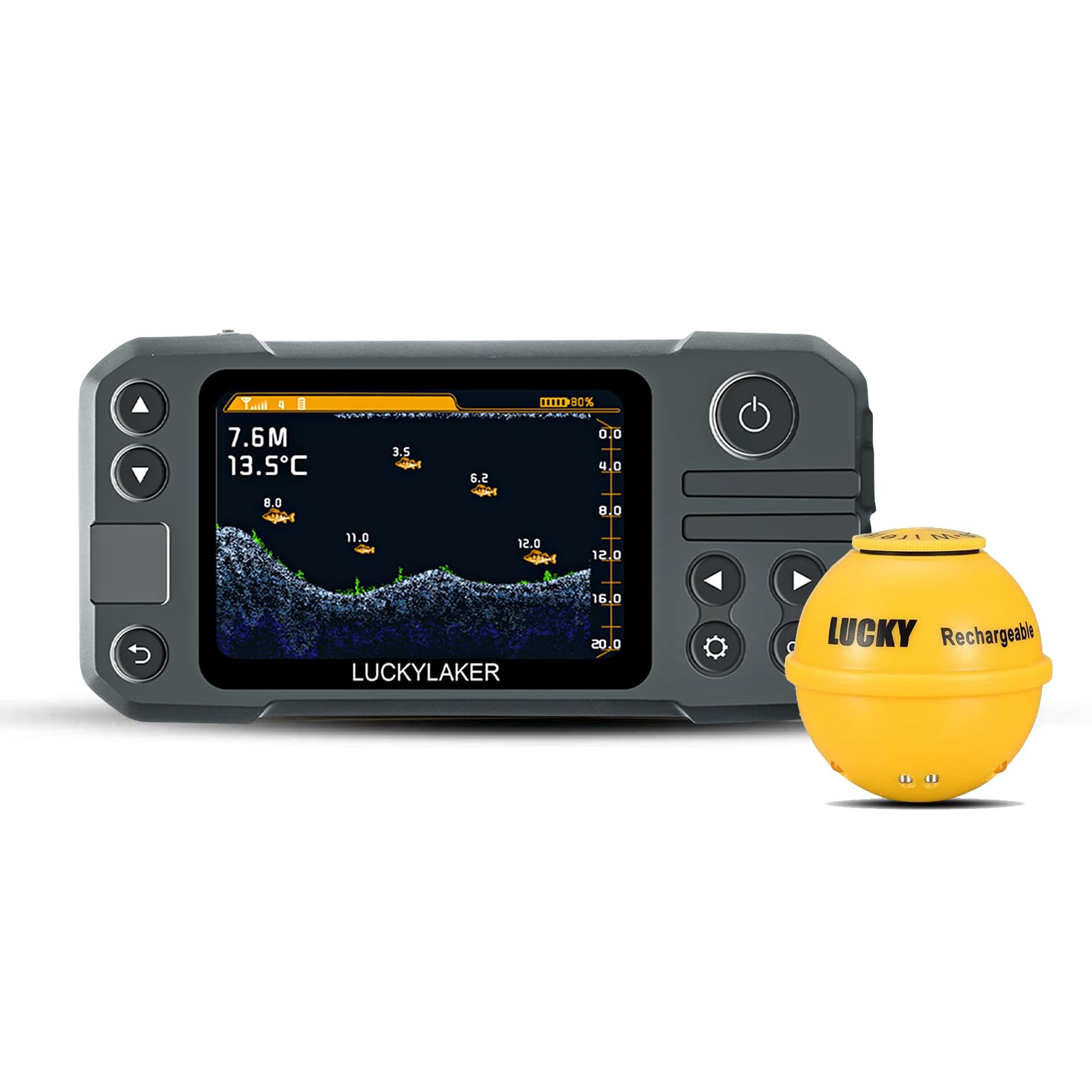
LUCKY MT-202

82 /100
LBD Score Excellent

Key details

Display
3.5-inch color LCD
Maximum Depth
147 ft
Wireless Range
Up to 853 ft
View on Amazon

The MT-202 answers a specific complaint about this whole category: your phone is the display, so it's also the battery, the distraction, and the thing that goes in the water when you lean too far. LUCKY puts the screen in a 3.5-inch handheld instead. We think that's the right call for kayak anglers and anyone fishing in gloves, because the readout is a glance rather than a session with an app.

The numbers read well. There's a horizontal 3.5-inch LCD, a fish-depth readout rather than bare arches, and a listed operating distance of 853 feet between sensor and display, the longest figure in this guide. The floating sensor and the handheld together weigh less than a liter of water, so the whole kit disappears into a daypack.

That screen is also the entire interface: no contour maps, no trip logging, no firmware ecosystem. What you get instead is one device to charge, one thing to watch, and no app to fight on a bank in the rain.

The listed maximum depth is 147 feet, which covers most inland water and stops short of the Deeper's 330-foot ceiling, worth knowing if you fish big reservoirs. Otherwise the appeal is the simplicity: a display you can read with wet hands, a sensor that floats where you threw it, and nothing to log into.

Pros

  • 3.5-inch screen keeps your phone in your pocket
  • 853-foot listed range between sensor and display
  • Shows fish depth, not just marks

Cons

  • 147-foot depth limit rules out deep reservoirs
Our verdict

We keep this one for anglers who don't want a phone in their hand: a bright 3.5-inch screen, a floating sensor, and the longest listed range here.

Check Latest Price
4

Best Budget

DANOPLUS DP-104

84 /100
LBD Score Excellent

Key details

Display
2.4-inch color LCD
Maximum Depth
147 ft
Sonar Coverage
90 degrees
View on Amazon

Budget castable finders usually give something up, and with the DP-104 it's mostly the size of the picture. The 2.4-inch color LCD is the smallest screen in this guide, the sensor reads to 147 feet, and the handheld weighs just over five ounces. What it doesn't give up is the basic job: drop the sensor in and you get depth, water temperature, and fish marks with depth numbers attached.

What we like is how little it asks for the money. The sonar covers a 90-degree cone, wide enough that one cast tells you about a good stretch of water, and there's a fish alarm for the days you'd rather watch the rod than the screen. The sensor lights up when it touches water, a small thing that saves you wondering whether the unit is actually live.

The limitations are real but narrow. Two and a half inches of glass is hard to read at a glance, and there's no mapping or logging. It also mistakes weed and hard cover for fish, so the alarm is a prompt to look rather than proof of anything. For pond and small-lake fishing from a bank or a kayak, none of that matters much, and the included USB and AC adapter means it charges from a wall outlet or a car without hunting for the right cable.

Pros

  • Least expensive unit here with its own screen
  • 90-degree sonar coverage per cast
  • Fish alarm plus a sensor light that shows it is live

Cons

  • 2.4-inch screen is hard to read at a glance
  • Weed and hard cover show up as fish
Our verdict

Our budget pick: it's the least expensive unit here, and it still puts depth, temperature, and fish marks on a screen of its own.

Check Latest Price
5

Best for Ice Fishing

Hawkeye FishPod 5x

82 /100
LBD Score Excellent

Key details

Weight
0.8 oz
Sonar Modes
Four presets, flasher
Maximum Depth
199 ft
Wireless Link
Bluetooth
View on Amazon

Vertical flasher mode is the reason the FishPod 5x is here rather than one of the cheaper bobbers. A flasher shows returns in real time instead of scrolling them past, which is exactly what you want when you're watching a jig under a hole and need to see a fish commit. The unit is 22 grams, so it hangs on light line, and there's a 1/4-20 mount thread if you prefer to fix it to a bracket than cast it.

Four preset modes are the other half of the pitch: pick one and the unit adjusts for fish by size, depth, or schooling instead of making you tune gain on a phone screen. FishEcho is meant to pull size and depth out of the clutter, and BottomScan tells you whether you're over vegetation or hard bottom. We treat those as helpers, with depth and bottom composition the parts you can lean on.

Two things to know before you buy. It runs through an app, so your phone is both the display and the battery you're spending all day; a bright screen for hours will drain it, and a power bank is worth packing. Depth, rated to 199 feet on paper, also gets vague over soft bottom.

Where it earns its place is winter. A 22-gram bobber drops down an ice hole, the flasher gives the real-time picture ice anglers expect, and a two-year warranty that covers damage outright is unusually generous for something dangling on a line. For open water the Garmin gives you a bigger, calmer picture; for the ice season this is the one we carry.

Pros

  • Vertical flasher built for ice fishing
  • 22-gram body hangs on light line
  • Four presets do the tuning for you
  • Two-year warranty covers damage

Cons

  • Soft bottom readings get vague
Our verdict

Our pick for the ice season: it drops through a hole, the flasher mode is built for it, and a two-year warranty covers breakage outright.

Check Latest Price
6

Kayak Mounting

Fuceter XF-08

80 /100
LBD Score Excellent

Key details

Display
3.5-inch color LCD
In The Box
Bracket and lanyard
Working Time
8 hours
Maximum Depth
164 ft
View on Amazon

Fuceter is the least familiar name in this guide, and the XF-08 is the one to look at if your finder is going to live on a boat rather than in a pocket. The box includes a mounting bracket, three screws, an antenna, and a lanyard, so the same unit can be bolted to a kayak rail in the morning and hung from a line in the afternoon. That flexibility is what earns it a place here.

The screen is the draw. Three and a half inches of color TFT with three backlight settings, black, blue, and white, is one more brightness option than most of the handhelds here offer. It displays depth, water temperature, fish size and fish depth, and bottom contour, and it keeps a fish alarm and a depth alarm. Fuceter lists two hours to charge and eight hours of working time.

The reservations are about the long haul rather than the feature list. The warranty runs one year where Garmin and Deeper both give two, and the charging routine is fussier: two cables, two ports, two things to remember before a dawn start. Neither is a dealbreaker at this price, but both decide whether a gadget comes along on the fifth trip as readily as the first.

Pros

  • 3.5-inch color screen with three backlight modes
  • Mounting bracket and screws in the box
  • Two-hour charge, eight-hour rating

Cons

  • Two charging cables and ports to manage
  • One-year warranty where rivals give two
Our verdict

We point kayak anglers here: a 3.5-inch screen, a mounting bracket in the box, and eight hours of listed run time make it a self-contained kit.

Check Latest Price
7

DIY Contour Maps

Garmin Striker Cast GPS

84 /100
LBD Score Excellent

Key details

Weight
2.65 oz
GPS Mapping
Quickdraw Contours
Maximum Depth
200 ft
Wireless Range
Up to 200 ft
View on Amazon

This is the same castable sonar as our top pick with one addition that changes who it's for. The GPS version records position as it drifts, so Quickdraw Contours can build a map of the bottom at one-foot intervals while you fish, with no separate chartplotter and no pre-made map to download. If you fish a reservoir that isn't charted, or you want your own picture of a hump you've been guessing at, that's the feature worth paying for.

Everything else carries over: the free Striker Cast app, 2-D and flasher views, the 20-foot tether and carry bag, and the 75-gram body that casts on a normal rod. Garmin rates this one to 200 feet of depth and 200 feet of wireless range.

Our hesitation is the price. It sits at the top of this group, and what you're buying is a mapping workflow plenty of anglers never touch. If contours aren't the point, the standard Striker Cast does the same job for less, and the Deeper PRO+ 2 costs less than this one while adding three beam widths and a deeper range.

One practical note: create your Garmin account and download the app at home, on Wi-Fi, before the first trip. Working through a login at the ramp with one bar of signal is a miserable way to start a morning on the water.

Pros

  • Built-in GPS draws one-foot contours
  • Same app, tether, and bag as the top pick
  • 200-foot depth and range ratings

Cons

  • Highest price in this group
Our verdict

Worth the extra only if you intend to chart your own water: the built-in GPS draws one-foot contours as you drift, and everything else matches our top pick.

Check Latest Price

How We Tested Castable Fish Finders

We started with about 30 castable units on the market, pulled the spec sheets, and cut anything that needed a wired transducer, a hardwired boat display, or a separate battery box. That left 14, all bought at retail rather than supplied by brands, and we fished with them for six months.

Most of that time was spent where these units actually live: from the bank of a local reservoir, drifting in a kayak, trolling slowly off a rented boat, and through the ice on two cold mornings. Depth measurement got checked against a marked drop line and a flasher I already trust, then again over a stretch of bottom I know shifts by a few feet. For fish tracking, we noted whether marks landed in the same place on repeated casts and whether they moved as fish moved, then confirmed it by jigging.

Connectivity was its own test — pairing to both an iPhone and an Android, timing how long it took, and walking away from the unit until the signal dropped. Battery life we logged the honest way: charged to full, run until dead, hour noted. Ease of use went to people who had never touched a castable finder; we timed from unboxing to first depth reading and watched whether the app made sense with no instructions. Quality meant docking mistakes — dropped on the dock, cranked hard against snags, seals checked after every trip.

Fun is the one thing we had no metric for, so we kept a note of how often we reached for a unit on trips where catching fish wasn't the point. Value came last: whether the extra money bought better accuracy or just a nicer screen.

How to Choose a Castable Fish Finder

A Phone App or a Screen of Its Own

This decision shapes everything else. App-based units such as the Garmin Striker Cast, the Deeper PRO+ 2, and the FishPod 5x stream sonar to a phone or tablet, which buys a big, bright display, color, and maps you keep. Handhelds like the LUCKY MT-202 and the DANOPLUS DP-104 put a small screen in your hand and leave the phone in your pocket.

The trap with apps is the phone itself. Hours of bright screen and a live wireless link will flatten a battery well before the sonar runs out, so plan on a power bank. The trap with handhelds is the glass: a 2.4- or 3.5-inch screen in sunlight is not a tablet, and backlight modes only do so much. Pick the weakness you can live with.

Range and Depth: What the Numbers Mean

Listed wireless range runs from about 200 feet to a claimed 853, and maximum depth from 147 to 330 feet across the units here. Both are ideal-condition figures. The float sits low in the water with a lot of lake between it and your phone, and the link is the first thing to go when you cast well past the bank.

Depth is the figure to buy for. The Deeper PRO+ 2 and its 330-foot ceiling earns its keep on deep reservoirs and steep banks; on a farm pond that tops out at 15 feet, a 147-foot handheld reads everything there is. Match the number to your water rather than to the box.

Casting Weight and Getting It Back

A castable finder is only as useful as your ability to throw it and retrieve it. The lightest unit here is 22 grams, the heaviest is a pound and a half, and that gap decides which rod comes out of the truck. Light units cast on ordinary tackle; heavy ones want a stout rod and heavy braid.

Use a tether whether or not one comes in the box. Garmin includes a 20-foot tether with both Striker Cast versions; on anything else, tie heavy braid to the attachment point and the other end to a cleat, a stake, or your wrist. Choose a color you can actually see, too, because a dark float in chop at 60 yards is genuinely hard to track.

Mapping and Flasher Modes: What Is Worth Paying For

Two features justify the jump in price. Built-in GPS and contour mapping, on the Deeper PRO+ 2 and the Garmin GPS version, build a picture of the bottom as you fish, and it earns the money if you return to the same water or fish lakes with no decent chart. Flasher mode is the other: real-time returns for ice fishing and for watching a stationary bait.

Skip both if you fish a handful of small waters from a dock. A basic 2-D view answers the question you actually have, which is how deep it is and whether anything is down there. Our top pick covers 2-D and flasher without the mapping premium, which is much of why it is the default.

Frequently Asked Questions

Final Verdict

Our default is the Garmin Striker Cast. It pairs in minutes, puts 2-D and flasher views on the phone you already carry, and ships with the tether and carry bag you'd otherwise buy separately, for less than the mapping units here.

Change one requirement and the answer changes. If you want to chart your own contours, the Deeper PRO+ 2 adds three beam widths, a 330-foot depth range, and shoreline mapping. If you don't want a phone on the water at all, the LUCKY MT-202 puts the screen in your hand.