Best Cameras for Kids of 2026

The moment my niece figured out how to open the camera on my phone, every photo on it became a close-up of her thumb. That's usually how it starts: a kid wants to take pictures, and the nearest camera is yours. A kids' camera puts something drop-able and smudge-proof in their hands instead, and gives you your phone back.

Over four months, we put 16 of them in the hands of kids ages 3 to 11, at birthday parties, in the backyard, and in the back seat on a long drive. Picture quality turned out to be the least useful thing to compare: nearly all of these shoot soft, grainy photos nobody minds. What kids mind is whether they can work the buttons alone, whether it fits a small hand, and whether it survives the driveway.

One thing first-time buyers don't expect: the instant-print models are the most fun and the only ones that keep costing you, because the paper is the purchase that never ends. Below are the ones worth handing over, sorted roughly by age.

1

Best Overall

Desuccus X2 Kids Camera

89 /100
LBD Score Excellent

Key details

Battery
1000mAh rechargeable
Age Range
3-12 years
Screen Size
2 inches
Included Storage
32GB card
View on Amazon

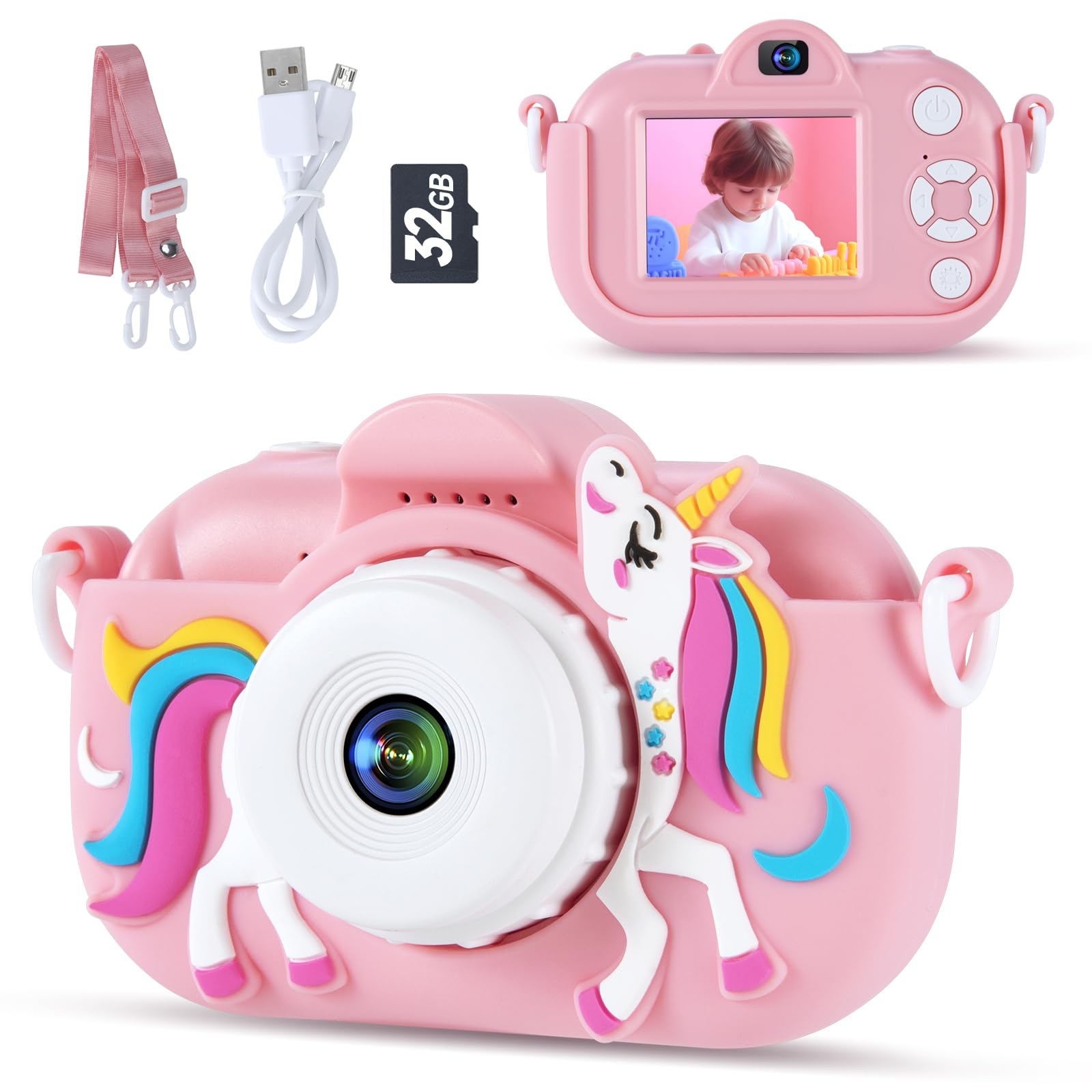
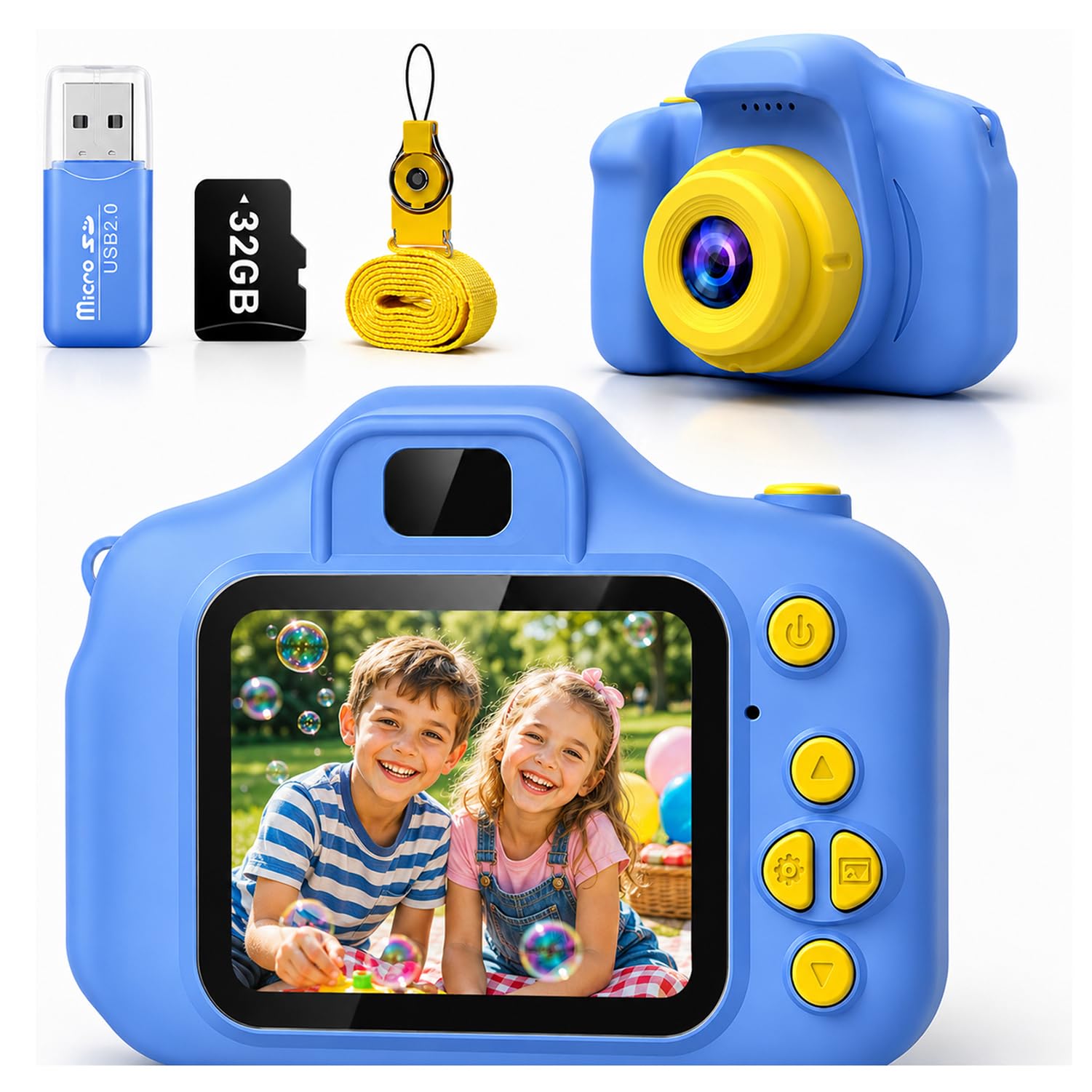
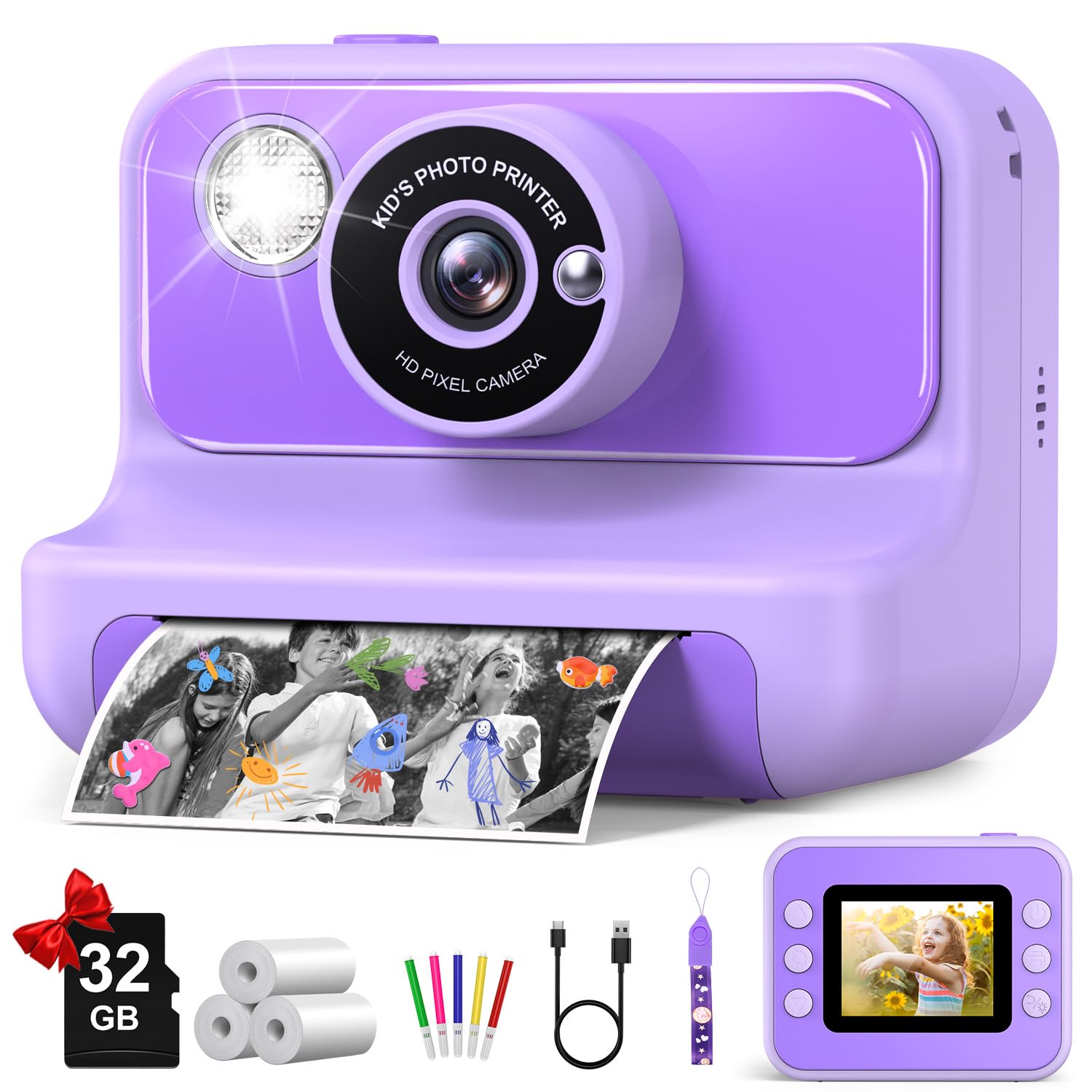
The included 32GB card and rechargeable battery are the first things we noticed, because they remove the two setup chores that make kids cameras feel like homework. The Desuccus X2 arrives ready after a charge: no hunting for a card, no keeping a pack of AA batteries in the kitchen drawer. That is a big part of why it is the camera we hand over first; the child can start taking pictures while the parent is still reading the box.

The 2-inch screen is small, which suits little hands, and the menu is shallow enough that a child can move between photo, video, and playback without an adult rescuing them. We like the extras, too: 15 frames, six color filters, and five games give the camera a second life on a rainy afternoon. The games are simple, not a tablet substitute, but they make the camera feel like a toy a child chooses rather than a chore.

Photo quality is kid-camera good: fine in a sunny backyard, softer in a dim room, and not something to compare with a phone. The tiny body also may be smaller than a child expects, especially if they have handled an adult camera. For a first camera, those are reasonable trade-offs; for an older child who wants a bigger screen and a zoom, the Camkory is the step up.

What we keep coming back to is the low-stakes package: 32GB of storage, USB-C charging, a lanyard, and enough games and filters to keep a child curious. A lost or dropped camera is less of a disaster at this end of the market, and that makes it easier to say yes.

Pros

  • 32GB card and USB-C charging included
  • Simple menus sized for small hands
  • Frames, filters, and games add play value
  • Budget price makes a first camera low-stakes

Cons

  • Photo quality softens in low light
  • Body may be smaller than expected
Our verdict

The Desuccus X2 is the camera we hand to a child first: it includes the 32GB card, charges by USB-C, and keeps the controls simple.

Check Latest Price
2

Best for Younger Kids

VTech KidiZoom Duo Camera FX

89 /100
LBD Score Excellent

Key details

Battery
4 AA batteries
Age Range
3-9 years
Screen Size
2.4 inches
Front Camera
8MP
View on Amazon

The two viewfinders and front-and-selfie cameras are what make the KidiZoom Duo feel like a camera rather than a toy phone. A child can hold it to an eye, frame a shot, and switch to the selfie camera without asking for help. For a 4- or 5-year-old, that independence is the whole point.

We found the 2.4-inch screen and physical controls easy to explain, and the 80-plus effects, five games, and AR tools give it more staying power than a bare point-and-shoot. The 8MP front camera and 2MP selfie camera are not going to match a phone, but they are fine for the kind of pictures a kid takes. The body feels chunky in a good way, which suits a preschooler's grip.

The catch is power: it runs on four AA batteries, so a rechargeable set and a spare pack belong in the budget. Battery life is the weak spot, and the photo quality is best in good light. For a younger child who wants games and effects, we think the trade-off is worth it; for a child who mostly wants to take pictures, the Desuccus is simpler and cheaper.

The practical test is whether your child asks for it by name; the games and viewfinders are what make that likely. This is the camera that feels most like a toy designed around a child's idea of photography.

Pros

  • Viewfinders and dual cameras for selfies
  • 80+ effects and five games
  • Simple physical controls for preschoolers
  • Chunky body suits small hands

Cons

  • Runs on four AA batteries
  • Premium price for a kids camera
Our verdict

We like this one for younger kids because the viewfinders, dual cameras, and 80-plus effects make it feel like a real camera without a steep learning curve.

Check Latest Price
3

Best Instant Print

Gofunly H3 Instant Print Camera

91 /100
LBD Score Outstanding

Key details

Print Type
Black and white
Screen Size
2.4 inches
Battery Life
4-5 hours
Included Storage
32GB card
View on Amazon

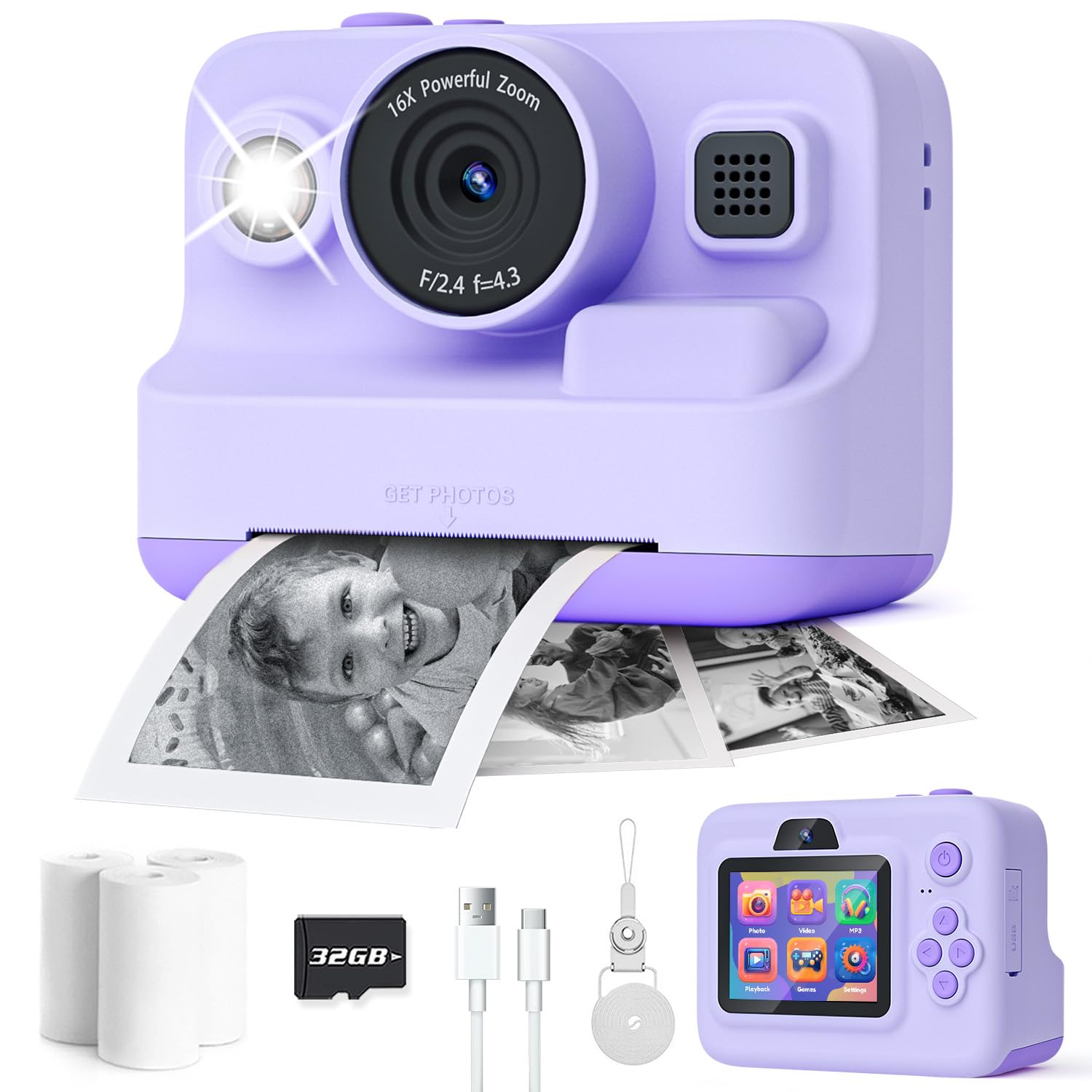
A black-and-white print sliding out seconds after the shutter is the reason to choose the Gofunly H3. The 2.4-inch screen lets a child line up a shot, the 10X digital zoom handles the obvious experiments, and the print gives them something to hand to a grandparent instead of another file lost on a card.

We liked the 1000mAh battery and the 32GB card because they make it a self-contained gift; the 4-5 hour rating is enough for a day out, and the three rolls of paper get you started. The controls are simple, and the camera is sized like a small instant camera. For a 4- or 5-year-old, that combination of instant reward and easy handling is hard to beat.

The prints are black and white, not color, and the paper is an ongoing cost; if you want color, this is not the camera. The print quality is clear enough for the format but not sharp, and the camera is a toy first. We also treat reliability as the area to watch: a unit that stops printing turns the whole ritual into a frustration.

Even so, it is the instant camera we recommend first because the core experience is so immediate. A child takes a picture, gets a print, and sticks it on the fridge; that loop is the product.

Pros

  • Prints black-and-white photos instantly
  • Simple controls for young kids
  • 1000mAh battery and 32GB card
  • Three rolls of paper included

Cons

  • Prints are black and white only
  • Paper is an ongoing cost
  • Reliability is the weak spot
Our verdict

For a child who wants a print in hand, the Gofunly H3 is our instant pick: it is simple enough for a 4-year-old and prints fast.

Check Latest Price
4

Best Budget

YEEHAO DHC-LCL5 Kids Camera

89 /100
LBD Score Excellent

Key details

Weight
7.76 oz
Age Range
3-9 years
Resolution
48MP
Included Storage
32GB card
View on Amazon

The budget position is the first thing to notice: this is a lot of camera for the money, with a dual-lens setup, a 32GB card, and a soft silicone case in the box. The 2-inch screen and 16X digital zoom are the useful parts; the selfie lens is what makes it feel less like a hand-me-down.

We found the selfie lens and the games give it more range than a plain point-and-shoot, and the silicone case is the right idea for a camera that will be carried by a lanyard. The 220g body is light enough for a 5-year-old but not so tiny that it disappears in a backpack.

Battery life is the weak link. The built-in rechargeable cell is convenient, but the runtime is inconsistent enough that a spare charge before a trip matters. Picture quality is fine for the budget, not fine for printing. For a first camera on a tight budget, we think the trade-off is reasonable; if you want a more reliable daily camera, the Desuccus is the better call.

The selfie lens is the detail that sells it for us: it turns the camera into a social toy, and that is what keeps a 6-year-old coming back.

Pros

  • Dual lenses for selfies
  • Silicone case and 32GB card
  • Light 220g body
  • Games and filters

Cons

  • Battery life is inconsistent
  • Picture quality is basic
Our verdict

Budget-minded families should start with the YEEHAO DHC-LCL5: it covers selfies, games, and a 32GB card without stretching the budget.

Check Latest Price
5

Older Kids

Camkory DC403 Digital Camera

86 /100
LBD Score Excellent

Key details

Zoom
16x digital
Battery
Two included batteries
Screen Size
3 inches
Included Storage
32GB card
View on Amazon

The bigger 3-inch screen and 16X zoom are what separate the Camkory from the pocket-sized cameras here. An 8- or 9-year-old who wants to frame a shot and zoom in on the bird at the feeder will find it more satisfying than a tiny toy body, and the 44MP claim gives it a more serious feel on paper.

We liked that it comes with two batteries and a charger, plus a 32GB card; that is a more complete kit than most. The controls are still automatic enough for a beginner, and the larger screen is easier to review photos on. It is also one of the few here that feels like a small adult camera rather than a plaything.

The downside is reliability. The camera's weak spot is units that stop powering on, so buy it where returns are easy and test it thoroughly in the first week. Picture quality is fine in good light and less so indoors. For an older child who wants a zoom and a bigger screen, it is a reasonable step up; for a first camera, we prefer the simpler Desuccus.

The larger screen is the part that changes daily use: a child can actually see what they shot and decide whether to keep it, instead of squinting at a postage stamp.

Pros

  • 3-inch screen and 16X zoom
  • Two batteries, charger, and 32GB card
  • Simple automatic controls

Cons

  • Reliability risk of units not powering on
  • Indoor picture quality is limited
Our verdict

We see the Camkory DC403 as a step-up point-and-shoot for an older kid, with a bigger screen and more zoom than the toy cameras here.

Check Latest Price
6

Longer Sessions

Dylanto BLL2 Instant Print Camera

91 /100
LBD Score Outstanding

Key details

Battery
2000mAh
Print Type
Black and white
Screen Size
2.4 inches
Included Paper
3 rolls
View on Amazon

The larger 2000mAh battery is the first practical detail we noticed; instant cameras are only fun if they keep working through a birthday party, and this one is built for longer sessions than the Gofunly.

It prints black-and-white photos on thermal paper, and the 2.4-inch screen and 16X zoom are familiar kids-camera territory. The three rolls in the box are a generous start, and the Type-C charging is easier to live with than a proprietary cable. The controls are simple enough for a child to load and print with a little help.

Print quality is the compromise: prints can come out streaky or blank, and the paper feed is the part to watch. The camera also has an uneven reliability record. We do not treat it as the safest instant pick; the Gofunly has the stronger record.

What we like is the longer battery and the three rolls together: it feels like a kit for a day out rather than a starter that runs dry by lunch. If the instant print is the main event, it is worth a look; just keep spare paper on hand and buy from a seller with a straightforward return policy.

Pros

  • 2000mAh battery
  • Three rolls of paper included
  • 2.4-inch screen and 16X zoom
  • USB-C charging

Cons

  • Prints can be streaky or blank
  • Reliability is inconsistent
Our verdict

The Dylanto BLL2 earns a look for its bigger battery and three paper rolls, which make instant printing feel less like a refill errand.

Check Latest Price
7

Travel and Gifts

LITLISFlY DC505 Kids Camera

84 /100
LBD Score Excellent

Key details

Age Range
3-8 years
Resolution
48MP
Screen Size
2.62 inches
Included Storage
32GB card
View on Amazon

The tiny body is the whole appeal. This is a camera that disappears into a jacket pocket or a small backpack, and the 2.62-inch screen is large relative to the chassis. For a 4- or 5-year-old who wants to copy an older sibling, that size makes it easy to hand over.

It comes with a 32GB card and a rechargeable battery, plus a selfie lens and the usual games and frames. The simple controls and light weight are the reason to choose it; we like it as a second camera or a gift for a child who is not ready for a more expensive model.

The catch is that it is a cheerful extra rather than the camera we reach for first. There is no flash, so dim rooms are a struggle, and motion can blur. For a first camera, the Desuccus is the safer call; for a cheap stocking stuffer, this one is easy to like.

The 2.62-inch screen is the detail that makes it feel less like a toy: it is big enough to review a shot without turning the camera around for a parent.

Pros

  • Pocketable tiny body
  • 32GB card and rechargeable battery
  • Selfie lens and built-in games

Cons

  • No flash for dim rooms
  • Motion blur in low light
Our verdict

We see the LITLISFlY DC505 as a spare or gift camera: it is tiny, cheerful, and cheap enough to keep in a bag without much worry.

Check Latest Price
8

Tiny Hands

goopow H11 Kids Camera

91 /100
LBD Score Outstanding

Key details

Weight
3.7 oz
Age Range
3-8 years
Dimensions
4.17 x 2.71 x 1.88 inches
Battery Life
1.5-2 hours
View on Amazon

The 105-gram body is the reason to consider the goopow H11. It is light enough to hang from a lanyard without dragging on a small neck, and the 4.17 x 2.71 x 1.88-inch shell fits a preschooler's hands. For a child who wants to bring a camera everywhere, that matters more than a megapixel count.

The 2-inch screen is small, and the controls are basic: photo, video, playback, games. We like the 1.5-2 hour battery for errands and short outings, and the included 32GB card keeps the setup simple. It is a camera that a 4-year-old can understand without a tutorial.

The trade-off is that the same small body makes the screen hard to see outdoors, and the camera's functions are the weak point. Units that stop working or refuse to power on are the risk to check for in the return window. It is not the camera we choose for a child who is hard on gear.

What it does well is disappear into a pocket and make photography feel casual. If your child is tiny, gentle, and always on the move, the goopow is a sensible first camera; if you want one camera to last through drops and siblings, the VTech or Desuccus is the sturdier bet.

Pros

  • Only 105 grams
  • Small body for preschool hands
  • Simple controls and 32GB card
  • 1.5-2 hour battery

Cons

  • Tiny screen is hard to see outdoors
  • Reliability risk of units not powering on
Our verdict

When small and light matter most, the goopow H11 is the one we reach for: at 105 grams, it is easy for a preschooler to carry all day.

Check Latest Price

How We Tested 16 Cameras for Kids

We started with every kids' camera that turns up on the first few pages of a search, plus the ones parents and teachers keep bringing up, then filtered hard. No strap or lanyard, no place in the test, since a camera in a 4-year-old's hand needs a tether. Anything that required an adult's phone, a coin, or a screwdriver to get running was cut. So was anything without a memory card in the box, because a camera that holds a dozen photos isn't really a camera. That left 16 models.

Testing ran four months with a rotating crew of kids ages 3 to 11, mine, my sister's, and a few borrowed from neighbors, through birthday parties, backyard afternoons, a bike ride around the block, and one very long car trip. We handed each camera over cold, with no instructions, then timed how long it took the kid to take a first photo and counted how often an adult had to step in.

We looked closely at what came back: faces at a party, a dog mid-run, a sunset through a car window, and the selfies kids took of each other. Batteries were charged Friday, handed over Saturday morning, and checked at dinner. On the instant-print models, we counted how many prints came out of a single pack and whether the feed jammed. We also noted which cameras kids reached for on day three and which got declared babyish by lunch, and whether extras like filters, frames, and games earned a second visit.

Durability wasn't scientific. Every camera took at least one fall off a picnic table, spent a day in a backpack full of snacks, and came back with fingerprints on the lens. The ones that made the list weren't the highest-spec models; they were the ones a kid could run without help and that were still working in week three.

How to Choose a Kids Camera

Match the controls to the child

A 4-year-old and an 8-year-old need different cameras even when both boxes say ages 3-12. For a preschooler, look for a small body, a clear shutter button, and a screen that shows the photo immediately; the VTech KidiZoom Duo's viewfinders and physical controls are easier to explain than a touchscreen. For an older child, a larger screen and zoom, as on the Camkory, make the camera feel more capable. If your child needs help every time, the camera will stay in the drawer.

Choose digital or instant print

Digital is the flexible choice: photos land on a memory card, and a 32GB card holds thousands of shots. Instant print is the more tactile choice, but the prints are black and white on thermal paper, not color, and the paper is an ongoing cost. The Gofunly H3 is the instant model we reach for; the Desuccus X2 is the simpler digital default. If your child mostly wants to hand out photos, pick instant; if they want to take hundreds of pictures, pick digital.

Treat battery and storage as part of the gift

A camera with a dead battery is a drawer ornament. Rechargeable models are easier for daily use, but check the runtime and keep a cable handy; the VTech Duo runs on four AA batteries, so add a rechargeable set and a spare. Storage matters too: a 32GB card is enough for a kid's photo habit, but confirm the card is included, because a camera without one may not record anything. Buy the card and charger at the same time as the camera.

Prioritize size, weight, and a lanyard

A kids camera should fit a child's hand and survive being carried by a strap. Weight matters more than a few millimeters of screen: the goopow H11 is 105 grams and easy to wear all day, while the VTech Duo is chunkier and better for a child who tends to drop things. Look for a soft case or silicone bumper, and use the lanyard. A case and a strap do more for durability than a high megapixel claim.

Don't shop by megapixels

The 44MP and 48MP numbers on kids cameras are not a reliable guide to image quality; sensor size, lens, and processing matter more, and many of these cameras produce soft photos in low light. A 2MP VTech can be more satisfying to use than a 48MP toy if the controls are easier. Look for a camera your child will actually carry, and accept that the photos are for fun, not for printing large.

Frequently Asked Questions

Final Verdict

For most families, the Desuccus X2 is the camera we hand over first. It includes the card, charges by USB-C, and keeps the controls simple enough that a child can use it without a parent hovering. The VTech KidiZoom Duo is the better choice for a preschooler who wants viewfinders, games, and a chunky body, while the Gofunly H3 is the one for a child who wants a print in hand.

Start with the child's temperament: if they need instant reward, choose instant; if they want to take hundreds of pictures, choose digital. The Desuccus gives you the easiest digital start, and the alternatives are there when a specific child needs a different shape.