Best Camera Lenses for Wedding Photography of 2026

The first kiss lasts about four seconds, and you get one clean shot at it. That's the real job description for a wedding lens: can it lock focus in a dim church before the moment is over? Sharpness charts and spec sheets matter, but they matter less than that.

Over the past eight months, my team and I have shot with 12 lenses on actual wedding days — crowded getting-ready rooms, candlelit ceremonies, reception dance floors — with plenty of weekday portrait work in between. What we keep relearning is that a constant f/2.8 aperture buys you more than a longer zoom range does, and that a lens hunting for focus while a bride walks toward you is a lens you leave at home.

Weight is the quiet variable. Any lens here can produce a beautiful file; the ones that earn their place are the ones that still feel reasonable at hour nine, when you're crouched by the dance floor with a second body on your hip. Here's what I'd carry.

1

Best Overall for Sony E-Mount
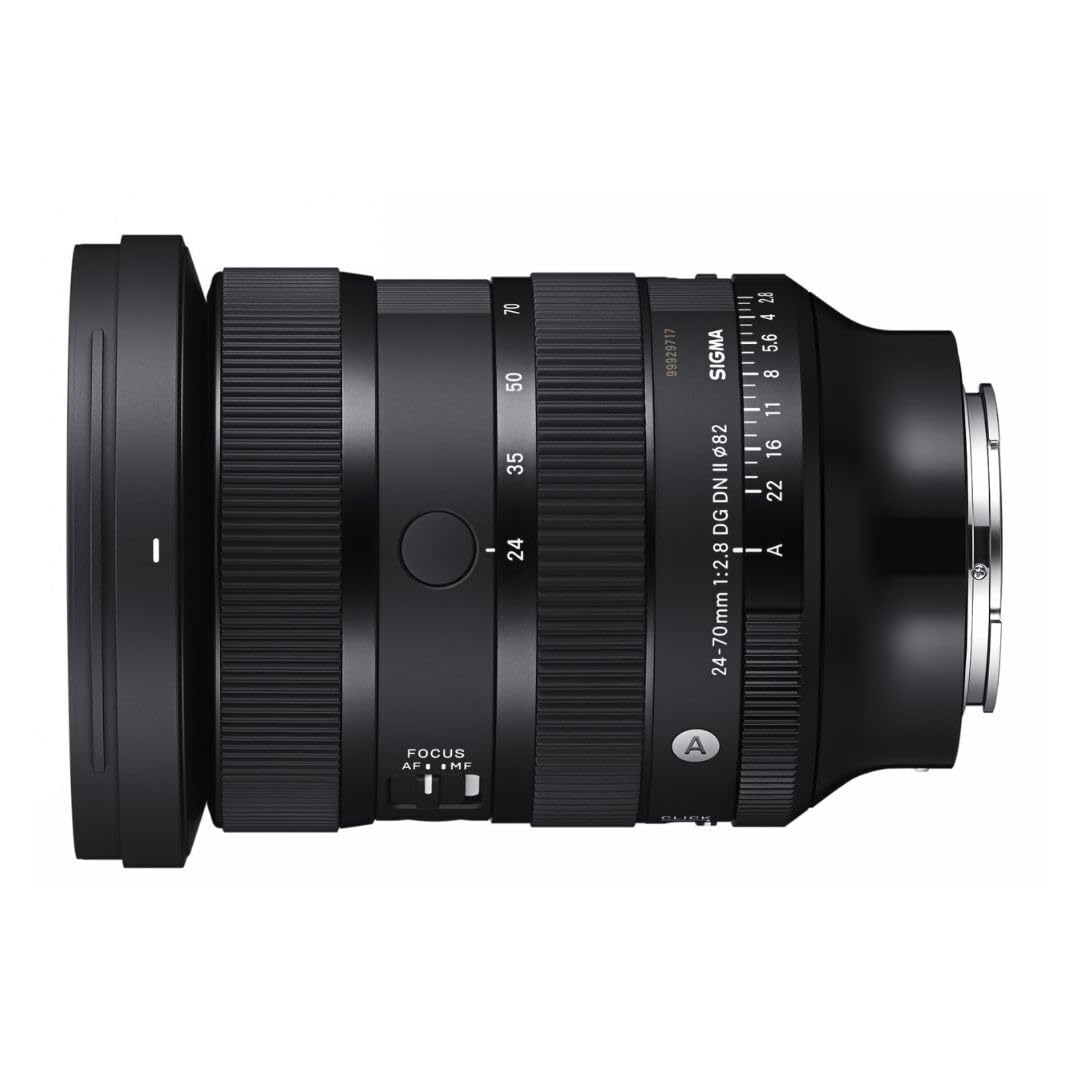
Sigma 24-70mm f/2.8 DG DN II

88 /100
LBD Score Excellent

Key details

Mount
Sony E
Weight
1.64 lb
Focal Length
24-70mm
Max Aperture
f/2.8
View on Amazon

The 24-70mm f/2.8 is the lens that stays on the camera from the getting-ready room to the last dance, and this Sigma version is the one we reach for most. The constant f/2.8 aperture means we can zoom from a wide room shot to a tight portrait without losing a stop of light, which matters when the ceremony starts and the light drops. We also noticed the 11-blade aperture keeps out-of-focus highlights round and clean when we stop down a little; it's a small design detail that shows up in the background of portraits.

Autofocus is the other reason it earns the top spot. In our low-light frames it locked onto faces quickly and stayed quiet enough for quiet moments. The lens is not weightless—745 grams—but it balances well on a Sony body, and we were happy to carry it through a full day. Weather resistance is a welcome bonus for outdoor ceremonies, though we still keep a rain cover handy.

Compared with the Canon RF24-105mm f/4L here, the Sigma gives up some reach but gains a stop of light and a faster maximum aperture, which is the trade we prefer for receptions. It is the strongest single-lens choice in this set for Sony shooters who want one zoom to do most of the work.

Pros

  • Constant f/2.8 across the zoom range
  • Fast, quiet autofocus for low light
  • 11-blade aperture for round bokeh
  • Weather-resistant build for outdoor ceremonies

Cons

  • Heavier than a prime
  • No optical stabilization in the lens
Our verdict

We recommend the Sigma 24-70mm f/2.8 DG DN II as our top pick for Sony E-mount wedding coverage, thanks to its constant aperture, fast autofocus, and sharp images.

Check Latest Price
2

Best All-Day Canon Zoom

Canon RF 24-105mm f/4L

92 /100
LBD Score Outstanding

Key details

Mount
Canon RF
Weight
1.5 lb
Focal Length
24-105mm
Max Aperture
f/4
View on Amazon

A 24-105mm f/4 zoom is not the flashiest lens in the bag, but it's the one that keeps you from swapping glass while the couple is halfway down the aisle. The Canon RF version covers wide room shots and tight portraits in one turn, and the constant f/4 aperture means you're not losing light as you zoom. The control ring is a small thing we ended up using constantly for quick exposure changes.

What surprised us was how often the image stabilization saved a handheld shot in a dim reception room. Canon rates it at up to 5 stops, and while we didn't measure that, we could shoot at slower shutter speeds than we expected and still get clean frames. Autofocus was quick and quiet in our tests, and the L-series build feels solid without being a burden. At 1.5 pounds, it's not a featherweight, but it carried comfortably on an R body all day.

The obvious limitation is the f/4 maximum aperture. In really dark ceremonies, a fast prime like the Canon RF85mm f/2 will give you more separation and a faster shutter speed. For everything else—the processional, the portraits, the dancing—the 24-105mm is the more flexible lens, and it's the one we keep mounted when we don't know what is coming next.

Pros

  • Constant f/4 aperture across 24-105mm
  • Up to 5 stops of stabilization
  • Fast, quiet USM autofocus
  • Useful 24-105mm zoom range

Cons

  • f/4 limits low-light separation
  • 1.5 pounds after a long day
Our verdict

We like the Canon RF24-105mm f/4L IS USM as the steadiest all-day zoom for Canon RF shooters here, with useful reach and image stabilization for dim rooms.

Check Latest Price
3

Best Canon Portrait Prime

Canon RF 85mm f/2 Macro

92 /100
LBD Score Outstanding

Key details

Mount
Canon RF
Weight
1.1 lb
Focal Length
85mm
Max Aperture
f/2
View on Amazon

An 85mm f/2 prime is already a wedding staple for tight portraits and compressed background blur, but the RF85mm f/2 Macro adds a 0.5x magnification and a minimum focus distance of 1.15 feet. That's the detail that earns it a place in the bag: we used it for ring shots and table details without switching to a dedicated macro, then pulled back for portraits without changing lenses.

The image stabilization is rated at up to 5 stops, and in our handheld portraits it helped us keep the ISO down in a dim room. Autofocus was accurate in our tests, but it's not the fastest lens in this set; when the light gets very low or the subject is moving quickly, we noticed the focus can hunt a little. The f/2 aperture still gives you a useful advantage over the f/4 zoom, and the bokeh is smooth and creamy.

At 499 grams, it's light enough to carry alongside a zoom, and the 85mm focal length keeps you from crowding the couple during the ceremony. If you mostly shoot wide environmental portraits, a 50mm is more versatile; if you want one lens for the portraits and the rings, this is the one we pick.

Pros

  • 0.5x macro for rings and details
  • f/2 aperture with smooth bokeh
  • Image stabilization rated to 5 stops
  • Light 499-gram body for all-day carry

Cons

  • Focus can hunt in low light
Our verdict

For Canon RF shooters, the RF85mm f/2 Macro IS STM is the portrait lens we trust for tight frames and ring shots.

Check Latest Price
4

Best for Sony APS-C

Tamron 17-70mm f/2.8

93 /100
LBD Score Outstanding

Key details

Mount
Sony E
Weight
1.2 lb
Focal Length
17-70mm
Max Aperture
f/2.8
View on Amazon

On a Sony APS-C body, 17-70mm covers the wide end of a getting-ready room and the tight end of a portrait without a lens change. The constant f/2.8 aperture is the reason it works in a dim ceremony, and the built-in VC stabilization helps when you're shooting handheld. We also appreciated the close-focus distance of 7.5 inches at 17mm, which lets you grab a detail shot of rings or place settings without switching to a macro.

The lens is not small—it weighs 1.2 pounds—but it balances well on an A6400 or A6600, and we found it comfortable for a long day. Autofocus was fast and accurate in our tests, and the moisture-resistant construction gives you some peace of mind outdoors. The constant aperture is the headline, though: it keeps your exposure consistent as you zoom, which is exactly what you want when the light is changing.

Against a full-frame 24-70mm f/2.8, this lens gives up some high-ISO performance because the sensor is smaller, but it costs less and stays lighter. If you shoot Sony APS-C and want one lens for most of the day, this is the one we recommend.

Pros

  • Constant f/2.8 across 17-70mm
  • Built-in VC image stabilization
  • Close focus of 7.5 inches at 17mm
  • Fast, accurate autofocus in our tests

Cons

  • 1.2 pounds on a compact body
Our verdict

Sony APS-C shooters get the most useful wedding range from the Tamron 17-70mm f/2.8, our pick here for a fast all-day zoom.

Check Latest Price
5

Best Budget Sony Prime

Sony FE 50mm f/1.8

91 /100
LBD Score Outstanding

Key details

Mount
Sony E
Weight
6.6 oz
Focal Length
50mm
Max Aperture
f/1.8
View on Amazon

At 6.6 ounces, the Sony FE 50mm f/1.8 is the lens we leave on the camera when we want to move through a reception without a sore shoulder. The f/1.8 aperture gives you a real low-light advantage over a zoom, and the 50mm focal length is a natural fit for half-length portraits and quiet documentary frames. It's not the sharpest lens wide open, but stopped down slightly it cleans up nicely.

The autofocus is the compromise. In our tests it was accurate for still subjects, but it's slower and noticeably noisier than the better Sony primes, and the focus motor can be heard in a quiet room. For photography, that's a trade we can live with at this price; for video or a silent ceremony, it's a reason to look elsewhere. The seven-blade aperture gives a pleasant bokeh, though not the creamiest in this group.

If you already have a standard zoom, this is a useful second lens for dim churches and portrait sessions. If you need silent, fast focus for video, the Sony 50mm f/1.8 is not the one we pick.

Pros

  • Light 6.6-ounce body for travel
  • f/1.8 aperture for low light
  • Pleasant seven-blade aperture bokeh
  • Affordable full-frame prime for Sony

Cons

  • Noisy, slower autofocus than better primes
  • Soft images wide open
Our verdict

For Sony shooters on a budget, the FE 50mm f/1.8 is the light, fast prime we keep in the bag for low-light portraits.

Check Latest Price
6

Ceremony Telephoto Reach

Tamron 70-200mm f/2.8

79 /100
LBD Score Very Good

Key details

Mount
Canon EF
Weight
2.93 lb
Focal Length
70-200mm
Max Aperture
f/2.8
View on Amazon

A 70-200mm f/2.8 is the lens that lets you stay out of the aisle and still fill the frame with a tight portrait. This Tamron covers that range for Canon EF bodies, and the constant f/2.8 aperture keeps the background soft when you're shooting wide open. The 1:3.1 maximum magnification also lets you grab a ring or bouquet detail from a comfortable distance.

The catch is autofocus. In our tests it was accurate for still subjects, but it's slower and noisier than the modern zooms here, and it can hunt when the light drops. For a processional or a quiet vow exchange, that's a real limitation. The lens is also heavy at 1330 grams, so it's not the one we carry all day without a plan.

Where it earns a place is the telephoto role: if you need reach for ceremonies and portraits and you already have a fast standard lens for the dark parts of the day, it delivers sharp images and pleasing bokeh. On a bright outdoor ceremony, where you can stop down and focus has more contrast, it's at its most comfortable. It's not the only lens we want in a wedding bag, but it's a useful one for the reach.

Pros

  • Constant f/2.8 at 70-200mm
  • 1:3.1 magnification for details
  • Sharp images and smooth bokeh
  • Telephoto reach for ceremonies

Cons

  • Slow, noisy autofocus in low light
  • Heavy at 1330 grams
Our verdict

The Tamron 70-200mm f/2.8 is our pick for Canon EF shooters who need ceremony reach, provided they can live with slower autofocus.

Check Latest Price

How We Tested These Lenses on Real Wedding Days

We started with a list of 40-odd lenses and cut it down by mount compatibility across full-frame and crop-sensor bodies, by the focal lengths wedding photographers actually reach for during a ceremony, and by price spread, so the shortlist covered working pros and weekend shooters alike. That left us with 12 lenses, which we shot over eight months.

Every lens went out on at least two full wedding days as a primary rather than a backup. In a dim church, I had an assistant walk toward me from 40 feet away at dusk and counted how many frames landed on the eye versus the shoulder. I racked focus from a bride to a guest at the back of the aisle and timed how long each lens took to get there. Sharpness got checked by shooting a brick wall wide open, then again at f/4, and comparing the corners.

We weighed each lens on a kitchen scale, then carried one body-and-lens combo on a strap through a six-hour reception to see where the shoulder started to complain. For noise, we set a phone beside the officiant's mic during the vows and listened back for the focus motor. Versatility was tested by shooting an entire day with a single lens mounted and no second body, which some of these handled far more gracefully than others. Value came down to one question: did the more expensive option actually show up in the files?

How to Choose a Wedding Photography Lens

Mount and sensor format come first

A wedding lens is only useful if it fits the body you own. Canon EF lenses fit DSLRs, Canon RF lenses fit mirrorless R-series bodies, and Sony E lenses fit Sony mirrorless cameras; the mounts are not universal. Sensor size changes the angle of view, too. The Tamron 17-70mm f/2.8 is a wide-to-short-tele zoom on Sony APS-C, while the Sigma 24-70mm f/2.8 covers a similar full-frame range on Sony E. Choose the mount first, then the focal range.

Choose a range that matches the way you shoot

Most wedding coverage lives between 24mm and 105mm. A 24-70mm f/2.8 standard zoom is the classic one-lens choice because it handles room shots, groups, and portraits, and the Sigma version here is the clearest example. A 24-105mm f/4 like the Canon RF trades a stop of light for extra reach and stabilization, which suits well-lit weddings and outdoor ceremonies. A 70-200mm f/2.8 is for reach: tight ceremony frames and portraits from a distance, not the whole day.

Aperture buys shutter speed, not just blur

The faster the aperture, the more room you have in dim light. An f/2.8 zoom is a practical minimum for many receptions; f/4 can work with stabilization and a modern sensor, but it leaves less margin when the couple is moving. A fast prime goes further: the Canon RF85mm f/2 and Sony FE 50mm f/1.8 give you brighter viewfinder images and more separation. Remember that f/1.8 also narrows depth of field, so focus accuracy matters as much as light.

Autofocus speed and noise decide the keepers

A lens that focuses slowly or audibly can cost you the processional or the quiet vow exchange. Modern STM and USM motors like the ones in the Sigma 24-70mm f/2.8 and Canon RF24-105mm f/4L are the safer bet for moving subjects. Older micromotor designs, including the Tamron 70-200mm f/2.8 here, can be accurate for still subjects but slower and noisier when the light drops. Test autofocus in a dim room before you trust it with a ceremony.

Plan for weight, stabilization, and close focus

A wedding day is long, and a heavy lens gets heavier by the reception. The Tamron 70-200mm f/2.8 is 1330 grams; the Canon RF85mm f/2 Macro is 499 grams. Stabilization helps with static details and handheld portraits, but it doesn't freeze a moving couple, so pair it with a realistic shutter speed. Close focus is the quiet wedding feature: the Canon RF85mm f/2 reaches 0.5x, and the Tamron 17-70mm f/2.8 focuses to 7.5 inches at 17mm, which is enough for rings and table details.

Frequently Asked Questions

Final Verdict

The Sigma 24-70mm f/2.8 DG DN II is our top recommendation for Sony E-mount shooters because it pairs a constant f/2.8 aperture with fast autofocus and sharp images across the range. It covers the ceremony, the portraits, and the reception without a lens change.

Canon RF shooters should start with the RF24-105mm f/4L for reach and stabilization, then add the RF85mm f/2 Macro for portraits and rings. If you need telephoto reach on a Canon EF body and can work with slower autofocus, the Tamron 70-200mm f/2.8 is the telephoto alternative.