Best Bone Conduction Headphones of 2026

Bone conduction headphones don't go in your ears. They rest against your cheekbones and send vibration toward your inner ear, leaving your ear canals wide open, so the car behind you and the chorus in your head arrive at the same time. That's a genuinely good idea for running and riding, and it's also why the cheap end of this category is such a minefield: thin, buzzy sound, music that leaks loud enough for the person next to you at a red light, and a band that starts loosening the moment you sweat.

I've spent six months running, lifting, and taking calls in 12 different pairs, and the gap between the good ones and the rest has almost nothing to do with the numbers printed on the box. Weight and where the band sits behind your head decide whether you'll still be wearing them at mile eight. Sound quality is real, but bass at a volume that still lets you hear traffic matters more than bass at full tilt. The picks below are the ones that survived.

1

Best Overall

SHOKZ OpenRun

91 /100
LBD Score Outstanding

Key details

Weight
0.92 oz
Battery Life
8 hours
Quick Charge
10 min for 1.5 hours
Water Resistance
IP67
View on Amazon

The IP67 rating is what makes the SHOKZ OpenRun the pair we recommend first for sport. Bone conduction headphones live or die by whether they survive sweat, rain, and a forgotten post-run rinse, and this one is sealed against all three. The 26-gram wraparound frame sits lightly behind the head, and the open-ear design keeps traffic, trail users, and gym announcements audible while your music plays. For running and cycling, that combination is the whole point.

The 8-hour battery is shorter than the 10- and 12-hour picks here, but the 10-minute quick charge buys about an hour and a half of playback, which is the detail that matters when you are heading out the door. The wraparound frame also leaves room for a helmet strap, and the open-ear fit does not ask you to jam anything into your ear canal.

The Pro 2 is the upgrade if you want more bass and a longer runtime, but it costs more and drops to IP55 sealing. The OpenRun is the better all-round sport default because it is the most weather-resistant of the two and the easiest to live with. For most runners, the OpenRun's real advantage is that it disappears into the routine: you put it on, hear the road, and stop thinking about it.

Pros

  • IP67 sealing for sweat and rain
  • Secure wraparound fit at 26 g
  • 10-minute quick charge for 1.5 hours

Cons

  • Magnetic charging cable instead of USB-C
Our verdict

We recommend the OpenRun as the default sport pair: it is light, secure, fully waterproof, and quick to recharge.

Check Latest Price
2

Best Sound

SHOKZ OpenRun Pro 2

88 /100
LBD Score Excellent

Key details

Weight
1.07 oz
Driver Type
Bone conduction plus air conduction
Battery Life
12 hours
Water Resistance
IP55
View on Amazon

The OpenRun Pro 2 is the pair to choose when pure bone conduction sounds thin. SHOKZ combines a bone-conduction driver with an air-conduction driver, and the result is the fullest sound in this set: more bass, more body, and enough clarity for podcasts and music. The 12-hour battery and hard case make it feel like a premium travel kit rather than a bare workout accessory.

We think it earns the premium for sound-first training, but it is not the automatic upgrade for everyone. The 30.3-gram frame is a little heavier, and the standard size fits average heads; if you are between sizes, the mini version is worth checking before you commit.

Calls are clear enough for quick check-ins, and the dual-driver tuning keeps the open-ear awareness intact. The hard case is the small luxury that makes the premium feel less fragile in a gym bag.

Pros

  • Fuller sound from dual drivers
  • 12-hour battery and hard case
  • Open-ear awareness stays intact

Cons

  • IP55 sealing trails the OpenRun's IP67
  • Premium price with mixed long-term reliability
Our verdict

We recommend the OpenRun Pro 2 for sound-first training: it is the fullest-sounding pair here, with 12-hour battery and a hard case, though it is a specialist rather than the default.

Check Latest Price
3

Best Budget

PSIER X12

82 /100
LBD Score Excellent

Key details

Weight
0.81 oz
Bluetooth
6.0
Battery Life
10 hours
Water Resistance
IPX5
View on Amazon

The PSIER X12 is the budget pair we point to first. At 23 grams, it is the lightest frame here, and the flexible memory-titanium band stays put without clamping hard. The battery covers a long training block, USB-C charging keeps it simple, and Bluetooth 6.0 pairs quickly. If you want to try bone conduction without spending premium money, this is the low-risk entry.

The IPX5 rating is the main limit: it handles sweat and light rain, not a downpour or a pool. The included earplugs are a useful experiment: try them once to hear how much ambient noise the open design is letting in.

Pros

  • 23 g frame stays secure
  • 10-hour battery and USB-C charging
  • Bluetooth 6.0 pairs quickly

Cons

  • 10-hour battery claim assumes 50% volume
Our verdict

The PSIER X12 is our budget pick: it is light, secure, and comfortable enough to try open-ear running audio without a big commitment.

Check Latest Price
4

Best for Wet Weather

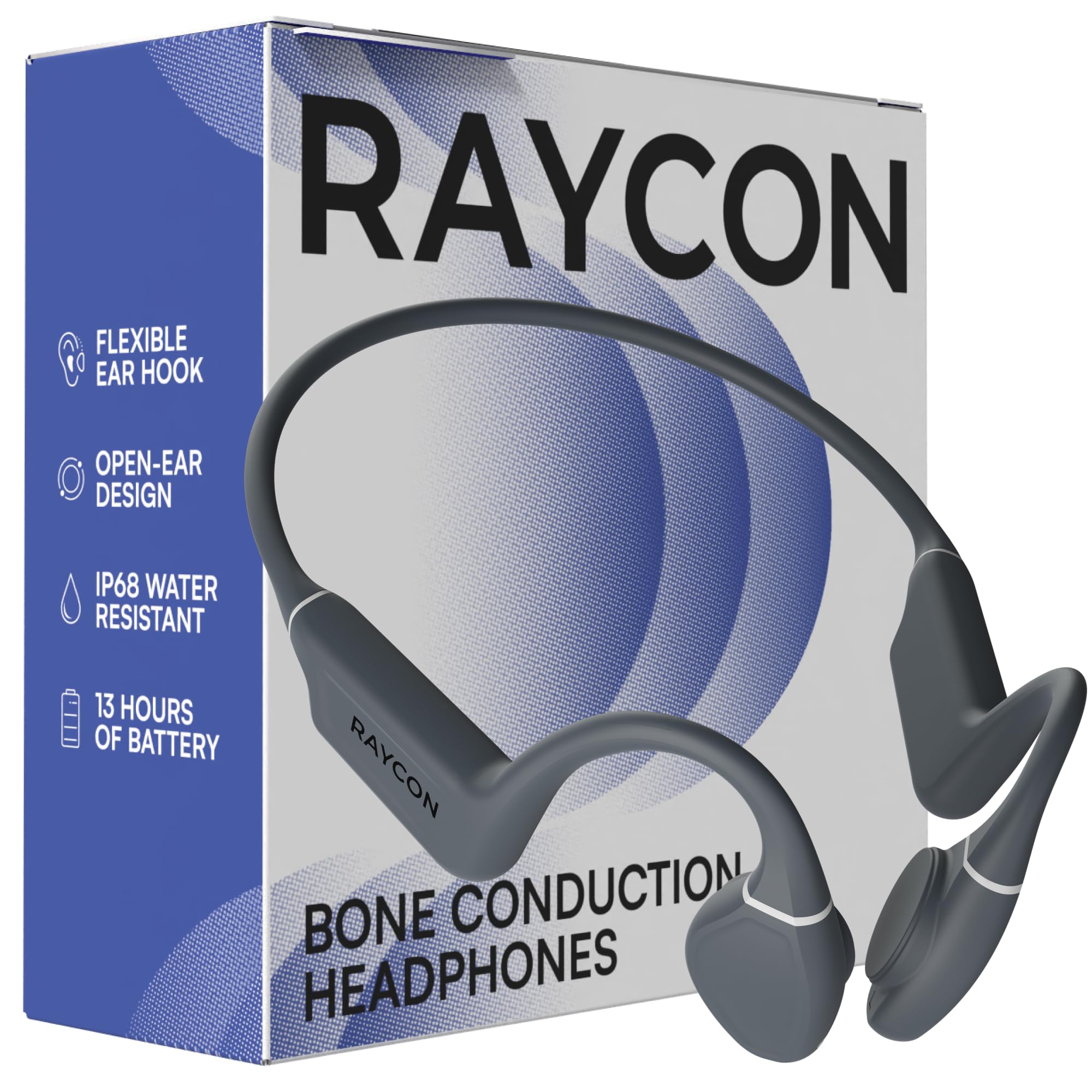
Raycon Bone Conduction

81 /100
LBD Score Excellent

Key details

Charging
Magnetic cable
Bluetooth
5.3
Adjustable Fit
Sliding earpieces
Water Resistance
IP68
View on Amazon

The Raycon pair is the wet-weather specialist. An IP68 rating is the highest level of dust and water protection in this group, which makes it the one to consider for rainy commutes, muddy trails, and sweaty gym sessions. The sliding earpieces are the more interesting design detail: you can move them closer for louder sound or back for more environmental awareness, a useful analogue volume control when your hands are busy.

We rank it as a runner-up rather than the top pick because fit is less predictable. The band has limited adjustment, and the hook-style earpieces do not sit snugly on every head; if you are between sizes or wear a helmet, check the return policy. Battery life is also below the longest-lasting picks, so it is not the pair for an all-day hike. The button controls are simple to operate, which matters when the weather is the reason you bought them.

Pros

  • IP68 sealing is highest here
  • Sliding earpieces adjust sound and awareness
  • Good for rain and sweat

Cons

  • Magnetic charging cable disconnects easily
Our verdict

The Raycon bone conduction headphones are our wet-weather pick, with IP68 sealing and adjustable earpieces that tune how much of the world you hear.

Check Latest Price
5

Fuller Sound

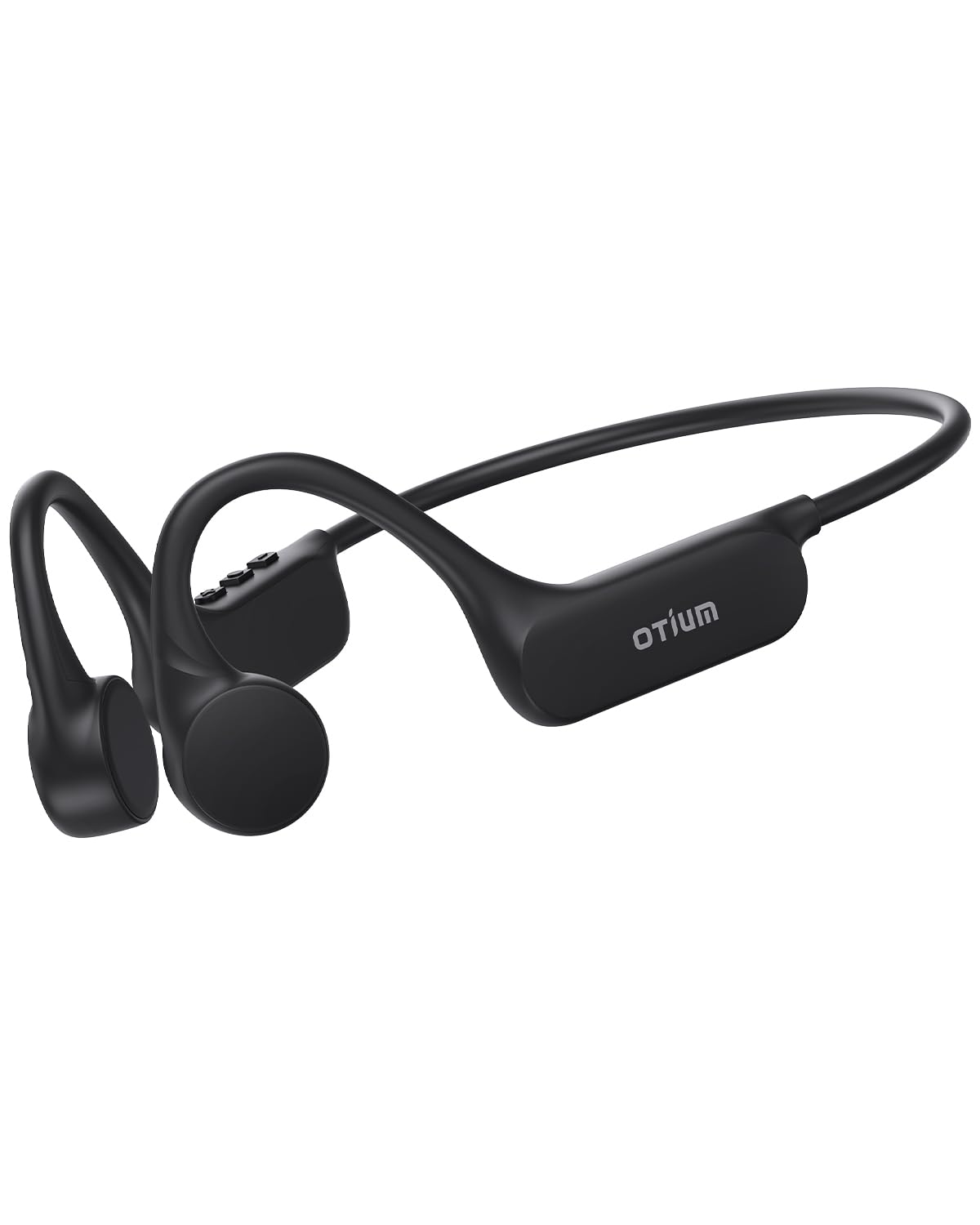
Otium X20

87 /100
LBD Score Excellent

Key details

Driver Type
Hybrid bone and air drivers
Battery Life
12 hours
Quick Charge
15 min for 2 hours
Water Resistance
IPX6
View on Amazon

The Otium X20 is the hybrid experiment in this group. It pairs a bone-conduction driver with an air-conduction driver, so it can deliver more bass and body than a pure bone-conduction design while still leaving the ear canal open. The 12-hour battery, IPX6 sealing, and Bluetooth 6.0 make it a practical sport headphone on paper.

The 15-minute quick charge is the feature we noticed most: Otium states two hours of playback from that top-up, which is enough for a forgotten commute or a short workout. The titanium memory frame and button controls keep the design simple, and the open-ear structure still lets road noise in.

We rank it as an also-consider rather than a runner-up because the hybrid approach is not automatically better. The air driver can make the sound feel less like pure bone conduction, and the app adds EQ options that most runners will not need. If you want maximum awareness, the OpenRun is the safer choice; if you want more bass, this is the interesting alternative. The hardware buttons handle the basics without the app.

Pros

  • Hybrid drivers add bass
  • 12-hour battery with 15-minute quick charge
  • IPX6 for sweat and rain

Cons

  • Hook shape limits fit adjustment
Our verdict

We see the Otium X20 as the hybrid alternative for listeners who want more bass than pure bone conduction delivers, with 12-hour battery and IPX6 sealing.

Check Latest Price
6

Lowest Cost

Gavhaio X128

95 /100
LBD Score Outstanding

Key details

Weight
0.99 oz
Bluetooth
6.0
Battery Life
12 hours
Water Resistance
IP54
View on Amazon

The Gavhaio X128 is the cheapest way into this list, and it includes a pair of noise-reducing earplugs and a silicone fit strap. The 12-hour battery and Bluetooth 6.0 are generous at this end of the market, and the 28.08-gram frame is light enough to forget on a run. If the goal is to test whether open-ear running audio works for you, this is the low-commitment option.

The earplugs are useful for noisy commutes when you want to shut the world out, but they defeat the open-ear point. The controls are basic, and the frame is a simple wraparound without the premium finish of the SHOKZ picks.

We rank it as an also-consider because the simpler build shows where the money went. The frame is light enough for long wear, and the silicone fit strap is the quiet hero for smaller heads; it takes up slack without bulk. If you want the lowest-cost entry into open-ear running audio, this is the one.

Pros

  • Lowest price here
  • 12-hour battery and Bluetooth 6.0
  • Includes earplugs and fit strap

Cons

  • IP54 is the weakest water resistance here
  • No hard case included
Our verdict

We recommend the Gavhaio X128 as the lowest-cost entry here, with a light frame, 12-hour battery, and a fit strap for smaller heads.

Check Latest Price

How We Tested 12 Pairs of Bone Conduction Headphones

We started by pulling every current bone conduction model from brands we'd already tested, then added the newer budget options that kept surfacing in reviews. Filtering by water-resistance rating, claimed battery life, weight, and price left us with 12 pairs. Over six months I wore them on runs, on a bike trainer, in the gym, on dog walks, and at my desk on calls.

Fit and comfort got the most attention because that's what falls apart first. I shook my head after every adjustment, wore each pair under a bike helmet and with sunglasses on, and noted whether the band crept up behind my head after an hour of sweating. I also hunted for the buttons by feel with cold hands, since the ones I had to look down at are the ones I stopped reaching for.

Sound quality we judged in motion: whether bass held up at a volume low enough to still hear traffic, and whether a podcast stayed clear in wind. Each pair ran at 70 percent while a colleague stood three feet away listening for leakage, the complaint an open-ear design invites. Battery life got logged from full charge to dead across long runs, and connectivity meant pairing to a phone and a laptop, walking out of range, and hopping between two devices without a dropout. Pairs were wiped down after every sweaty session; sticky buttons or scuffed coating within a few weeks ruled a set out. Value came down to how much of the gap in sound and fit you actually pay for.

How to Choose Bone Conduction Headphones

Fit Matters More Than a Few Grams

A bone conduction headphone rests against your cheekbones and wraps behind your head, so a secure fit is not a comfort extra; it is what keeps the sound consistent. A band that clamps too hard becomes a headache, while a loose hook slides when you sweat. We put more weight on fit than on a gram or two of weight. If you wear a helmet, check that the band leaves room for the straps. The OpenRun's slim wraparound and the Raycon's sliding hooks are two different answers; choose the one that matches your head shape and return policy.

Read the IP Rating as a Use Limit

IPX5 and IP54 cover sweat and light rain, IP67 adds dust protection and survives a dunk, and IP68 goes further. We treat IPX5 as a workout rating, not a swimming rating. If you run in heavy rain or sweat heavily, pay for IP67 or IP68; the OpenRun and Raycon are the two picks here that make that easy. If you only need protection from a sweaty brow, a budget IPX5 pair is enough. No pair here should go in a pool unless the maker explicitly rates it for swimming.

Battery Hours Are Best-Case Numbers

Bone conduction headphones often quote playtime at a moderate volume, and wind or traffic makes you turn them up. A 10-hour claim can shrink on a loud outdoor run, so compare the range rather than the biggest number. Quick charging is the feature that saves a forgotten session: the OpenRun gives about an hour and a half from a 10-minute charge, and the Otium states two hours from 15 minutes. If your longest session is a half marathon, 8 hours is plenty; if you ride all day, look at the 12-hour picks.

Know What Open-Ear Sound Can and Cannot Do

Bone conduction trades bass and isolation for awareness. That is the right trade on a bike path and the wrong one on a plane or a noisy train. Pure bone conduction can sound thin, and wind can mask the highs; hybrid models like the Otium add an air driver for more body, while the OpenRun Pro 2 uses a similar dual-driver approach. If you need silence, buy noise-canceling headphones instead. If you need to hear your surroundings, keep the volume moderate and treat the open ear as the safety feature it is.

Frequently Asked Questions

Final Verdict

The SHOKZ OpenRun is the pair we recommend first because it gets the sport basics right: IP67 sealing, a 26-gram frame that stays put, and a 10-minute quick charge for an 8-hour battery. If sound is the priority, the OpenRun Pro 2 is the upgrade; if you want to spend less, the PSIER X12 is the budget pick. The OpenRun remains the default because it balances weather protection, fit, and everyday usability better than either.