Best Automatic Espresso Machines of 2026

A super-automatic espresso machine does the whole routine for you: it grinds, tamps, pulls the shot, and usually froths the milk, all at the press of a button. The differences that matter after a year of mornings are less glamorous than the box suggests — grind consistency, how hot the shot lands, how many taps stand between you and a latte at 6:45 a.m., and how much of your Saturday the cleaning eats. Get those right and you retire the cafe run without turning your kitchen into a hobby.

I've had a machine on my counter for years, and my team and I just spent 10 months brewing through eight of them. The spec I'd tell a first-time buyer to ignore is the recipe count; what matters is the grinder and whether the milk system does the work or hands it back to you. Mostly we wanted to know whether each one pulled the same shot in month nine as in week one.

The picks below suit different kitchens and drink orders, but they share a job: good coffee with less of your morning.

1

Best Overall

Philips 3300 Series

85 /100
LBD Score Excellent

Key details

Milk System
LatteGo, no tubes
Water Capacity
1.8 liters
One-touch Drinks
6
Dimensions (D X W X H)
9.68"D x 17.04"W x 14.6"H
View on Amazon

The part of a super-automatic that decides whether you keep using it is the milk system, and LatteGo is why the 3300 is our top pick. It's two pieces with no internal tubes or hidden channels: it clips onto the dispenser, froths straight into your cup, and comes apart for a rinse under the tap or a run through the dishwasher. That's the difference between a Tuesday-morning latte and a carafe you start avoiding because cleaning it takes longer than drinking from it.

The rest of the machine is well judged. Six drinks sit on the touchscreen — espresso, coffee, iced coffee, cappuccino, latte macchiato and hot water — and My Coffee Choice sets strength, length and milk froth level drink by drink, so a cappuccino and a latte don't have to be the same drink in different cups. There's a 1.8-liter tank and an AquaClean filter rated to keep you from descaling for up to 5,000 cups, which on a normal household schedule is a chore you can mostly forget.

Two things to check before you buy. The machine is 17 inches across the front, wider than either De'Longhi here, so measure the run of counter you're giving up. And six drinks is a short menu next to the Dinamica Plus's 24 — if you want flat whites, iced lattes and a dozen variations, this isn't that machine.

The iced coffee preset is the one we underestimated. It isn't cold brew and doesn't pretend to be; it's an espresso-strength brew made to pour over ice, and in July it's the button that gets pressed first.

Pros

  • Two-part milk unit rinses in seconds
  • Six drinks including iced coffee
  • Strength, length and froth set per drink
  • Filter rated to 5,000 cups between descales

Cons

  • 17 inches wide across the front
  • Six-drink menu is short for the price
Our verdict

Our pick for most people: one-touch lattes, a two-part milk system that rinses clean, and six drinks on a color touchscreen for mid-range money.

Check Latest Price
2

Best Budget

Philips 2200 Series

86 /100
LBD Score Excellent

Key details

Grinder
Ceramic, 12 settings
Milk Frothing
Classic frother
Water Capacity
1.8 liters
One-touch Drinks
3
View on Amazon

This is the least expensive machine in the roundup, and it earns the slot by doing the essential job properly: whole beans in the top, a ceramic grinder with 12 settings, and espresso, coffee or hot water at one touch. Nothing about it is trying to be a coffee shop.

What the money doesn't buy is a milk system. The classic frother is the manual kind — you steam into a pitcher and wipe the wand afterward — so a cappuccino is a two-step drink here rather than a button. If your order is a latte every morning, that's the fork in the road, and it's why the 3300 sits above this one.

Where the 2200 does impress is the boring parts. The brew group lifts out for rinsing, the parts that touch coffee are dishwasher-safe, and the AquaClean filter is rated for up to 5,000 cups before the machine asks to be descaled, which is the difference between a machine you maintain and one you resent. At 7.5 kg it's also the lightest machine here, so dragging it forward to reach the tank or the drip tray isn't a chore.

Three drinks and a wand is the whole story: no iced preset, no profiles, nothing to configure beyond strength and length. The touch display keeps even that to one tap each, which is what you want at 6:45 in the morning.

Pros

  • Least expensive machine in this group
  • 12-setting ceramic grinder
  • Filter rated to 5,000 cups between descales
  • Removable, dishwasher-safe brew parts

Cons

  • Manual wand, no one-touch milk
  • Three drinks, no iced preset
Our verdict

The cheapest way into fresh-ground espresso here, and a good one, as long as you're content steaming milk yourself with the wand.

Check Latest Price
3

Best Milk Carafe

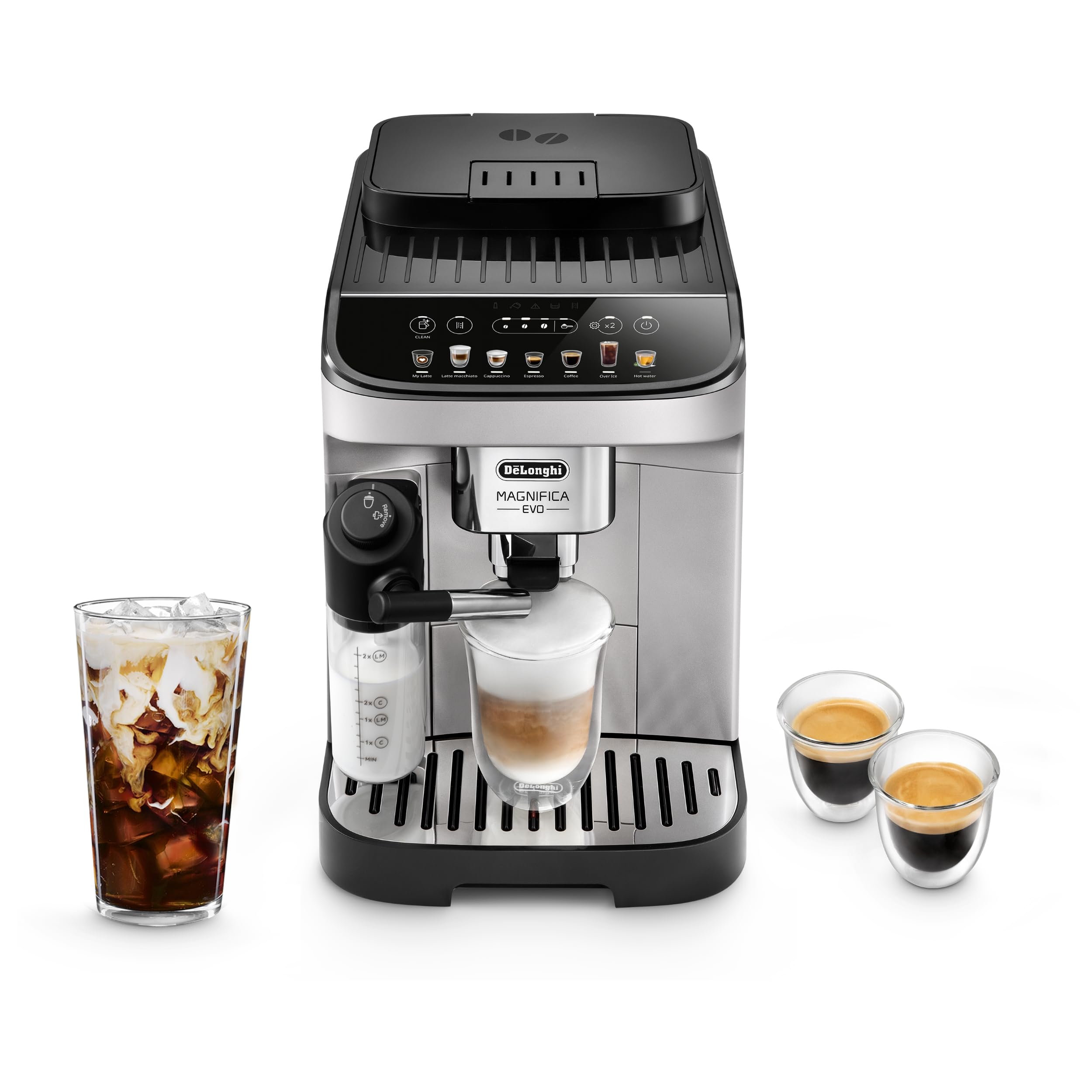
De'Longhi Magnifica Evo

80 /100
LBD Score Excellent

Key details

Grinder
13-setting conical burr
Milk System
LatteCrema carafe
Pump Pressure
15 bar
One-touch Recipes
7
View on Amazon

Spend more than the LatteGo Philips machines and the extra money buys you a carafe. The Magnifica Evo's LatteCrema system is a milk container you fill and seat in place, with the machine frothing from it and running its own rinse afterward — dairy or oat, and no small chamber to top up between drinks. We think it's the better setup for anyone making three lattes in a row.

The rest is De'Longhi's standard recipe: a 13-setting conical burr grinder, a 15-bar pump, and seven one-touch drinks — espresso, cappuccino, latte, iced coffee, coffee, hot water and a MyLatte slot you program yourself. The 15-bar figure is a pump spec rather than a taste score; the grind settings are what you'll actually touch when a new bag pulls sour.

Two practical notes. At 19.5 inches deep and just over 21 pounds, this is the deepest machine in the group, so check both your counter depth and the clearance above the bean hopper. And the drinks come out in set volumes — a big-mug household will find itself brewing twice, which is the price of one-touch simplicity.

Reliability is the other thing to weigh. This model's record is split, with early failures mixed in among machines that run for years, which is exactly when De'Longhi's two-year warranty, plus a third year for registering, earns its keep. Register it the day it lands.

Pros

  • Seven one-touch drinks including iced coffee
  • Hands-free carafe with an automatic rinse
  • 13-setting conical burr grinder
  • Three years of coverage with registration

Cons

  • 19.5 inches deep
  • Set drink volumes; big mugs take two cycles
Our verdict

Seven one-touch drinks and a hands-free milk carafe make the Magnifica Evo the pick for a household that wants café drinks without holding a pitcher.

Check Latest Price
4

Best for Small Counters

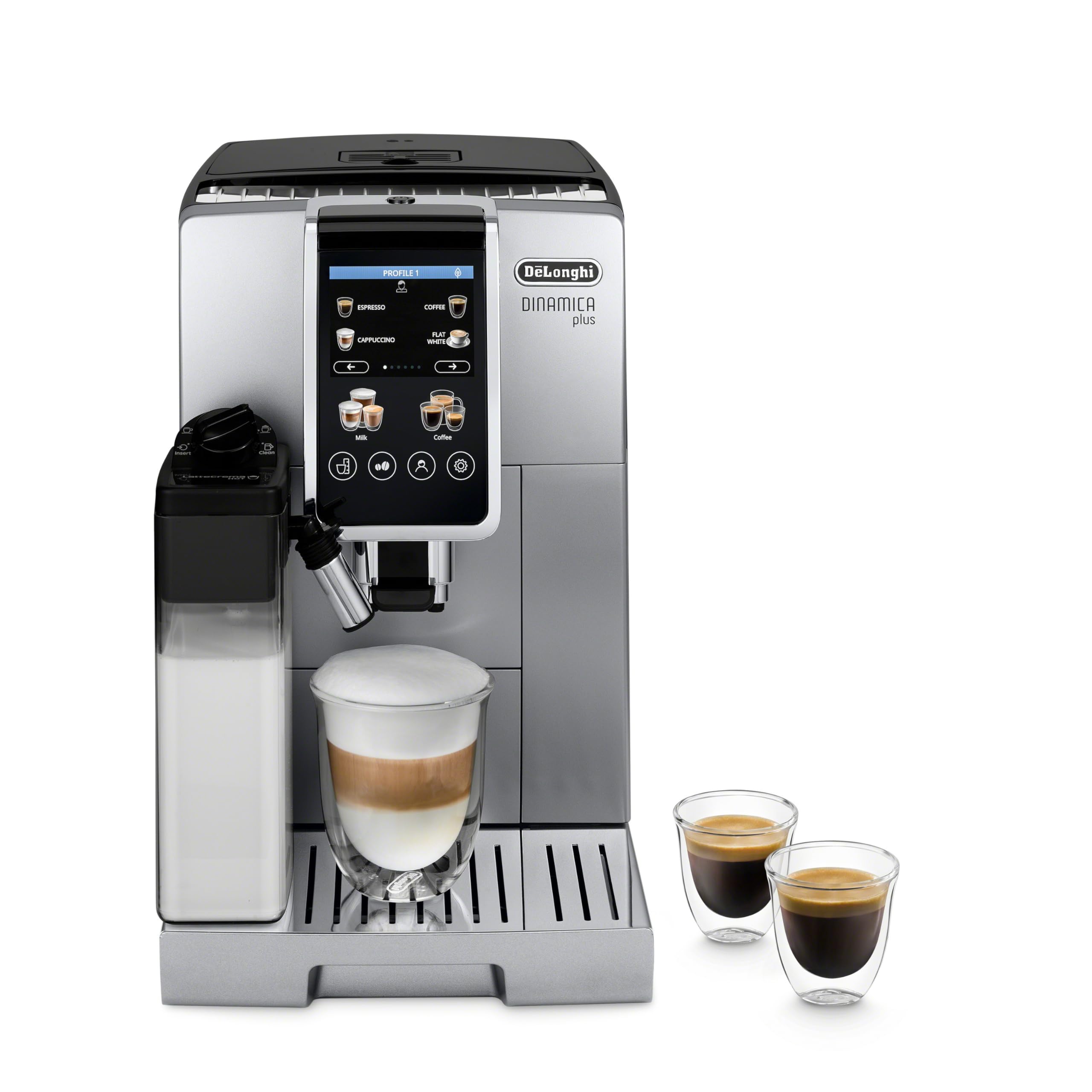
De'Longhi Dinamica Plus

83 /100
LBD Score Excellent

Key details

Display
3.5-inch color touchscreen
User Profiles
4
One-touch Recipes
24+
Dimensions (D X W X H)
16.9"D x 9.3"W x 13.7"H
View on Amazon

9.3 inches wide. That's the number that matters if your counter is already crowded: the Dinamica Plus is the narrowest machine we're recommending, and at 13.7 inches tall it slides under most wall cabinets without a fight. The 16.9-inch depth is ordinary for the category, so what you're buying here is width, not a smaller box overall.

The reason to pay more than the Magnifica Evo is the profile system. Four people can each save a drink — strength, length, milk, temperature — and the machine keeps them one tap from the home screen, which is what stops a shared machine from becoming nobody's machine. The 3.5-inch color display is the clearest interface in this group, and 24 recipes reach flat whites, iced coffee and the occasional espresso macchiato.

The catch is the learning curve. There are menus behind menus here — three frother modes, grind, temperature, dose — and the first week is a lot of tapping before the drink in front of you comes out right. That depth is also the point: dial in a lungo for one person and a mild latte for another and never touch either again.

One detail we appreciated: the machine rinses the milk carafe itself after each use, so the carafe isn't the reason to skip a drink. The 13-setting grinder matches what De'Longhi fits across this family, which means the extra money goes to the screen and the profiles rather than the burrs.

Pros

  • Narrowest machine here at 9.3 inches
  • Four saved user profiles
  • 24+ one-touch recipes
  • Clear 3.5-inch color touchscreen

Cons

  • Deep menus take a week to learn
Our verdict

The narrowest machine here, with four profiles that remember everyone's order — worth the premium if counter space and a divided household are your problems.

Check Latest Price
5

Best Espresso Quality

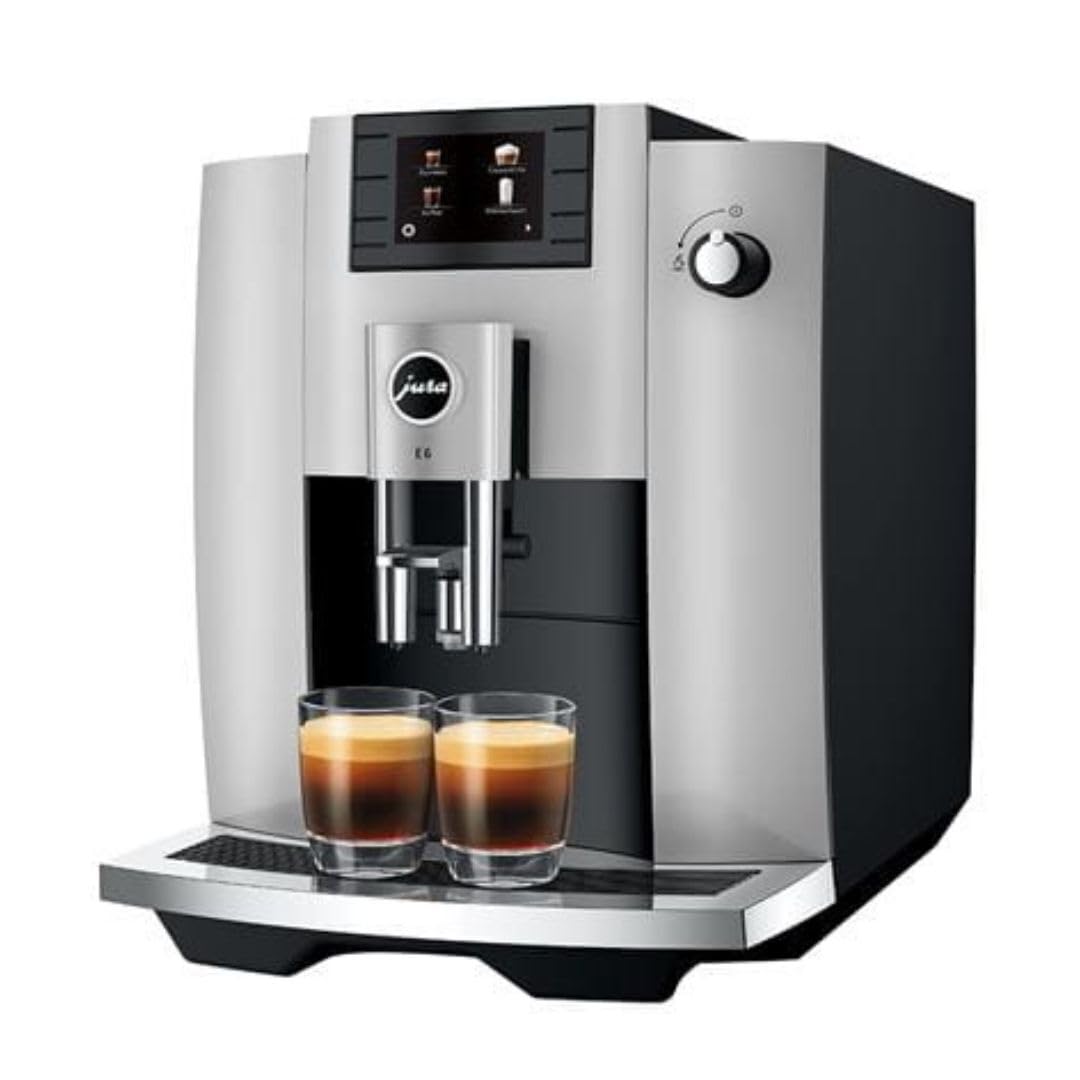
Jura E6

87 /100
LBD Score Excellent

Key details

Grinder
Professional Aroma Grinder
Extraction
Pulse Extraction Process
Milk Frothing
Programmable foam amount
Water Capacity
1.9 liters
View on Amazon

No iced coffee, no cold foam, no cold brew — the E6 does less than the machines around it and costs more than any of them. That reads like a bad trade until you taste the espresso, which is the best of this group and the reason the machine exists.

Jura's Pulse Extraction Process and Professional Aroma Grinder are the technical explanation; the practical one is that the E6 grinds, tamps, brews, froths and runs its own clean in under 60 seconds, with strength, volume, temperature and foam amount all programmable. Five specialties plus hot water on demand covers espresso, ristretto and long coffees properly, and the foam is set per drink rather than by one blunt froth button.

Two things to go in with your eyes open. The listed warranty is one year, where De'Longhi gives two plus a third for registering, and on a machine at this price that gap is the biggest single difference between the brands. And the drink list is short and entirely hot, so a household that runs on iced lattes in summer is looking at the wrong machine.

What we came back to is the milk. Foam amount is programmed drink by drink, so a dry cappuccino and a wet latte differ by a setting rather than by technique, down to how much hot water lands in the cup for an Americano.

Pros

  • Best espresso quality in this group
  • Strength, volume, temperature and foam programmable
  • Full cycle and self-clean under 60 seconds
  • Hot water on demand

Cons

  • One-year warranty
  • No iced or cold drinks
Our verdict

The best espresso in this lineup, with programmable foam and hot water on demand, as long as you don't want iced drinks and can live with a one-year warranty.

Check Latest Price

How We Tested: Ten Months, Eight Machines, and a Whole Lot of Lattes

We started by rounding up every fully automatic machine we could find with a built-in grinder, then sorted them by how the milk gets handled — an automatic carafe or steam wand versus a manual frother — and by footprint, since these things eat counter space. That narrowed the field to eight, ranging from simple one-touch models to machines with touchscreens and multiple user profiles.

Every machine ran on the same medium-roast beans and the same water. In the first week we pulled shots back to back, weighed what landed in the cup, timed how long each took to heat up from cold, and tasted them side by side, noting whether the crema held or thinned within a minute. We steamed milk for lattes and cappuccinos and watched whether the foam poured glossy or bubbly, then let the milk system sit for an hour to see what the cleanup looked like.

Then we just lived with them. That meant making a milk drink at 6:40 on a weekday and counting the taps it took, running eight drinks back to back for weekend guests, refilling the water tank mid-session, and listening to how loud the grinder was with someone still asleep upstairs. We noted how often each machine asked to be descaled and how much of the brew group we could reach without tools.

At the 10-month mark we re-pulled the same shot we'd pulled in week one and compared it against our notes, which said more about reliability and durability than any spec sheet could. We also tracked the small stuff — seals that stiffened, drip trays that stained, parts that were a misery to wash — because that's what decides whether a machine is worth its price over five years rather than five weeks.

How to Choose an Automatic Espresso Machine

Pick Your Milk System First

Three designs turn up in this group. A classic frother is a wand you hold a pitcher under: cheapest, and the most work per drink. LatteGo, on the Philips machines, is a two-part froth unit with no internal tubes that rinses under the tap. De'Longhi's LatteCrema is a carafe you fill and seat in place, and it runs its own rinse afterward. All three make decent foam; they differ in how many seconds of chores follow the cup.

Our priority is the rinse. A machine you start skipping milk drinks on has stopped being convenient, whatever its spec sheet promised. One cappuccino a week? A wand is fine, and the Philips 2200 saves you money. Two lattes a day? Pay for the automatic system.

Count the Drinks You Actually Order

Recipe counts here run from three to more than two dozen, and the number alone is a poor guide. What matters is whether your drinks exist as presets: espresso and coffee are universal, iced coffee is not, and flat white or cold brew narrows the field fast. Cold brew in particular is a separate technology, not just another menu line.

For a household, look at user profiles instead. Four saved profiles on the Dinamica Plus mean nobody re-dials their drink; a single-profile machine makes everyone share one setup. Neither is wrong — it depends on whether one person or four press the button each morning.

Measure the Counter, Not the Box

The footprint spread is wide. The Dinamica Plus is 9.3 inches across, the Philips machines are about 17 inches at the front, and depth runs from roughly 9.7 inches to 19.5. Height clearance matters just as much, because the bean hopper sits on top and you need room to pour into it.

The trap is a listing that calls a machine compact. Compact usually describes the shipping box or the height, not the counter it eats. Note all three dimensions, then leave a couple of inches behind for the cord and steam.

Read the Grinder, Ignore the Pressure

Every machine here grinds, but the adjustment range is what lets you fix a sour or bitter shot. Twelve and 13 settings show up across this group, on ceramic and conical burr grinders respectively; just as important is whether the finest setting is fine enough to slow the flow to a trickle, which is what light roasts need.

Pump pressure is the number the marketing leads with, and 15 bar is standard. It tells you nothing about taste, because the machine regulates brew pressure regardless. Spend the attention on grind range and temperature settings instead.

Check the Warranty Before the Feature List

A super-automatic is an appliance with a pump, a grinder, and electronics, and eventually it needs service. The brands differ: De'Longhi lists two years plus a third with registration on every machine in this roundup, while Jura lists one year on the E6. On a premium machine, that gap is worth more than any single drink preset.

Register the machine the day it arrives and keep the receipt and model number with the manual. On the De'Longhi models, registration is what activates the extra year, and it's the first thing a service line asks for.

Frequently Asked Questions

Final Verdict

Buy the Philips 3300 if you want one-touch milk drinks without a cleanup ritual; it does the everyday job for mid-range money, and the two-part LatteGo system is the reason we keep recommending it over machines that cost more.

Two requirements change that answer. If your counter is shallow on space and more than one person has a saved order, the De'Longhi Dinamica Plus is the better machine at 9.3 inches wide with four profiles. If the espresso itself is what you care about and iced drinks are irrelevant, the Jura E6 is worth the premium, warranty and all. And if milk is a weekend indulgence rather than a daily habit, the Philips 2200 delivers the core job for the least money here.