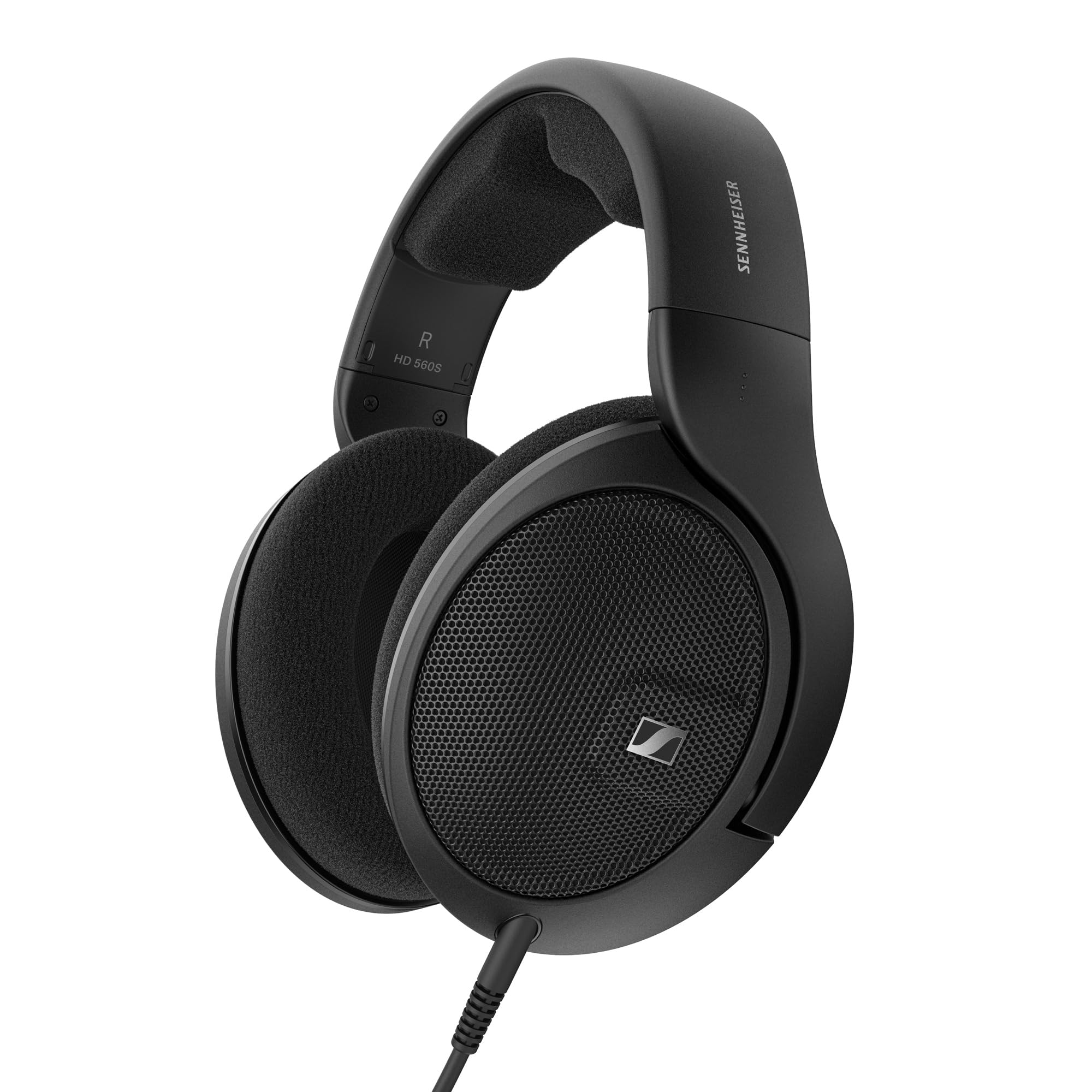
Best Overall

Sennheiser HD 600
Key details
- Cable
- Detachable
- Weight
- 9.1 oz
- Impedance
- 300 ohm
- Frequency Response
- 12-40,500 Hz
The 300-ohm impedance is the first thing to settle: the HD 600 wants a real headphone amp, not a phone dongle. Plugged into a laptop jack, it plays, but the low end loses grip and the music feels polite. With a dedicated desktop amp, the same recordings gain weight and control. If your listening happens at a desk and you already have that amp, this is the most sensible starting point in the group.
What we appreciate most is how little the HD 600 adds. Voices sit in a natural midrange, strings and cymbals have texture without glare, and the open-back cups put depth between instruments instead of pushing everything forward. The 12-40,500 Hz range is broad, but the tuning matters more than the number: this is a headphone for hearing the recording rather than a highlight reel.
The open metal mesh and plush pads give it a light, non-fatiguing feel over long sessions, and the steel band feels built to be handled. The detachable Kevlar-reinforced cable is the quiet ownership win: a snagged lead becomes a replacement instead of a repair. We also appreciate that the cable is long enough to reach a desktop amp without stretching.
The HD 600 is not the choice for a noisy room or a bass-first playlist; its open-back design lets the room in and sends your music out. But for acoustic, jazz, classical, and well-recorded rock, it keeps revealing small choices in the mix without turning harsh. That is why it stays the reference we compare the rest against.
Pros
- Neutral, detailed reference sound
- Comfortable for long sessions
- Detachable cable simplifies repairs
- Solid steel-band build
Cons
- Firm clamp on wider heads
If you listen critically at a desk and own a proper headphone amp, the HD 600 is the neutral, comfortable reference we recommend first.