Best Air Purifiers of 2026

The first thing you notice about a bad air purifier isn't the air — it's the noise. I've slept beside one that whined all night and another so quiet it moved almost nothing. What a good one buys you is dull in the best way: a bedroom you can close the door on, a kitchen that stops smelling like salmon, and a filter you don't think about for a year.

Over six months, my team and I ran 12 purifiers through ordinary life in bedrooms, a home office, and a house with a very sheddy dog. We logged what changed: how loud each is at 2 a.m., whether the display reacts when the air shifts, what a year of filters costs. App control and real sleep modes earned their place; aromatherapy pads are a nice extra, not a reason to buy.

One thing first-time buyers miss: the top fan speed is a number almost nobody lives at. Buy for your room size, then judge noise on medium. The picks below are the ones we'd keep plugged in.

1

Best Overall

Levoit Core 300-P

95 /100
LBD Score Outstanding

Key details

CADR
143 CFM smoke / 153 CFM dust / 167 CFM pollen
Coverage
Up to 1,073 sq ft
Filter Type
3-in-1 HEPA
Sleep Noise
24 dB
View on Amazon

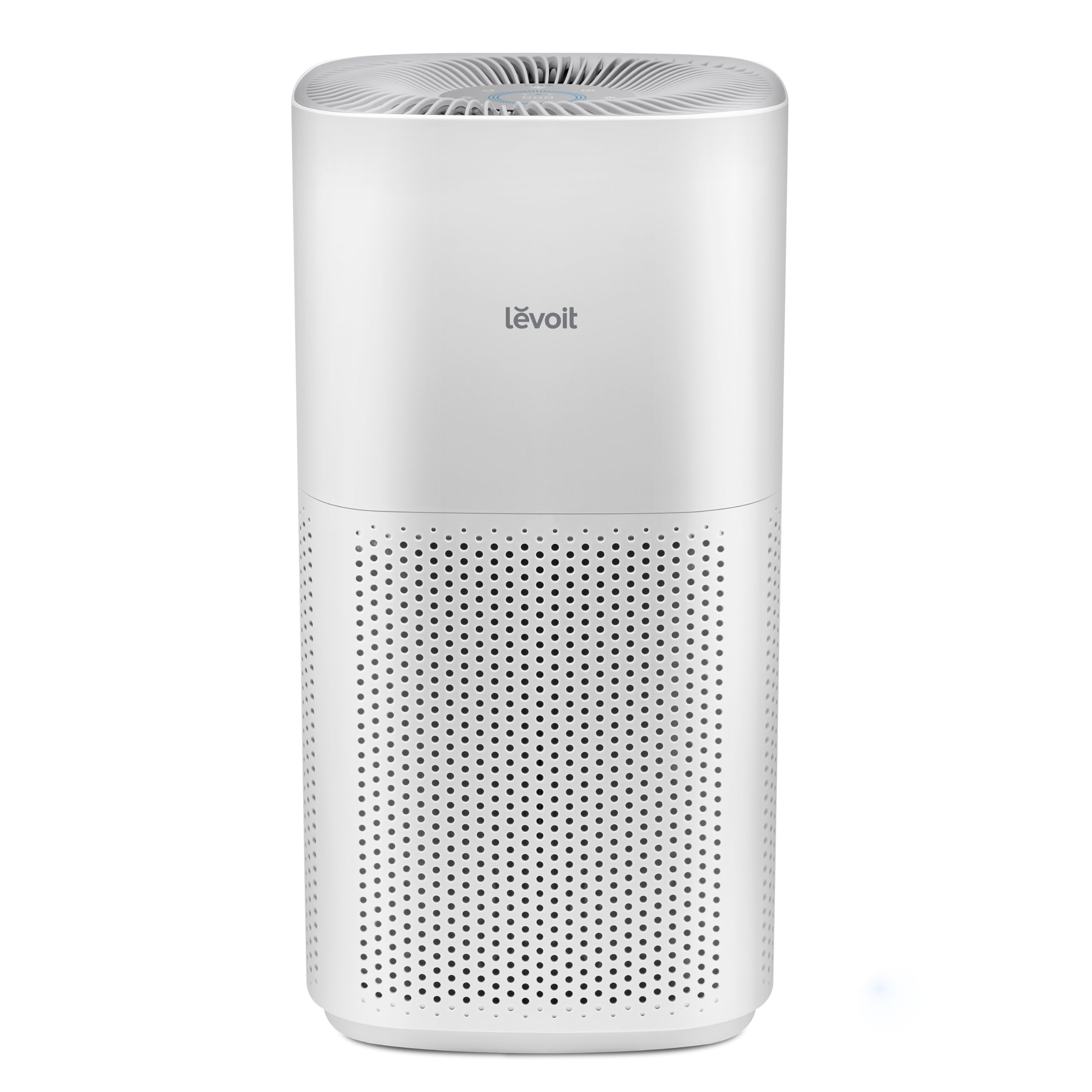
The Core 300-P is the one we point most people to first, and the case starts with the numbers. Levoit lists a 143 CFM CADR for smoke, 153 for dust, and 167 for pollen, along with a 1,073-square-foot coverage claim and a 24 dB sleep mode. In a bedroom and a small home office, the 8.7-inch-square cabinet tucked into a corner without blocking an outlet. We appreciated the simple touch controls and the three-stage filter, which lifts out without a fight.

What makes it our top pick is the balance of proof and livability. The AHAM-verified CADR gives you a real performance figure instead of a marketing ceiling, and the low speed is quiet enough to leave running overnight. The 1,073 sq ft number is an ideal-condition claim, so a large open plan will need a second unit or a bigger purifier; in a closed bedroom or living room, it is sized right. Replacement filters are easy to find, which matters more than the first price.

The trade-off is top-end power: this is a room purifier, not an open-plan workhorse, and the plain controls keep it simple rather than smart. We did not mind those omissions in a bedroom, where we set it and left it. If you want a purifier to tell you what is happening in the air, the ECOSELF or Coway makes more sense; if you want a proven filter mover with less to go wrong, this is the safer buy.

Pros

  • Verified CADR for smoke, dust, and pollen
  • Quiet 24 dB sleep mode
  • Compact 8.7-inch-square footprint
  • Easy-to-find replacement filters

Cons

  • High fan is audible
Our verdict

For most bedrooms and living rooms, this is the air purifier we recommend: verified CADR, a quiet sleep mode, and a compact body at a sensible price.
Check Latest Price
2

Best for Large Rooms

Coway Airmega Mighty2

93 /100
LBD Score Outstanding

Key details

Weight
15.2 lb
Sensors
PM1, PM2.5, PM10
Coverage
Up to 1,800 sq ft
Filtration
3-stage HEPA + carbon
View on Amazon

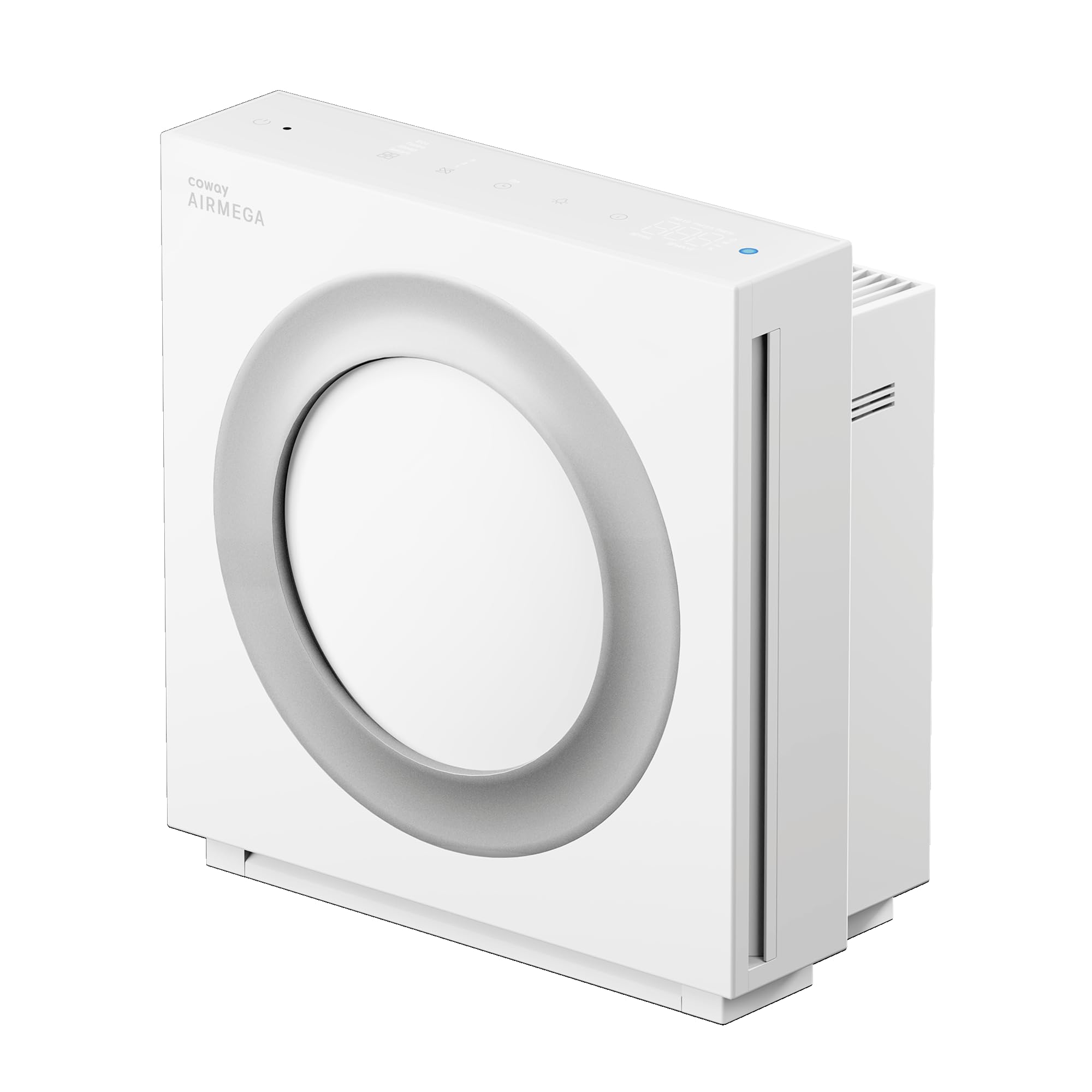
The Mighty2 is one of the priciest purifiers here, and it is the one we reach for when a room is large, busy, and hard to stay ahead of. Coway rates it for 1,800 square feet and says it can clean 900 square feet in 30 minutes; the Megascan sensor reads PM1, PM2.5, and PM10 and feeds a numerical display. That sensing is what won us over. Instead of guessing, you can watch the readout fall after cooking or a door opens, and Smart Mode does the fan adjustment for you.

The three-stage filter pairs a washable prefilter with a 2-in-1 HEPA and active-carbon cartridge, and the display tracks remaining filter life. At 15.2 pounds, it is substantial enough to feel planted, but the cabinet is still easy to move between rooms. We liked the precise percentage readout more than a row of vague indicator lights; it takes the guesswork out of ordering a replacement.

The caveat is odor. The carbon layer helps with smoke and cooking, but a new filter can carry a chemical smell for the first few days, so air it out before you judge the unit's odor performance. For a large living area where you want the purifier to react on its own, that is an acceptable trade-off. The readout is the part we keep glancing at; it turns the vague question of whether the air is clean into something you can see.

Pros

  • Fast large-room cleaning with 1,800 sq ft coverage
  • PM1/PM2.5/PM10 laser sensor
  • Washable prefilter and precise filter-life display
  • Smart Mode adjusts automatically

Cons

  • Turbo fan is loud
Our verdict

The Mighty2 is our choice for large, busy rooms where you want fast, sensor-driven cleanup; it costs more, but the coverage and display earn it.

Check Latest Price
3

Best for Extra-Large Spaces

Levoit Core 600S-P

93 /100
LBD Score Outstanding

Key details

Coverage
Up to 2,933 sq ft
Dimensions
12.3 x 12.3 x 23.6 in
Filtration
3-stage HEPA
Smart Control
Alexa and app
View on Amazon

The Core 600S-P is the one to consider when the room is the problem. Levoit rates it to 2,933 square feet, the largest coverage claim in this group, and the cabinet stands 23.6 inches tall and 12.3 inches square. That is a piece of furniture rather than a desktop gadget. In an open living area, we liked having one central unit instead of two small ones fighting for outlets.

What we appreciate most is the balance of muscle and manners. Auto mode responds to air quality, Alexa and the app give you remote control, and the three-stage filter captures 99.97% of particles down to 0.3 microns. On its lower settings it is quiet enough for a living room, and the cleanable prefilter helps the main cartridge last longer. The 2,933 sq ft figure is still a best-case number for an open room, so treat it as a ceiling rather than a promise.

The ownership question is the part to weigh. The long-term filter-life picture is less settled than it is for the Core 300-P, so register the warranty and keep a spare on hand. If you have a true open plan, the coverage earns the commitment; in a standard bedroom, it is more purifier than you need.

Pros

  • Largest coverage here at 2,933 sq ft
  • Auto mode and Alexa/app control
  • Quiet on lower settings
  • Cleanable prefilter extends filter life

Cons

  • Replacement filters are costly
Our verdict

Open plans and extra-large rooms are where we send buyers to the Core 600S-P; its 2,933-square-foot coverage justifies the size and the filter bill.

Check Latest Price
4

Best Budget with a Display

ECOSELF HAP603

93 /100
LBD Score Outstanding

Key details

Weight
6.79 lb
Coverage
Up to 2,400 sq ft
Air Display
PM2.5
Sleep Noise
22 dB
View on Amazon

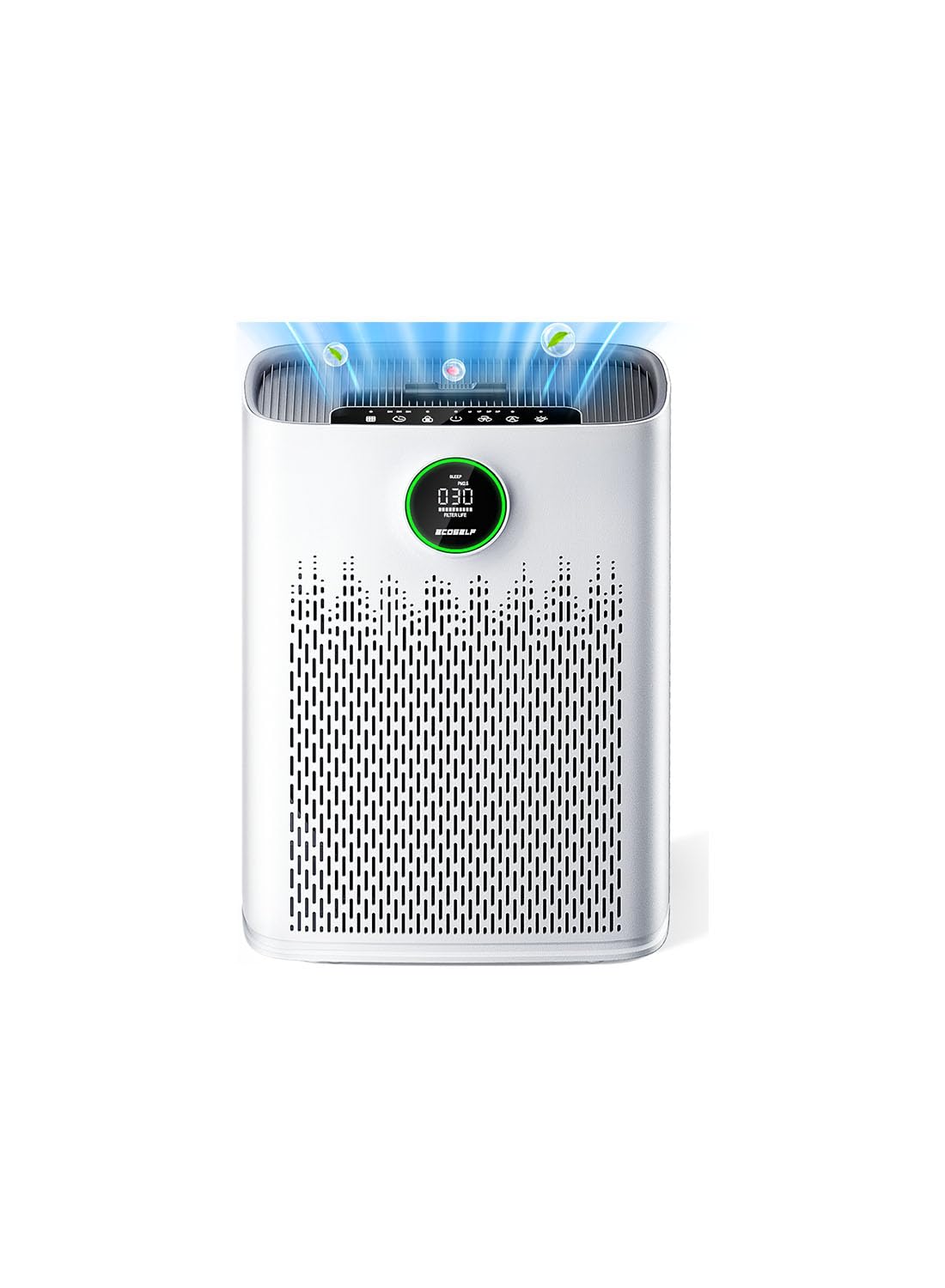
The HAP603 is the budget purifier that does not feel stripped down. The PM2.5 display is the first thing you notice, and it is genuinely useful: you can watch the reading move when you cook or open a door, and auto mode adjusts the fan without you touching anything. For a spare bedroom or a home office, that feedback makes the unit feel more capable than its price suggests.

Levoit and Coway have the more established filtration claims, but ECOSELF covers the basics with a True HEPA filter, a 22 dB sleep mode, and a 2X-purification claim for rooms up to 2,400 square feet. We liked the compact 6.79-pound body and the 6.3-inch depth, which lets it sit on a narrow shelf. The aromatherapy tray is optional; skip it if you want unscented air.

The coverage number needs context. It comes from a twice-per-hour turnover, so it is a large-room estimate rather than a guarantee for an open plan. The brand also has a shorter track record than Levoit or Coway. The 6.3-inch depth is the quiet advantage here: it fits a narrow shelf where most purifiers with this claimed coverage will not.

Pros

  • PM2.5 display with auto mode
  • 22 dB sleep mode
  • Slim 6.3-inch depth
  • Low price for the feature set

Cons

  • No app control
Our verdict

If you want a real-time air-quality display and auto mode without premium money, the HAP603 is the value pick we point to.

Check Latest Price
5

Tiny Spaces

VOOPNU DH-JH12

89 /100
LBD Score Excellent

Key details

Weight
2.54 lb
Coverage
Up to 1,076 sq ft
Filtration
Triple-layer
Sleep Noise
22 dB
View on Amazon

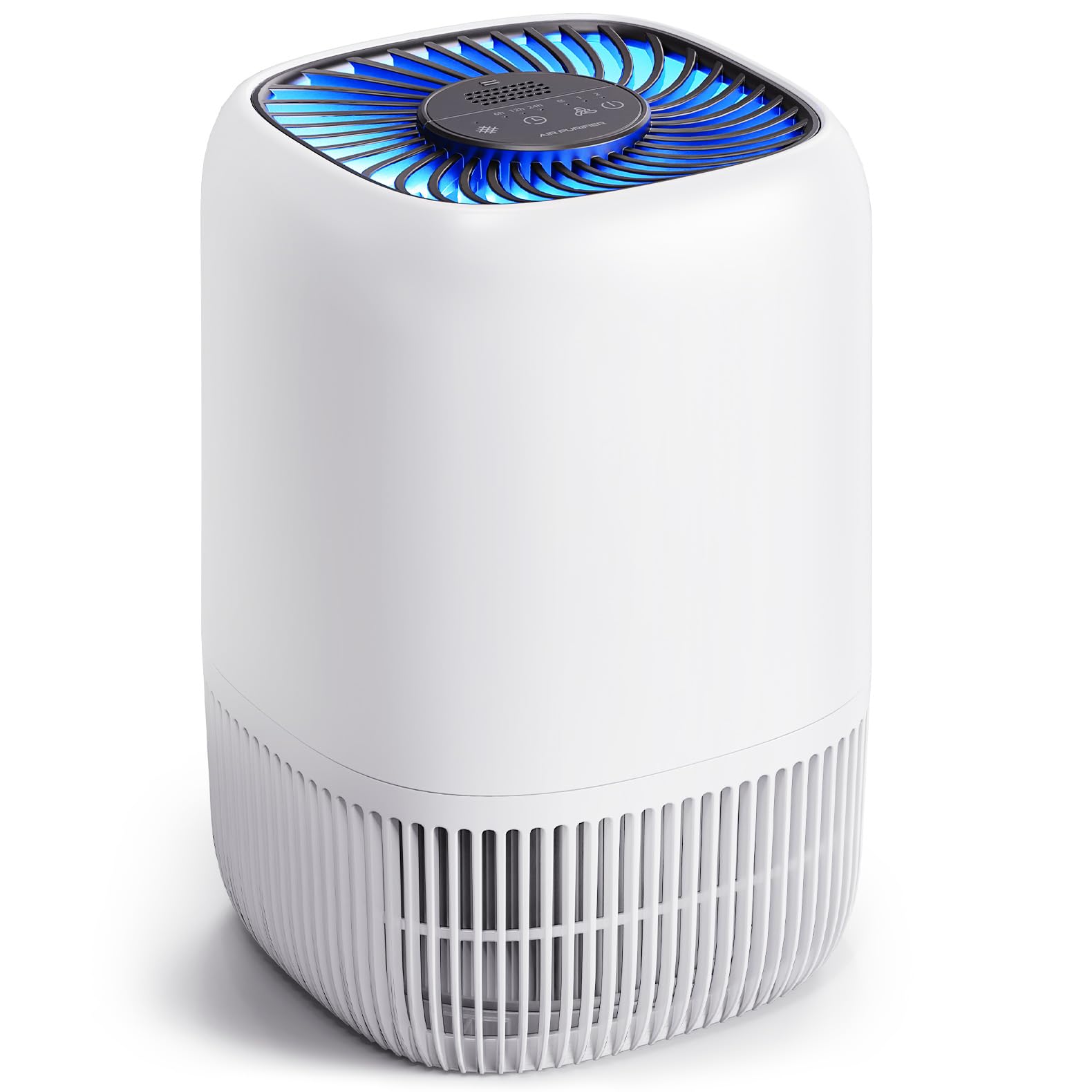
The DH-JH12 is the smallest purifier here, and it is unapologetic about it. It weighs 2.54 pounds, stands about 9.84 inches tall, and runs at a listed 22 dB on its low setting. The controls are simple: three speeds, a timer, and a blue light you can turn off. We liked that the filter is easy to reach and the unit is light enough to move from a desk to a bathroom without thinking about it.

Its 1,076-square-foot coverage claim deserves a raised eyebrow. That figure comes from an ideal air-change rate, and the little cabinet cannot move the same volume as a full-size purifier. In a bedroom, it is a supplementary unit; in a nursery, bathroom, or office cubicle, it makes more sense. The essential-oil tray is there if you want scent, but it is not a reason to buy.

What we appreciate is the lack of fuss. You set a speed and let it run, which is the right level of control for a desk or nursery. The top-mounted controls are reachable from a chair, and the blue light shuts off for sleep—two small things that matter in a nursery.

Pros

  • Tiny 2.54-pound body
  • 22 dB low setting
  • Simple three-speed controls
  • Low price for a small room

Cons

  • No auto mode or air-quality sensor
Our verdict

The DH-JH12 is for a desk, nursery, or bathroom, not a whole room; at its size and price, we think it is an easy small-space add.

Check Latest Price
6

Bedrooms and Offices

Shark HP152

88 /100
LBD Score Excellent

Key details

Weight
7.25 lb
Coverage
Up to 650 sq ft
Filtration
HEPA-exceeding NanoSeal
Filter System
NeverChange long-life
View on Amazon

The HP152's pitch is simple: a filter that lasts longer so you stop thinking about replacements. Shark calls it NeverChange, pairs it with an anti-allergen NanoSeal filter that exceeds HEPA standards, and adds a CleanSense IQ display that shows air quality in real time. The 650-square-foot coverage is for a bedroom, office, or nursery rather than a whole floor, and the 7.25-pound cabinet is easy to move.

We liked the display more than we expected to. It gives you a clear read on particles and a visible change when the air improves, which is more satisfying than a single colored light. The odor-neutralizer cartridge is a nice extra, but skip it if you are sensitive to scent; the purifier works without it. The washable outer filter also makes routine dusting less of a chore.

The ownership question is where we hesitate. The NeverChange design is meant to reduce replacements, but the long-term filter life is not as predictable as the name suggests. If you want the simplest filter routine and a readable display in a bedroom, this is a reasonable choice. If you want the lowest running cost, the Core 300-P is the safer bet.

Pros

  • CleanSense IQ air-quality display
  • NeverChange long-life filter design
  • Compact 7.25-pound body
  • Optional odor-neutralizer cartridge

Cons

  • Replacement filter cost is high
Our verdict

We recommend the HP152 for a bedroom or office where you want a clear air-quality readout and a filter you touch less often, provided you check replacement costs.

Check Latest Price

How We Tested the Best Air Purifiers

We started by pulling every model we could find rated for roughly 1,000 square feet or more, then cut anything with a vague filter spec, a clean-air rating we couldn't verify, or a cartridge sold only through the manufacturer. That narrowed the field to 12 units, from compact bedroom machines to large-room towers, and we ran them for six months.

Each one spent at least two weeks in a bedroom, running overnight on auto and again on its quietest setting, and a week in a living room beside a shedding dog and a litter box. We seared steak and burned toast on purpose, then watched a particle counter to see how quickly the room came back down and whether the on-board display tracked the change. Noise was measured with a decibel meter at arm's length on every speed, with a note on whether I could actually sleep through it.

For value, we priced a year of replacement filters per unit and compared the filter-life indicator against what we scraped off the prefilter. We set up every app and voice pairing ourselves, timed the schedules, and tried the aromatherapy pads some of these ship with. Each purifier also ran on high through a full cooking session, which is where odor removal either holds up or doesn't.

How to Choose an Air Purifier

Match Coverage to the Room You Close Off

The first number to check is not the biggest square footage on the box; it is the coverage a unit can deliver at a noise level you can live with. A closed bedroom and an open living-kitchen share air very differently, so treat an open plan as several zones rather than one big room. The Core 300-P is sized for ordinary bedrooms and living rooms; the Core 600S-P is the one for a true open plan. If the room is larger than the purifier's realistic coverage, buy a bigger unit or plan on two.

Treat Sleep Noise and High-Fan Noise as Two Different Specs

Air purifiers publish a low noise figure because low fan speed is quiet, not because the whole machine is. A 22 to 24 dB sleep mode is genuinely unobtrusive; the same purifier on high can be much louder. Decide where the unit will run at its highest setting—during cooking, after smoke, or with pets—and whether you can live with that sound. The Coway Mighty2 is quiet on low, but turbo is a fast-cleanup setting rather than a background one. In a bedroom, prioritize the sleep mode; in a living room, you have more tolerance.

Budget for the Filter, Not Just the Purifier

HEPA captures particles, while the carbon layer handles odors and gases, so the amount and quality of carbon matter if you cook, smoke, or live with pets. A washable prefilter is the other feature we look for: it catches hair and lint before they reach the main cartridge and makes routine cleaning easier. Before buying, check the replacement filter's price and how easy it is to find; the running cost matters more than the first price. Shark's NeverChange design aims to reduce changes, but check the replacement cost anyway.

Use Sensors as a Convenience, Not a Requirement

Auto mode and a PM2.5 display are conveniences, not necessities. They are worth paying for if you want the purifier to react to cooking, candles, or a door opening, or if seeing a number drop gives you confidence the unit is working. If you plan to run the purifier continuously in a bedroom, a simple low-speed setting does the job with less to fail. The ECOSELF HAP603 is the budget example of useful feedback; the Core 300-P is the simpler alternative.

Place It Where It Can Breathe

Placement changes performance. Leave the intake and outlet clear, keep the unit off the bed and away from curtains, and do not tuck it into a closed cabinet. A corner is fine if air can still move around the cabinet; a narrow shelf works for a small unit like the VOOPNU, while a large model needs floor space. Clean the prefilter on a schedule you will actually keep, and vacuum the room before blaming the purifier for dust.

Frequently Asked Questions

Final Verdict

The Levoit Core 300-P remains our default because it makes the fewest compromises for the most people: verified CADR, a quiet sleep mode, and a footprint that disappears into a bedroom. For a large, busy room, the Coway Mighty2 is the upgrade we choose for sensor-driven cleaning. If you have a true open plan, the Core 600S-P is the one to measure your floor space for; otherwise, the smaller Levoit is the smarter buy.