Best Acoustic-Electric Guitars of 2026

An acoustic-electric should let you plug in without losing the feel of an acoustic. The trouble is that plenty of them solve the pickup problem and create new ones—a neck that fights your hand, tuning that drifts before the second verse, and electronics that make a warm strum sound brittle. What you want is a guitar that feels broken-in from the first chord and sounds like itself whether it's unplugged on the couch or running through a PA.

Over eight months, I lived with 11 acoustic-electrics, from slim cutaways to full dreadnoughts, playing them in the living room, porch, a weekly open mic, and band rehearsals. I kept track of the boring stuff—how often I retuned, how the strings felt after a month, whether jacks and strap buttons stayed tight—because that's what separates a keeper from a resale. The best also looked the part, didn't punish beginners, and felt worth the money. The picks below got the fundamentals right first: playability, tuning stability, and acoustic tone, with electronics and extras that earn their place.

1

Best Overall

Yamaha FGX800C

91 /100
LBD Score Outstanding

Key details

Top
Solid Sitka spruce
Body
Dreadnought cutaway
Electronics
System 66 piezo, 3-band EQ, tuner
Scale Length
25.5 inches
View on Amazon

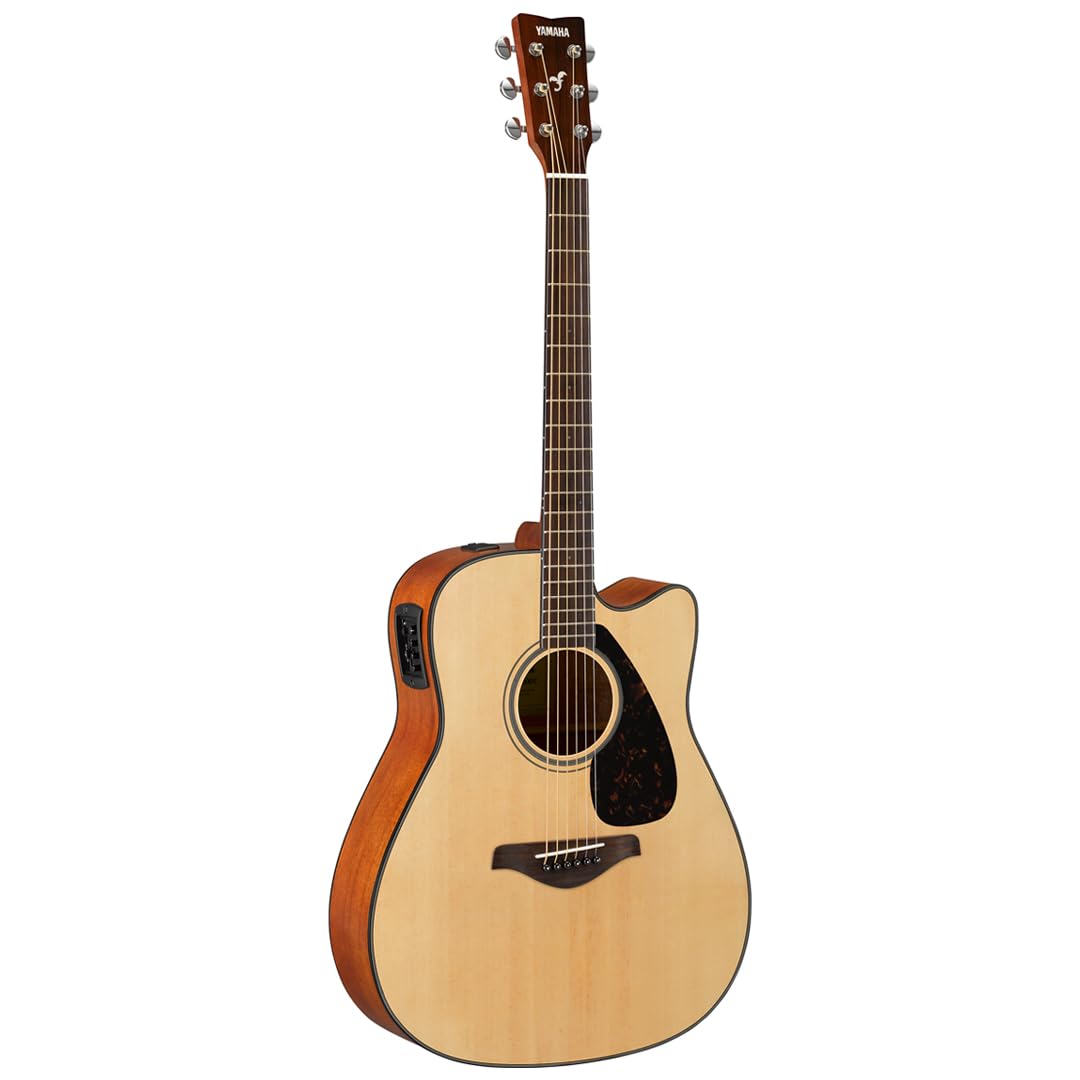
A solid Sitka spruce top is the first thing we look for in this category, and the FGX800C is the pick here that has one. It's a dreadnought with a cutaway, so you get a full acoustic body and access to the upper frets. The nato back and sides and rosewood fingerboard are familiar Yamaha workhorse choices. On paper, it's less flashy than a thinline stage guitar, but that's the point: it's built to sound like an acoustic first.

We think that's the right priority for most buyers. The solid top gives the guitar a livelier, more open response than the laminate-top models here, and the dreadnought body pushes more unplugged volume. Plugged in, the System 66 under-saddle piezo has a 3-band EQ, adjustable midrange, and a chromatic tuner. That's practical rather than fancy: you can shape a room, kill a little boom, and tune without a clip-on. We liked having the tuner right in the preamp.

The neck and 25.5-inch scale feel familiar, and the cutaway makes upper-fret chords less of a reach. At 7.5 pounds, it's not the lightest guitar in this group, but it balances like a standard dreadnought. If you like to play on the couch or stand for long sets, a full-size body can feel bulky; the APX600 is the better fit for that. The guitar itself feels ready for open mics and living-room practice alike.

We recommend it first for a buyer who wants one acoustic-electric to cover practice, open mics, and the occasional plugged-in gig. It has the tonewood and electronics that matter, and it's the most complete package here for serious playing. The guitar feels like a long-term instrument rather than a starter box.

Pros

  • Solid Sitka spruce top
  • System 66 preamp with EQ and tuner
  • Cutaway gives easy upper-fret access
  • Balanced dreadnought voice

Cons

  • No case included
Our verdict

We recommend the FGX800C as the best all-round acoustic-electric here: its solid spruce top and flexible System 66 electronics make it the one to buy for plugged-in gigs and serious practice.
Check Latest Price
2

Best Warm Solid-Top

Fender CD-60SCE

87 /100
LBD Score Excellent

Key details

Top
Solid mahogany
Body
Dreadnought cutaway
Electronics
Fishman Classic Design pickup/preamp
Scale Length
25.3 inches
View on Amazon

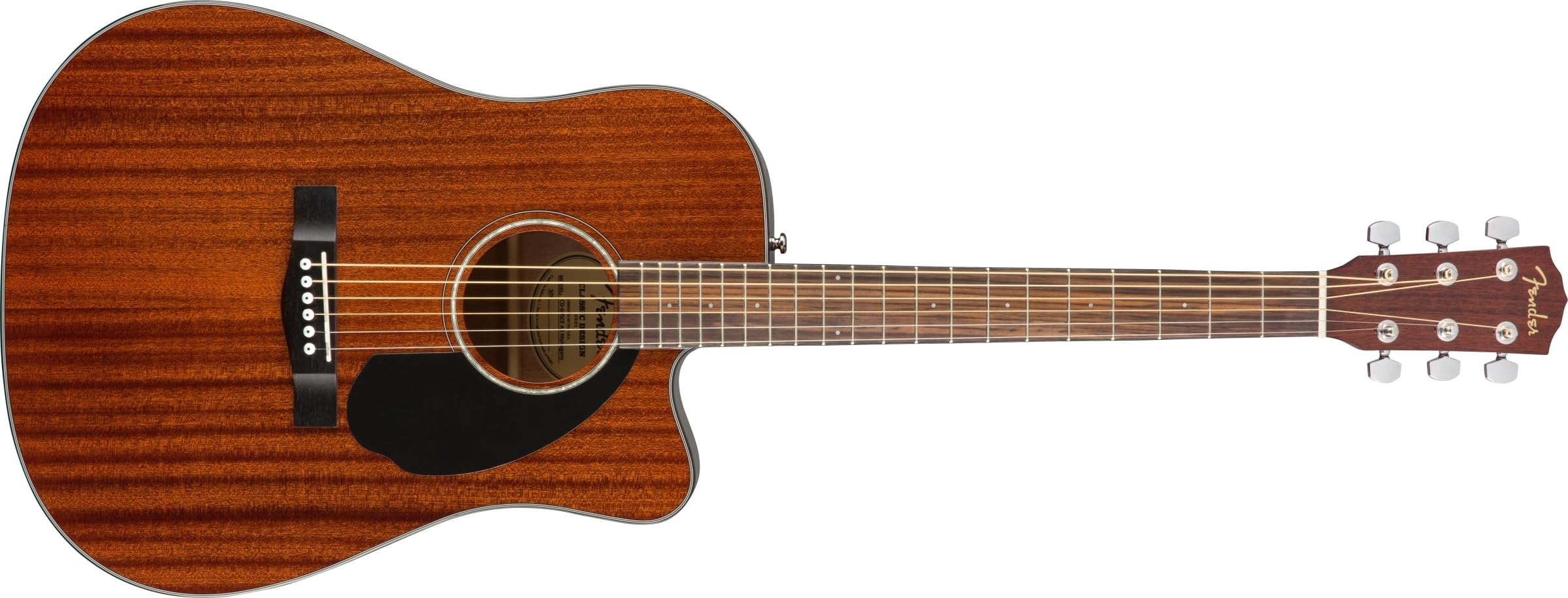
The CD-60SCE is the warm-voiced counterpoint to our top pick. Its solid mahogany top and mahogany back and sides give it a darker, rounder acoustic character than the spruce-topped Yamaha, and the dreadnought cutaway body still has enough air and projection for unplugged practice. We like it for singer-songwriter strumming and anything that benefits from a softer top end.

The Fishman Classic Design pickup/preamp is the practical reason to choose it for gigs. You get onboard shaping without a separate pedal, and the rolled fingerboard edges make the neck comfortable for longer sessions. The 25.3-inch scale is familiar rather than cramped. We found the setup-friendly neck and cutaway make barre chords and upper-fret work less of a struggle, which matters if you're moving between acoustic and electric.

Where it gives ground to the FGX800C is in sheer acoustic liveliness: the solid spruce top on our top pick has more snap and headroom for aggressive strumming. The Fender is the better choice if you already know you prefer a warmer, woodier tone and want a proven Fishman system. It's also a good step-up for someone who started on a budget bundle and wants a solid top without jumping to a collector-grade instrument.

We recommend auditioning it against a spruce-top guitar if you can, because the tonal difference is the whole decision. If warmth is what you want, this one earns its place. The mahogany top is the feature we keep coming back to; it makes this the more intimate-sounding guitar of the two.

Pros

  • Solid mahogany top
  • Fishman Classic Design preamp
  • Rolled fingerboard edges
  • Warm, balanced voice

Cons

  • Heavier than the Yamaha top pick
Our verdict

We recommend the CD-60SCE for players who want a solid mahogany top and a proven Fishman preamp in a warm-sounding dreadnought cutaway.

Check Latest Price
3

Best Thin-Body Stage Guitar

Yamaha APX600

91 /100
LBD Score Outstanding

Key details

Top
Spruce
Body
Thin-line cutaway
Electronics
Piezo pickup, built-in tuner
Scale Length
25 inches
View on Amazon

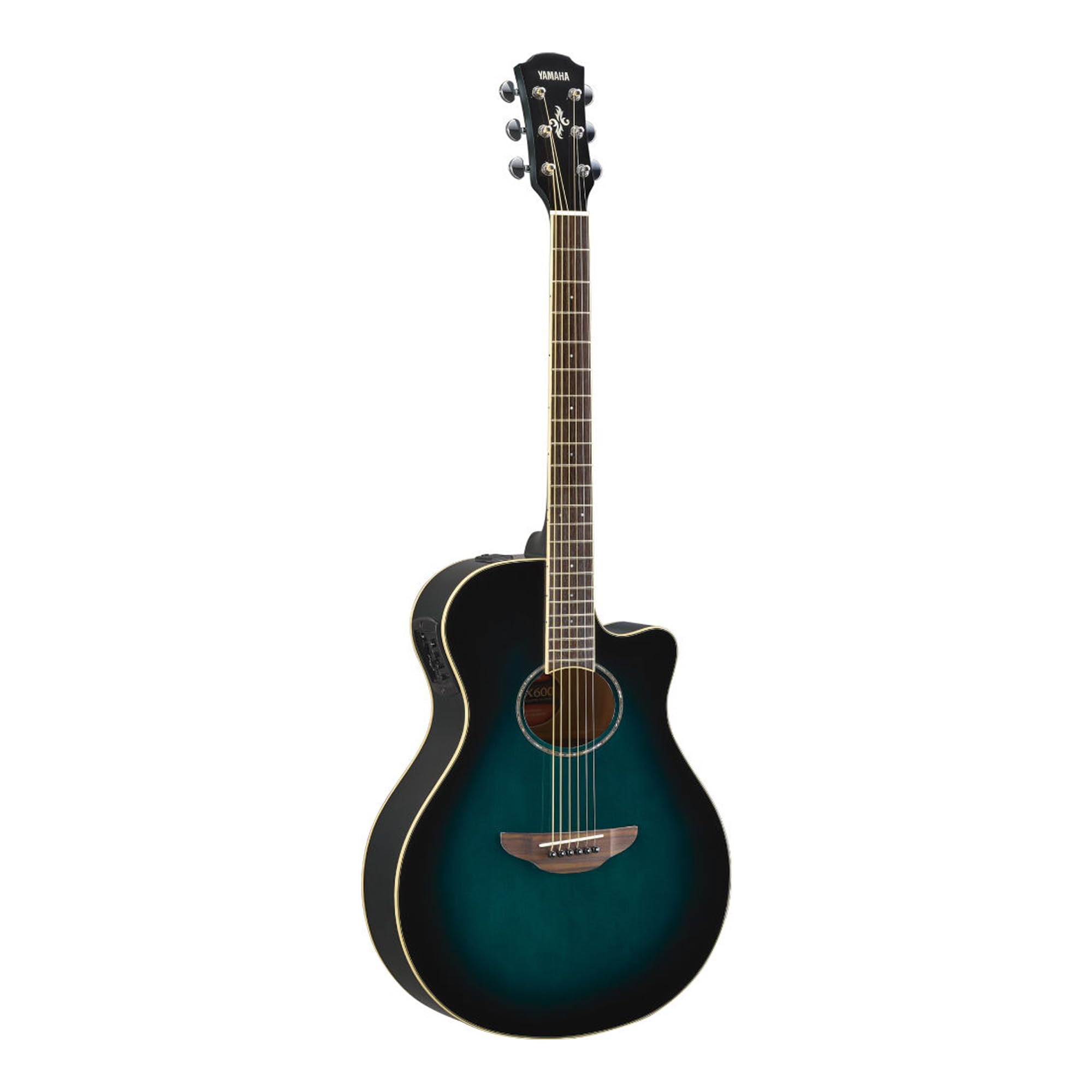
The APX600 is the guitar we reach for when a full dreadnought feels like too much body. Its thinline cutaway design sits closer to your torso and leaves your strumming arm in a more natural position, and the 25-inch scale with narrower string spacing makes the neck feel compact. If you're smaller-framed or you've struggled with a full-size acoustic, that difference is the whole point.

We were also impressed by how stage-focused the package is. The under-saddle piezo is voiced for plugged-in work, and the built-in tuner means you can check tuning between songs without another gadget. The scalloped bracing helps the thin body retain some bass, though it will never move as much air as a dreadnought. That's the trade: you get comfort and feedback control in exchange for some unplugged volume.

The mahogany back and sides give it a warm acoustic tone, and the abalone rosette and blue burst finish make it one of the more distinctive-looking guitars here. We liked the low action and the easy upper-fret access, and the 6.5-pound weight is light enough to hold for a long set.

For coffeehouse gigs, musical theater pits, and players who want an acoustic-electric that feels closer to an electric, this is the one. It's not the best choice for pure unplugged jamming, but it's excellent at the job it was designed for.

Pros

  • Thin body is comfortable for smaller players
  • Short 25-inch scale feels compact
  • Built-in tuner and stage-ready piezo
  • Light 6.5-pound build

Cons

  • Narrow string spacing may not suit wide fingerstyle
Our verdict

We recommend the APX600 for smaller players and stage performers who want a comfortable thin body and easy amplified sound.

Check Latest Price
4

Best First Acoustic-Electric

Fender California Debut Redondo CE

89 /100
LBD Score Excellent

Key details

Top
Spruce
Body
Redondo cutaway
Warranty
2 years
Electronics
Piezo, built-in tuner
View on Amazon

The California Debut is the guitar we hand to a beginner who wants to plug in without buying a separate tuner. Fender builds in a tuner and on-board electronics, adds a comfortable cutaway, and backs it with a two-year warranty. That's a more coherent starter package than a no-name bundle with a thin bag and a mystery preamp.

We like the Redondo body shape for its balanced size. The cutaway makes higher frets reachable while you're still learning, and the 25.5-inch scale and C-shaped neck are familiar Fender territory. The body is light enough for a beginner to hold, and the cutaway gives you room to reach past the neck. It feels like a guitar you can grow with for a year or two before stepping up.

The built-in tuner is the feature that makes the biggest difference day to day. Beginners often quit because tuning is a chore, and having the tuner in the guitar removes one more reason to put it down. The included Fender Play subscription is a nice bonus, though you'll still want a teacher or a structured course if you get serious.

We recommend it for a teenager or adult starter who wants a recognizable brand, a comfortable body, and electronics that work without a pedalboard. If you already know you'll stick with it, the solid-top Yamaha is the worthier long-term buy.

Pros

  • Built-in tuner
  • Two-year warranty
  • Comfortable cutaway body
  • Fender Play subscription included

Cons

  • Laminate body limits acoustic depth
Our verdict

We recommend the California Debut Redondo CE as a first acoustic-electric: the built-in tuner, comfortable cutaway body, and two-year warranty make it easy to start.

Check Latest Price
5

Best Complete Kit

Washburn WA90CE

87 /100
LBD Score Excellent

Key details

Kit
Full starter kit
Top
Linden
Body
Dreadnought cutaway
Electronics
Barcus Berry LX4, built-in tuner
View on Amazon

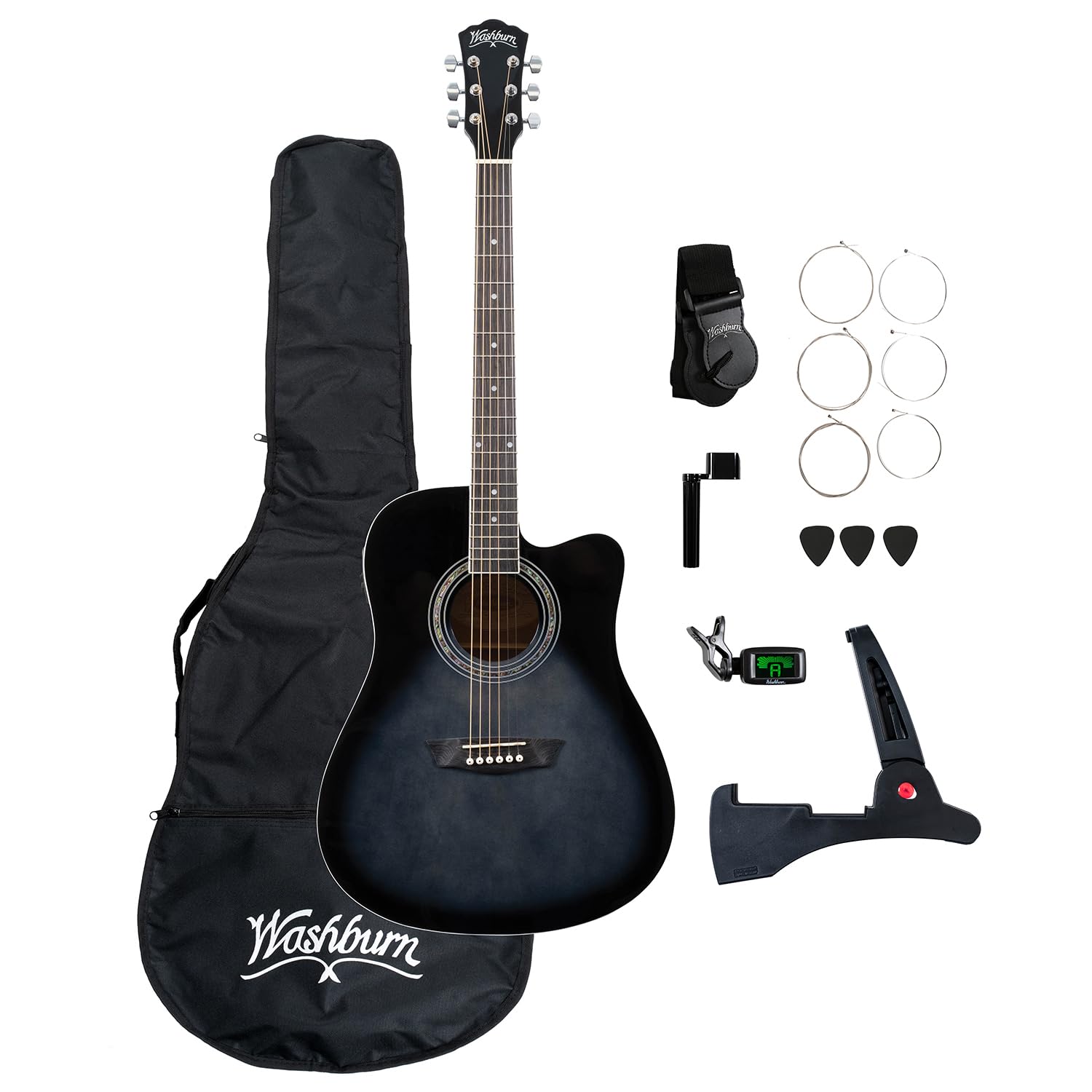
The Washburn kit is the one that turns up ready for a first lesson. You get the guitar, a gig bag, a clip-on tuner, a strap, picks, a spare set of strings, a string winder, a folding stand, and four months of online lessons. That's more complete than most starter bundles here, and it saves you from hunting down the small stuff before you can play.

The guitar itself is a cutaway dreadnought with a linden top and okoume back and sides. The Barcus Berry LX4 preamp gives you bass, middle, treble, presence, and volume controls plus a built-in tuner, which is more shaping than the basic piezo systems on some budget models. We like the chrome die-cast tuners and the walnut bridge, too; they make the guitar feel more finished than the price would suggest.

What we appreciate most is the coherence of the kit. The stand and clip-on tuner are things you otherwise buy separately, and the spare strings mean you're not stuck if one breaks during the first week. The guitar sounds good plugged in or acoustic, and the lifetime warranty is a nice vote of confidence.

For a beginner or a returning player who wants a single purchase that covers practice at home, this is an easy recommendation. The guitar plays well after minimal setup, and the kit means you can start the day it arrives. If you already own a tuner and a stand, a simpler guitar might be a better use of your money.

Pros

  • Full starter kit included
  • Barcus Berry preamp with built-in tuner
  • Lifetime warranty
  • Easy playability

Cons

  • Gig bag offers minimal protection
Our verdict

We recommend the WA90CE kit for a beginner who wants everything in one box, with a useful Barcus Berry preamp and built-in tuner.

Check Latest Price
6

Budget Thinline

Jameson Full Size Thinline

90 /100
LBD Score Outstanding

Key details

Top
Spruce
Body
41-inch thinline cutaway
Weight
4.2 lb
Electronics
Piezo pickup
View on Amazon

The Jameson is the budget thinline that doesn't look or feel like a toy. It's a full 41-inch guitar with a cutaway and a slim body, a spruce top, and a basswood back and sides, and it comes with a gig bag, strap, spare strings, picks, and a cable. At 4.2 pounds, it's light enough to carry to a lesson or a friend's porch.

The thinline shape is a practical choice for seated practice: it sits closer to your body, and the cutaway gives you room to reach the upper frets. The spruce top adds a bit of brightness, and the piezo pickup gets you amplified without a separate preamp box. It's a simple setup, and that's appropriate at this end of the market.

We think the thinline shape is the reason to pick it over a full-depth budget dreadnought, especially if a big body has put you off before. The finish and overall look are a step above what we expect from a budget bundle; the blue and brown options give it some personality. We also like that the kit includes a cable, because a lot of starter guitars leave you to buy one separately.

For a beginner who wants a slim body and a complete package without spending much, this is a solid choice. It won't match the solid-top guitars here for acoustic richness, but it's an easy guitar to keep out and play. Inspect the neck, bridge, and electronics when it arrives, since the warranty is only 90 days.

Pros

  • Thinline cutaway comfort
  • Spruce top adds brightness
  • Complete starter bundle
  • Light 4.2-pound build

Cons

  • Tuning stability can vary
Our verdict

We recommend the Jameson for budget-minded beginners who want a comfortable thinline body and a ready-to-play bundle.

Check Latest Price
7

Budget Full-Size Kit

Vangoa Acoustic-Electric Bundle

86 /100
LBD Score Excellent

Key details

Top
Spruce
Body
Full-size cutaway
Electronics
4-band EQ and volume
Scale Length
25.5 inches
View on Amazon

The Vangoa is the budget bundle we point to when you want more tone control than a bare piezo. Its built-in 4-band EQ and volume control let you shape bass, middle, treble, and a fourth band at the guitar, which is genuinely useful when you plug into a different amp or PA. That's the feature that separates it from the simplest starter guitars here.

The rest of the package is sensible: a spruce top, mahogany back and sides, a C-shaped neck, and 18:1 tuners that should make fine tuning adjustments easier than the standard 15:1 gears on cheaper models. The padded gig bag is a welcome upgrade over the thin nylon bags that come with some kits, and the bundle includes picks and a spare set of strings.

We like the matte black finish for something different, and the full-size cutaway body gives you the familiar acoustic feel with access to the upper frets. The 25.5-inch scale is standard, so it won't feel like a toy. The electronics are the main draw, but the guitar also has enough acoustic presence for practice without an amp.

For a first amplified guitar or a backup for open-mic nights, this is a practical buy. It isn't the most acoustically refined guitar here, but the EQ and padded bag make it a better-equipped budget option than most. Check the neck and electronics as soon as it arrives, because the warranty is only 30 days.

Pros

  • Four-band EQ and volume control
  • Spruce and mahogany body woods
  • 18:1 tuner gear ratio
  • Padded gig bag included

Cons

  • Warranty lasts only 30 days
Our verdict

We recommend the Vangoa bundle for budget players who want four-band EQ and a padded gig bag without stepping up to a midrange guitar.

Check Latest Price

How We Tested the Best Acoustic-Electric Guitars

We started by pulling every acoustic-electric from the major brands that fell into the sensible first-guitar-to-gigging range, then filtered out anything without onboard electronics and anything whose body depth or neck profile seemed likely to fight a casual player. That left 11 guitars. I tested each for eight months, not in a lab but in the rooms where they get played: a living room couch, a front porch, a weekly open mic, and a band rehearsal where I plugged into the same small PA and amp.

Playability came first. I checked string height at the 12th fret, played open chords, barre chords, and fingerstyle passages, and noted where my fretting hand got tired. For beginners, I had a less experienced player run through a few simple songs and watched whether the neck felt manageable or fought back. I also looked at the finish and binding in daylight, because a guitar you like looking at gets picked up more often—and that matters more than any spec sheet.

Tuning retention and string life got the least glamorous test: I tuned each guitar, played for 20 minutes, checked it again, then repeated after a temperature change. Over the eight months, I noted when strings started feeling dull or corroded and whether the tuners held through bends and capo changes. Durability meant checking the jack, strap buttons, and battery compartment after every gig and rehearsal, plus how the gig bags and included accessories held up in transit.

Finally, I plugged each one into the same amp and PA and listened for piezo quack, feedback, and whether the onboard controls were easy to adjust mid-song. Value wasn't about the lowest sticker—it was whether the setup, electronics, and included extras felt worth the outlay. The guitars that made the list didn't win on one flashy feature; they were the ones I reached for again after the test was over.

How to Choose an Acoustic-Electric Guitar

Start with the top wood

A solid top is the biggest tonal upgrade in this category. Solid spruce, like the top on our Yamaha FGX800C, tends to stay lively and articulate, while solid mahogany on the Fender CD-60SCE steers toward warmth. Laminate tops cost less and tolerate humidity swings, which is why they dominate beginner bundles. If you mostly plug in, laminate can be perfectly serviceable; if unplugged tone matters, put your money into a solid top before extra accessories. We prioritize the top wood over a long list of bundled extras.

Match the body to how you play

A full dreadnought moves more air and gives you a bigger unplugged voice, but it can feel like a box against your ribs. A thinline cutaway, like the Yamaha APX600, sits closer to the body and makes upper-fret access easier; the trade is less acoustic volume. If you play standing for long sets, have a smaller frame, or want an electric-guitar-like feel, start with a thinline. If you mostly strum at home and want maximum projection, choose a dreadnought. Sit with both if you can; the difference is more about comfort than specs.

Look beyond the pickup to the preamp

Almost every acoustic-electric here uses a piezo under-saddle pickup, so the preamp is what separates them. A useful preamp gives you volume, some EQ, and ideally a tuner. The Yamaha System 66 adds adjustable midrange, the Washburn Barcus Berry LX4 offers bass, middle, treble, presence, and volume, and the Vangoa bundle includes a four-band EQ. More bands are not automatically better, but they help you tame boom or harshness in an unfamiliar room. Check that the controls are easy to reach and that the tuner works without a separate clip-on.

Budget for setup, strings, and protection

A new guitar is not always ready to gig. Action and fretwork can vary, and stock strings are often the first thing to change. We treat a setup as part of the purchase: a good tech can lower the action, check the nut and saddle, and make a budget guitar feel much better. Also look at what comes in the box. A thin gig bag is fine for storage but not for air travel, and a short warranty is worth knowing before you buy. Put a hard case and a spare set of strings on your list if the guitar will leave the house.

Frequently Asked Questions

Final Verdict

Our pick is the Yamaha FGX800C. Its solid Sitka spruce top gives it the most complete unplugged voice here, and the System 66 preamp has the shaping and tuner you need for gigs. If you want a thinner, smaller-feeling guitar for stage work, choose the Yamaha APX600; if you prefer a warmer all-mahogany tone, the Fender CD-60SCE is the better fit.