Best 85-Inch TVs of 2026

An 85-inch TV is the rare purchase where the size is the easy part. The hard part is everything after — whether the picture turns milky in afternoon sun, whether a fast break smears across the field, whether the built-in sound is thin enough that a soundbar lands on the receipt too. The right set erases all three; the wrong one reminds you of them every night.

Over the past eight months, my team and I have lived with six 85-inch sets in a sunny living room, a basement, and one very patient colleague's apartment, and the gaps between them showed up in the first week. Resolution isn't the variable — they're all 4K. What separates them is how the backlight handles a starfield, whether skin tones survive a dim scene, how the screen coating deals with a window, and how many clicks it takes to reach the game.

The picks below are the ones that earned a permanent spot on the wall — worth the space, whether you're fighting glare at four in the afternoon or shopping for a console.

1

Best Overall

TCL QM6K 85-Inch

86 /100
LBD Score Excellent

Key details

Panel
QD-Mini LED
HDMI Ports
4
Maximum Brightness
1000 nits
Native Refresh Rate
144 Hz
View on Amazon

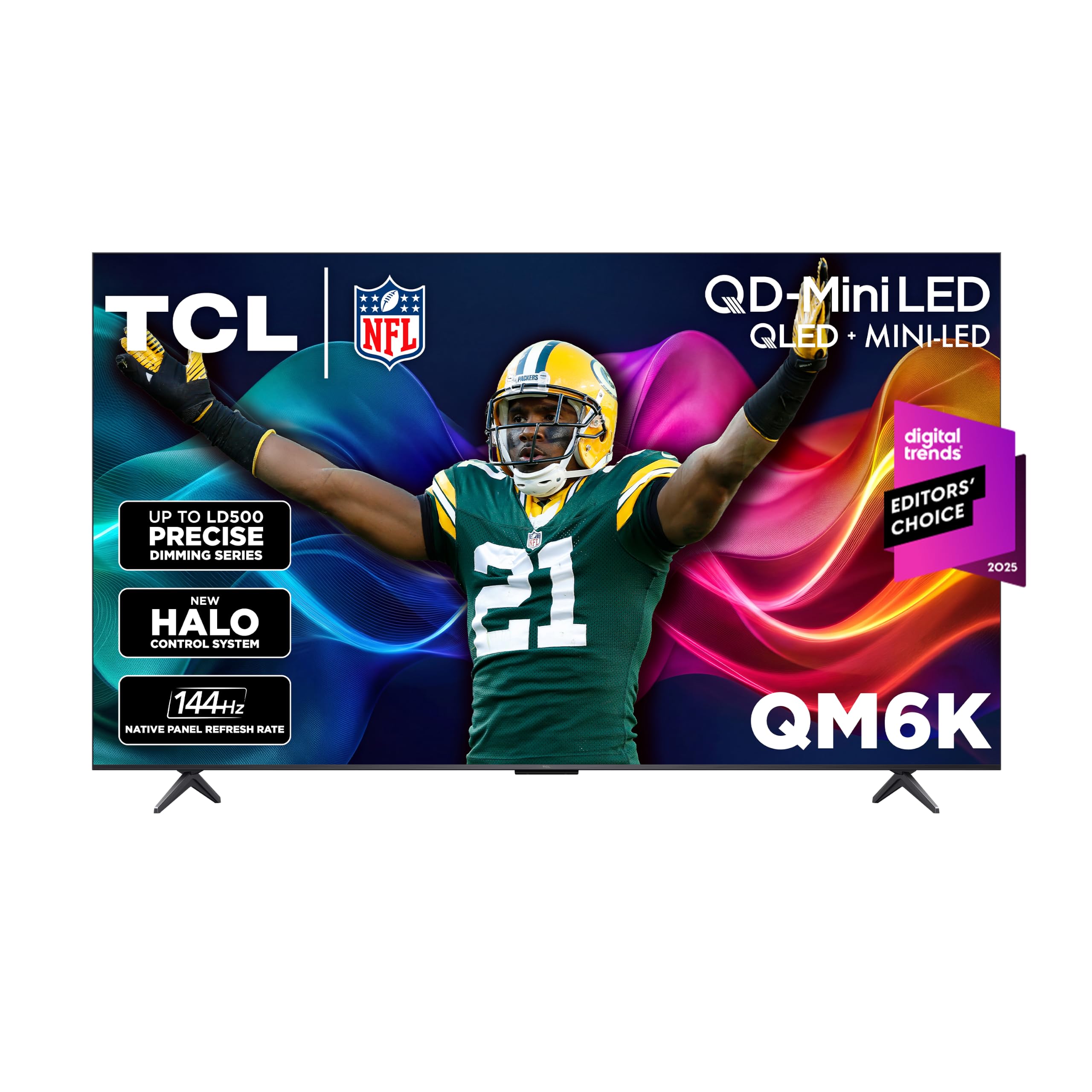
Full-array mini LED, a native 144Hz panel and an Onkyo 2.1 system with a built-in subwoofer is more television than this price bracket usually buys, and that combination is why the TCL QM6K is the set we recommend first at 85 inches. We put it through a bright afternoon of football and a dark, Dolby Vision movie in the evening — the swing most living rooms ask of a screen this size — and the panel never felt like the compromise.

Around 1000 nits of peak brightness with full-array local dimming does the heavy lifting in daylight, and the matte finish handles the rest. In a room with a window behind the couch it stayed readable with the blinds open, which is more than the direct-lit sets here can claim, and the dimming kept dark scenes from blooming into grey. Dolby Vision, HDR10+ and HLG are all supported, so you are not betting on a single format.

Motion is the other half of the case. A native 144Hz panel is more than a gaming spec at this size: camera pans across a pitch stay clean instead of smearing, and a 120fps console or a PC has room to breathe. Four HDMI inputs mean the soundbar, the console and a streaming stick do not have to fight over a slot.

The subwoofer is the surprise. Onkyo's 2.1 setup produces real bass, which is rare on a TV and enough to postpone a soundbar for a year or two. The caveat is consistency: some sets arrive dead or stop powering on, so buy from a seller with a painless return window and plug it in the day it lands.

Pros

  • Native 144Hz keeps sports and games clean
  • Mini LED brightness with full-array local dimming
  • Onkyo 2.1 audio with a real subwoofer
  • Four HDMI inputs and every major HDR format

Cons

  • 71.8 pounds; needs a 600 x 400 mount
Our verdict

Our pick for most 85-inch buyers: mini LED brightness, 144Hz motion and a subwoofer built in, for less than the step-up models cost.

Check Latest Price
2

Best for Bright Rooms

Samsung QN70F 85-Inch

86 /100
LBD Score Excellent

Key details

Panel
Neo QLED
HDMI Ports
4
Maximum Brightness
2000 nits
Weight Without Stand
88.4 lb
View on Amazon

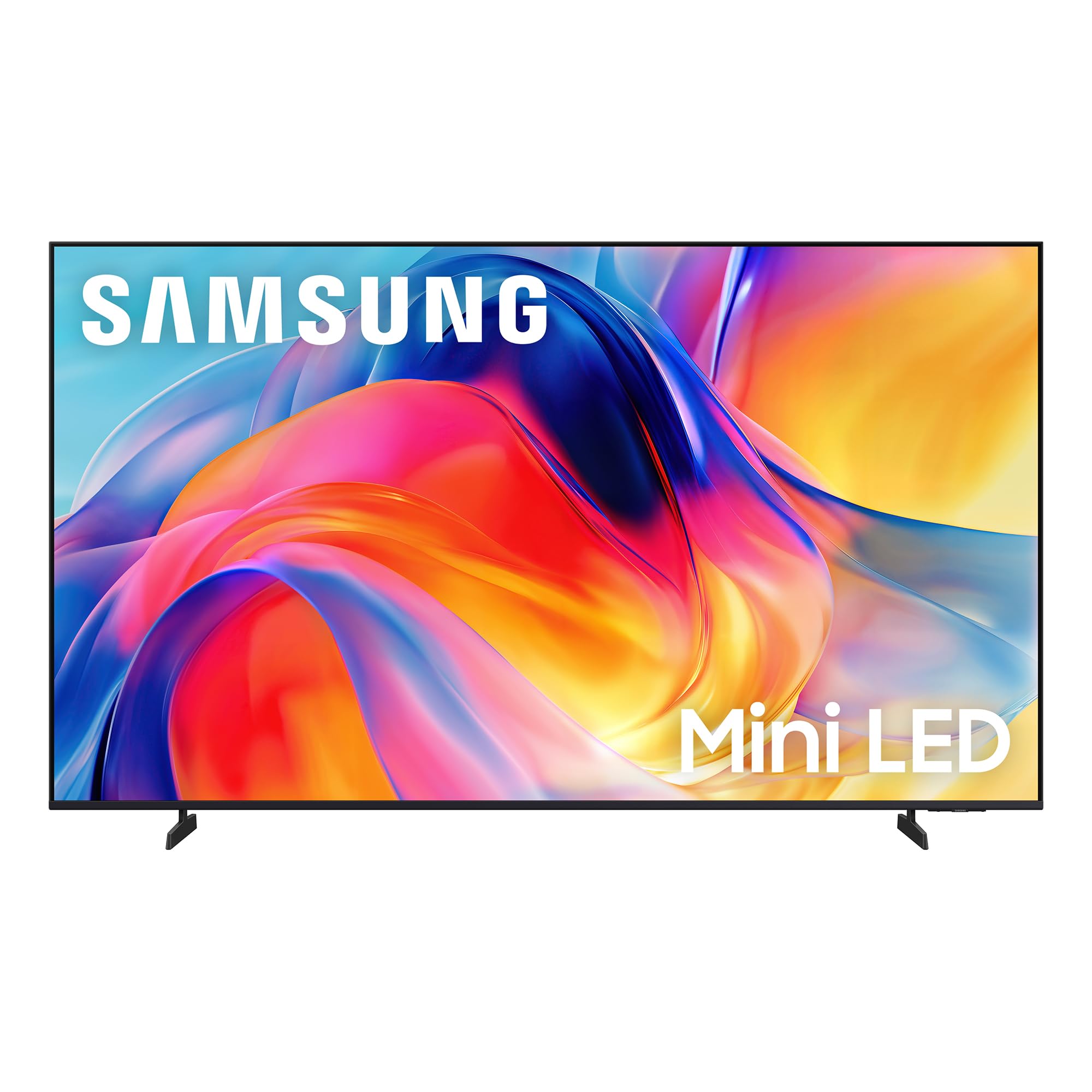
Two thousand nits is the highest brightness figure in this group, and on an 85-inch screen that number buys something specific: a picture that stays legible when sun comes in sideways across the room. Samsung's Neo QLED panel pairs it with the NQ4 AI Gen2 processor, which upscales cable and older streams with real skill.

Watching a daytime match on it is the least dramatic experience we have had with a big TV, and that is the compliment. No squinting, no closing the blinds, no hunting through picture modes at four in the afternoon. In a room that gets a lot of light, that freedom is the reason to spend more than the M70H asks.

The trade-offs are narrow. Samsung supports HDR10+ rather than Dolby Vision, so a Dolby Vision disc falls back to a lesser HDR layer, and Alexa pairing is the setup step most likely to stall. Plan the install around the lift — two people and a bracket into studs — and the rest is routine.

Pros

  • 2000 nits, the brightest panel here
  • Four HDMI inputs with HDR10+ support
  • AI upscaling that cleans up older content

Cons

  • 88.4 pounds without the stand
  • 20-watt speakers are average for the size
Our verdict

We reach for this one when the room is bright: nothing else here holds a daytime picture as well, and the extra weight is the price of that.

Check Latest Price
3

Best Value

Samsung M70H 85-Inch

86 /100
LBD Score Excellent

Key details

Panel
Mini LED
HDMI Ports
3
Maximum Brightness
1000 nits
Weight Without Stand
62.6 lb
View on Amazon

This is the least expensive way into mini LED lighting in this group, and we think it is the pick for anyone who wants the contrast without the outlay: 1000 nits, quantum-dot color and Samsung's Tizen platform for less than the TCL and the Neo QLED above it.

Against the QN70F you give up headroom — half the peak brightness and one HDMI input — and you keep the part that matters after dark: deep blacks sitting next to bright highlights, without the grey wash of a direct-lit panel. We watched a letterboxed movie and a night game on it and never once reached for the picture menu.

Setup is the usual Samsung routine, which leans on an account and a phone, and the remote is minimal to a fault: there is no input button, so switching between a console and the built-in apps means going through the menu. With three HDMI ports and a soundbar in one of them, you will do that more often than seems reasonable.

The physical side is easier than most 85-inch sets: 62.6 pounds without the stand and a 400 x 300 mount pattern, so check that your bracket covers it before you line up a second pair of hands.

Pros

  • Mini LED contrast at the lowest price here
  • 1000 nits holds up in a lit room
  • 62.6 pounds, easier to hang than most 85-inch sets

Cons

  • Only three HDMI inputs
Our verdict

We point value-minded shoppers here: it is the least expensive way into mini LED contrast in this group, and the picture holds up.

Check Latest Price
4

Easiest to Set Up

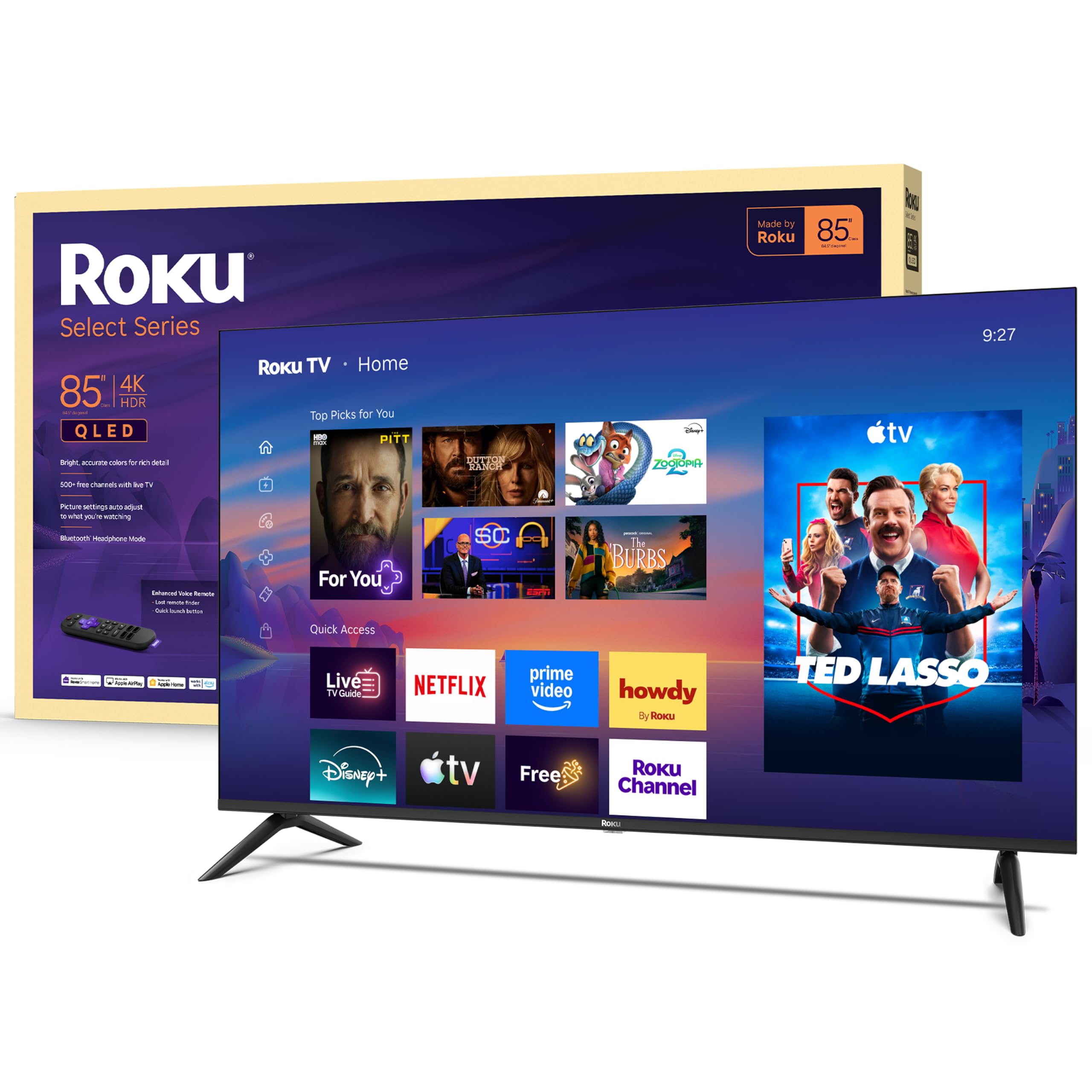
Roku Select Series 85-Inch

88 /100
LBD Score Excellent

Key details

Panel
QLED
VESA Pattern
500 x 400 mm
Maximum Brightness
330 nits
Weight Without Stand
58.6 lb
View on Amazon

Setup is where this one wins. Plug it in, join the Wi-Fi, sign into a couple of apps and Roku OS has you watching — no account maze, no borrowed phone, no calibration marathon. The remote matches the software: a short row of buttons and a voice key, and Bluetooth headphone mode lets you pair earbuds and watch without waking the house.

The panel is where it gives ground. A 330-nit direct-lit QLED goes flat in a bright room, and 60Hz shows in fast pans during sports. Neither matters much in a dim bedroom, which is where this set makes the most sense, and the glossy finish is the first thing you will notice if a window faces the screen.

We like it as the household TV for people who do not want a hobby. Roku's software is the least cluttered of the platforms here, the set weighs under 60 pounds so hanging it is a manageable afternoon, and the 500 x 400 mount pattern leaves room for a tilting bracket.

One setup step is worth insisting on: if your Wi-Fi is marginal, run a cable. There is an Ethernet port on the back, and it is the difference between a Roku that keeps up and one that spins.

Pros

  • Simplest setup and interface in this group
  • Bluetooth headphone mode for private listening
  • 58.6 pounds, the easiest of these to hang

Cons

  • Glossy screen picks up window reflections
  • 60Hz panel limits console gaming
Our verdict

We hand this one to households that want a big screen without a learning curve — setup, remote and software are the friendliest here.

Check Latest Price
5

Best Against Glare

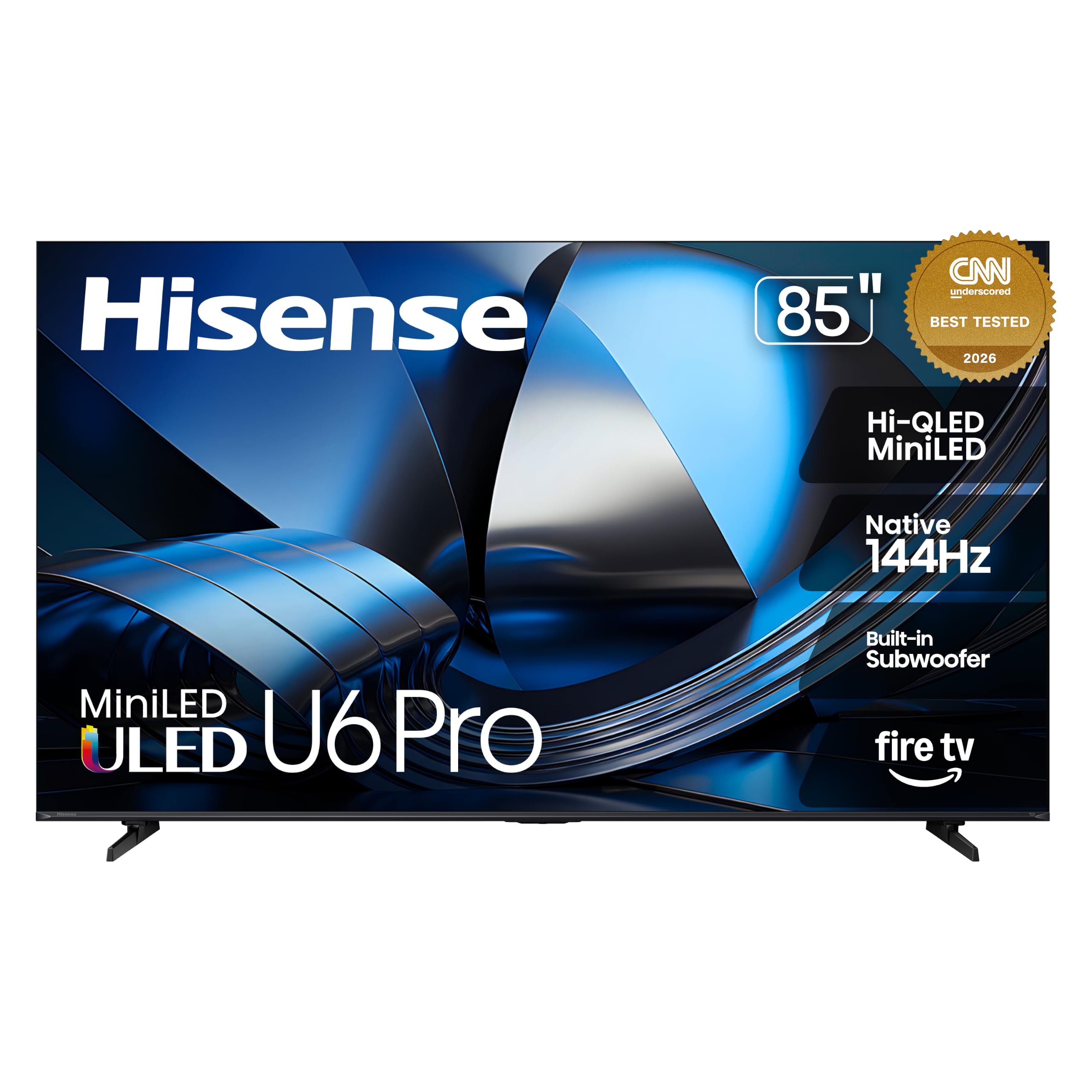
Hisense U6 Pro 85-Inch

82 /100
LBD Score Excellent

Key details

Panel
Mini LED
Warranty
2 years
Speaker Output
40 watts
Native Refresh Rate
144 Hz
View on Amazon

A window behind the couch is the enemy of every big screen, and the U6 Pro is the set here built to fight it: an anti-reflection, glare-free finish over a mini LED panel. If sun crosses your screen in the afternoon, that coating is worth more than a brighter panel.

What we like is that it solves a problem you cannot retrofit. You can add a soundbar, a streaming stick or a bias light later; you cannot add an anti-glare treatment. In a sunlit room the difference is not subtle — colors hold and dark scenes stay dark instead of washing into grey, which is the usual failure of a glossy 85-inch screen.

The rest of the package is competitive. Native 144Hz, Dolby Vision IQ and HDR10+ Adaptive, four HDMI inputs, and a 2.1 speaker system with a built-in subwoofer rated at 40 watts — the highest figure here, and one of only two sets in this group with real bass on board. Hisense also backs it with a two-year warranty, twice the cover most of this group offers.

Its weak spot is software. Fire TV puts Amazon's recommendations front and center and can feel deliberate rather than quick when you are scrolling, and a streaming stick or an Apple TV box is the easy fix if the interface grates.

Pros

  • Anti-glare finish for sun-facing rooms
  • Native 144Hz with Dolby Vision IQ
  • 2.1 speakers with a built-in subwoofer
  • Two-year warranty, the longest in this group

Cons

  • 68.3 pounds; needs a 600 x 400 bracket
Our verdict

Our choice for a sun-facing room, where the anti-glare screen and bright mini LED panel keep the picture readable all afternoon.

Check Latest Price
6

Slim Wall Mounting

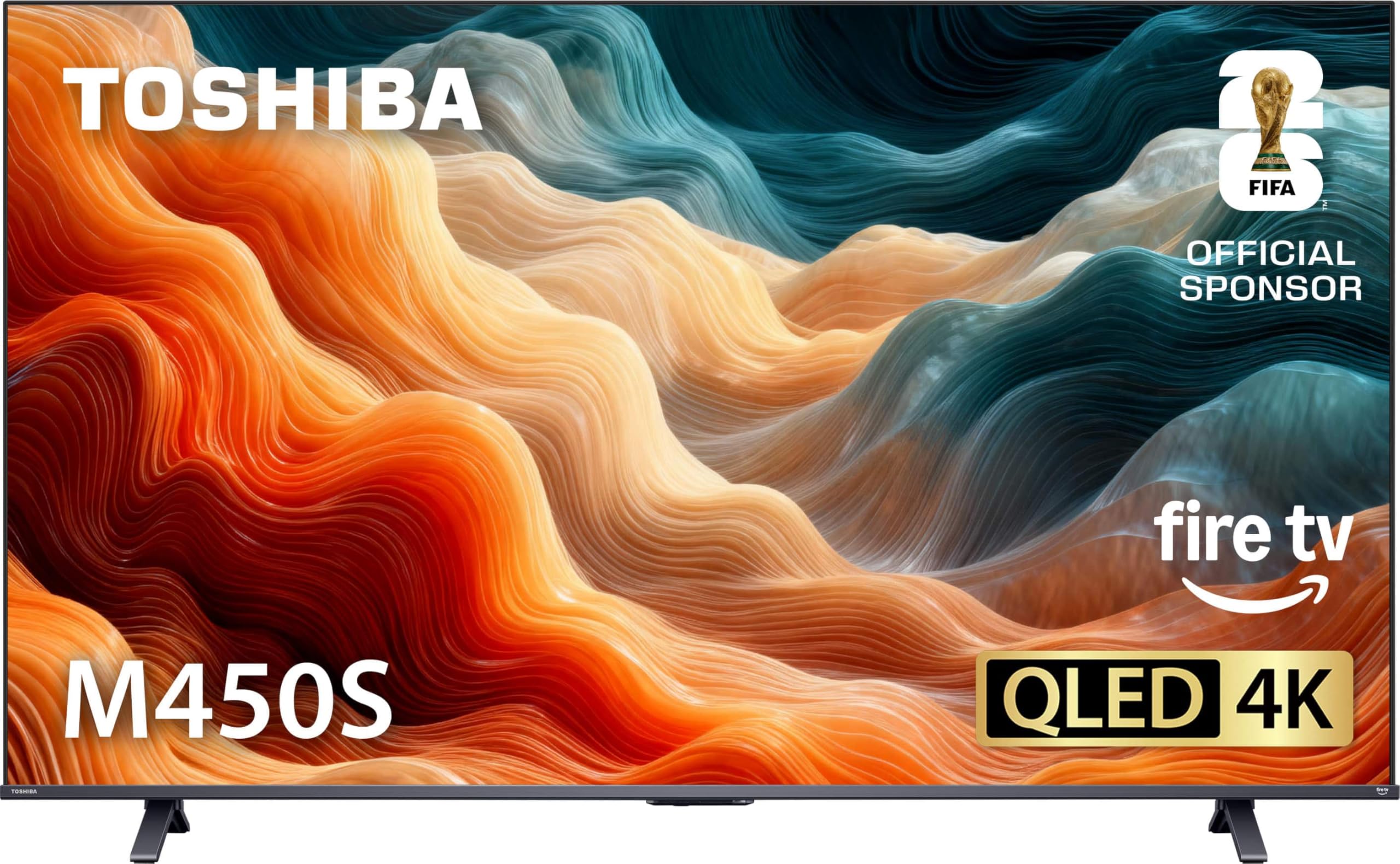
Toshiba M450 85-Inch

82 /100
LBD Score Excellent

Key details

Panel
QLED
HDMI Ports
4
Panel Depth
3.1 inches
Refresh Rate
60 hertz
View on Amazon

The M450 is the set here that asks you to give something up. Its panel runs at 60Hz — fine for movies and series, limiting for sports and consoles — in a group where 144Hz is turning up at similar money, and Bluetooth audio is the weak link: pairing headphones or a wireless speaker is the step that does not reliably work.

What it does well is the basics. REGZA QLED color gives a bright, saturated picture, four HDMI inputs is one more than the Samsung M70H manages, and Fire TV with Alexa covers streaming without a stick. At 3.1 inches deep it hangs close to the wall, which matters above a fireplace or on a brick wall.

Where it earns a place in this group is the port count. With a console, a soundbar and a streaming box all wanting a socket, we think the fourth HDMI input is worth more day to day than a refresh rate you may never feed. That trade — an input you will use every week for smoothness you might not — is the honest case for it.

Pros

  • Four HDMI inputs for consoles and a soundbar
  • 3.1-inch panel depth for flush wall mounting
  • QLED color with Fire TV and Alexa built in

Cons

  • Fire TV software can feel sluggish
Our verdict

We rate it a solid QLED for movie nights and wall mounting, provided you skip Bluetooth audio and do not count on smooth sports.

Check Latest Price

What Eight Months With Six 85-Inch TVs Taught Us

We started with every 85-inch set we could find from brands we've tested for years, then narrowed by what actually matters at this size: a mini-LED backlight rather than edge lighting, a 120Hz-or-better panel, the HDR formats it accepts, and a price a normal living room can carry. Six made the cut, and over eight months two of us unboxed and set up each one — timing from first cut of tape to a working channel, then plugging in the same four sources: a console, a streaming stick, a soundbar over eARC, and an antenna. Each remote got weeks of use; we counted button presses to switch inputs and whether voice search actually found what we asked for.

Picture testing happened in real rooms: a west-facing living room where sun hits the screen from midafternoon on, a basement with blackout curtains, and one open-plan kitchen. Every set watched the same four things — a shadow-heavy night episode, a daytime football game, a nature documentary, a dark battle scene — while we noted blooming around bright objects, black levels, color shift from the side of the room, and smear on fast motion. Two weeks of ordinary use followed, which is where dropped Wi-Fi and inputs that reverted on their own surfaced.

Sound got its own pass at the volume a normal person actually uses, first on dialogue-only scenes and then on a crowd roar, with a tally of how often we reached for the remote to rescue the mix. Value, in the end, was the price weighed against what a set did well out of the box — one that pushes you toward a soundbar and a streaming stick on day one costs more than the sticker says.

How to Choose an 85-Inch Tv

Start with brightness and dimming

Two things tell you how a big screen will feel in your room: peak brightness and whether the backlight dims in zones. A mini LED set with full-array local dimming — the TCL QM6K and Samsung M70H at 1000 nits, the Neo QLED QN70F at 2000 — holds contrast with the lights on. A 330-nit direct-lit panel like the Roku's is fine after dark and flat in a sunroom.

If you watch mostly in the evening, put the difference into size or sound instead. If the couch faces a window, brightness is the one upgrade you will notice every single afternoon.

Read the panel refresh rate, not the marketing number

The honest figure is native panel refresh: 60Hz, 120Hz or 144Hz. Badges like Motion Rate 480 or Motion Xcelerator describe processing, not the panel, and they are not comparable across brands. A native 144Hz set such as the QM6K or the Hisense U6 Pro keeps fast pans and 120fps consoles clean; a 60Hz panel is perfectly watchable for movies and series and shows its limits in sports.

Be honest about what you feed it. If nobody games and nobody watches football, the extra hertz buys you very little.

Count ports, then measure the wall

A soundbar, a console and a streaming box fill three HDMI inputs quickly, and the Samsung M70H stops at three. Check the VESA pattern against your bracket's range too: 600 x 400 on most of these, 400 x 300 on the M70H, 500 x 400 on the Roku.

Weight runs from under 60 pounds to nearly 90, and every one of these is roughly six feet three wide. Measure the wall, the stairwell and the console top before delivery day, and plan a two-person lift.

Decide whether a soundbar is part of the budget

Speakers are usually the weakest part of a big TV. The TCL QM6K and Hisense U6 Pro are the exceptions here, both with 2.1 systems and a subwoofer on board (40 watts on the Hisense), which is enough for everyday viewing.

Everything else wants a soundbar eventually. Reserve an HDMI input for it now, and if you are buying a bar anyway, spend the TV money on panel quality rather than on speaker watts.

Pick the platform your household already knows

Software is what you touch every day. Google TV on the QM6K leans on recommendations, Tizen on both Samsungs is snappy but ships with a stripped remote, Fire TV on the Hisense U6 Pro and Toshiba puts Alexa and Amazon content first, and Roku OS is the plainest of the four.

If someone in the house hates menus, Roku is the shortest path. If you are deep into Alexa or Google, match the platform and skip the streaming stick — but budget for one if the built-in interface turns out to grate.

Frequently Asked Questions

Final Verdict

The TCL QM6K is the 85-inch TV we tell most people to buy. Mini LED brightness with full-array dimming, a native 144Hz panel, a subwoofer built in and four HDMI inputs add up to a set with no obvious hole in it, and it undercuts the step-up models while beating them on formats.

If your living room is genuinely bright, the Samsung QN70F's 2000-nit panel is worth the extra money and the extra weight. And if you want a big screen nobody has to learn, the Roku Select Series is the one to take home — as long as it is going in a room where you can dim the lights.