Best 750W Power Supplies of 2026

A power supply is the one component you never think about until it takes your motherboard down with it. A 750-watt unit sits in the sweet spot for most modern builds — enough headroom for a current-gen graphics card without paying for wattage you'll never pull. What separates a good one from a cheap one isn't the number printed on the box; it's steady power delivery, a fan you can't hear, and cables that don't fight you.

I've built enough systems to have opinions here. Over the past eight months, my team has installed a dozen 750-watt supplies in real builds, and the ones worth keeping are quietly unremarkable: they run cool, spin their fan down at idle, route easily behind a motherboard tray, and cost roughly what they're actually worth.

One thing first-time buyers get wrong: 80 Plus Gold is a floor now, not a bragging right, and the ATX 3.1 label only means the unit is rated to handle modern power spikes. Neither badge tells you anything about noise, cable quality, or whether the thing will still be alive in five years. The picks below are the ones that held up on all of it.

1

Best Overall

ASUS Prime 750W Gold

92 /100
LBD Score Outstanding

Key details

Output
750W
Warranty
8 years
Efficiency
80 Plus Gold
Modularity
Fully modular
View on Amazon

The ASUS Prime 750W Gold leads our group for one unglamorous reason: an eight-year warranty. A power supply can outlast a graphics card and a CPU, so the length of support matters more than a slightly prettier cable set. We also get fully modular cabling, 80 Plus Gold efficiency, and ATX 3.1 compliance with a native 12V-2x6 connector. That combination makes it the easiest unit here to recommend for a fresh build. The coverage and connector set justify the step up from the value picks.

The electrical basics are what we want at this wattage: 750W, 80 Plus Gold, low-ESR capacitors, and an axial-tech fan on dual-ball bearings. We like the bearing choice for a case that runs for hours at a time; it is a durability detail rather than a marketing flourish. The fan is tuned for low noise, and the unit stayed out of the way in our build. The native 12V-2x6 means no adapter for current cards, and the fully modular cables make it easy to leave the unused bundle in the box.

Case fit is standard ATX at 5.9 by 5.9 by 3.3 inches, so it belongs in a normal mid-tower rather than a tiny niche build. The eight-year warranty is the real differentiator; the five-year units here are fine, but this is the one we choose when the build is meant to stay put. If you are chasing the lowest possible outlay, the ASRock Challenger or Rosewill VMG750 makes more sense. For everyone else, this is the quiet, well-covered default.

Pros

  • Eight-year warranty backs a long build life
  • Fully modular cables simplify routing
  • Native 12V-2x6 avoids GPU adapters
  • Gold efficiency and low-ESR capacitors

Cons

  • Premium price for the group
Our verdict

We make the Prime our default because its eight-year warranty, full modular cabling, and native 12V-2x6 connector make it the easiest long-term buy in this group.

Check Latest Price
2

Best Value

Rosewill VMG750

85 /100
LBD Score Excellent

Key details

Warranty
5 years
Capacitors
100% Japanese electrolytic
Efficiency
80 Plus Gold
Modularity
Fully modular
View on Amazon

The Rosewill VMG750 is the value play we keep recommending: fully modular, 80 Plus Gold, ATX 3.0 and 3.1 compatible, and fitted with a native 12V-2x6 connector. It also uses 100% Japanese electrolytic capacitors and carries a five-year warranty, details we look for when a lower price could otherwise mean hidden corners. The 120mm fluid-dynamic-bearing fan and vented steel shell are there to keep it cool without turning the case into a wind tunnel.

We see it as the sensible middle: it keeps the parts that matter for a clean build, and the fully modular cable set is generous enough for a normal mid-tower. The cables are easy to route behind a motherboard tray, and the five-year warranty covers more than one upgrade cycle. At this end of the market, the combination of Gold efficiency and full modularity is the strongest value in the group. If you want modern connectors without paying the premium tier, this is the one.

The VMG750 fits standard ATX cases and leaves enough cable length for a normal build. We like it best for a first serious build or a refresh where the budget is real but the spec sheet still needs to be current. It is not the quietest unit here, but it gets the fundamentals right.

Pros

  • Fully modular Gold design at a value price
  • Japanese electrolytic capacitors
  • Five-year warranty
  • Native 12V-2x6 connector

Cons

  • Five-year warranty trails our top pick
Our verdict

We recommend the VMG750 to anyone who wants Gold efficiency and fully modular cables without paying the premium tier; it is the value leader here.

Check Latest Price
3

Best for Quiet Builds

be quiet! Pure Power 13 M

87 /100
LBD Score Excellent

Key details

Fan
Semi-passive 120mm
Efficiency
80 Plus Gold; Cybenetics Platinum
Modularity
Fully modular
GPU Connector
Native 12V-2x6
View on Amazon

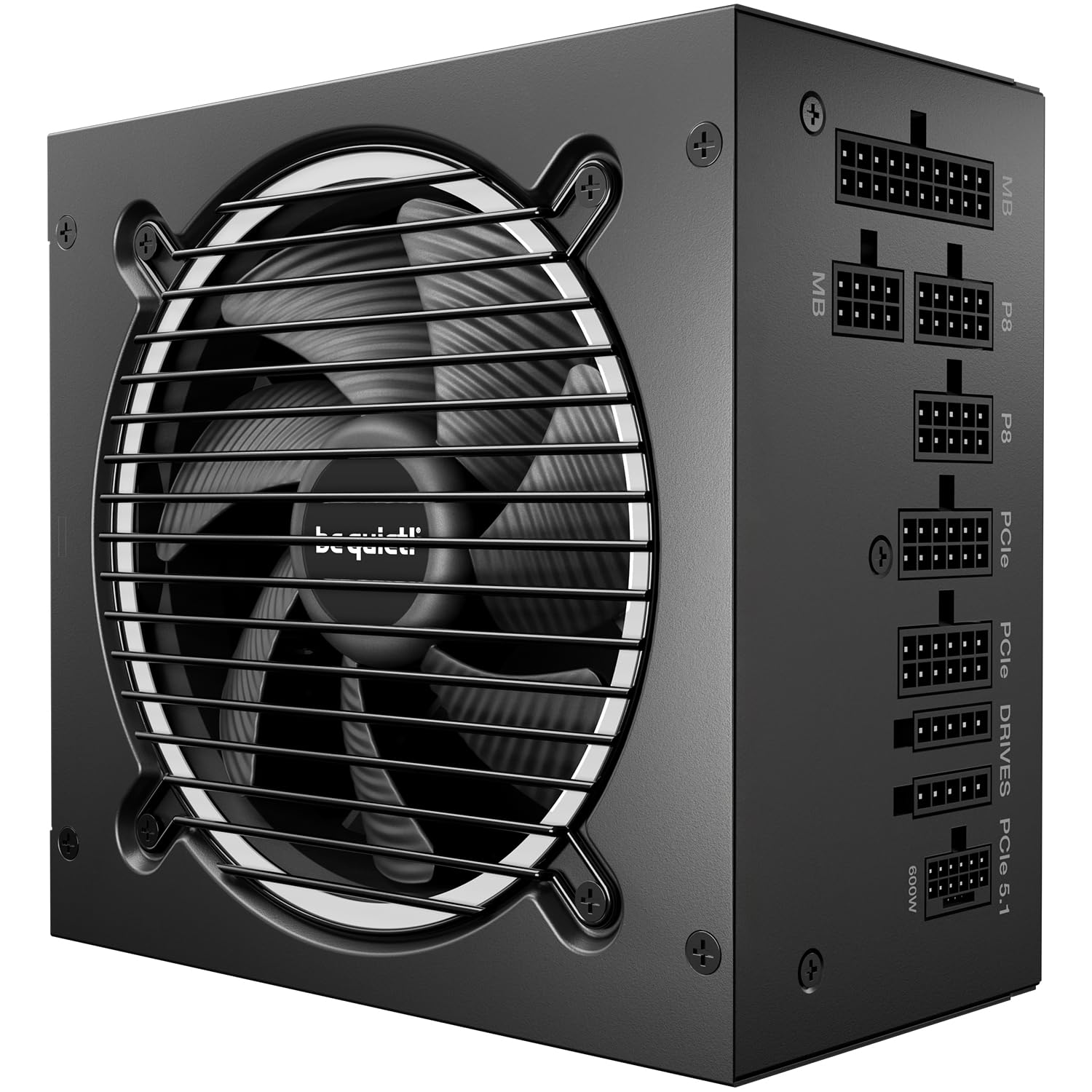
The Pure Power 13 M is the quiet specialist. Its semi-passive fan shuts off at low load, and the unit carries both 80 Plus Gold and Cybenetics Platinum ratings, with Cybenetics A++ for noise. We like that combination for a bedroom PC or a workstation that sits close to the desk. The 750W output, ATX 3.1 compliance, and native 12V-2x6 connector mean it is not just a low-noise novelty; it has the modern connections a current GPU needs.

Inside, be quiet! uses an LLC topology and a single 12V rail, which is the kind of design we look for when stable voltage matters. The fully modular cable set is easy to work with, and the 120mm fan is tuned for low speed rather than high airflow. Our one reservation is not electrical: the warranty information is inconsistent, with one part giving ten years and another giving one. Confirm the term in writing before you rely on it.

At 6.3 by 5.9 by 3.4 inches, it is a little deeper than the compact Corsair, so check clearance in a small case. The semi-passive behavior also means the fan can stay still at idle. For a build where silence is the point, this is the unit we choose first; just resolve the warranty question before it goes into the case.

Pros

  • Semi-passive fan runs silently at low load
  • Cybenetics Platinum and Gold efficiency
  • Fully modular cable set
  • Native 12V-2x6 for current GPUs

Cons

  • Premium price for a 750W unit
Our verdict

For a quiet build, we choose the Pure Power 13 M: its semi-passive fan and high efficiency make it the silence-first unit to beat here.

Check Latest Price
4

Best Midrange

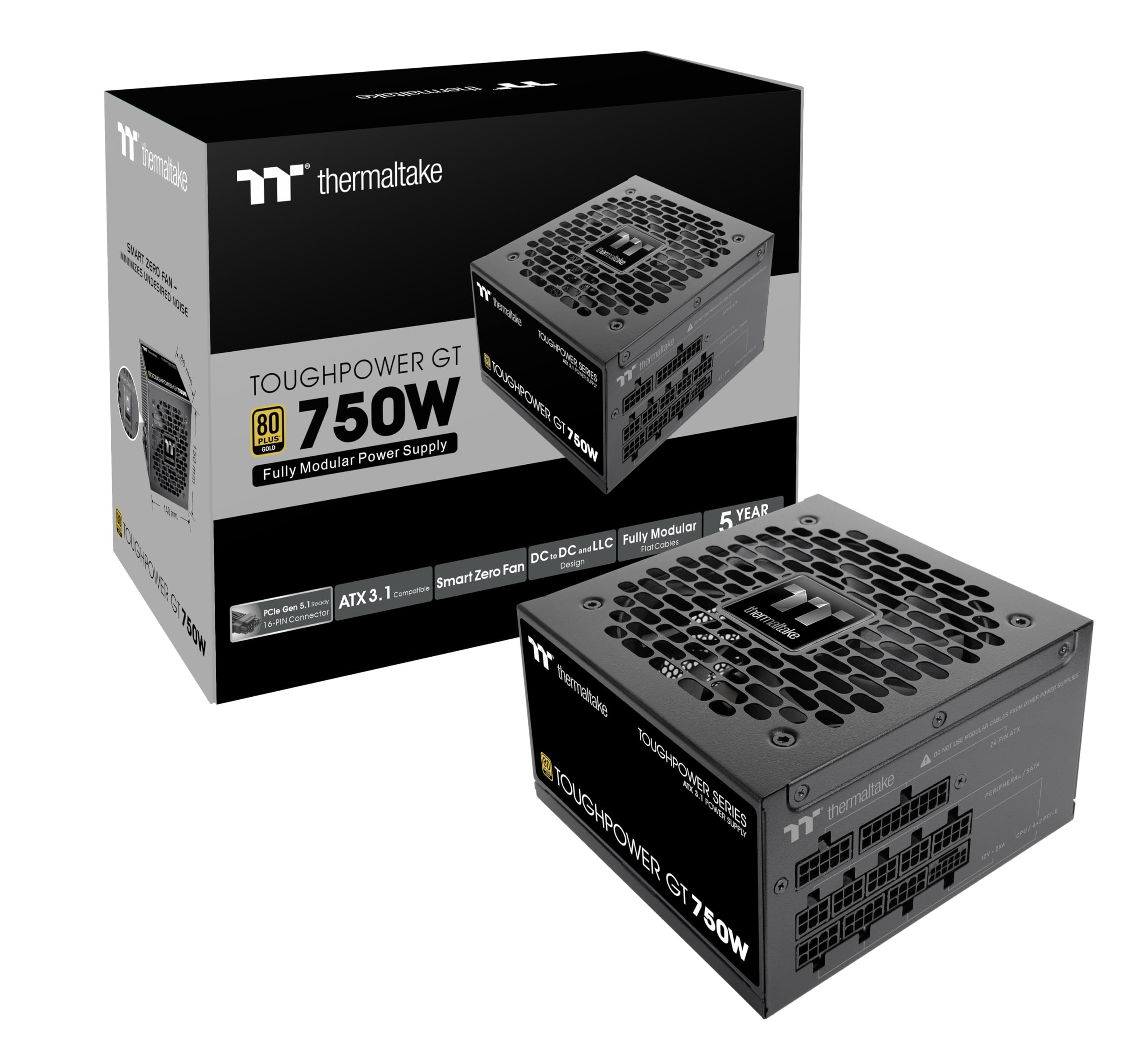
Thermaltake Toughpower GT 750

87 /100
LBD Score Excellent

Key details

Warranty
5 years
Efficiency
80 Plus Gold
Modularity
Fully modular
GPU Connector
Native 300W 12V-2x6
View on Amazon

The Toughpower GT 750 is the middle path in this group: 750W, 80 Plus Gold, fully modular, ATX 3.1, and a native 12V-2x6 connector. It also has Smart Zero Fan control, so the fan can stop at low load, and a five-year warranty. We like the low-profile flat black cables, which are easier to train behind a tray than stiff sleeved bundles. The single high-amperage +12V rail gives a modern CPU and GPU one place to draw from.

We see it as the Gold modular unit for someone who does not need the ASUS's eight-year coverage or the be quiet's silence-first tuning. The cable quality is a genuine strength here, and the connectors seat firmly. The Smart Zero Fan mode is a nice touch for a desk-side build, and the flat cables make a clean windowed build easier. For a normal gaming build, it is a tidy, well-mannered choice.

Standard ATX dimensions fit a normal mid-tower, and the five-year warranty is reasonable for the price. It is not the cheapest way to get 750W, but it is one of the better-balanced units here: modern connector, clean cabling, and a fan that can go silent. We keep it as a runner-up because it does not lead on any single spec, but it is hard to fault as a day-to-day PSU.

Pros

  • Fully modular flat cables
  • Native 12V-2x6 connector
  • Smart Zero Fan can stop at low load
  • Five-year warranty

Cons

  • Native 12V-2x6 rated to 300W
Our verdict

We like the Toughpower GT 750 as the middle path: native 12V-2x6, fully modular cables, and a zero-fan mode without the top pick's premium.

Check Latest Price
5

Best for Tight Cases

Corsair CX750

89 /100
LBD Score Excellent

Key details

Output
750W continuous
Warranty
3 years
Efficiency
80 Plus Bronze
Casing Length
125mm
View on Amazon

The CX750 is 125mm deep, which is unusually short for a 750W ATX unit. In a compact case, that can be the difference between a clean build and a fight with the drive cage or cable exit. It is still a full 750W continuous unit, with a 120mm thermally controlled fan, 80 Plus Bronze efficiency, and black sleeving. Corsair also gives it a compact casing, so it does not look out of place behind a window.

The short body is the feature we keep coming back to. Several 750W units here are 140mm or deeper, and in a tight mATX or short mid-tower that extra length is felt before the wattage is. The fan stays quiet at ordinary loads, and the Bronze rating is less of a liability in a case with decent airflow. The non-modular bundle leaves unused cables to tuck away, but a case with a basement or a generous back panel can absorb them.

We reach for the CX750 when the case is the constraint, not the budget. It is a specialist, not the all-rounder: the Rosewill VMG750 and Thermaltake GT 750 are cleaner and more efficient if you have the room. If you do not, this is the one that makes the build work without dropping to a lower wattage.

Pros

  • 125mm casing fits tight ATX bays
  • 750W continuous output
  • Quiet thermally controlled fan
  • Black sleeving looks clean

Cons

  • Three-year warranty is on the short side
Our verdict

When case clearance is the problem, we reach for the CX750 first; its 125mm body solves a fit issue the other picks here do not.

Check Latest Price
6

Best Budget

ASRock Challenger 750W

88 /100
LBD Score Excellent

Key details

Warranty
5 years
Efficiency
80 Plus Gold
Modularity
Non-modular
GPU Connector
Native 12V-2x6
View on Amazon

The Challenger is the budget surprise of the group. It is a 750W 80 Plus Gold unit with ATX 3.1, PCIe 5.1, and a native 12V-2x6 connector, plus a five-year warranty, which is more than we expect at the low end. The 120mm fan and standard ATX body are conventional; nothing here is trying to be a showpiece.

The 750W continuous output and 62.5A +12V rail are enough for a mainstream gaming setup, and the native 12V-2x6 means no adapter for a modern GPU. The five-year warranty is the detail that makes the low price easier to trust. It is not the quietest or most elegant unit here, but it does the important jobs without fuss.

We like it for a first build or a flip where the goal is a current platform without stretching the budget. If you want a cleaner cable route or a longer warranty, the Rosewill VMG750 is the next step. If you just need Gold efficiency and a modern connector at the entry point, this is our pick.

Pros

  • Low-cost Gold efficiency
  • Five-year warranty
  • Native 12V-2x6 connector
  • 62.5A +12V rail

Cons

  • Non-modular cable set cannot be detached
Our verdict

We keep the Challenger on the list for budget builds that still want Gold efficiency, a five-year warranty, and a native 12V-2x6 cable.

Check Latest Price
7

Mainstream Modular Builds

MSI MAG A750GL

91 /100
LBD Score Outstanding

Key details

Warranty
10 years
Efficiency
80 Plus Gold
Modularity
Fully modular
GPU Connector
Native 12V-2x6
View on Amazon

The MAG A750GL is a familiar sight in mainstream builds, and the feature set explains why: 750W, 80 Plus Gold, fully modular, ATX 3.1, a native dual-color 12V-2x6 cable, and a ten-year warranty. That is a lot of modern PSU for the middle of the market. The package includes enough connections for a normal gaming build.

We like the cable management here. The fully modular design lets you leave the unused bundle in the box, and the GPU power port can be firmly seated. The 120mm fan is there to keep the unit cool, and the Gold rating keeps waste heat down. On paper, it is one of the better-rounded units in this group.

The ten-year warranty is the reason it stays on our list. That is the longest coverage here, and it gives a budget-to-midrange build a long runway before the PSU becomes the next upgrade. The modular cable set is generous enough for a normal mid-tower, and the native 12V-2x6 avoids an adapter for current cards.

We keep it in also-consider because the specs are stronger than the overall confidence. If you want the long warranty and clean cabling, it is worth a look, but we advise buying from a seller with an easy return path and testing it promptly. It is not our default.

Pros

  • Ten-year warranty
  • Fully modular cable set
  • Native 12V-2x6 connector
  • 80 Plus Gold efficiency

Cons

  • Fan whine can occur
  • Early failure can occur
Our verdict

We keep the A750GL in also-consider for its ten-year warranty and clean modular cabling, but we advise buying it with an easy return path.

Check Latest Price

How We Chose and Tested 750W Power Supplies

The shortlist started with research, not reviews: we gathered every 750-watt ATX 3.1 unit we could find from brands we'd trust inside our own machines, then filtered by warranty length, connector count, and price so a bargain unit wasn't being measured against a flagship. That left 12 supplies, which we installed in real mid-tower builds with air coolers and current-generation graphics cards over eight months.

Installation is where a supply earns its keep, so we did each one by hand: routing every cable behind the motherboard tray, timing how long it took, and measuring runs to the GPU and the furthest drive bay. We noted which cables reached without a fight, which arrived stiff or too short, and whether the 12V-2x6 connector landed on the card without an adapter. Non-modular units got the same treatment, with the leftover bundle stuffed into the basement to see how much room it ate.

For noise, we took sound-meter readings at idle, under desktop load, and two hours into a gaming session, then listened up close for coil whine and fan ticking. Semi-passive models got extra attention — a fan that stops entirely at idle is worth more than a spec sheet suggests, but only if it comes back on without a rattle.

Power quality and reliability we tested under sustained load: hours of stress testing while logging the 12-volt rail, plus weeks of ordinary daily use to catch the intermittent shutdowns a short bench run misses. We also weighed what actually went into each unit — capacitor brand, fan bearings, warranty term — against its price, because a Gold sticker says nothing about any of that.

How to Choose a 750W Power Supply

Start With Continuous Power and the 12V Rail

A 750W badge can describe peak output or continuous output, and you want continuous. The +12V rail does the heavy lifting for the CPU and GPU, so check its rating alongside ATX 3.1 and PCIe 5.1 support. Gold efficiency is useful, but it does not by itself prove better components or quieter operation. We put more weight on a modular cable set and a warranty we can use than on a slightly higher efficiency number. The ASUS Prime and Rosewill VMG750 get that balance right; the ASRock Challenger shows where the budget line falls.

Match the Connector to Your GPU

Modern cards may use a native 12V-2x6 cable, two or three 8-pin PCIe cables, or a mix. A native 12V-2x6 avoids an adapter and makes a cleaner build, but check its wattage rating: some native cables are rated for 300W, others for much more. If your GPU needs more, choose a unit with a higher-rated cable or use the adapter the card maker supplies. Never mix modular cables from another PSU.

Measure the Bay, Not Just the Form Factor

ATX sets the mounting pattern, not the depth. A 125mm unit like the Corsair CX750 can save a fight in a compact case, while 140mm to 160mm models may crowd drive cages or cable exits. Measure the PSU bay, then add 20-30mm for cable clearance; a modular connector adds depth at the back even when the box itself is short. If your case lists a maximum PSU length, treat it as a hard limit.

Choose Modularity and Noise for Your Build

Fully modular cables let you use only what you need and are easier to route; semi-modular keeps the essential motherboard and CPU cables fixed, which is fine for a budget build; non-modular is cheapest but leaves unused cables in the case. Noise is the other trade-off: a zero-RPM or semi-passive fan can be silent at idle, but under load the fan profile matters more. We prefer a five- to ten-year warranty on a part that can outlast two graphics cards; the Corsair CX750's three-year coverage is the exception we accept for its compact size.

Frequently Asked Questions

Final Verdict

We recommend the ASUS Prime 750W Gold as the default for a new build. Its eight-year warranty, fully modular cabling, and native 12V-2x6 connector make it the easiest unit to live with through a GPU upgrade, and the quiet fan is a bonus rather than the reason to buy.

If the budget is tighter, the Rosewill VMG750 gives you Gold efficiency and full modular cables for less; if silence is the priority, the be quiet! Pure Power 13 M is the one to audition first.