Best Overall

Blue Yeti
Key details
- Weight
- 3.5 lb
- Connection
- USB
- Pickup Patterns
- Cardioid, omni, bidirectional, stereo
- Onboard Controls
- Gain, mute, pattern, headphone volume
Four pickup patterns is the whole argument for the Yeti, and it is worth knowing what each one does before you pay for them. Cardioid is what a solo show uses: it listens in front of the capsule and pushes down the wall behind you. Turn the dial to bidirectional and the mic hears two people facing each other across a table, which is a co-host episode without buying a second microphone. Omni takes in the room for a group recording, and stereo spreads the image for music or atmosphere. Three capsules under the grille do that work, which is why the body is as large as it is.
The controls sit on the front where you can reach them mid-sentence: gain, mute, headphone volume and the pattern dial, with a headphone jack for zero-latency monitoring. We plugged it into a Mac and a Windows laptop and it appeared as an input on both without a driver; Blue VO!CE adds EQ and compression if you want them, but nothing about the mic depends on installing it. That set of controls is the most complete on any mic in this group.
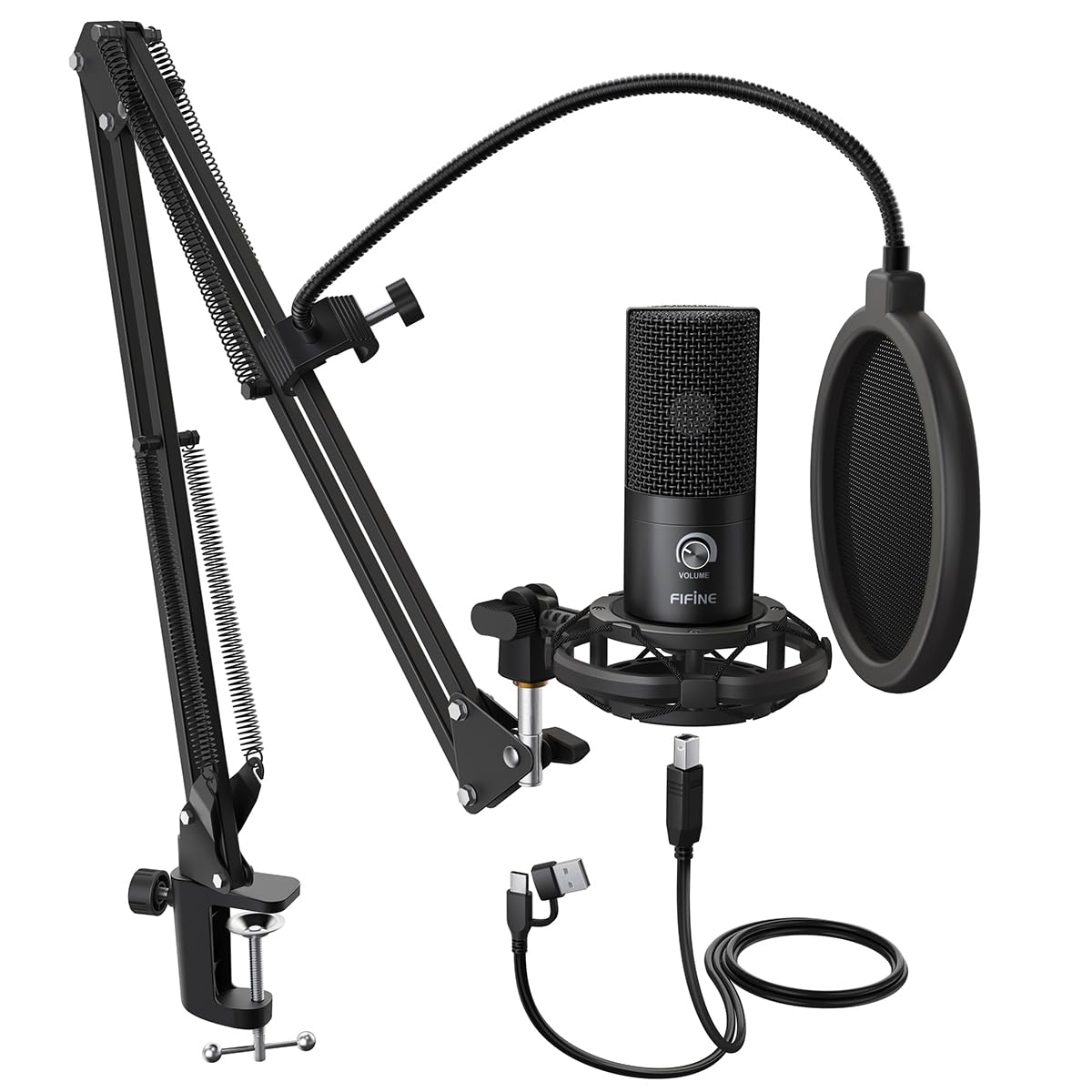
What makes it our default is range. A solo show that adds a guest, a voice track that later needs a jingle, an interview recorded across a table: all of it works without another purchase. The bill for that sensitivity is the room. This is a condenser that will happily record your keyboard, the fridge and the reflection off a bare wall, so sit close, keep the gain low and put something soft behind you. If your space is genuinely loud, the FIFINE K688 is the better tool.
Pros
- Four pickup patterns cover solo, co-host and group recording
- Gain, mute and headphone monitoring on the body
- Plug-and-play on Mac and PC, no driver needed
- Blue VO!CE adds EQ and effects if you want them
Cons
- Sensitive capsule captures keyboard, fan and room reflections
- Tall, heavy body takes desk space
We recommend the Yeti as the default podcasting mic: one purchase covers a solo show, a two-person interview and a music bed, with the controls to run all three from the desk.