Best Smartwatches of 2026

A smartwatch is really two devices fighting over the same wrist: a second screen for your phone and a training partner that wants your heart rate at 6 a.m. The good ones make that seam invisible — you stop pulling out your phone to read a text, and you find out your so-called easy run wasn't easy at all.

I've worn a watch on my left wrist daily since 2019, and I'm picky about the boring parts: pairing on the first try, notifications that land on time, a strap that stays put through a sweaty workout. My team and I spent six months with nine smartwatches, at the office, on runs, and overnight.

What the spec sheet won't tell you is that case size decides more than sensor count. A 51mm case looks heroic in photos and swallows a small wrist; a 40mm case disappears under a cuff. Battery claims have the same catch — most are measured with the always-on display off, which is the first setting you'll switch on. The picks below cover both ends of that.

1

Best Overall

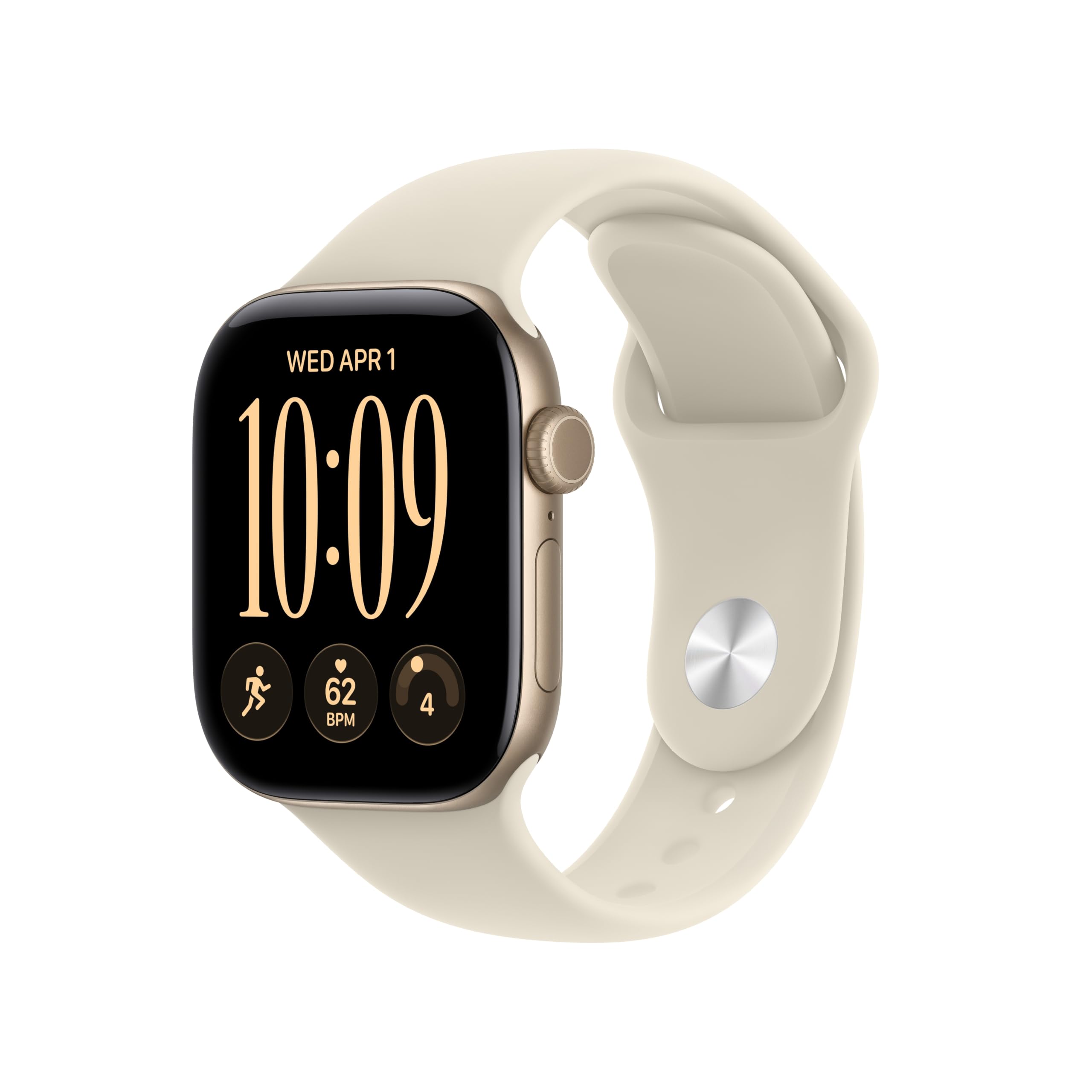
Apple Watch Series 12 (42mm)

91 /100
LBD Score Outstanding

Key details

Safety
Fall and crash detection
Case Size
42mm
Connectivity
GPS
Heart Sensing
HRV every five minutes
View on Amazon

Heart rate variability sampled every five minutes is the detail that makes this watch worth its money. A single overnight reading tells you roughly how recovered you were; sampling right through the day gives the readiness score something to work with, so a hard training session or a short night actually shows up in the morning number. That's the feature we came back to most, and it's the reason this is our pick for most iPhone owners.

As a smartwatch rather than a fitness band, it's the most complete device in this group. Notifications, apps, Siri, and the safety suite — fall and crash detection that can call emergency services on its own — all sit in one watch, and none of it feels bolted on. The Garmins beat it on training depth and battery life; the Samsung runs a comparable app library but not the same sensing cadence.

Apple also made this generation thinner and lighter than the model it replaces, which matters more than it sounds, because a watch you forget about is a watch you wear to bed. The included S/M sand band has a textured finish that can irritate sensitive skin, so budget for a second band if you react to texture rather than discovering it at 2 a.m.

The one figure Apple doesn't publish for this model is runtime. The SE 3 lists 18 hours and the Series 12 has no equivalent number, so plan on a daily charge and treat anything longer as a bonus. If charging every night is the line you won't cross, the Garmin Venu 3 is the honest alternative.

Pros

  • Five-minute HRV sampling feeds a useful readiness score
  • Deep health suite: Vitals, sleep score, heart rate zones
  • Fall and crash detection with emergency calling
  • Thinner and lighter than the model it replaces

Cons

  • Requires an iPhone; no Android support
  • 42mm case is a lot of watch on a small wrist
Our verdict

We recommend the Series 12 to iPhone owners who want one watch that handles health, safety, and apps well; the readiness score is the piece we used every day.

Check Latest Price
2

Best Value

Apple Watch SE 3 (40mm)

95 /100
LBD Score Outstanding

Key details

Battery
Up to 18 hours
Charging
Up to 2x faster than SE 2
Case Size
40mm
Health Sensing
Temperature sensing
View on Amazon

Most people who want an Apple Watch should buy this one. The SE 3 keeps the parts that change a day — sleep and workout tracking, temperature sensing that feeds the Vitals and Cycle Tracking apps, fall and crash detection — and drops the Series 12's five-minute HRV sampling and readiness score. For a first watch, that's the right trade, and it's the reason we point new buyers here before the flagship.

The 40mm case is the smallest in this group, which is either the point or the problem. On a narrow wrist it tucks under a cuff and stays comfortable overnight, and sleep tracking is the feature most buyers end up using most. On a larger wrist the display feels cramped and a long message turns into a scroll, so try the size on before you commit to the savings.

Setup runs through the phone, and it's worth blocking out half an hour with both devices charged. Check your iPhone's age first, too — older handsets can be left behind by the software requirement, and that's a disappointing thing to learn after the box is open. The consolation is charging: the SE 3 tops up up to twice as fast as the SE 2, so a forgotten charge becomes a short stop rather than a dead watch.

Pros

  • Temperature sensing adds cycle and Vitals insights
  • Charges up to twice as fast as the SE 2
  • Fall and crash detection at the lower price
  • 40mm case sits flat and stays comfortable overnight

Cons

  • 18-hour rating means charging most days
Our verdict

Buy the SE 3 if you want the Apple Watch essentials — sleep, workouts, safety alerts — without paying for the densest health sensing Apple sells.

Check Latest Price
3

Best Battery Life

Garmin Venu 3

89 /100
LBD Score Excellent

Key details

Battery
Up to 14 days
Display
1.4-inch AMOLED
Case Size
45mm
Water Resistance
50 meters
View on Amazon

Fourteen days is the number that reorganizes your habits. With the Venu 3, charging stops being a nightly ritual and becomes something you do on a Sunday while the coffee brews, and sleep tracking stops depending on whether the watch survived the night. Against the Apple models and their daily charging, that gap is the single biggest difference in ownership in this whole group.

The rest of the package is closer than the battery figure suggests. There's a 1.4-inch AMOLED display that holds up outdoors, a speaker and microphone for taking calls from the wrist, and 50-meter water resistance for pool sessions. Garmin's software is the part to budget time for: the menus reward setup, and pinning the four or five screens you actually use is worth an hour in the first week.

Where it earns its place is as the cross-platform pick. It pairs with iPhone and Android alike, so it's the one to choose when you might change phones before you change watches, and it undercuts the Apple and Samsung options while outlasting both on a charge. The trade is on the smart side: the app situation is thin next to those two, and this is a fitness watch that happens to handle calls rather than a phone on your wrist.

Forty-five millimeters is about the limit for everyday wear, and at 1.6 ounces it stays put overnight. Body Battery and the sleep coach are the two features we kept returning to, because they take the raw sensor data and answer the only question that matters at 7 a.m. — how hard today should be.

Pros

  • Up to 14 days in smartwatch mode
  • Take calls from the wrist via speaker and mic
  • Body Battery and sleep coach turn data into guidance
  • Pairs with both iPhone and Android

Cons

  • Wrist replies are limited on iPhone
  • Re-pairing after a phone change takes patience
Our verdict

Two weeks of battery and wrist calls make the Venu 3 the watch we point people to when charging something every night is the dealbreaker.

Check Latest Price
4

Best for Android

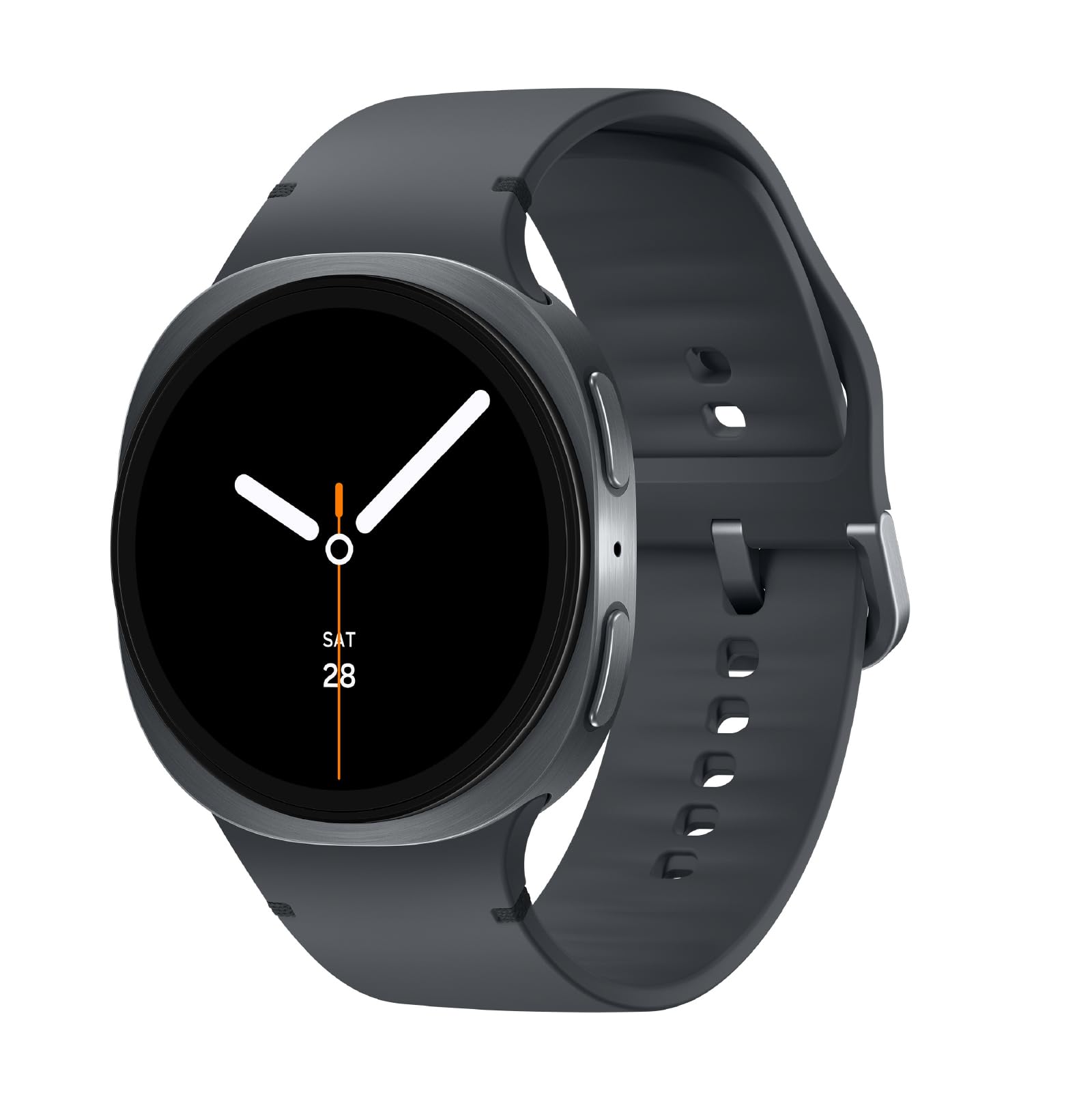
Samsung Galaxy Watch 8 (44mm)

88 /100
LBD Score Excellent

Key details

Display
1.47-inch AMOLED, 3000 nits
Case Size
44mm
Compatibility
Android phones
Battery Capacity
425 mAh
View on Amazon

An Android phone is the entry ticket. The Watch 8 pairs with Android handsets and not with an iPhone, so if you're carrying an Apple phone, stop here and look at the SE 3 instead. On Android it's the most phone-like watch in the group: 32GB of storage, a proper app library, and a 1.47-inch AMOLED that hits 3000 nits — the highest brightness figure any watch here publishes.

The rotating bezel and Quick Button are what we appreciate most, because they work when the screen doesn't want to: mid-run, in gloves, with wet hands. Samsung's coaching is the other draw. Energy Score reads like a simpler take on Garmin's Body Battery, and Running Coach gives feedback while you move instead of a post-run report you skim once and forget.

Sleep coaching is where Samsung has put its money, and it's what justifies wearing the watch overnight — the app talks about bedtime consistency and stages, not just a single score. It's also why the battery question bites. This is the one place the Watch 8 gives real ground to the Garmins, and it's the first thing to weigh if you already know you won't charge something every night.

Pros

  • 1.47-inch AMOLED at 3000 nits
  • Rotating bezel and Quick Button for gloved hands
  • Sleep coaching and Energy Score in one app
  • 32GB of storage for apps and offline media

Cons

  • Battery trails the Garmins badly, often a daily charge
Our verdict

If your phone runs Android, the Galaxy Watch 8 gives you the brightest screen in this group and coaching that reads like advice rather than a data dump.

Check Latest Price
5

Best for Off-Grid

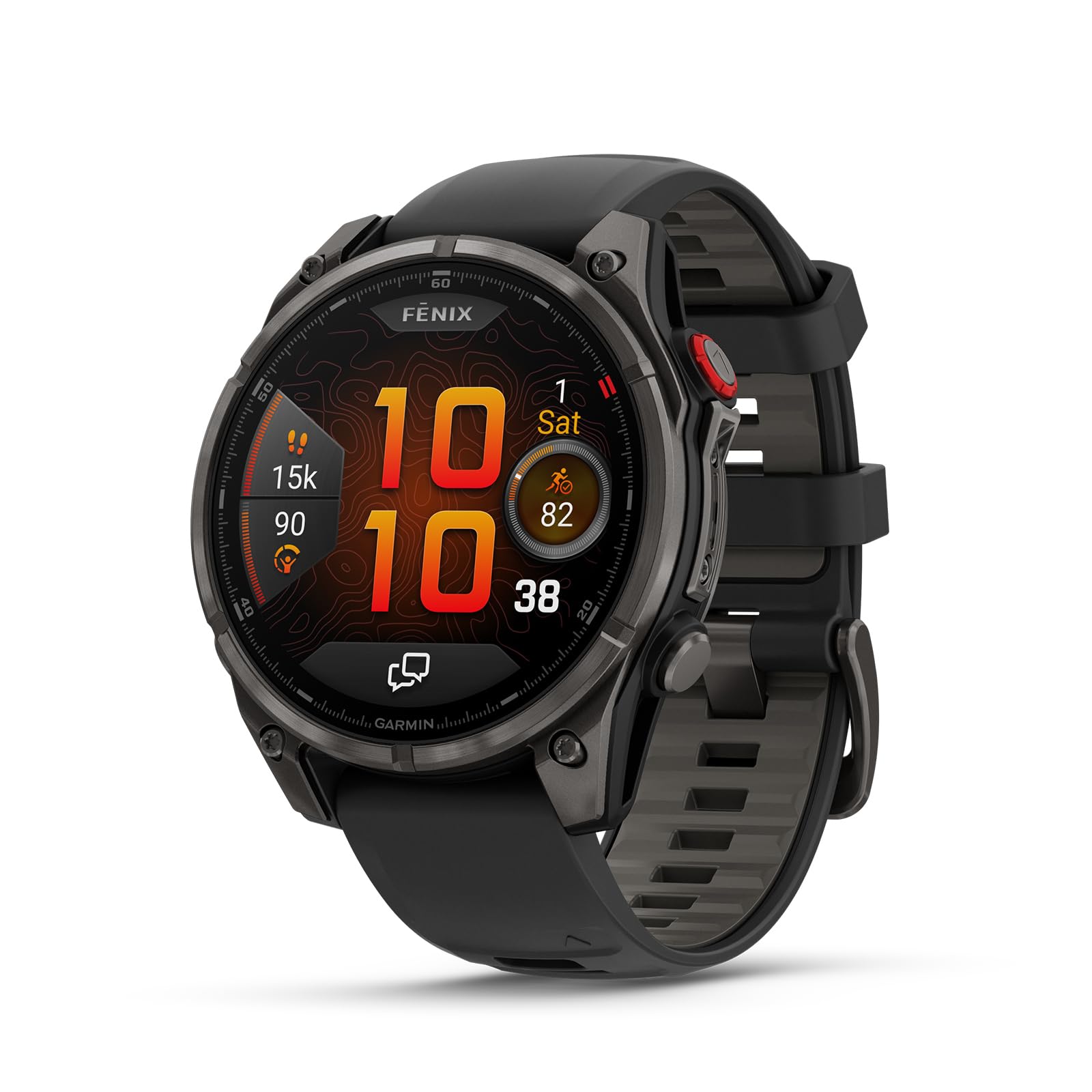
Garmin fenix 8 Pro (51mm)

86 /100
LBD Score Excellent

Key details

Weight
3.17 oz
Battery
Up to 27 days
Case Size
51mm
Satellite
inReach messaging and SOS
View on Amazon

This is the watch for the trip where your phone stops being useful. Beyond cell coverage, the fenix 8 Pro can send a two-way satellite message or trigger an interactive SOS to Garmin's response center without a paired phone in reach. Nothing else in this group does it, and no other feature here is as easy to dismiss right up until the day it isn't.

The everyday side is just as unusual: up to 27 days in smartwatch mode, a 1.4-inch AMOLED under a sapphire lens, a built-in flashlight that gets used far more often than you expect, and LTE so you can leave the phone at home on an ordinary run. The titanium bezel and 32GB of storage round out a device built to be knocked around.

Two things to price in before you commit. The satellite and LTE functions need an active subscription and coverage, so the emergency feature is not free after purchase, and at 90 grams on a 51mm case this is a watch you notice — sleeping in it is a choice rather than something that slips your mind.

We think of it as insurance with a step counter attached, and like any insurance it looks like poor value until the day it doesn't. Buy it if you hike, dive, or sail beyond coverage and want one device that tracks the effort and can call for help. If your adventures happen indoors, the Venu 3 does the training and sleep work for a fraction of the money.

Pros

  • Two-way satellite messaging and interactive SOS
  • Up to 27 days of battery in smartwatch mode
  • Sapphire lens and titanium bezel
  • Built-in flashlight, speaker, and mic

Cons

  • Satellite and LTE need an active subscription
  • 90 grams is heavy for overnight wear
Our verdict

Buy the fenix 8 Pro only if you go where phones don't; otherwise its subscription and 90 grams are money and weight you don't need to carry.

Check Latest Price
6

Budget Big Screen

Poounur KW281A

85 /100
LBD Score Excellent

Key details

Calls
Bluetooth calling
Screen
2.01-inch AMOLED
Battery
5-7 days typical use
Water Resistance
IP68
View on Amazon

A two-inch AMOLED screen on a budget watch is the whole pitch, and it's a good one. The 2.01-inch curved panel is the largest display here — noticeably bigger than the Samsung's 1.47 inches — and at 1000 nits it stays readable outside, which is more than most watches at this end of the market manage. If a bright, roomy screen is what makes you actually look at notifications, this delivers it.

What you're buying underneath is a notification mirror with fitness basics, not a small phone. Calls work over Bluetooth, the 110 sport modes cover the obvious activities, and heart rate, sleep, and stress are recorded on a schedule you control. GPS comes from your phone rather than the watch, so a run without it logs distance by estimate — fine for a walk, less so for a training plan. It's the right first watch for a teenager and a good second watch for the gym bag.

Pros

  • 2.01-inch AMOLED, the largest screen here
  • Bluetooth calling without reaching for the phone
  • IP68 rating for sweat and rain
  • Up to 5-7 days of typical use

Cons

  • Runs and rides need your phone for GPS
  • Magnetic charging cable is easy to leave behind
Our verdict

For a first watch or a spare, the Poounur's big AMOLED screen and week-long battery are the best budget combination in this group.

Check Latest Price
7

Lowest Spend

Jacoosa TG38

83 /100
LBD Score Excellent

Key details

Screen
1.83-inch IPS
Sports Modes
140+
Compatibility
Android 5.0+, iOS 9.0+
Water Resistance
IP68
View on Amazon

Where the Poounur spends its money on the screen, the Jacoosa spends it on being cheap and comfortable. The 1.83-inch IPS display is bright enough for notifications and step counts, the fluoroelastomer band is soft enough to sleep in, and 140-plus sport modes plus Bluetooth calling cover the basics for the least money in this group.

The compromise shows the moment you set it beside an AMOLED watch. Blacks look grey, the interface is plainer, and the sensors are honest rather than gifted — heart rate and sleep are there, but this isn't a training tool. Battery life is the least predictable part, and charge can stop holding after a month, so buy it as a watch you won't mourn.

As a first watch, a gift, or something to wear in situations where a nicer watch would make you nervous, it earns its place. Pairing takes minutes on either platform, setup is guided by the app, and nothing about it asks you to learn a new system. That's the entire brief for a watch at this price, and it meets it.

Pros

  • 1.83-inch display is bright and easy to read
  • 140+ sport modes for the lowest spend here
  • IP68 rating plus a soft, comfortable band
  • Quick setup on iOS and Android

Cons

  • IPS panel looks flat next to the AMOLED picks
  • Battery life is inconsistent over time
Our verdict

We point budget-first shoppers to the Jacoosa: it tells time, counts steps, and takes calls for less than anything else on this list.

Check Latest Price

How We Chose and Tested the Best Smartwatches

We built the shortlist from spec sheets and thousands of customer reviews across every price band, then filtered out anything that disqualified itself early: a case size that only suits one wrist, a pairing process that only works with one phone platform, always-on displays that drain the battery by lunchtime. Nine watches made the cut, each worn for at least a week as my daily driver over six months.

Battery life got the least forgiving test. I charged each watch to full, left the always-on display on, and recorded what was left at bedtime on day one and how long it took to die; a 30-minute GPS run generally cost more charge than a whole afternoon of notifications. For connectivity, I paired each watch to both iOS and Android where it supported them, walked away from my phone until the link dropped, and took a call from my wrist in a windy parking lot to hear whether the mic held.

Fit and size took longer, because a watch can pass a morning and fail a week. I wore each under a shirt cuff, slept in it, and swapped a band to see how fussy the lugs were; anything whose heart-rate sensor lost contact mid-workout got marked down. I also checked the finish after a month of daily wear — scuffed bezels, a strap that went shiny at the buckle.

Sleep tracking got checked the impatient way: two watches, one on each wrist, the same night, then the numbers compared. Usability came down to counting taps to start a workout and mis-swipes before I found the timer. Value we judged by what each price tier actually delivered rather than the number on the tag.

How to Choose a Smartwatch

Start With the Phone in Your Pocket

The Apple Watch only works with an iPhone, and the Galaxy Watch 8 only pairs with Android handsets. That single constraint eliminates half this group before you read a spec sheet, so settle it first. Garmin and the budget watches here pair with either platform, which is why they turn up as the answer for mixed households and for anyone who changes phones more often than watches.

Pairing with both doesn't mean behaving the same on both. The Garmins lose wrist replies on iPhone, and setup is smoother on Android. If a feature is the reason you're buying — replying to texts, say — confirm it works on your phone before you order rather than after.

Decide How Often You'll Charge

Battery ratings in this group run from 18 hours to 27 days, and that spread is about display and sensor strategy as much as cell size. The Apple watches are built around a nightly charge; the Garmins are built around going a week or more. If you plan to wear one overnight for sleep tracking, the charging window has to live somewhere — a morning shower for a fast-charging watch, a Sunday afternoon for a two-week one.

Read the qualifier as well as the headline. Garmin's 27 days is smartwatch mode, and a long GPS workout eats into it; the budget pair's five-to-seven days assumes ordinary notification use. If sleep data matters more than anything else, pick the watch whose charging routine fits your mornings.

Fit the Case to Your Wrist, Not the Spec Sheet

Case sizes here run from 40mm to 51mm, and that number describes the body, not the screen. Weight is the figure that decides whether you actually sleep in the thing: the fenix 8 Pro is 90 grams on a 51mm case, while the Galaxy Watch 8 is 33.8 grams and the Venu 3 about 45. Above roughly 60 grams, overnight wear becomes a decision rather than a habit.

The other trap is the band. Several watches here ship with a single small-to-medium strap, and a textured band can irritate skin you'd otherwise never think about. Measure your wrist before ordering and plan on a second band if you're between sizes.

Pick the Health Data You'll Actually Use

Every watch here counts steps and reads heart rate; the difference is what happens next. Apple's readiness score, Garmin's Body Battery, and Samsung's Energy Score are three attempts at the same job — turning overnight and all-day data into one number that changes your plans. Temperature sensing on the SE 3 feeds cycle tracking, and the fenix adds training readiness for structured sport.

Choose the coaching you'll read rather than the sensor count. Wrist readings are estimates: trends across weeks are informative, a single morning reading is not, and a watch that reports ten metrics you ignore is worse than one that reports three you act on.

Know What 'Smart' Actually Buys You

Notifications are table stakes. The real split is between watches that run apps and watches that only mirror your phone. The Apple and Samsung models have app libraries, storage, and voice assistants; the Garmins handle calls and notifications well but treat third-party apps as an afterthought; the budget pair pass along alerts and place Bluetooth calls, and that's the extent of it.

Be honest about which of those you'll use. If you want a wrist screen for messages and a week of battery, a fitness-first watch is the better buy. If you want the watch to do more without the phone, pay for the app ecosystem.

Frequently Asked Questions

Final Verdict

The Apple Watch Series 12 is the watch we recommend to most people carrying an iPhone: it senses more, explains it more clearly, and covers the safety basics without a subscription. If the price is the obstacle, the SE 3 keeps the daily essentials and gives up only the densest health sensing.

On Android, the Galaxy Watch 8 is the closest equivalent, with the brightest screen in this group. And anyone who resents a nightly charger should go straight to the Garmin Venu 3, where two weeks of battery and wrist calls settle the question.