Best Smart Alarm Clocks of 2026

A phone alarm going off in a pitch-black room is its own small dread: the jolt, the fumbling, the screen that's suddenly the brightest thing in your life. A smart alarm clock replaces that with light that builds gradually and sound that swells instead of shouts — though the category is uneven, and some sunrise lamps are so dim they wouldn't rouse a houseplant.

I've been skeptical since a cheap sunrise alarm in my twenties glowed like a nightlight and did nothing else. Over the past six months, my team and I slept beside 11 of them, in blackout-curtained bedrooms and one shared room where a partner's sleep was part of the test, comparing how the light ramps and how the sounds wear over weeks.

One thing worth knowing before you shop: the length of the sunrise ramp matters more than peak brightness. A slow half-hour climb coaxes you out of light sleep; a five-minute blast just startles you. The picks below got that pacing right, along with the sound, the middle-of-the-night dimness, and the ones that never missed a morning.

1

Best Overall

Philips SmartSleep HF3520/60

88 /100
LBD Score Excellent

Key details

Display
Automatic dimming
Lighting
Sunrise and sunset simulation
Wake Sounds
5 natural sounds
Brightness Settings
20
View on Amazon

Waking in a room that's still black at seven is the problem this lamp was built for. The Philips HF3520 starts as a low glow and climbs to whatever brightness you've picked — there are 20 steps to choose from — then runs the same trick in reverse at night, dimming on a timer while you read.

What we appreciated most is how little it asks of you in the dark. Tap the lamp anywhere and the alarm snoozes, with no fumbling for a button the size of a pea, and the display dims itself automatically so the clock face doesn't glow across the ceiling. It also earns its space as a bedside reading lamp, which quietly solves the two-lamps-one-socket problem.

Setup is where it stumbles. Alarm times and brightness live in a menu that takes a session with the instructions in hand, and it's a Sunday-afternoon job rather than a bedtime one. Once your alarm is in, you'll barely touch that menu again — the nightly interaction is a tap on the lamp.

It costs more than the Odokee and the REACHER and does fewer things than either, so what are you paying for? Brightness range, a proper reading lamp, and a design that doesn't look like a gadget on the table. We think that's the right trade for a bedroom. If you'd rather schedule your wake-up from your phone with a deep sound library behind it, the Hatch Restore 3 is the pick here that does that.

Pros

  • 20 brightness steps for sunrise and lamp
  • Sunset simulation for winding down
  • Tap the lamp itself to snooze
  • Auto-dimming display for dark rooms

Cons

  • Takes up a lot of nightstand space
  • Wake sounds are gentle rather than loud
Our verdict

Our default for dark winter mornings: 20 brightness steps, a snooze you can hit with the whole lamp, and a light you'll read by — once the programming is behind you.
Check Latest Price
2

Best App-Controlled Routines

Hatch Restore 3

85 /100
LBD Score Excellent

Key details

App
Hatch Sleep App
Connectivity
2.4GHz Wi-Fi network, Bluetooth
Sleep Sounds
80+
Subscription
30-day Hatch+ trial included
View on Amazon

The Restore 3 is the priciest thing in this group, and the money doesn't buy the whole library: the box includes a 30-day Hatch+ trial, and the premium sounds and features sit behind that subscription afterwards. Whether that's fair depends entirely on how you sleep. Build a nightly wind-down and actually use the meditations and it's the most complete sleep product here; want a clock and nothing else and you're paying for a service you'll never open.

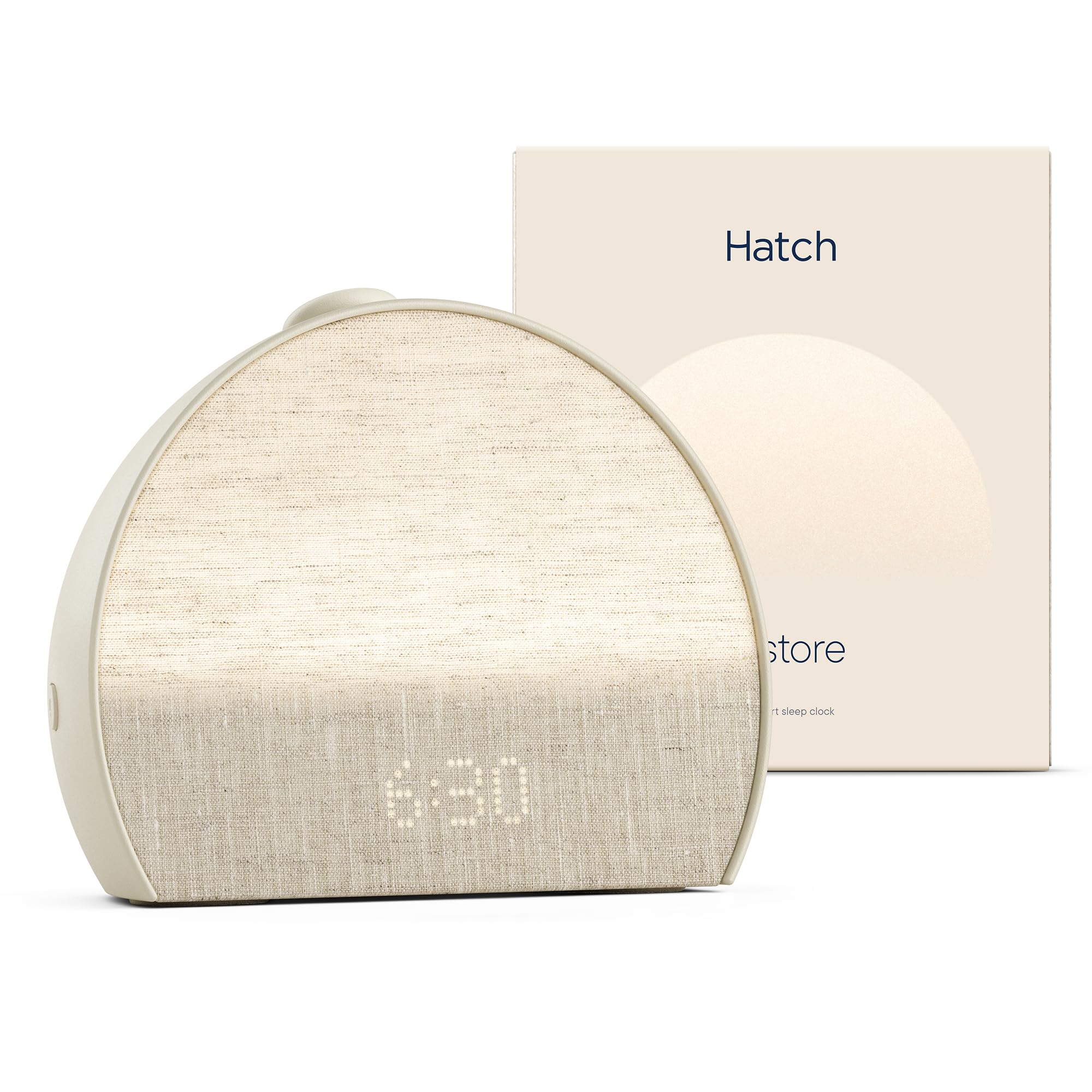
Where it earns its place is the routine. Bedtimes, wake times, light colors and soundscapes are all set in the Hatch Sleep app, while the device itself stays screen-free — a soft dome 2.43 inches wide and 5.31 tall that disappears on a nightstand. The audio is the strongest of the group: 80-plus sounds including rain and white noise, guided meditations, and a speaker without the tinny edge cheap sound machines have.

Two things to go in with your eyes open. The routine lives on your phone and a 2.4GHz Wi-Fi connection, so the bedside experience is only as good as your home network and a charged battery. And a unit that dies in its first week is the failure to watch for, so keep the box and the receipt until you've had a run of mornings out of it.

The light itself is the part we came back to. Hatch lets you tune color as well as brightness, and the low amber setting at 11 p.m. is far pleasanter than a phone screen — which is the real comparison, since most of us have been using a phone as an alarm clock for a decade.

Pros

  • 80+ sounds and guided wind-downs
  • Routines scheduled from the app
  • Screen-free, slim body for a nightstand
  • Tunable light colors for reading and waking

Cons

  • Full sound library needs a Hatch+ subscription
  • Routines rely on the app and Wi-Fi
Our verdict

Buy it if you want a full wind-down-and-wake program run from your phone and you'll use the sound library; skip it if you want a clock that works without Wi-Fi or a subscription.

Check Latest Price
3

Best for Bedside Audio

Odokee Sunrise Alarm Clock H03

90 /100
LBD Score Outstanding

Key details

Speaker
5W stereo
Night Light
12 colors
Alarm Sounds
7
Sleep Sounds
25
View on Amazon

A 5W Bluetooth speaker inside an alarm clock reads like a spec-sheet afterthought until you live with it: it turns the box on your nightstand into the radio you actually put on while you get dressed. Pair a phone once and podcasts, audiobooks and music come out of a real speaker instead of tinny phone audio — and the rain and white noise come out of the same one.

The wake-up side is just as configurable. The sunrise runs anywhere from 5 to 60 minutes, there are 25 sleep sounds and seven alarm tones, and three wake modes let you take light and sound together, sound alone, or light alone with no noise at all. The display dims across its full range, and 12 nightlight colors cover the nights you want a low glow rather than darkness.

We think it's the best value in this group: you get the sunrise, the dimming and the speaker for less than the Philips or the Hatch, and nothing about the wake-up feels cut down. The trade is a busier first week — the buttons are labeled, but there are a lot of them, and the first alarm took a couple of tries with the instructions out. By the end of that week we were setting it in the dark.

Pros

  • 5W Bluetooth speaker for podcasts and music
  • 25 sleep sounds plus 7 alarm tones
  • Three wake modes, including light only
  • Full-range display dimmer and 12 nightlight colors

Cons

  • Alarms and sounds are set by hand on the unit
Our verdict

The pick we point anyone at who wants a sunrise wake-up and a proper bedside speaker without an account — it does the lot on the device itself.

Check Latest Price
4

Best Budget

REACHER R7W Sunrise Alarm Clock

89 /100
LBD Score Excellent

Key details

Dimensions
6.7 x 2.7 x 6 inches
Sleep Sounds
26
Sunrise Window
5-60 minutes
Display Dimming
0-100%
View on Amazon

Nightstands are small, and the REACHER is the pick that respects that: 6.7 inches wide, 6 tall and 2.7 deep, at 11.2 ounces, in a wood-grain finish that reads as furniture rather than gadget. On a table already holding a lamp and a glass of water, that counts for more than a feature list.

Under the finish it's a proper sunrise clock. The light ramps over 5 to 60 minutes, there are 26 sleep sounds, and the display dims across its full range — which we rate as the single most useful thing on any bedside clock, because a bright clock face is what actually ruins a dark room. Eight nightlight colors cover the rest, the buttons are labeled, and the volume goes higher than a clock this size has any right to.

Two details we noticed in use. It holds its settings through a brief power cut, so a flicker at 2 a.m. doesn't mean reprogramming everything before bed. And the light-only wake-up is the best thing about it: sunrise with no sound at all is the gentlest way to come round, with the 26 sounds waiting for the mornings you need backup.

Pros

  • Small wood-grain body for tight tables
  • 5-to-60-minute sunrise plus 26 sounds
  • Display dims from 0 to 100%
  • Keeps settings through a brief outage

Cons

  • Sunrise begins early enough to wake light sleepers
Our verdict

Our budget pick and the one for a crowded nightstand: real sunrise, 26 sounds and full display dimming in a small wood-grain body.

Check Latest Price

What Six Months of Sleeping Next to 11 Alarm Clocks Taught Us

To build the shortlist, I started with the details that change how these things feel at 6 a.m.: whether the light brightens in gradual steps, how many distinct sounds a machine offers and whether they loop audibly, whether the display can dim to near-dark, and whether the clock runs fully without a phone. From there I filtered by price and by reviews that mentioned dead units or missed alarms, then brought in 11 clocks — a few from brands we've lived with for years, a few we hadn't touched.

Every clock spent at least six months on a real nightstand: mine, two editors', and a colleague's shared bedroom, where a partner's sleep was part of the test. They ran through blackout-curtained winter mornings, bright summer sunrises, and one humid room next to a bathroom. Each night we set the same wake time and noted whether we woke before the sound, on it, or after a snooze we didn't remember tapping.

Wake-up time was judged by when we actually got up, not when the alarm was set. Sound got judged in week three, once the novelty wore off — whether the loop repeated audibly, whether rain sounded like rain, whether the lowest volume still stirred a light sleeper. For lighting and brightness, we checked the dimmest display setting in a fully dark room and whether the sunrise felt gradual or like a flashlight. Usability meant finding snooze and volume without glasses; reliability meant watching for missed alarms, time drift, and settings that reset after an unplug. Value came last: whether the radio, the speaker, or the extra sounds earned the higher price.

How to Choose a Smart Alarm Clock

App Routines or Buttons on the Nightstand

The biggest fork in this category is where your schedule lives. An app-connected clock like the Hatch Restore 3 keeps bedtimes, wake times and soundscapes on your phone, which is a gift if your week changes shape and a nuisance if the Wi-Fi is patchy at the far end of the house. The Philips, Odokee and REACHER are set by hand on the unit, which means nothing can push an update into your 6 a.m. alarm.

Choose by what you'll actually maintain. If you want guided wind-downs and a routine that shifts by itself, pay for the app model and check your signal where you sleep before you buy. If you want an alarm that works whether or not your phone charged overnight, buy the buttons.

What the Sunrise Setting Is Really Doing

Two things matter: how long the light takes to ramp, and how well it behaves at the bottom of the range. The REACHER and Odokee both stretch the sunrise from 5 to 60 minutes; the Philips gives you 20 brightness steps instead, which is the more useful control if you like a very dim room.

The trap is shopping for the top brightness. Most people end up living in the lower third of the range, so fine low-end control beats a spec sheet that simply says bright. Check that the display and the light dim separately, too, since one runs all night and the other only runs at dawn.

Sound, Speakers, and the Bill After Purchase

Audio is where these clocks differ most in daily use. A 5W Bluetooth speaker like the Odokee's turns the box into the thing you play podcasts on while you dress; the Philips gives you FM radio and five gentle tones; the REACHER offers 26 sounds and more volume than you'd expect from a clock its size.

Watch the running cost. Hatch includes a 30-day trial of Hatch+ and keeps its premium library behind that subscription afterwards, so an 80-plus-sounds claim means less if your favorites are the paid ones. On-device libraries cost nothing after purchase, which is the simpler deal if you already know you like rain noise.

The Display at Two in the Morning

A clock face can undo a good sunrise. Full-range dimming — 0 to 100% on the REACHER and the Odokee — lets you take the display down to almost nothing, while the Philips dims itself as the room darkens. Nightlight options run to eight colors on the REACHER and 12 on the Odokee if you prefer a low glow to total darkness.

Then check the footprint against your table. The REACHER is 6.7 by 2.7 by 6 inches and the Hatch is 2.43 inches wide, while the Philips is a round lamp that wants an uncluttered patch rather than a corner. Compact in a listing means it will sit on a nightstand, not that it will sit beside your lamp and your water glass.

Frequently Asked Questions

Final Verdict

Start with the Philips HF3520 if your mornings begin before the sun. It has the widest brightness control here, a snooze you can hit with the whole lamp while half asleep, and a sunset that makes the wind-down as deliberate as the wake-up. Budget an afternoon for the programming and a clear patch of nightstand for it.

The Hatch Restore 3 is worth the extra if you'll genuinely use the app: routines, meditations and the deepest sound library in this group, paid for with a subscription and a Wi-Fi dependency. On a tight budget or a small table, the REACHER does the core job — sunrise, sounds, full dimming — in a body that still leaves room for your lamp.