Best Overall

Airthings Corentium Home 223
Key details
- Size
- 1 x 2.7 x 4.7 in
- Power
- 3 AAA batteries
- Weight
- 3.52 oz
- Readings Shown
- Short- and long-term averages
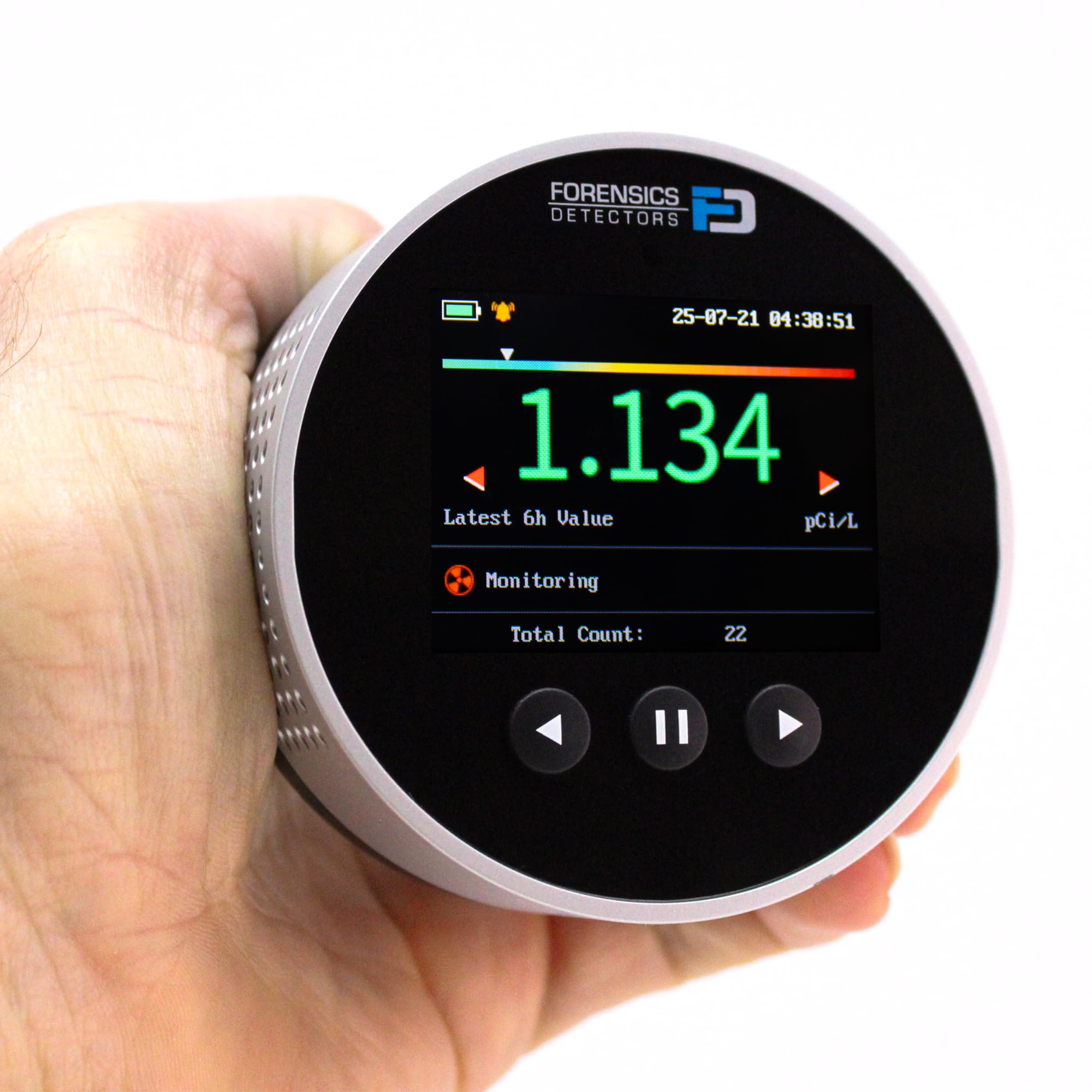
Radon testing is mostly waiting, and the Corentium Home is built for the wait. Three AAA batteries, a screen the size of a business card, and two numbers: a short-term average and a long-term average. No app, no account, no router. That is why it is the detector we recommend first — it removes every step at which a months-long measurement can quietly stop happening.
The two numbers do different jobs, and we paid close attention to the difference. The short-term figure swings with the weather, the season, and how tightly the house is closed up; a bad morning on that reading is not a verdict on your home. The long-term average is the one to act on, and the one that tells you whether a mitigation system is still holding. Because the readings live on the device, there is no login to forget and no pairing to drop halfway through a measurement.
Batteries are the other half of the appeal. A monitor on a cord stops measuring in an outage, and radon does not care about your power supply. It is small enough — under five inches tall, 3.52 ounces — to sit on a shelf without becoming furniture, and the plain ABS housing will not mind a damp basement. One piece of housekeeping is worth doing the day the box arrives: Airthings applies its extended five-year warranty only if the unit is registered within 30 days.
Pros
- No app, account, or Wi-Fi required
- Short- and long-term averages on screen
- Keeps measuring through power outages
- Small enough to sit unnoticed on a shelf
Cons
- Some units quit after about four years
- Readings mean walking to the device
We recommend the Corentium Home first: a battery-powered monitor that shows short- and long-term averages without an app, so a months-long measurement never depends on your phone.