Best Home Theater Projectors Under $500 of 2026

A projector's spec sheet is written for the shelf, not for your wall. Nearly every box under $500 promises 4K and a lumen number in the thousands, and few of those figures survive a lamp-lit living room. What keeps you happy is duller: autofocus and keystone that hold their settings, a lamp that shrugs off some ambient light, and a fan you don't hear over dialogue. My team and I have spent six months with 10 of these projectors, from palm-sized portables to full-size home theater units.

Picture quality is the headline, but the small stuff decides whether you actually use it. Built-in apps and WiFi 6 mean no dongle and one less remote; two-way Bluetooth lets you push late-night audio to headphones or send music through the speaker. Setup splits the field as well—auto focus and auto keystone get you watching in minutes, while manual wheels have you fussing every time someone bumps the table.

Sound is the other quiet decider, ranging from genuinely room-filling to thin enough that you'll budget for a soundbar, and size runs from shelf-friendly minis to consoles that want a permanent spot. The picks below are the ones that got out of their own way.

1

Best Overall

HAPPRUN JQ820

86 /100
LBD Score Excellent

Key details

Max Image
300 inches
Auto Setup
Auto focus, 6D keystone
Brightness
2,000 ANSI lumens
Native Resolution
1920 x 1080
View on Amazon

A projector's first job is to put enough light on the wall, and the JQ820's 2,000 ANSI rating is the most useful brightness figure in this group. That is not a daylight projector, but it is a different class from the 300-ANSI minis here: with the blinds closed, it gives you room to fill a 100-inch screen with something left in reserve. We also like that HAPPRUN pairs it with auto focus and 6D auto keystone, so the picture settles into shape without constant nudging.

The 300-inch maximum image is more than most walls can take, but the useful part is the flexibility. At a normal throw distance, you can go big without moving the projector to the back of the room. Auto focus matters for a ceiling or shelf install, and 6D keystone helps when the projector cannot sit square to the wall. The 8W speaker is fine for dialogue and casual viewing; we treat it as a placeholder for a soundbar, not the main event. There are no built-in streaming apps, so plan on a Fire Stick, Roku, or console.

At 6.3 pounds, it is portable enough to carry to a backyard, but it is not a throw-in-a-bag mini. That weight buys a bigger light engine and a more substantial body, which is the right trade for a projector that mostly lives in one room. We think it is the best default here for a living-room movie setup: bright enough to matter, automatic enough to live with, and priced to leave room for a streaming stick and a speaker. The two-year warranty is decent for the class. If you need built-in smart apps or a really short throw, the TOPTRO A2 is the more convenient machine; for picture size per dollar, this is the one we reach for.

Pros

  • 2,000 ANSI lumens for a dark living room
  • Auto focus and 6D keystone simplify setup
  • 300-inch maximum image gives placement flexibility
  • Two-year warranty adds peace of mind

Cons

  • 6.3 pounds is not grab-and-go portable
Our verdict

For most dark living rooms, the HAPPRUN JQ820 is the projector we point to: 2,000 ANSI lumens, automatic focus and keystone, and a 300-inch ceiling for a big movie night.
Check Latest Price
2

Best for Small Rooms

TOPTRO A2

87 /100
LBD Score Excellent

Key details

Audio
36W Dolby
Brightness
650 ISO ANSI
Throw Ratio
1.0:1 short throw
Smart System
VIDAA
View on Amazon

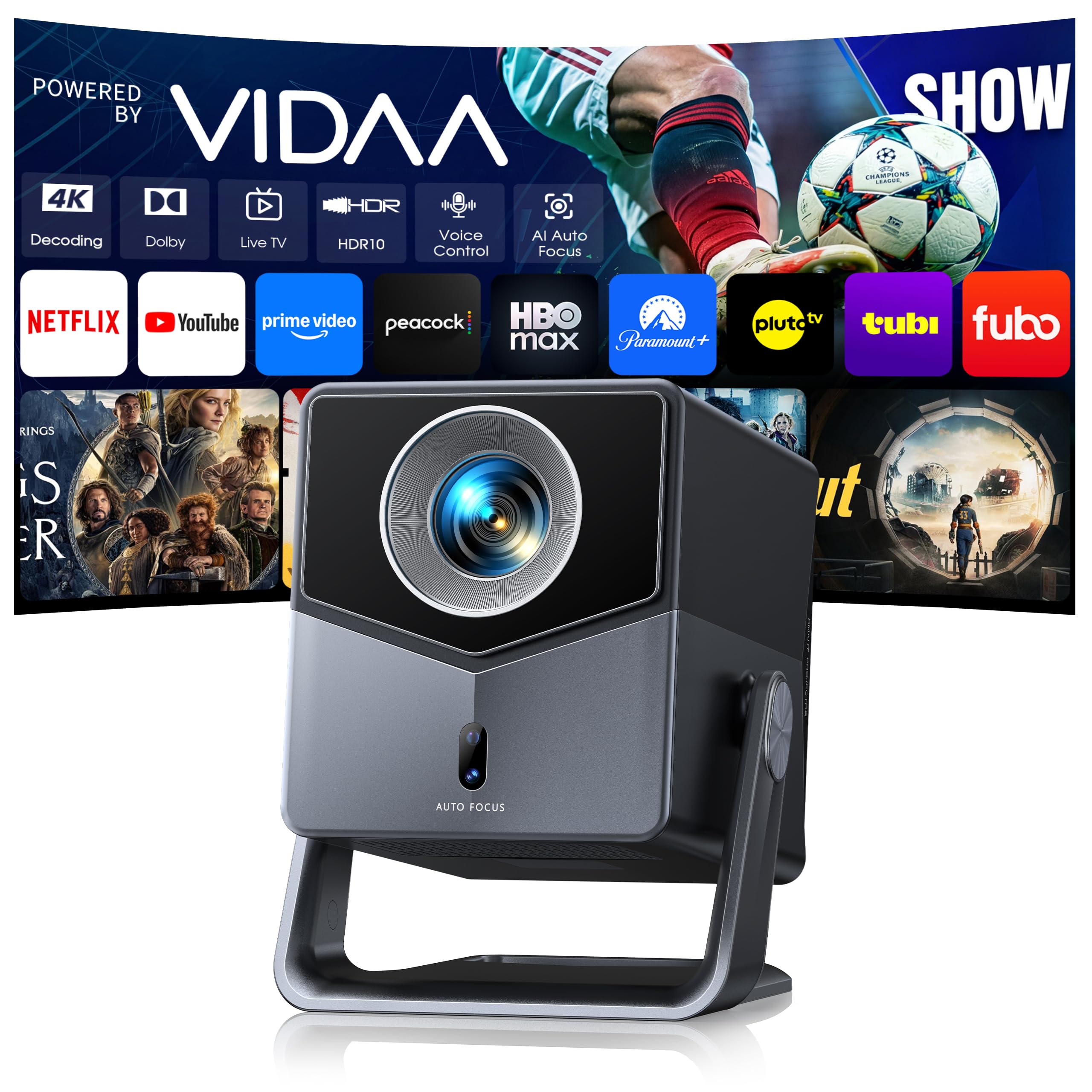
The first thing we look at in a tight room is not the screen size but the distance it demands. The TOPTRO A2 has a 1.0:1 throw ratio, and the listing says it fills a 100-inch screen from about 2.2 meters, roughly the depth of a small living room rather than the back wall of a big one. That is the difference between a projector you can place on a console and one that has to live behind the sofa. The 200-degree rotating stand helps when the only open surface is a side table.

VIDAA is the other reason this one earns a spot. It is a real smart-TV layer with apps and live channels, so you can power on and stream without adding a stick. The 36W Dolby speakers are also a step above the 8W setups here; dialogue has more body, and Bluetooth gives you an easy path to a bigger speaker. The 650 ISO ANSI brightness is the compromise. In a dark room it is enough for a 100-inch image; in a bright room it will look flatter than the 2,000-ANSI HAPPRUN. We think that is a fair trade for the short throw and built-in apps, but it is the reason this is a runner-up rather than our overall pick.

The auto focus and keystone are quick, and the 4.2-pound body is easy to move between rooms. We wish the brightness had more headroom for daytime sports, but for a bedroom or apartment movie night, the convenience wins. If you already have a streaming stick and a long wall, the HAPPRUN JQ820 gives you more light for the money; if space is the constraint, this is the one we choose.

Pros

  • Short-throw lens fills a wall from close range
  • Built-in VIDAA apps and live channels
  • 36W Dolby audio is strong here

Cons

  • 650 ISO ANSI needs a dark room
Our verdict

The TOPTRO A2 earns our recommendation in tight rooms: its short throw fills a wall from close range, and VIDAA plus 36W Dolby audio cut the accessory count.

Check Latest Price
3

Best for Bright Rooms

GOODEE AC571

91 /100
LBD Score Outstanding

Key details

Audio
60W Dolby
Max Image
400 inches
Brightness
4,000 ANSI lumens
Smart System
Built-in smart OS
View on Amazon

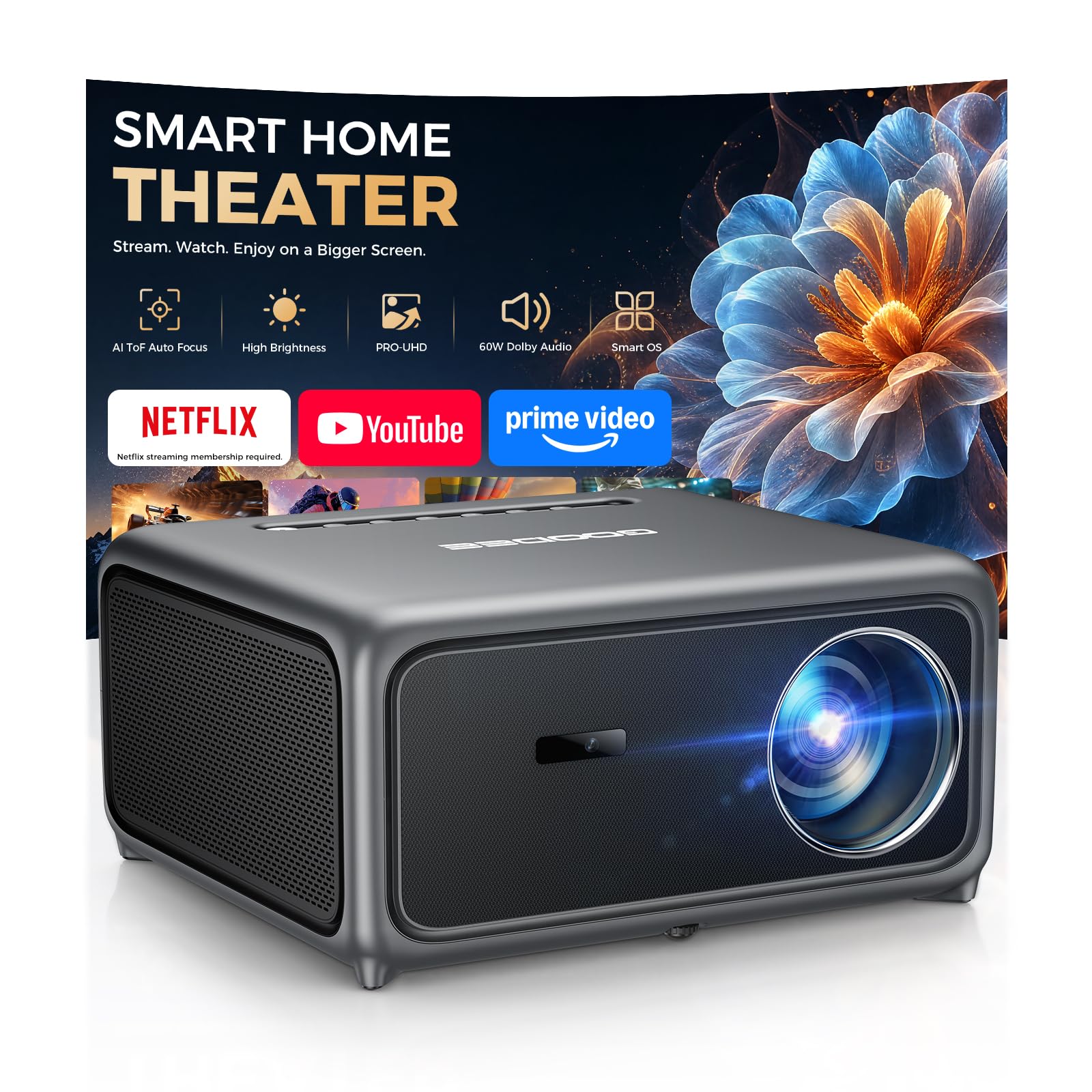
The GOODEE AC571 is the one we reach for when the room is not a cave. Its listed 4,000 ANSI lumens is the highest brightness figure in this set, and that matters if you watch with a lamp on, host a game, or use a white wall that catches every bit of ambient light. The 400-inch maximum image is equally oversized, but the practical benefit is a big picture without pushing the projector to the far wall.

The 60W Dolby speaker system is the other headline. Most projectors this size ask you to add a soundbar; the GOODEE is the one here that can carry a movie night on its own. We still prefer a dedicated speaker for bass-heavy films, but the built-in sound is fuller than the 8W and 36W systems in this group. HDR10+ and the built-in smart OS round out the package, and the three-year warranty is longer than most.

The trade-off is size and price. At 7.2 pounds and with a 180W lamp, it is a bigger, heavier projector than the minis. It is also the priciest pick in this roundup, so it makes sense only if brightness and sound are the two things you care about most. For a dedicated media room or a bright family room, that is a fair exchange; for a bedroom ceiling, the smaller VISSPL or YGSKK is easier to live with.

Pros

  • 4,000 ANSI lumens leads this group on brightness
  • 60W Dolby audio can fill a room without a soundbar
  • 400-inch maximum image
  • Three-year warranty

Cons

  • Modest 2,000:1 contrast ratio
Our verdict

We like the GOODEE AC571 for a bright family room: its listed 4,000 ANSI lumens and 60W Dolby audio give it more fight than most projectors here.

Check Latest Price
4

Best Value

Dxyiitoo S3

86 /100
LBD Score Excellent

Key details

Included
Tripod and carrying bag
Max Image
300 inches
Connectivity
Wi-Fi, Bluetooth 5.2
Native Resolution
1920 x 1080
View on Amazon

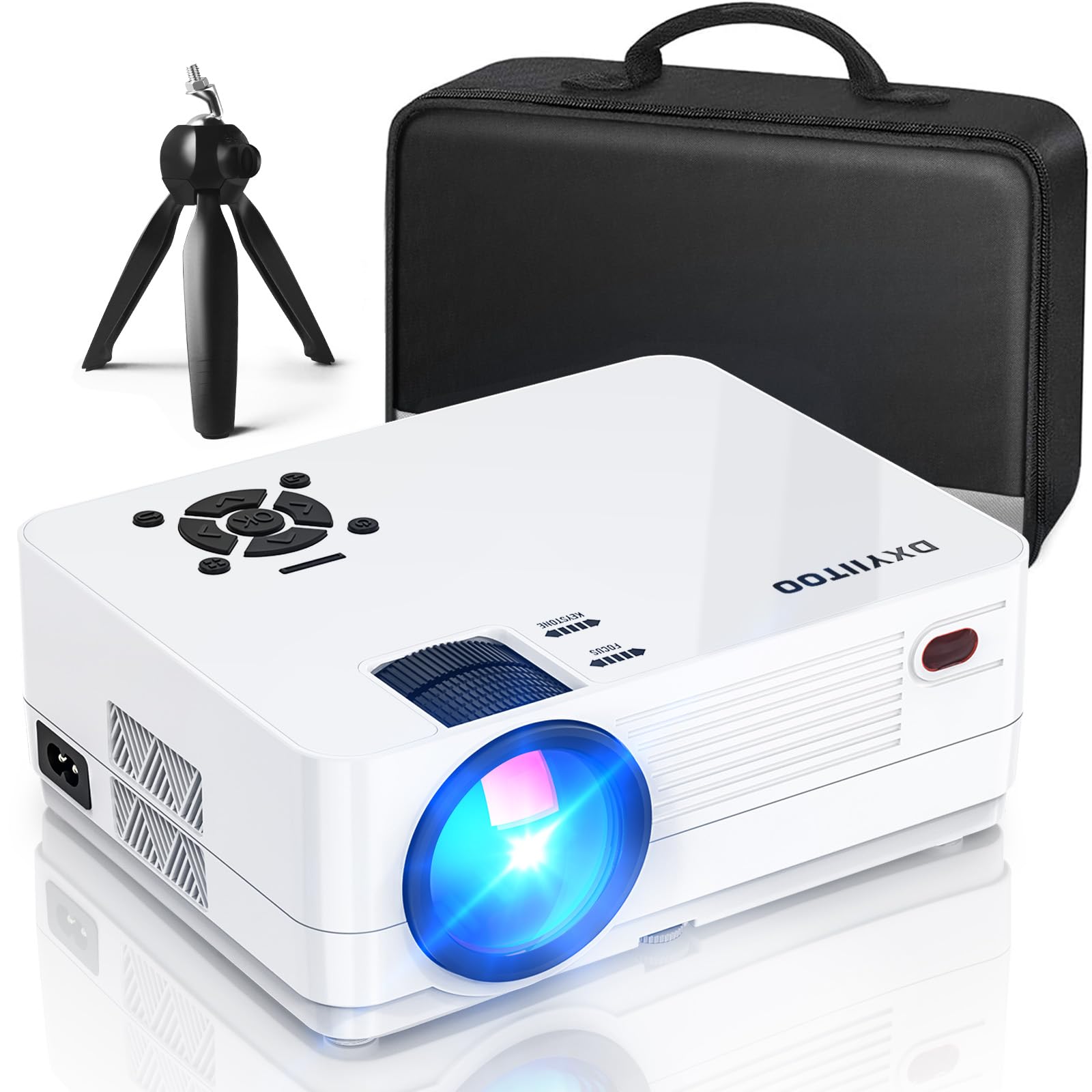
The Dxyiitoo S3 is the projector we point to when the budget is the first constraint and the room is the second. It lists native 1920 x 1080 resolution, a 300-inch maximum image, and both Wi-Fi and Bluetooth 5.2. The tripod and carrying bag in the box also matter more than they sound: you can set it up on a table and move it without buying extras.

Native 1080p is the right baseline for a budget movie projector, and the 10,000:1 contrast ratio is respectable on paper. We treat the S3 as a dark-room or after-sunset projector; the 1.3 kg body is clearly aimed at portable use. The dual speakers are enough for casual viewing, and the HDMI input covers laptops, consoles, and streaming sticks.

The included tripod and bag make it easy to move, and the 300-inch image gives you room to go big on a blank wall. If you want a first projector for a dark bedroom or a backyard after sunset, this is an easy recommendation; the TOPTRO is the step up if you want built-in apps and a short throw.

Pros

  • Native 1080p at a midrange price
  • 300-inch maximum image
  • Tripod and carrying bag included

Cons

  • iPhone mirroring can be finicky
Our verdict

We see the Dxyiitoo S3 as the value first projector: native 1080p, a 300-inch ceiling, and a tripod and bag in the box.

Check Latest Price
5

Best Budget

HAPPRUN H1

88 /100
LBD Score Excellent

Key details

Inputs
HDMI, USB, Bluetooth
Weight
2.87 lb
Max Image
200 inches
Brightness
300 ANSI lumens
View on Amazon

Dark-room movie nights are the H1's brief, and the 300-ANSI output fits that job. At 1.3 kg it is easy to move from bedroom to backyard, and the 200-inch maximum image is far more than most people need. We like it for a first projector or a kids' movie night because the price is low enough that it does not have to be perfect.

Native 1920 x 1080 resolution is the important spec here. Add a Fire TV Stick or similar through HDMI and the H1 becomes a capable little dark-room cinema; the built-in Bluetooth is there for a speaker or headphones. The 24-month warranty is also longer than we expect at the bottom of the market.

The H1 is not the projector for a bright living room or a big sports party; it is the one for a dark bedroom, a dorm, or a backyard after sunset. That is a narrow brief, but it is a useful one. If you already have a streaming stick and a blank wall, the H1 gets you a big picture for very little.

Pros

  • Very low price for native 1080p
  • Light 1.3 kg body is easy to move
  • 200-inch maximum image

Cons

  • 300 ANSI lumens needs a dark room
  • Bluetooth is audio-only, not video casting
Our verdict

We like the HAPPRUN H1 for a dark bedroom or dorm: native 1080p and a 200-inch ceiling for very little.

Check Latest Price
6

Best Compact Smart

YGSKK Mini

91 /100
LBD Score Outstanding

Key details

Max Image
200 inches
Brightness
300 ANSI lumens
Smart Apps
Prime Video, YouTube, Hulu
Native Resolution
1920 x 1080
View on Amazon

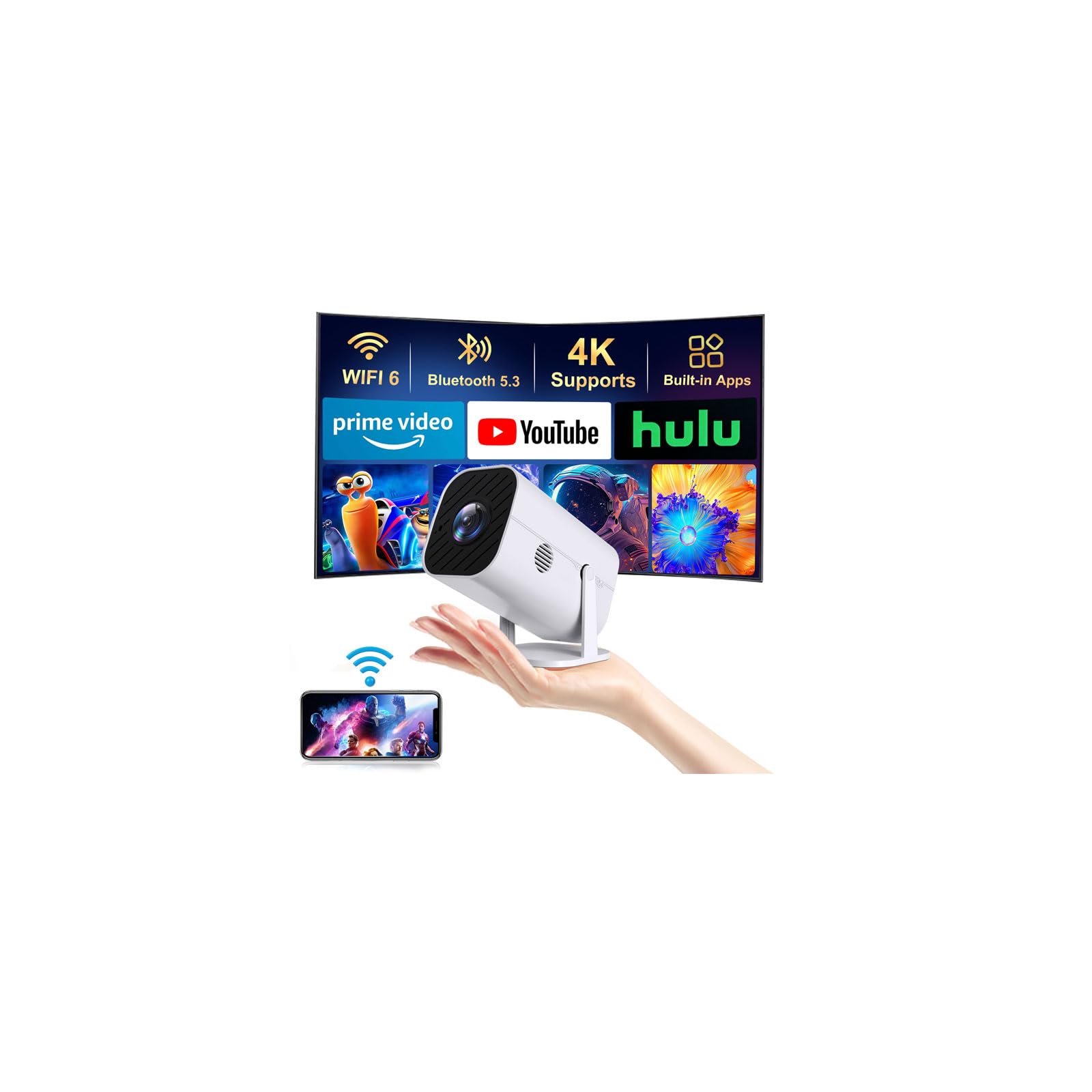
Built-in Prime Video, YouTube, and Hulu are the reason the YGSKK Mini stays on this list. There is no stick hanging off the back, and the 1.7-pound body is small enough to sit on a shelf or slip into a backpack. For a bedroom, dorm, or casual backyard night, that combination is more useful than another lumen of brightness.

Native 1080p and a 300-ANSI rating put it in the same dark-room class as the HAPPRUN H1, but the YGSKK is easier to live with if you want streaming without extra hardware. The 50-inch minimum image is worth knowing: this is not a pico projector for a 30-inch desktop picture. It wants a wall large enough for a real movie, which suits a bedroom or a blank living-room wall.

The 300 ANSI output is the compromise. In a dark room it looks fine; with lights on, it will look flat. The 1.7-pound body is light enough to knock over, so a stable shelf matters more than with the bigger units. For a dorm, bedroom, or casual backyard night, the combination of built-in apps, electric focus, and a small body is hard to beat at the budget end. If you need more light, the HAPPRUN JQ820 is the step up.

Pros

  • Built-in Prime Video, YouTube, and Hulu
  • 1.7-pound body is easy to move
  • Native 1080p resolution

Cons

  • 300 ANSI lumens needs a dark room
  • 50-inch minimum image limits tiny spaces
Our verdict

Built-in Prime Video, YouTube, and Hulu make the YGSKK Mini our easy bedroom pick; it is tiny, native 1080p, and simple to move.

Check Latest Price
7

Bedroom Ceilings

VISSPL A5

86 /100
LBD Score Excellent

Key details

Stand
360° rotating
Auto Setup
Auto focus, 6D keystone
Smart Apps
Netflix ready
Native Resolution
1920 x 1080
View on Amazon

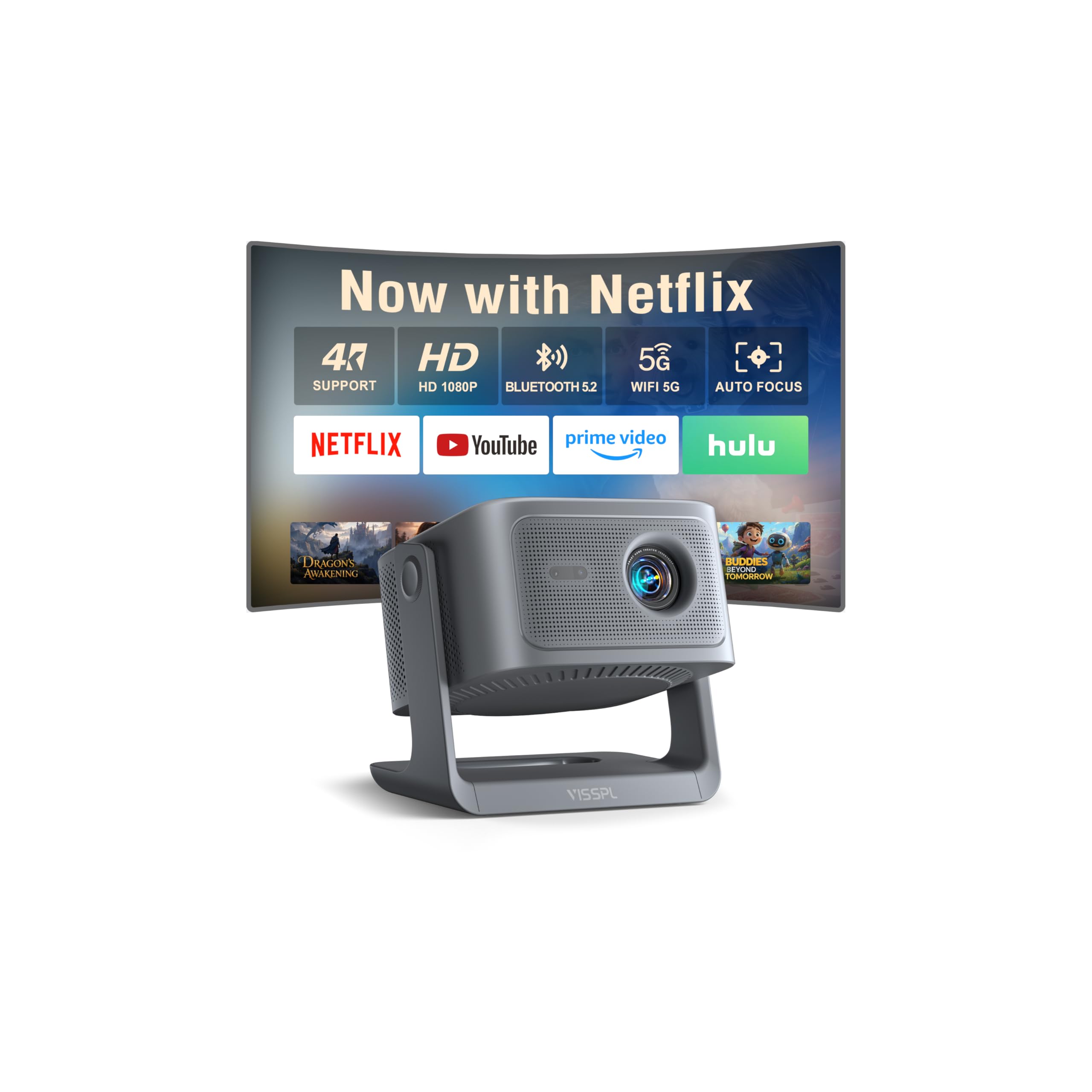
One feature changes where the VISSPL A5 can live: a 360-degree rotating stand. Set it on a nightstand, tilt the body upward, and you can project onto the ceiling without drilling a mount. That is a small design choice with a big effect on a bedroom, a dorm, or any room where the only empty wall is above the bed.

The rest of the package is sensible for the money. It has native 1080p resolution, auto focus, and 6D keystone correction, and the smart system is Netflix-ready without a stick. We like the idea of pressing play and not hunting for a remote in the dark. This is a dark-room projector rather than a daylight one.

The stand also makes it easy to switch from a wall to the ceiling without moving the whole projector, which is useful for a kids' room or a shared bedroom. The auto focus and keystone keep that flexibility from turning into a setup chore.

For a bedroom ceiling or a kids' room, that combination is more useful than a brighter projector that has to sit on a shelf and point straight ahead. We recommend it when the ceiling is the screen and the room can go dark; if you need a living-room picture that fights ambient light, the HAPPRUN JQ820 is the better tool.

Pros

  • 360-degree stand projects onto ceilings
  • Netflix-ready smart apps built in
  • Auto focus and 6D keystone

Cons

  • Built-in audio is modest for big rooms
  • Phone casting can be inconsistent
Our verdict

For ceiling projection, the VISSPL A5 is the one we choose: its 360-degree stand aims upward without a mount, and Netflix-ready apps are built in.

Check Latest Price
8

Google TV Fans

WEMAX VP03

82 /100
LBD Score Excellent

Key details

Max Image
120 inches
Brightness
300 ISO lumens
Smart System
Google TV
Optical Engine
Fully sealed
View on Amazon

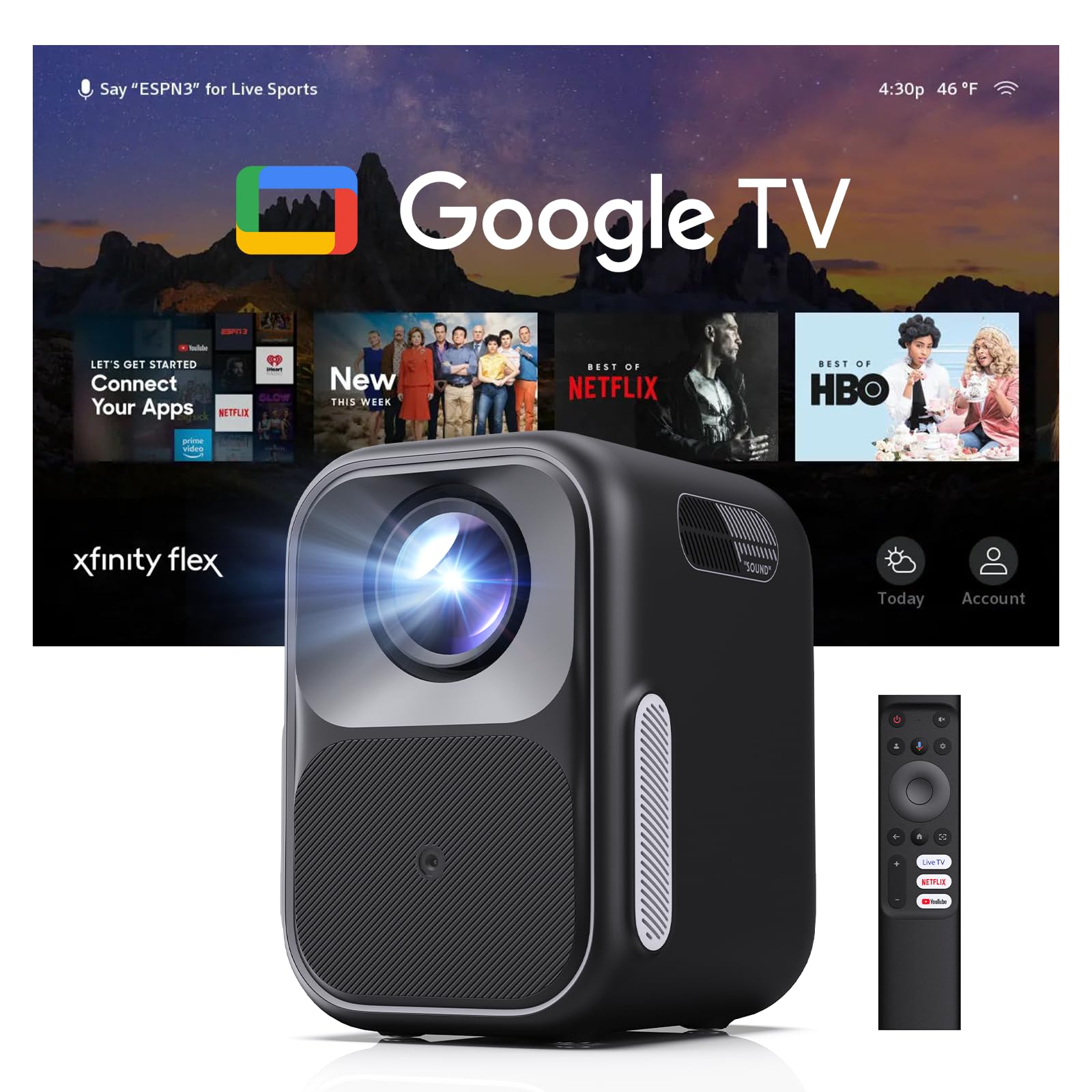
Google TV is the point of the WEMAX VP03. It runs the official platform with access to the usual apps, and the Android 14 base should feel familiar if you already use a Chromecast. The sealed optical engine is the less obvious advantage: it keeps dust away from the light path, which is a real long-term concern for a projector that sits out on a shelf.

The hardware is built for a bedroom or small living room. Native 1080p, a 120-inch maximum image, auto focus, and auto keystone are all sensible, and the 2.8-pound body is easy to move. The 300 ISO lumen rating is the limiter, and the 120-inch ceiling means it is not the one for a huge wall.

The dual 3W Dolby speakers are fine for casual viewing, though they are not a substitute for a soundbar. The compact body makes it easy to move between rooms, and the auto focus and keystone keep setup simple.

For a Google TV household, the VP03 makes sense as a secondary projector or a bedroom unit: official apps, a compact body, and a sealed engine. We do not recommend it for a bright room or a 150-inch screen. If you want maximum light for the money, the HAPPRUN JQ820 is the better default; if you want Google TV specifically, this is the one.

Pros

  • Official Google TV with familiar apps
  • Fully sealed optical engine resists dust
  • Compact 2.8-pound body

Cons

  • Six-month warranty is short
Our verdict

We point Google TV households to the WEMAX VP03: official apps, a sealed optical engine, and a compact body for a bedroom or secondary room.

Check Latest Price

How We Tested Projectors Under $500

We started with roughly 30 listings and cut anything that hid its native resolution, skipped HDMI, or couldn't pair over Bluetooth. The 10 we kept span what shoppers actually face at this price: palm-sized portables, native 1080p workhorses, and smart models with their own app stores. Price counted against what you'd still have to buy—a streaming stick, a soundbar, a screen.

Each unit went from sealed box to first picture while one person timed it, counting every step: focus, keystone, app sign-in, source switching. Then we moved it to a second room and did the whole thing again, because autofocus that needs a manual nudge after a move isn't really automatic. We measured throw distance for a 100-inch image and pushed each one off-axis to see how far the keystone correction stayed sharp.

Picture testing used the same clips on every projector—a dark episode full of shadow, a bright sports broadcast, a title card of fine text—first with the blinds open at midday, then at night with the lights off. Fine text is where a claimed 4K badge separates from true native resolution. We also sat through three-hour sessions to watch for focus drift as the lamp warmed up.

For audio, we ran a dialogue scene at maximum volume and noted the point where the built-in speaker turned harsh, then paired a Bluetooth soundbar and headphones and walked the room checking for dropouts. A decibel reading a foot from the vent showed what the fan added between eco and bright modes. Last, we packed each one into its case and carried it out to the car, since portability is half the pitch here.

How to Choose a Home Theater Projector

Start with brightness and the room, not the screen size

Brightness is the spec that decides whether a projector feels like a TV or a compromise. The 300-ANSI models here are dark-room machines; the 2,000-ANSI HAPPRUN JQ820 is the first one we trust for a living room with the blinds closed. A 4,000-lumen claim like the GOODEE's is useful for a brighter family room, but treat every lumen number as a guide rather than a guarantee because listing claims vary widely at this price. Match the projector to the light you actually watch in.

Native 1080p is the real resolution, not 4K decoding

Almost every projector here says 4K somewhere, but the honest number is native 1920 x 1080. 4K decoding means the projector accepts a 4K signal and downscales it; it does not put 8 million pixels on the wall. For a budget movie projector, native 1080p is the right target, and it looks sharp on a 100-inch screen when the room is dark. Do not pay extra for a 4K badge alone. Check the native resolution line, then spend the difference on brightness or a better soundbar.

Measure throw distance before the screen size

The maximum image size is less important than the distance needed to make it. A standard-throw projector needs several feet of room behind the couch; a short-throw model like the TOPTRO A2 can fill a 100-inch screen from about 2.2 meters, which is the difference between a usable apartment setup and a projector with nowhere to sit. Measure from the lens to the wall, not the room's length, and leave room for ventilation. If you plan to project onto the ceiling, a rotating stand such as the VISSPL's is more useful than another lens specification.

Choose built-in apps or a streaming stick

Built-in smart systems are convenient: the TOPTRO's VIDAA, the YGSKK's app library, and the WEMAX's Google TV let you press play without dongles. The trade-off is that a projector's app platform can age faster than a cheap streaming stick, and some budget models still ask you to add one. We prefer a built-in system when it is the platform you already use, and an HDMI stick when you want the latest apps and the cleanest upgrade path. Either way, check that the apps you pay for are actually supported.

Budget for sound, noise, and easy setup

Picture gets the attention, but sound and fan noise decide whether you use the projector often. The GOODEE's 60W system and the TOPTRO's 36W Dolby are the exceptions here; most of these projectors are fine for dialogue and need a soundbar for a real movie night. Fan noise is the other spec sheet blind spot because small bodies work harder to stay cool, so a quiet scene can reveal the fan. Auto focus and keystone are worth paying for if the projector will move between rooms, and a two- or three-year warranty is a better long-term value than another hundred lumens.

Frequently Asked Questions

Final Verdict

Our pick for most people is the HAPPRUN JQ820. It has the brightness to make a 100-inch movie night feel intentional, the auto setup to keep it simple, and enough image-size flexibility for a living room or backyard. It leaves streaming to a stick, which is the one thing we accept at this price.

If your room is tight, choose the TOPTRO A2 for its short throw and built-in apps. If you want the brightest picture here and have a bigger room, the GOODEE AC571 is the step up.