Best Electric Guitars of 2026

A beginner electric guitar has one job: it should make you want to pick it up again tomorrow. I’ve seen plenty that look right in photos and then fight a new player—stiff tuners, scratchy frets, action so high the strings feel like bridge cables. The good news is that the gap between discouraging and playable is smaller than the price tags suggest.

Over eight months, my team and I lived with 10 electric guitars—solid-body and semi-hollow, starter kits and guitar-only options. We compared how they sounded clean and with a little dirt, how they looked on a stand, and whether the bundled extras were useful or filler. I also tracked tuning drift, scratchy controls, and rough fret ends.

A first guitar is a setup story. Most affordable models need a truss-rod tweak or intonation check, so one that arrives playable is worth more than one with flashier specs. The picks below are the ones that felt comfortable to beginners, stayed in tune through practice, and looked good enough to leave out.

1

Best Overall

Donner DST-100S

93 /100
LBD Score Outstanding

Key details

Pickups
H-S-S
Fretboard
Purpleheart
In The Box
Amp, gig bag, tuner, capo, strap, strings, cable, picks
Body And Neck
Poplar body, maple neck
View on Amazon

Open the box and the whole first session is in there: the 39-inch DST-100S, a small two-channel amp with an aux input for playing along to your phone, a 600D gig bag, a clip-on tuner, a capo, a strap, an extra string, a cable, and picks. None of it is premium. None of it is missing either, and that is the point — you can unbox it after dinner and be making noise before bed.

Completeness alone wouldn't earn the top spot. What puts this ahead is that the guitar underneath the accessories is a genuinely playable full-size instrument, and beginner satisfaction here is the most consistent in this group. It runs 39 inches overall with a slim C-shaped maple neck and a purpleheart board, so it doesn't feel like the toy-sized thing some starter kits turn out to be. Small hands get around that neck, and older ones won't find it cramped.

The pickup set is the other reason we like it for a first guitar: a bridge humbucker for the distorted sound most beginners chase first, plus two single coils and a five-way switch for brighter, cleaner tones, with a volume knob and two tone knobs to shape them. You get a usable rock sound and a usable clean sound from the same instrument, which is more than several guitars on this list manage.

The amplifier is where the money ran out. It's a small practice box that won't hang with a drummer, and it and the cable are the parts that fail. Plug it in the day it arrives and sort out a replacement while the return window is open. The guitar is the part worth keeping, and it's the part that makes the bundle easy to recommend anyway.

Pros

  • Complete kit: amp, bag, tuner, capo, strap, cable, picks
  • Humbucker plus two single coils cover rock and clean
  • Full-size 39-inch body with a slim C-shaped neck
  • Strongest beginner satisfaction in this set

Cons

  • Stock strings are basic; a fresh set helps
  • Full-size body is a stretch for younger children
Our verdict

The kit we hand a total beginner: a full-size HSS guitar, a practice amp, and every accessory in one box, so the first session costs nothing extra.

Check Latest Price
2

Best Guitar-Only Starter

Squier Debut Stratocaster

90 /100
LBD Score Outstanding

Key details

Bridge
Tremolo
Weight
6.7 lb
Pickups
S-S-S
Included
30-day Fender Play subscription
View on Amazon

The first thing we check on a budget guitar is whether it plays before anyone adjusts anything — action, fret buzz, fret ends. The Debut Stratocaster passes. The thin poplar body comes in around 6.7 pounds, the C-shaped neck is comfortable from the first chord, and the matte finish doesn't grab your forearm the way a sticky gloss body can. This is the guitar-only pick in the guide, and it's the one we hand people who already own something to plug into.

Three single-coil pickups and a five-way switch give you the glassy, jangly Strat sound that shows up on more recordings than any other, and it cleans up beautifully at low volume. The tremolo bridge comes with a removable arm, the scale is the familiar 25.5 inches, and the laurel board is smooth enough that bends don't snag.

Understand the tremolo before you buy. Used gently, it returns to pitch; lean on it and tuning drifts, which is normal at this level. Leave the arm off for the first few months — the bridge sits flat and the guitar is more stable without it. Fender backs the instrument with a two-year warranty and includes 30 days of Fender Play, which is a genuine head start for someone learning alone.

Pros

  • Plays cleanly out of the box, with no fret buzz
  • Light 6.7-pound body and comfortable C-shaped neck
  • Three single coils deliver the classic Strat jangle
  • Two-year warranty plus 30 days of Fender Play

Cons

  • No amp, cable, or gig bag included
Our verdict

If there's already an amp in the house, this is the beginner guitar we reach for: light, playable out of the box, and unmistakably a Strat.

Check Latest Price
3

Best for Rock and Metal

Ibanez GRX70QA

92 /100
LBD Score Outstanding

Key details

Top
Quilted maple art grain
Neck
Slim maple
Bridge
Fixed
Weight
7.5 lb
View on Amazon

The quilted maple art-grain top under a transparent red burst is the kind of finish you expect to see behind glass, not on a guitar at this end of the list. It's a full-size instrument, just under 42 inches long and 7.5 pounds, and it looks considerably more expensive than it is. That's usually an empty compliment. Here it isn't.

The neck is what sold us. Ibanez's slim maple profile with low action from the factory makes fast playing feel easy, and playability sits near the top of this set. If you've tried a chunky beginner Stratocaster and found your fretting hand cramping after twenty minutes, this is the alternative worth trying.

The Infinity R humbuckers push hard, which suits rock, punk, and metal with no pedal in front of them, and the fixed bridge means there's no tremolo to fight when you drop the tuning. It's a guitar-only buy, so an amp and a cable are extra.

Where it gives ground is the clean, sparkly side of the tonal range: humbuckers come out warmer and louder than a single coil ever will. If your taste lives in surf, funk, and clean arpeggios, the Squier above is the better fit. For everything with gain, this is the one we plug in first.

Pros

  • Fast, slim maple neck with low factory action
  • High-output Infinity R humbuckers suit heavier music
  • Quilted maple art-grain top looks far above the price

Cons

  • Guitar only
Our verdict

For a player whose taste runs to distortion, this is the one: hot Infinity R humbuckers, a fast slim neck, and a fixed bridge with nothing to knock out of tune.

Check Latest Price
4

Best Step-Up

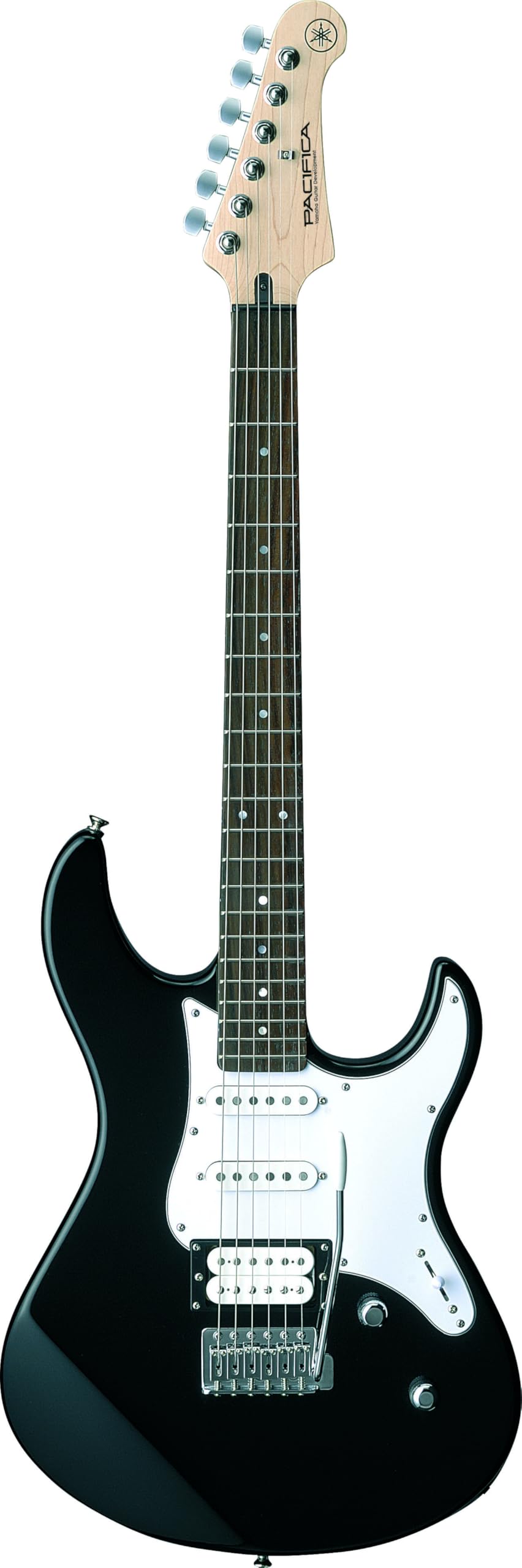
Yamaha Pacifica PAC112V

89 /100
LBD Score Excellent

Key details

Body
Alder
Bridge
Vintage tremolo
Pickups
H-S-S
Fretboard
Rosewood
View on Amazon

There comes a point when a starter guitar starts holding you back: the tuners slip, the switch crackles, and you want a bridge humbucker you can split for cleaner tones. That's the player Yamaha built the Pacifica 112V for, and it's the guitar in this guide with the fewest corners cut in the parts your hands touch.

What the extra outlay buys shows up in the specification: an alder body rather than poplar, a rosewood board on a bolt-on maple neck, and an HSS setup with a five-position switch and a coil tap that splits the bridge humbucker toward single-coil territory. That one switch turns it from a rock guitar into something that handles funk and country cleans, and the vintage tremolo is there if you want it. At three kilograms it stays comfortable on a strap.

This is the one we point an intermediate player toward, and playability is how it justifies itself: action is low out of the box, the neck sits naturally in hand, and it covers enough ground that you won't need a second guitar for a while. It is also the most expensive instrument here and arrives with nothing but the guitar, which is the trade for better parts. Accessories are the cheap half of the equation to add later.

Pros

  • Alder body and rosewood board step up from the starters
  • Coil tap splits the humbucker for single-coil tones
  • Low action and playable right out of the box
  • Covers rock, funk, and clean tones with one guitar

Cons

  • Priciest pick here, and no bag or cable included
Our verdict

The step-up we recommend for a player past the beginner stage: an alder body, coil-tap HSS pickups, and hardware that feels a level above the starter guitars here.

Check Latest Price
5

Best for Blues and Jazz

Grote Semi-Hollow

90 /100
LBD Score Outstanding

Key details

Body
Semi-hollow maple
Frets
22 stainless steel
Pickups
H-H
Scale Length
24.75 in
View on Amazon

A semi-hollow body changes how a guitar sounds and responds, not just how it looks. The Grote's maple body has air inside it, and notes come out rounder and a little breathier than they do from the solid poplar and basswood instruments elsewhere on this list. Under the vintage sunburst it is easily the most distinctive guitar here, and the one people ask about.

The 24.75-inch scale is shorter than the 25.5-inch Strats and Ibanezes, which means looser strings and easier bends — a real advantage while your fingers are still building strength. Two humbuckers and a fixed bridge push it toward warm, thick clean tones rather than high gain, and the 22 stainless steel frets are the detail we appreciate most: they stay slick under your fingers as you slide and they wear slowly.

We reach for this one when the sound in our head is bluesy or jazzy rather than metal. Check the fretwork when it arrives, because fret ends can come sharp enough to catch your hand; a fine file or a few minutes from a tech sorts it out, and after that the action is genuinely good. The tuners feel vague on some units, and replacing them is a small job worth doing if yours slip. The guitar underneath is worth both.

Pros

  • Semi-hollow maple body gives a warm, resonant voice
  • 22 stainless steel frets stay smooth and wear slowly
  • Shorter 24.75-inch scale makes bends easier
  • Sunburst finish looks far above the price

Cons

  • Tuners feel vague on some units
Our verdict

Blues and jazz players should start here: a warm semi-hollow voice, stainless steel frets, and a sunburst that looks far more expensive than the guitar is.

Check Latest Price
6

Tuning-Stable Practice

Squier Debut Telecaster

87 /100
LBD Score Excellent

Key details

Bridge
Hardtail
Tuners
Sealed-gear
Weight
6.7 lb
Pickups
S-S
View on Amazon

The hardtail bridge is the least glamorous line on this page and the one a beginner benefits from most. With no tremolo to pull the strings sharp, the Debut Telecaster stays where you tuned it, and the sealed-gear tuners turn smoothly and hold. That combination is why we keep pointing new players at it: fewer things to fight means more time actually playing.

Two single-coil pickups and a three-way switch give you the Telecaster's bright, percussive twang, which is wonderful for country, indie, and clean rock and less suited to heavy distortion. The slim C-shaped neck and satin urethane finish feel good in the hand, the poplar body weighs about 6.7 pounds, and it carries the same two-year Fender warranty and lesson subscription as its Stratocaster sibling.

The fret ends are what to check on arrival — they can come sharp enough to catch your hand, and a few minutes with a fine file, or a quick job from a tech, settles it. Get past that and this is the least fussy guitar here: two pickups, three positions, and nothing that drifts while you practice.

Pros

  • Hardtail bridge and sealed tuners hold tuning well
  • Classic Telecaster twang from two single coils
  • Slim C-shaped neck on a 6.7-pound body
  • Two-year warranty and lessons included

Cons

  • Sold without a bag, cable, or amp
Our verdict

For players who don't want a tremolo to fight, this hardtail Telecaster is the most tuning-stable beginner guitar here, with the twang that made the model a standard.

Check Latest Price

How We Tested the Best Electric Guitars

We built the shortlist by scanning current beginner and step-up electrics, then filtering for full-size solid-body and semi-hollow options, plus both starter kits and guitar-only packages. We checked the details that affect first-year ownership—neck shape, fret material, included accessories, warranty terms—and cut listings with vague setup or return information. That left 10 guitars, which we played for eight months in living rooms, weekly lessons, and the occasional basement jam.

Every guitar got the same first hour: tuned to pitch, played through a small practice amp, then checked again after 20 minutes of open chords, barre chords, and bends. We noted how many times it needed correcting and whether each tuner turned smoothly or had slack. I ran a hand along both fretboard edges, bent notes at every fret to listen for choking or buzz, and checked action height and neck relief with a ruler. We also worked every pickup selector and knob, wiggled the cable jack, and listened for crackle or hum.

For sound, we played clean and with gain, comparing string-to-string balance and noise. For appearance, we looked at the finish in daylight and after a week of handling. Beginners on our team followed a short chord lesson on each guitar to see whether the neck and body felt manageable. On starter kits, we tried the bundled amp, bag, capo, tuner, cable, and picks, and judged whether the extras earned their space. Value came down to setup, hardware, and what you would still need to buy.

How to Choose an Electric Guitar

Kit or guitar alone

A starter kit answers the question of what else you have to buy, which is why the Donner bundle at the top of this list is so easy to recommend to someone starting from nothing: amp, cable, bag, tuner, strap, and picks arrive together. The compromise is that the bundled amp is usually the cheapest part of the package, and on a few kits it's the part that fails first.

If there's already an amp in the house, or a friend with one, put the whole budget into the instrument. The Squier Debut Stratocaster is the least expensive guitar in this guide and a better instrument than any kit guitar at the same money. Add the amp later, once you know what you want from it.

Pickups: HSS, SSS, or humbuckers

Pickups decide what the guitar can sound like before you touch a pedal. Three single coils give you the bright, glassy Strat tone and the twang behind decades of records, but they hum under heavy gain. Two humbuckers are warmer, louder, and quieter, which is why they suit rock, punk, and metal. An HSS layout — humbucker at the bridge, single coils in the middle and neck — is the most useful first choice because it covers both.

A coil split goes a step further: the Yamaha Pacifica's coil tap turns its bridge humbucker into single-coil territory with a pull, so one guitar handles clean funk and driven rock. If you genuinely don't know what you'll play, buy HSS and stop worrying about it.

Neck, action, and fretwork

Spec sheets lead with body wood, but the part your hand actually meets is the neck, and it decides whether you practice or put the guitar down. A slim C-shaped profile suits most hands, especially smaller ones; low action makes chords easier on the fingertips; and fret ends that were never dressed will catch your hand every time you slide.

Play before you buy if you can. If you're ordering online, check the fret ends and the string height the day it arrives. A setup from a local tech — truss rod, action, intonation — costs far less than a second guitar and transforms how a budget instrument feels.

Tremolo or hardtail

A tremolo bridge lets you wobble the pitch with a bar, and on an inexpensive guitar it is also the fastest route to tuning trouble: the bridge floats, strings bind at the nut, and one dive leaves you reaching for the tuner. A hardtail bridge is fixed, simpler, and holds pitch better — the Squier Debut Telecaster here is the clearest example in this group.

If you want a tremolo anyway, and plenty of players do, keep the arm off until the strings are stretched in, use it gently, and expect to tune more often than a hardtail owner. Buy hardtail if you want your practice time spent playing rather than tuning.

Size, weight, and scale length

Every guitar here is a full-size instrument around 39 inches long, and they suit most players from roughly eleven upward. Weight varies more than you might expect — the Squier bodies sit near 6.7 pounds while the Ibanez is 7.5 — and you feel that difference at the end of a long session.

Scale length changes feel as much as size does. The 24.75-inch Grote has looser strings and easier bends, while the 25.5-inch guitars feel tighter and brighter. Neither is better; the shorter scale is friendlier to smaller hands and heavier string gauges.

Frequently Asked Questions

Final Verdict

The Donner DST-100S is where we point a beginner who owns nothing yet: one box, one purchase, and a full-size HSS guitar that will carry someone through the first year or two of playing. Test the amp the day it lands and keep the guitar.

If an amp already exists, the Squier Debut Stratocaster is the better instrument for the money and the one we reach for. Past the beginner stage, the Yamaha Pacifica 112V is the step up worth paying for.