Best Cross-Cut Paper Shredders of 2026

The worst possible time for a paper shredder to give out is the moment you actually need it — a kitchen-table pile of bank statements the night before a move, a stack of client files due for disposal before an audit. That's the fear most people bring to this category, and it's a fair one. The machines that fail don't do it dramatically; they gum up one sheet at a time until the cutters are packed solid and the motor is whining at a stack of junk mail.

We spent the past seven months running 12 cross-cut shredders through that exact scenario, from compact four-gallon bins that tuck under a desk to heavy-duty models that swallow 18 sheets at a pass. Two things the spec sheet won't tell you. The advertised sheet count assumes fresh, unwrinkled paper — slide a window envelope into the middle of a stack and the real number drops fast. And the run time you get before the cool-down cycle matters more than top speed when you're trying to clear a filing cabinet in one sitting.

The picks below cover the whole range, and each one earned its place on a different mix of quiet operation, bin capacity, and how gracefully it handled the sheet that finally tripped it up. If you're mostly shredding mail and old bills, a small machine is plenty; if you're working through decades of paperwork, you'll want to start further up this list.

1

Best Overall

Fellowes Powershred 99Ci

93 /100
LBD Score Outstanding

Key details

Noise Level
62.1 dB
Bin Capacity
9 gallons
Sheets Per Pass
18 sheets
Continuous Run Time
30 minutes
View on Amazon

Every other machine in this guide gives up something on the two things that decide whether a shredder is pleasant to own: how long it runs and how often it jams. The 99Ci gives up neither. It cuts for 30 minutes before it needs to cool, takes 18 sheets at a pass, and the jam-proof feed detects an overload and powers through it rather than stalling and leaving you to fish the paper free. At 62.1 dB it is also the quietest machine here with a published figure — roughly the level of ordinary conversation.

The details we appreciated are the ones you meet every week rather than on the spec sheet. The 9-gallon bin pulls out on a drawer, so emptying it does not mean lifting a head full of cutters off the basket. It sits on casters, which is the only way a 36.4-pound machine gets moved without a second person. And SafeSense stops the cutters the moment a hand crosses the paper opening — the sort of feature you buy for a house with children or a shared office where someone always leans in to look.

What you are paying for is duty cycle, and the build that supports it: the cutters carry a lifetime warranty where the machine gets two years. If your shredding is a shoebox twice a year, this is more machine and more money than the job requires, and the Bonsaii below handles that for a fraction. If the machine sits in a shared space and runs most days, nothing else here comes close.

Pros

  • Runs 30 minutes without a cool-down
  • Jam-proof feed powers through overloads
  • Quietest published figure here at 62.1 dB
  • 9-gallon pull-out bin on casters

Cons

  • 36.4 pounds
  • Premium price next to every other pick
Our verdict

We recommend the 99Ci to anyone who shreds weekly or shares a machine: 30 minutes of run time and a jam-proof feed end the stop-start chore that cheap shredders turn into.
Check Latest Price
2

Best for Household Backlogs

Bonsaii C275-A

91 /100
LBD Score Outstanding

Key details

Weight
12 lb
Bin Capacity
5.5 gallons
Sheets Per Pass
12 sheets
Continuous Run Time
6 minutes
View on Amazon

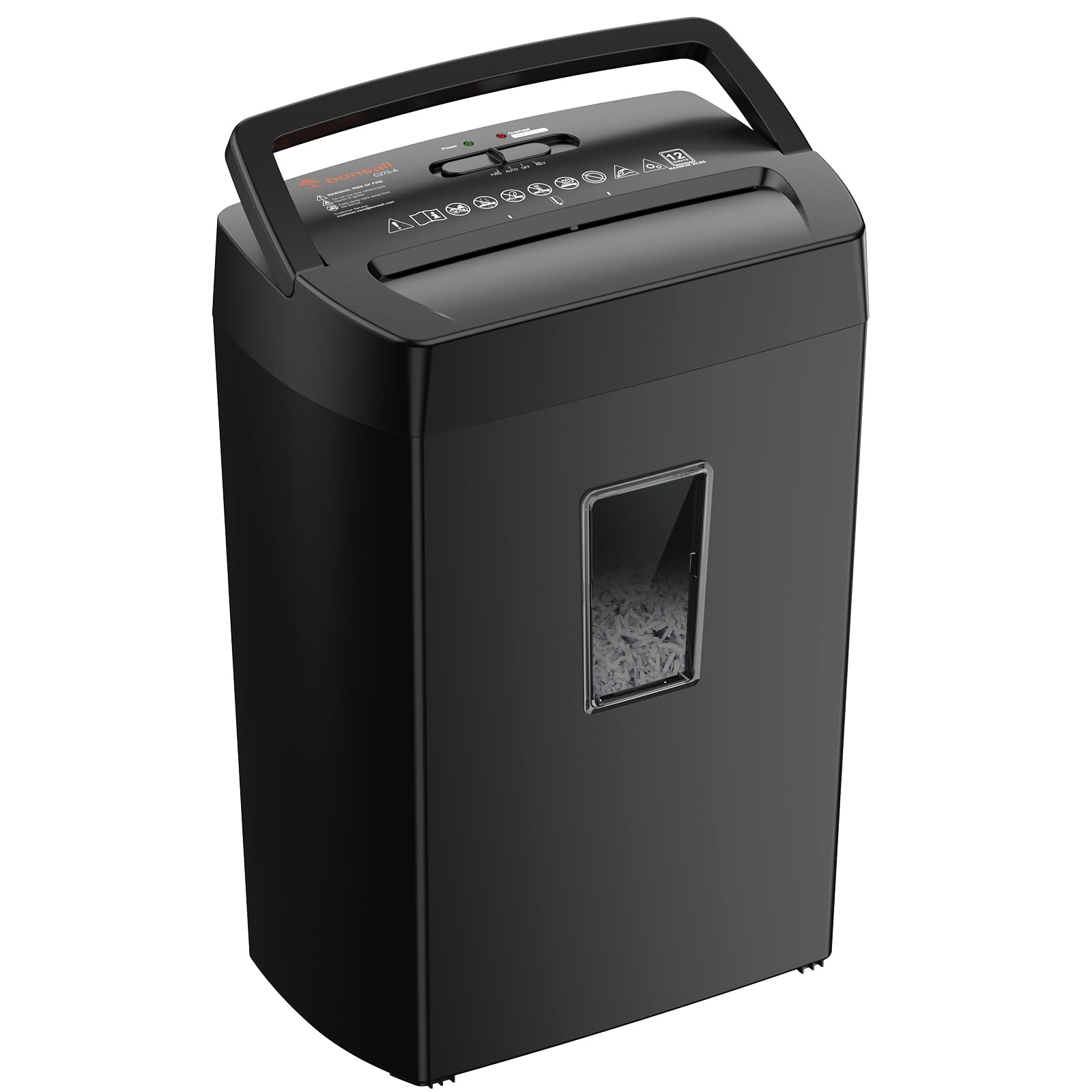
A 5.5-gallon bin with a clear window, a handle on the head so the whole top lifts off in one piece, and a body 12.6 inches wide: the C275-A is organized around the small chores that make shredding irritating rather than around the cutting itself. At 12 pounds it goes on a shelf or beside a filing cabinet without claiming floor space of its own.

We think it is the best value in this group. Twelve sheets a pass is a filing-cabinet drawer's worth, and the bin holds enough that you empty it once per session instead of once per folder. For a household working through old statements, expired cards, and pre-approved offers, it is the right size of machine at a price that does not ask you to think twice.

Six minutes of continuous running is the catch. That is ample for a shoebox of paper, but if you are clearing years of records in one sitting you will spend half the afternoon waiting on the motor, so feed it in batches and let it rest between them. The other thing to know is volume: this is not a quiet machine, and in a small room you will hear it plainly. Neither point sinks it — this is a shredder people buy for a home desk, and that is exactly the work it does well.

Pros

  • 12-sheet cut with a 5.5-gallon bin
  • Clear window shows how full it is
  • 12 pounds with a lifting handle
  • P-4 cross-cut security

Cons

  • Six minutes on, then a wait
  • Loud in a small room
Our verdict

For most households this is the one we point to: 12 sheets a pass, a 5.5-gallon bin, and a price the Fellowes machines cannot approach.

Check Latest Price
3

Best for Long Sessions

Fellowes Powershred 12C15

89 /100
LBD Score Excellent

Key details

Weight
17.2 lb
Bin Capacity
5 gallons
Sheets Per Pass
12 sheets
Continuous Run Time
20 minutes
View on Amazon

Twenty minutes. That is the figure that separates the 12C15 from the compact machines here — a full afternoon of tax files or a box of client records without the stop-and-wait rhythm of a small shredder. It costs a fraction of the 99Ci and gives up run time, capacity, and quiet, in that order.

The 5-gallon bin pulls out on a drawer, so emptying it means reaching in from the front rather than lifting a head full of cutters off the basket — a small thing you notice every week. It also takes staples, paper clips, credit cards, and unopened junk mail, which covers most of what actually gets shredded in a home office.

We wish the feed were more forgiving. Push a dozen sheets through and the reverse switch becomes part of the routine; keep the stack to six or eight and the machine does what its run time promises. The Safety Lock, which disables the cutters outright, is a welcome thing in a house with children, and for anyone who wants long sessions without premium money, this is the pick.

Pros

  • 20 minutes of continuous shredding
  • 5-gallon pull-out drawer bin
  • Handles staples, clips, cards, junk mail
  • Safety Lock disables the cutters

Cons

  • Durability is the weak point next to the 99Ci
  • Heavy for a deskside unit at 17.2 pounds
Our verdict

Twenty minutes of continuous shredding and a pull-out bin, for work that outgrows a mail pile without needing an office budget — that is why we keep the 12C15 here.

Check Latest Price
4

Best for Everyday Home Use

Bonsaii C261-C

91 /100
LBD Score Outstanding

Key details

Run Time
5 minutes on, 40 minutes cool
Noise Level
75 dB
Bin Capacity
4.2 gallons
Sheets Per Pass
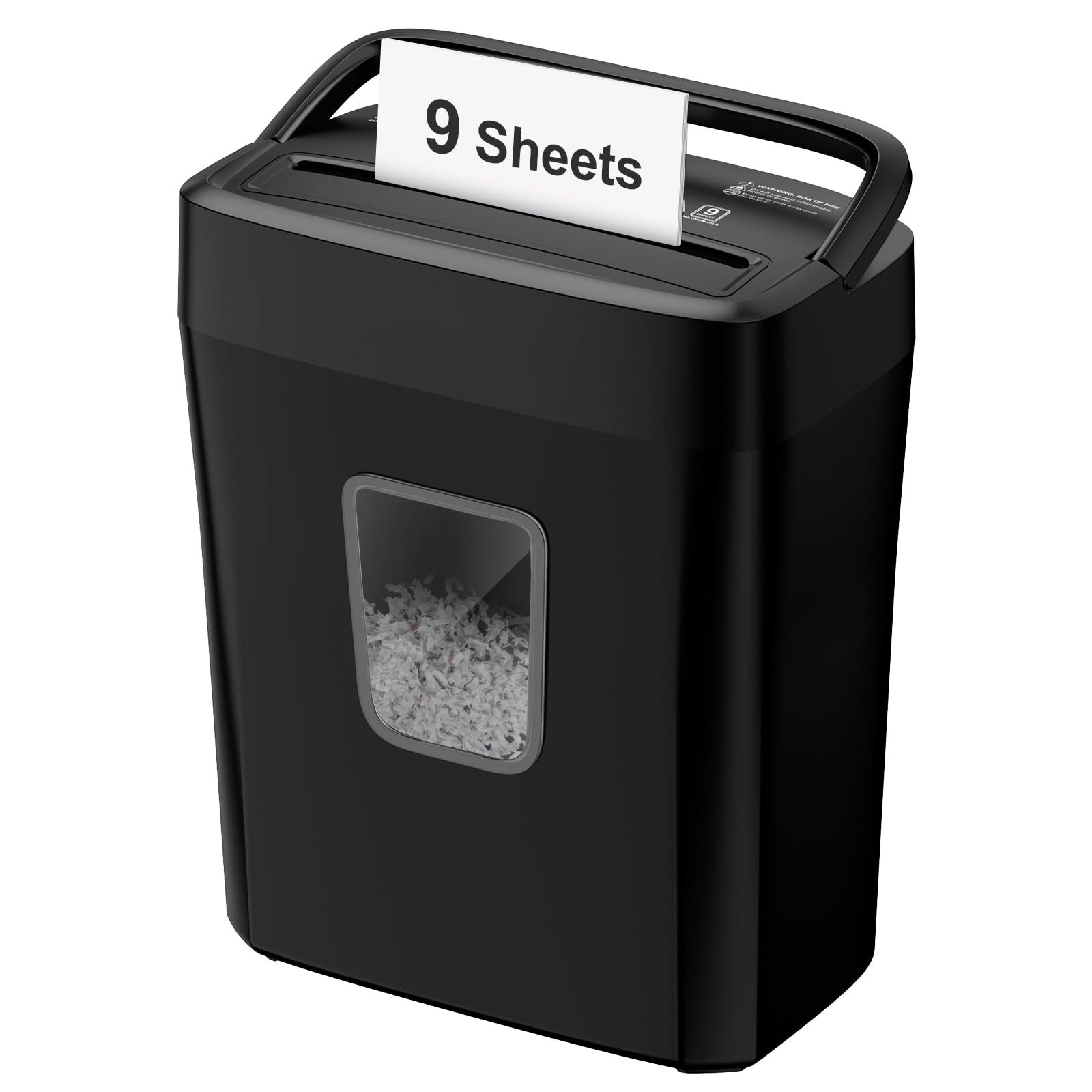
9 sheets
View on Amazon

The head will not run unless it is seated correctly on the basket, which means a child who lifts it mid-cut stops the machine rather than meeting the cutters. That interlock is the detail that defines the C261-C: this is a shredder designed for a desk in a house with other people in it, not for a records room.

Day to day it is the easiest of these to live with. It cuts into pieces 5 by 18 mm — P-4 security, and small enough that a bag of them does not invite a second look — and five minutes of running clears about 180 sheets, which is a month of mail for most households. The 4.2-gallon basket has a fill window we came to rely on, and at 12.2 inches wide the whole thing fits beside a printer.

It is the loudest machine here with a published figure, at 75 dB: fine in a basement office, noticeable in a shared one. That does not change the recommendation for the buyer it is aimed at — someone at a home desk shredding a few documents at a time who wants the machine to be safe, small, and simple rather than fast.

Pros

  • Head interlock stops the cutters
  • 5 by 18 mm P-4 pieces
  • 4.2-gallon basket with a fill window
  • Compact 12.2-inch footprint

Cons

  • 40 minutes to cool after five
  • Slows when fed the full nine sheets
Our verdict

We like the C261-C for a home desk where documents go in a few at a time: safe to have around, small enough to keep out, and priced like a budget machine.

Check Latest Price
5

Best Budget

Locksworth 8-Sheet

87 /100
LBD Score Excellent

Key details

Run Time
4 minutes on, 60 minutes cool
Dimensions
12.4 x 7.48 x 14.61 inches
Bin Capacity
4.23 gallons
Sheets Per Pass
8 sheets
View on Amazon

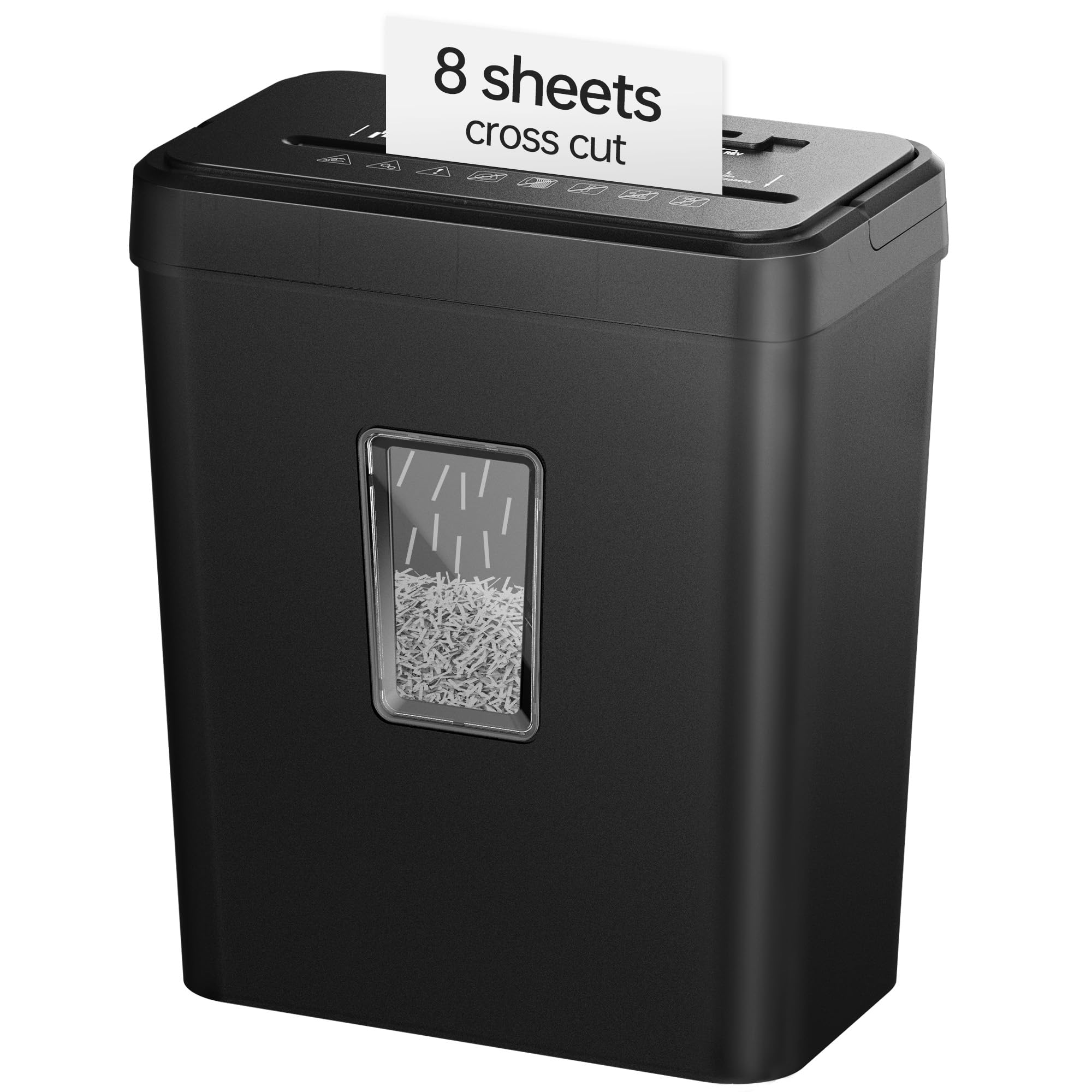
The least expensive machine in this guide, and nothing about it announces that: a 4.23-gallon bin with a clear window, a head that lifts off by its handle, and a body small enough to sit under a desk or on a shelf. It is rated P-4 like the rest, so the cut security matches machines that cost several times as much.

Two details earned our attention. The blades stop the moment the lid comes off the bin, which is exactly what you want in a house where a child might wander over to investigate the noise. And it is quiet for the money — quiet enough that shredding at a kitchen counter does not clear the room. It also takes staples and one credit card at a time, which covers the everyday jobs.

Where it earns its place is light, frequent use: mail, statements, the odd card. You are paying less for a smaller motor, and that is a trade worth making when your shredding arrives a few envelopes at a time rather than as a filing cabinet in one sitting. For that, it is the bargain of the group.

Pros

  • Least expensive machine in this guide
  • Blades stop when the lid is lifted
  • Quiet for the price
  • 4.23-gallon bin with a window

Cons

  • Four minutes on, then an hour off
Our verdict

Our budget pick: P-4 security, a 4.23-gallon bin, and quiet running for the least money here, as long as your shredding comes in small batches.

Check Latest Price
6

Small Home Offices

BONSEN S3101

89 /100
LBD Score Excellent

Key details

Run Time
5 minutes on, 30 minutes cool
Noise Level
65 dB
Bin Capacity
4 gallons
Sheets Per Pass
8 sheets
View on Amazon

Eight sheets is the rating; five is how you should feed it. Push the BONSEN to its full stack and we found the cutters bog down and jam, which is the one real caveat on an otherwise tidy little machine — and at 65 dB it is quiet enough that you will keep it at your desk instead of banishing it to a closet.

The rest of the design is sensible for a small office: a 4-gallon bin that takes a couple of weeks of mail, a lift-off head with a handle, and an interlock that refuses to run unless the head and basket are seated. At 7.9 pounds it moves between rooms easily, and five minutes of cutting followed by a half-hour rest suits short bursts of paperwork.

Buy it as a second machine — a reception desk, a home office, a room where documents get opened and dealt with — rather than as the one that clears the closet. At its price it is an easy addition, and it handles the small jobs without drama; it just is not the machine you buy for volume.

Pros

  • 65 dB, quiet for a compact machine
  • Interlock stops it when the head is off
  • 4-gallon bin and 7.9 pounds

Cons

  • Jams when fed the full eight sheets
Our verdict

We see the S3101 as a second machine for a reception desk or home office: quiet, compact, safely interlocked, provided you keep the stack under its rating.

Check Latest Price

How We Tested the Cross-Cut Shredders

We started by pulling every cross-cut shredder we could find with a stated security level of P-4 or higher, then filtered out anything with a vague cut type, no reverse function, or a wastebasket small enough that we'd have to empty it mid-project. That left a dozen machines, ranging from compact four-gallon home units to an 18-sheet office model, and we bought them at retail like anyone else would.

Testing ran for seven months across a home office, a two-person shared office, and a front desk that handles a steady flow of client paperwork. Every machine went through the same rotation: a 50-sheet stack of standard copy paper in a single pass, a week's worth of junk mail with window envelopes and glued folds, stapled packets and paper-clipped invoices, and finally a credit card.

We counted how many sheets went through before the first stall and noted whether the machine backed itself out or needed us to pick the cutters clean by hand. Cool-down periods were timed with a stopwatch so we knew how long we'd be standing there waiting. Noise got checked two ways: a decibel reading taken at desk height, and a simpler test — could someone on a phone call in the next room hear it running?

Capacity and value got the long view. We tracked how often each bin needed emptying during a normal week, whether a window made that obvious before it overflowed, and how much a full bin weighed on the walk to the recycling. Durability showed up in the small things over time — whether the handle still felt solid, whether the cutters started leaving ragged strips instead of clean cross-cuts, whether the reverse button still responded on the first press.

How to Choose a Cross-Cut Paper Shredder

Match the Duty Cycle to the Job

Every shredder here has a thermal limit: run the motor long enough and it shuts off to protect itself, then needs a rest before it starts again. The spread in this group is wide. The Fellowes 99Ci runs 30 minutes straight, the 12C15 runs 20, the Bonsaii C275-A runs 6, and the Locksworth runs 4 before an hour-long cool-down.

Match that to your real backlog rather than to the marketing. An office clearing client files needs the long end of the range; a household shredding a week's mail can live happily with four minutes. If a listing gives a run time but no cool-down figure, assume a real wait and plan in short batches.

Treat the Sheet Rating as a Ceiling

Sheet ratings are measured on clean bond paper, fed flat, one neat stack at a time — not on the folded envelopes, window mail, and stapled packets that make up most real shredding. Feed the full rated stack and you are at the edge of what the cutters can take, which is where most jams begin.

The machines that hold up best in this group are the ones fed well under their rating: five or six sheets through an eight-sheet machine, six or eight through a twelve-sheet one. That is also the argument for buying slightly more capacity than you think you need — the extra headroom is what keeps the run time honest.

Look at the Bin and How It Opens

Cross-cut shreds take far more room per sheet than the strips a cheap strip-cut machine produces, so a bin that sounds generous can fill in a single session. How it opens matters just as much. A lift-off head, as on the Bonsaii and BONSEN machines, means taking the cutters off the basket and setting them down; a pull-out drawer, as on the 99Ci and the 12C15, means reaching in from the front and leaving the cutters where they belong.

The drawer is easier on your back and tidier; the lift-off head is lighter and cheaper. Either way, a clear window saves you from lifting a loaded bin just to check the level.

Weigh Noise and Weight Against Where It Lives

Published figures in this group run from 62.1 dB on the 99Ci to 75 dB on the Bonsaii C261-C — roughly the difference between a machine you can run while someone is on the phone and one they can hear in the next room. In a shared space that gap is worth paying for; in a basement it is not.

Weight decides placement too. A 36-pound machine on casters stays where you put it, while a 7- to 12-pound unit can move between a desk and a closet. Measure the spot before you order: the compact machines here are 14 to 15 inches tall and slide under most desks, while the 99Ci stands over two feet.

Frequently Asked Questions

Final Verdict

We recommend the Fellowes 99Ci without much hesitation when shredding is a regular chore. The 30-minute run time and the jam-proof feed are what stop a shredder from becoming a shelf ornament, and the 62.1 dB figure means you can put it where the work happens.

If your paper arrives as a shoebox a few times a year, buy the Bonsaii C275-A instead and spend the difference elsewhere — 12 sheets a pass and a 5.5-gallon bin cover household volumes comfortably. The deciding question is duty cycle, not sheet count.