Best CB Antennas of 2026

The first time you key the mic and get nothing back but static, the radio usually isn't the culprit. More often it's the antenna — a whip cut for the wrong band, a ground that never bonded to the cab, a mount that lost contact somewhere down the highway. It's the half of the system that decides whether you hear the scale house five miles out or ride in silence, and I've spent enough evenings chasing a bad ground to stop treating it as an afterthought.

Over four months, my team and I ran 12 antennas through the same radios on the same roads, from magnetic pucks to mirror-mounted fiberglass, and the spread was wider than I expected. Two things first-time buyers tend to miss: a taller whip isn't automatically better, since length buys you ears but also every branch and drive-thru ceiling, and nearly every antenna needs tuning before it works well, so a model with no adjustable tip is one you'll be fighting.

The picks below are the ones that earned a permanent spot on the vehicle, sorted by how you plan to mount yours.

1

Best Overall

Wilson 305-492 T2000

93 /100
LBD Score Outstanding

Key details

Mount Thread
3/8 in. x 24
Power Handling
3,500 watts
Whip And Shaft
49 in. whip plus 5 in. shaft
Frequency Range
26–30 MHz
View on Amazon

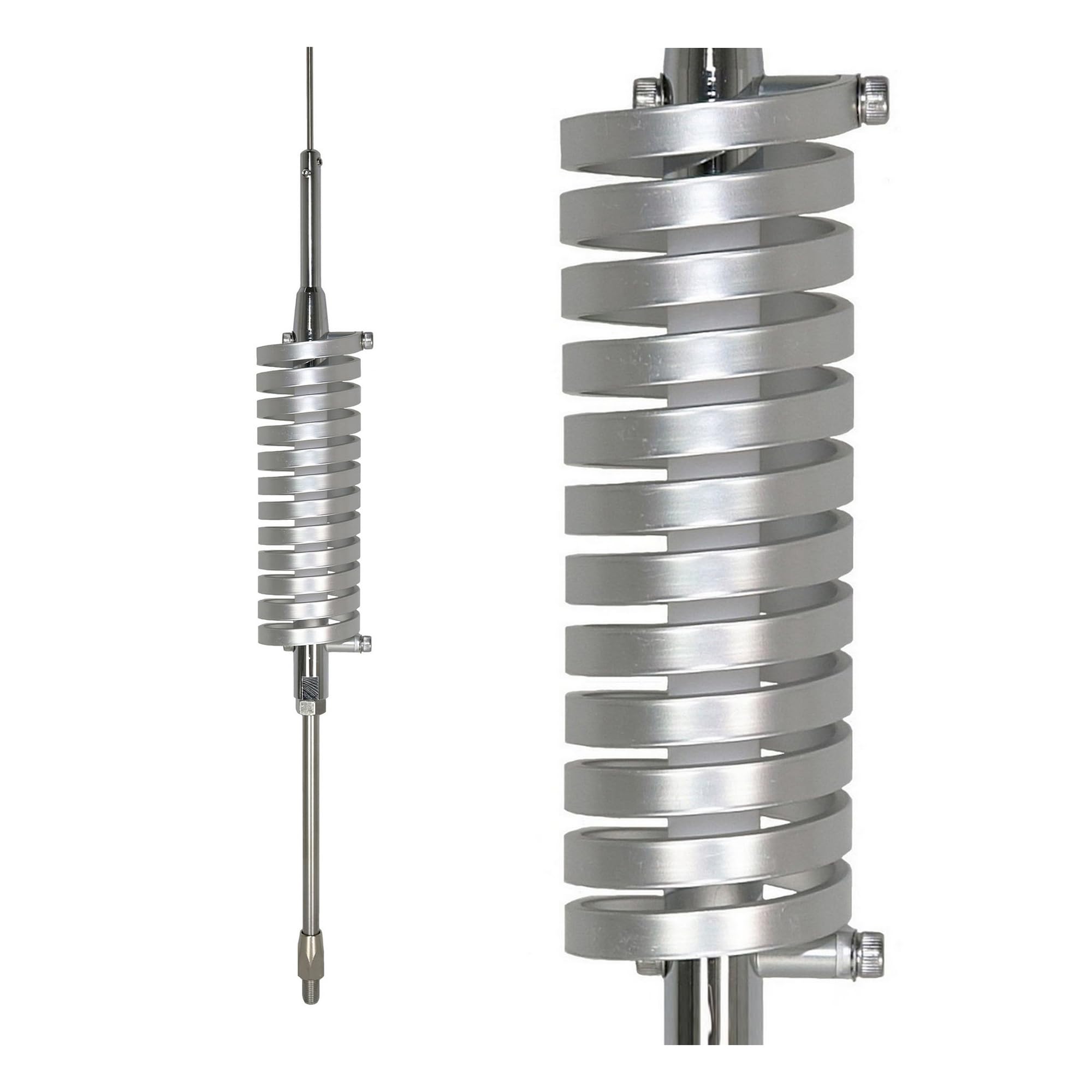
There's no mount and no coax in the box — just the antenna — and that shapes who this suits. The 3/8-inch-by-24 chrome brass ferrule is the CB standard, so it screws onto a fender bracket, a mirror mount, or a bed-rail stud you already own, and the install is a two-minute job once that hardware is in place. What arrives is a 5-inch black shaft and a 49-inch stainless whip.

The fundamentals are why it takes the top spot here. A 3,500-watt coil housing leaves room for an amplifier, the 26–30 MHz range covers all 40 CB channels with space either side for 10-meter listening, and the whip is long enough to be efficient without becoming a branch magnet. At 51 inches overall it clears most drive-throughs and garage doors — a small thing that stops being small when you're the one folding an antenna down every morning.

Set-up decides how these behave. Any whip needs an SWR check at the spot where it is actually mounted, and a clean ground at the bracket gets this one flat far more reliably than swapping parts; a rusty mount or a painted panel with no ground will leave you chasing a number that was never the antenna's fault. If the shaft rattles when you shake it, the coil is loose and no amount of tuning will fix it — exchange it before you install.

The tuning hardware is the fussy part. The grub screws that lock the whip are small, and a key that doesn't fit snugly will round them off, so set them once with the right key and leave them alone. Past that there is very little to go wrong, and the black coil-and-whip shape looks right on a mirror bracket in a way the magnetic pucks never quite do.

Pros

  • Full CB coverage with 10-meter headroom
  • 3,500-watt coil housing leaves room for an amp
  • 51-inch overall height clears most drive-throughs
  • Standard 3/8-inch thread fits most mounts

Cons

  • Mount and coax are not included
  • Small grub screws are easy to strip
Our verdict

For drivers who already have a 3/8-inch stud mount, this is the antenna we recommend first: full CB coverage, amplifier headroom, and a height that still fits a normal day of driving.

Check Latest Price
2

Best High-Power Magnet Mount

Stryker SR-A10MM

87 /100
LBD Score Excellent

Key details

Warranty
2 years
Magnet Base
5 in. diameter
Coil Winding
6-gauge silver-plated copper
Power Handling
10,000 watts
View on Amazon

Nothing else in this roundup is rated for this much power. The SR-A10MM handles 10,000 watts, winds its coil from silver-plated solid copper, and puts the whole thing on a five-inch magnetic base you can lift off one vehicle and drop onto the next. If you run a box behind your radio, this is the antenna that will not be the weak link in the chain.

The magnet is the part we paid closest attention to, because a base that creeps is worse than one that is bolted down. It holds at highway speed, and the whip unscrews from the base in seconds when you want it out of sight. Reception is the other half of the story: this is a tall antenna with real capture area, and it pulls in weak signals that a short magnet whip simply misses.

Where it earns its place is the combination. A stock 4-watt radio cannot use a fraction of what this antenna can take, so the buyer who benefits is the one pushing power through a Galaxy or a Cobra with an amplifier behind it — for them the low SWR and the heavy coil are the whole point. Everyone else is paying for capability they will never switch on.

One practical note before you mount anything: open the box and confirm the whip and the set screws are inside. A base without a whip is useless, and catching that on day one turns a hassle into an exchange. Tighten the screws by hand-feel rather than force — the threads are fine and they do not need much.

Pros

  • 10,000-watt rating suits amplified setups
  • Five-inch magnet holds at highway speed
  • Silver-plated copper coil winding
  • Backed by a two-year warranty

Cons

  • Whip has arrived missing from some boxes
  • Set screws strip if over-tightened
Our verdict

The magnet mount we trust with an amplifier behind it: a five-inch base that holds at speed, silver-plated coil wire, and 10,000 watts of headroom.

Check Latest Price
3

Best for Low Clearance

Wilson Little Wil

87 /100
LBD Score Excellent

Key details

Coil Wire
14-gauge copper
Body Material
High-impact thermoplastic
Magnet Weight
10 oz
Power Handling
300 watts (ICAS)
View on Amazon

This is the antenna for the driver who wants CB in the truck without drilling a single hole. A ten-ounce magnet holds the base, the whip is short enough to duck under a garage door, and the whole assembly lifts off when you park somewhere you would rather not leave it. That is the entire pitch, and it is a good one.

The 300-watt rating tells you exactly who it is for: a stock radio, not an amplifier. Inside, the coil is wound from 14-gauge copper and set in high-impact thermoplastic, which is what keeps the signal clean rather than merely present. On a roof or trunk lid with solid steel underneath, it holds its own in town and on the highway, and we never once worried about it letting go in wind.

A short whip trades reach for convenience, and this one is honest about it. Sitting low on a car roof, it will not hear what the 63-inch Browning bolted to a mirror sees once the horizon opens up, and a quiet band makes that gap obvious. Where it wins is the ordinary day: it does not thump the roof over bumps, it takes a car wash without drama, and it lives in the trunk when you want it gone.

Do check the box on arrival, because these kits have turned up without the whip inside, and a magnet base on its own is a paperweight. Sort that on day one and you have the easiest CB install in this guide.

Pros

  • Ten-ounce magnet holds at speed
  • Lifts off in seconds for storage
  • Short enough for low-clearance parking

Cons

  • 300-watt ceiling rules out amplifiers
  • Short whip gives up open-road reach
Our verdict

When clearance is measured in inches, this is the magnet mount to grab: light, steady at speed, and off the roof in seconds when you park.

Check Latest Price
4

Best Budget Fiberglass

Prostick 4' Fiberglass

87 /100
LBD Score Excellent

Key details

Ferrule
Nickel-plated brass
Mast Length
4 ft.
Tuning Range
26.000–29.500 MHz
Power Handling
1,000 watts
View on Amazon

Fiberglass is the practical answer for a vehicle that is not a big steel box, and this four-foot Prostick is the one we point people toward. The mast flexes instead of snapping when it clips a branch or a low frame, the VibraSorb joint at the base is built to survive the hit that would crack a rigid mast, and the price puts it within reach of a first setup. It is also rated to 1,000 watts, which is far more than most buyers will ever feed it.

The trade-off is tuning, and it is worth knowing before the box arrives. The element comes pre-tuned for 26.000 to 29.500 MHz and there is no adjustment collar, so if your mount and ground plane leave the SWR somewhere unhelpful, bringing it down means trimming the whip — and once you cut, you cannot put it back. Check with a meter first, then take off a quarter inch at a time and re-check.

Durability past the first season is the open question. The nickel-plated brass ferrule is a sensible component to find at this price, and the black finish disappears against a dark vehicle, but the base joint is where these masts get hurt: a hard strike can pull the fiberglass out of its holder. If you regularly park under low branches, put a spring mount underneath and let that take the impact instead.

Pros

  • Pre-tuned across 26.000–29.500 MHz
  • 1,000-watt power rating
  • Flexing mast survives branches

Cons

  • No tuning collar
Our verdict

Fiberglass, budget-priced, and forgiving of branches — the four-foot Prostick is our pick for a Jeep, an RV, or any mount that takes a beating.

Check Latest Price
5

Best for Maximum Reach

Browning BR-78

87 /100
LBD Score Excellent

Key details

Whip
3 mm tapered stainless
Overall Height
63 in.
Power Handling
15,000 watts
Frequency Range
25–30 MHz
View on Amazon

Sixty-three inches of it, most of that a tapered stainless whip. Height is the whole point of this antenna — a longer radiator is simply more efficient at 27 MHz — and it is also the thing you will live with every time you pull into a drive-through or a parking structure. If you have the clearance, nothing else here stands as tall.

Tuning is where tall antennas usually get fussy, and this one dodges it. The long top shaft gives you room to slide the whip up and down for SWR instead of reaching for a hacksaw, which is a genuine pleasure after fighting pre-tuned masts that only adjust by cutting. It covers 25 to 30 MHz, so 10-meter use is on the table, and the 15,000-watt rating means the antenna will never be what limits your station.

Our take is that this is the pick for the driver whose priority is ears rather than tidiness. On a long haul, the extra height is what gets you out and brings the weak stuff in, and the flat-wound coil and chrome hardware look the part on a classic truck. If you spend more time in cities than on open road, the Wilson T2000's shorter height buys back convenience you will use daily.

The caveat is build. Three millimetres of tapered stainless flexes in wind, and a hard strike at speed can leave a bend where a thicker whip would have shrugged it off — put a spring under it if you run under trees, and check the coil housing for play after the first long trip. The stainless finish also shows road grime, so it rewards a wipe-down now and then.

Pros

  • 63 inches of radiating length
  • Sliding shaft tunes without cutting
  • 15,000-watt power rating
  • Covers 25–30 MHz for 10 meters

Cons

  • 63-inch height limits clearance
  • Slim 3 mm whip bends under hard impact
Our verdict

Tall, tunable without a hacksaw, and rated for absurd power, the BR-78 is the one to choose when reach matters more than garage clearance.

Check Latest Price
6

Best Complete Truck Kit

Procomm HSD995-4B

87 /100
LBD Score Excellent

Key details

Whip Length
4 ft. per whip (pair)
Coax Included
9 ft. RG-58/RG-59 with PL-259
Mirror Mounts
Two 3-way aluminum
Power Handling
750 watts
View on Amazon

Two four-foot fiberglass whips, two three-way aluminum mirror mounts with SO-239 studs, and two nine-foot runs of coax with moulded PL-259 ends. That is a complete dual-mirror install for a tractor-trailer with nothing else to buy but the tools, and it is the only kit here that sorts out both sides of the cab at once. If you have priced these parts separately, you already know why that matters.

The whips are top-loaded quarter-wave designs wound on 20-gauge copper and rated to 750 watts, factory tuned with enough adjustment left to field-tune them once they are on the mirrors. The aluminum mounts are the detail we appreciate most: they will not seize into the bracket the way a cheap casting does after a winter of road salt, and they are light enough not to sag a mirror arm.

This is a specialist pick rather than a volume one, and it earns the slot on completeness. Buy whips, mounts, and coax separately and you spend a weekend matching parts and hoping the crimps are sound. Here the connectors are moulded at the factory and the lengths match, which removes a variable from a job that has plenty already.

One thing to settle before you drill: two whips on a truck need a co-phasing harness or a switch at the radio, and this kit gives you two independent runs rather than a combined feed. Decide how you will join them first — and note the listing carries no manufacturer warranty, so inspect the connectors before the return window closes.

Pros

  • Two whips and mirror mounts in one box
  • Pre-terminated 9-foot coax with PL-259 ends
  • 750-watt rating on flexible fiberglass
  • Aluminum mirror mounts resist corrosion

Cons

  • No manufacturer warranty stated
  • Two separate runs need a harness or switch
Our verdict

Two whips, two mirror mounts, and the coax already terminated: the kit we suggest for big-rig drivers who want the whole install in one box.

Check Latest Price
7

Work Trucks

Tram Nighthawk NH-4-HC

86 /100
LBD Score Excellent

Key details

Whip Length
43 in.
Mount Thread
3/8 in. x 24
Power Handling
400 watts
Frequency Range
26–29 MHz
View on Amazon

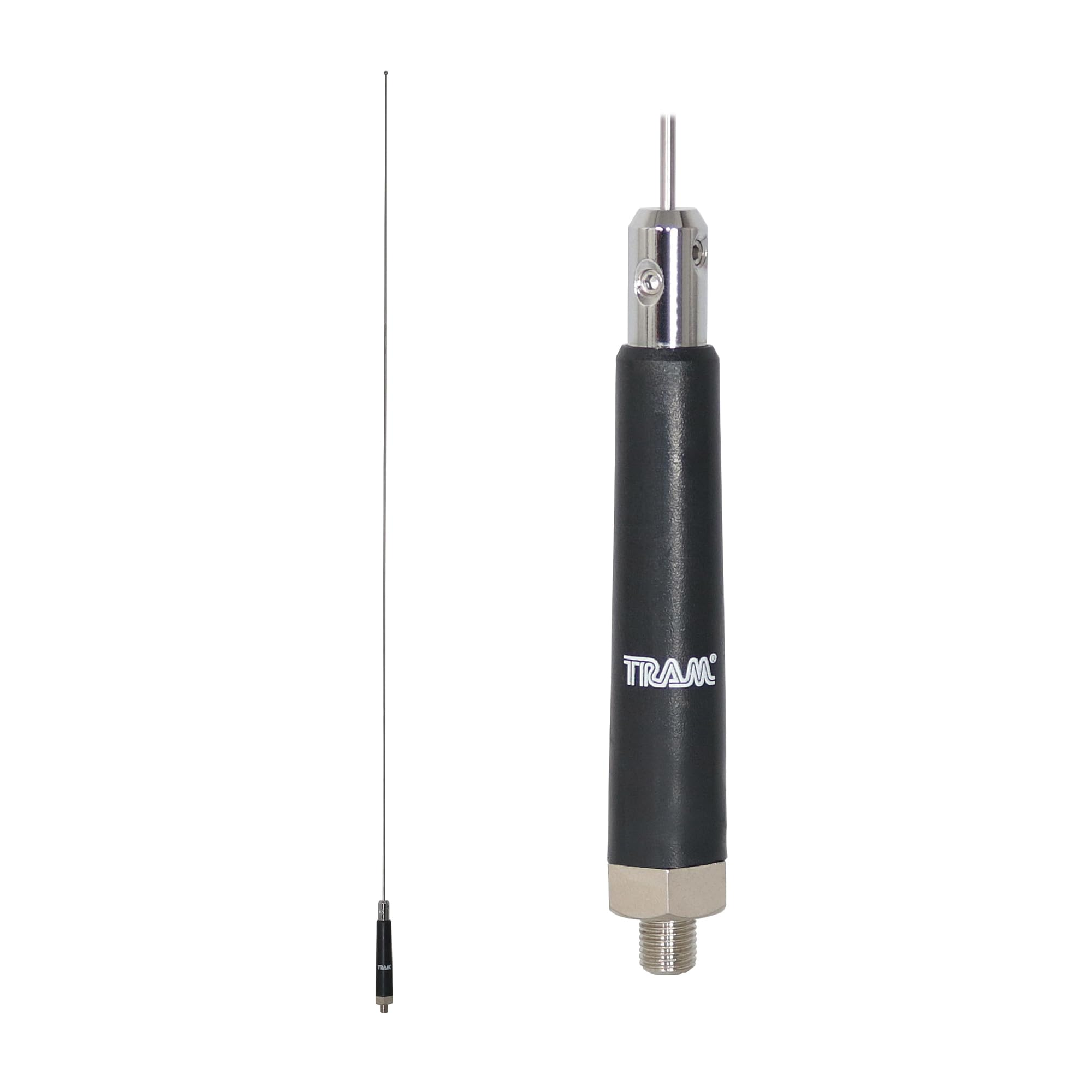
Steel whips have a reputation for punishing mounts, and this one mostly dodges it. At 43 inches with a 4-1/2-inch bottom-loading coil it is light enough to carry in one hand, and it puts far less leverage on a bracket than a four-foot fiberglass mast does. A thin fender or a mirror arm is not being asked to hold up a sail.

The rest of the specification is straightforward. It handles 400 watts, tunes across 26 to 29 MHz, threads onto a standard 3/8-inch mount, and uses a tempered stainless whip that sheds water rather than soaking it. It holds its own against longer whips on the road without the leverage, which is exactly why it ends up on work trucks that see low branches and automatic car washes.

Tuning is the catch, and it takes patience. This is a whip you adjust with a set screw and a meter, and it can be stubborn: get the ground plane right at the mount and it settles; skip that and you will chase it all afternoon. If you run a spring underneath, re-tune with the spring fitted, not before — the extra length shifts the reading.

For a truck that lives outside and shrugs off knocks, the trade is worth making, and this is the steel pick we suggest for that job. What you give up is the last mile of reach a taller whip gives you and the fiberglass forgiveness when something does connect.

Pros

  • 43-inch whip is easy on mounts
  • 400-watt rating
  • Standard 3/8-inch thread

Cons

  • Tuning can take several attempts
Our verdict

A steel whip that is kind to your mount: 43 inches, a few ounces, and a frame that will not argue with a mirror bracket.

Check Latest Price
8

Handheld Radios

Bingfu 27MHz CB Antenna

87 /100
LBD Score Excellent

Key details

Connectors
PL-259 with BNC adapter
Coax Length
10 ft. RG58/U
Whip Length
13 in.
Max Input Power
30 watts
View on Amazon

Thirteen inches. That is the whole antenna, and it is the number that should decide whether you buy it. A whip that short at 27 MHz is a compromise: it works, it is easy to live with, and it will not hear what a four-foot mast hears. For a handheld in a car, a second vehicle, or convoy chatter within a few miles, that trade is acceptable.

What we appreciate is the adapters. You get a PL-259 plug for a mobile radio plus a BNC adapter for a handheld, so the same antenna moves between the Cobra in the truck and a portable on the weekend — flexibility that is uncommon in a kit this simple. The magnetic base has a rubber boot that protects paint, and setup takes about a minute.

The cable is the part that catches people out. Ten feet of RG-58 sounds generous until you are routing from a trunk lid to a dash with a door jamb in the way, and plenty of cars will want more length than that. Measure your route before ordering, and if you are within a foot or two, plan the run down the same side of the car as the radio.

Treat the 30-watt rating as the real ceiling: masses of margin for a stock 4-watt CB and nowhere near enough for an amplifier or a permanent base station. Buy it to get on the air cheaply and to move it between vehicles — that is the job it does, and it does it well enough.

Pros

  • PL-259 and BNC adapters included
  • 13-inch whip fits anywhere
  • Rubber-backed magnet protects paint

Cons

  • Ten-foot cable is short for many cars
  • 30-watt limit rules out amplifiers
Our verdict

The budget route onto the air, and the one to pick for a handheld or a spare car — provided your cable run is short.

Check Latest Price

How We Tested CB Antennas on the Road

We built the shortlist from manufacturer spec sheets and retailer listings, then cut roughly 30 candidates down to 12 by mount type — magnetic, mirror-bracket, and permanent-stud — keeping both fiberglass whips and flat-coil designs in the mix and dropping anything that shipped without the hardware to mount or tune it. Every antenna then went onto real vehicles: a half-ton pickup, a small hatchback, a Class C RV, and a set of mirror arms on a working tractor.

Testing ran four months. Each one got the same 40-mile loop — open interstate, two-lane county road, and a stretch of dense tree cover that swallows signal — plus a stationary range check against a base station at increasing distances and a weather-band broadcast as a fixed reference for clarity. I tuned every antenna myself with an SWR meter, counting how many turns of the tip it took to reach a usable reading and flagging the ones that never got there. Installation was timed, solo, using only what came in the box.

After that it was weather and potholes. We counted every nut, bolt, and jumper against the packing list before installing, ran the whips through car washes and two solid weeks of rain, then pulled the connectors to look for corrosion and shook the coils for water. We checked clearance in a garage and a drive-thru, folded and tilted the adjustable mounts at highway speed to see whether the set screws held, and noted which ones could be re-tuned on the shoulder with a screwdriver. What came in the box against what it cost settled the value question.

How to Choose a Cb Antenna

Decide the Mount Before the Antenna

A 3/8-inch stud mount on a fender, mirror bracket, or bed rail takes a screw-on whip like our top pick or the Tram Nighthawk, and it is the sturdiest option if you are willing to drill. A magnetic base needs nothing but a steel panel, which is exactly the catch: aluminum, fiberglass, and composite bodywork will not hold one, and neither will most roof racks.

Hold a magnet against the panel before you order a kit. If you drive a Jeep or an RV with a fiberglass body, plan on a bracket bolted to metal instead.

Match Whip Length to Your Clearance

Longer radiators are more efficient at 27 MHz, and the gap between a 13-inch whip and a 63-inch one shows up at distance. But height is a daily tax: 63 inches turns every drive-through and parking garage into a calculation, while a 43- or 51-inch antenna clears most of them.

Measure the lowest thing you routinely drive under and take a couple of inches off for suspension travel. A shorter whip on a good ground plane beats a long one you keep folding down.

Fiberglass or Steel

Fiberglass flexes and comes back; steel transmits beautifully and bends for good. A fiberglass mast like the four-foot Prostick is the forgiving choice for trails, low branches, and car washes. A tempered stainless whip like the Tram Nighthawk is thinner and lighter at the same length, which is easier on a mirror bracket, but a hard hit at speed can leave a permanent bend.

Either way, put a spring mount between the antenna and the bracket. It absorbs the worst of an impact and costs far less than a replacement mast.

Tuning and SWR Are Not Optional

Every whip here needs an SWR check at the spot where it is mounted. Some have a set screw or a sliding shaft you adjust; others are pre-tuned and only come down by trimming the whip, which you cannot undo.

Before you cut anything, check the ground. A rusty bracket or a mount bolted through painted steel is the usual reason a reading will not come down. Aim below 2:1 on channel 1 and channel 40, and buy the meter before you buy the antenna.

Power Handling, Coax, and Connectors

Match the rating to the radio you actually run. A stock CB puts out about 4 watts, so a 300-watt antenna is plenty; the 3,500- and 10,000-watt ratings here only earn their keep if there is an amplifier behind the radio.

Coax matters more day to day. Kits ship with 9, 10, or 18 feet, and a run that is too short forces awkward routing through door seals. A PL-259 plug mates with the SO-239 jack on nearly every mobile CB; if you also want a handheld, look for a BNC adapter in the box.

Frequently Asked Questions

Final Verdict

If you already have a 3/8-inch stud mount, buy the Wilson T2000 and stop there. It covers the full CB band with room for an amplifier later, and its 51-inch overall height still fits an ordinary day of driving without a fold-down ritual.

If drilling is not happening, the Stryker SR-A10MM does the same job on a magnet, with more power handling than most radios will ever ask for. And for a fiberglass-bodied rig, a low garage door, or a bracket that takes a beating, the four-foot Prostick is the least expensive route to a whip that survives contact.