Best Camera Bags of 2026

A camera bag does two jobs that fight each other: the padding and dividers that keep a lens safe are the same things that make a bag heavy on a long climb. The right one splits the difference, so your gear arrives intact and your shoulders forget about it — but you can't spot that balance in a product photo. I've hauled a body and two lenses through wedding receptions, drizzly trailheads, and middle seats, and bags that manage both are rare.

Over the past six months, my team and I loaded 11 backpacks, slings, and shoulder bags with the same kit, and the spec sheet sells you the wrong things. Liter capacity tells you almost nothing; divider layout and which side the bag opens on decide whether you'll actually change a lens on the move. Same with the rain cover — buried at the bottom of a stuff sack, it never goes on.

The questions that mattered were plainer. Does the gear stay put when the bag gets tossed in a trunk, does the strap stop digging in by mile three, and does the zipper still feel solid in month four? Everything below answered all three.

1

Best Overall

CADeN Camera Backpack

95 /100
LBD Score Outstanding

Key details

Weight
1.7 lb
Capacity
17 liters
Laptop Fit
14 inches
Water Resistance
Water resistant
View on Amazon

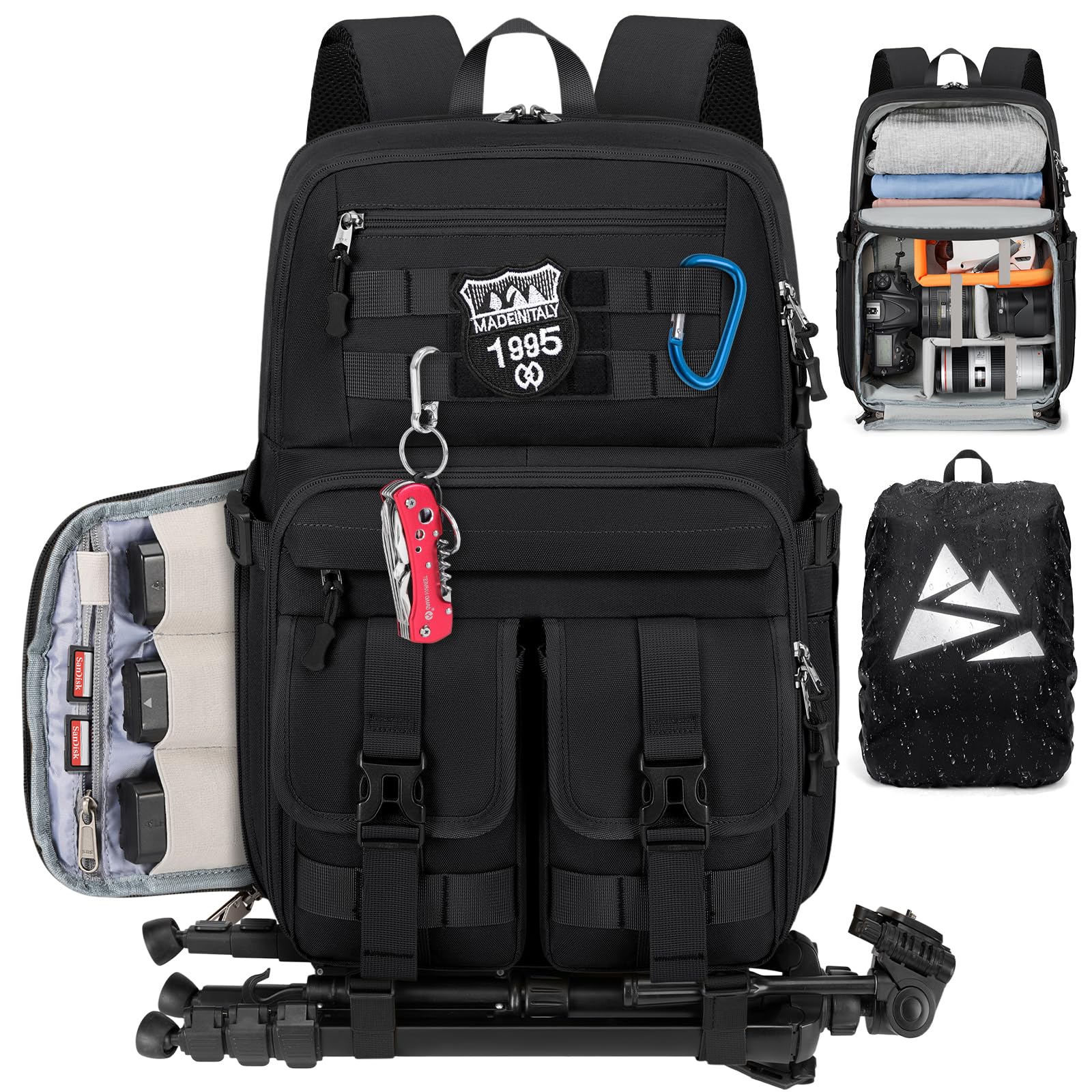
The 17-liter CADeN is the camera backpack we recommend first because it gets the everyday balance right: two camera bodies, four lenses, a 14-inch laptop, and a tripod holder in a pack that weighs 1.7 pounds empty. That empty weight matters when the rest of the load is glass and batteries, and the smaller body keeps you from overpacking just because the bag has room.

The dividers do the real work. They are thick, adjustable, and arranged so a camera with a lens mounted can sit in the main bay while the rest of the kit stays separated. A front pocket takes a tablet and small accessories, the side mesh pocket holds a bottle or a compact tripod, and the shoulder straps and handle are reinforced where a budget bag usually cuts corners. There is a place for a tripod on the outside, though it is sized for a travel tripod rather than a studio set.

The limits are specific: a two-gripped-body kit with long glass will crowd the 17-liter bay, and the tripod holder favors a compact travel tripod rather than a heavy studio set. For a hobbyist or a second shooter who wants one bag for most shoots, those are easy trade-offs to accept.

Pros

  • Holds two bodies and four lenses
  • Just 1.7 pounds empty
  • Adjustable dividers keep gear separated
  • Reinforced straps and handle

Cons

  • 14-inch laptop sleeve is the ceiling
Our verdict

For most photographers, this is the camera backpack to buy: light, organized, and sized for a two-body, four-lens kit without charging a premium.

Check Latest Price
2

Best Hardshell Protection

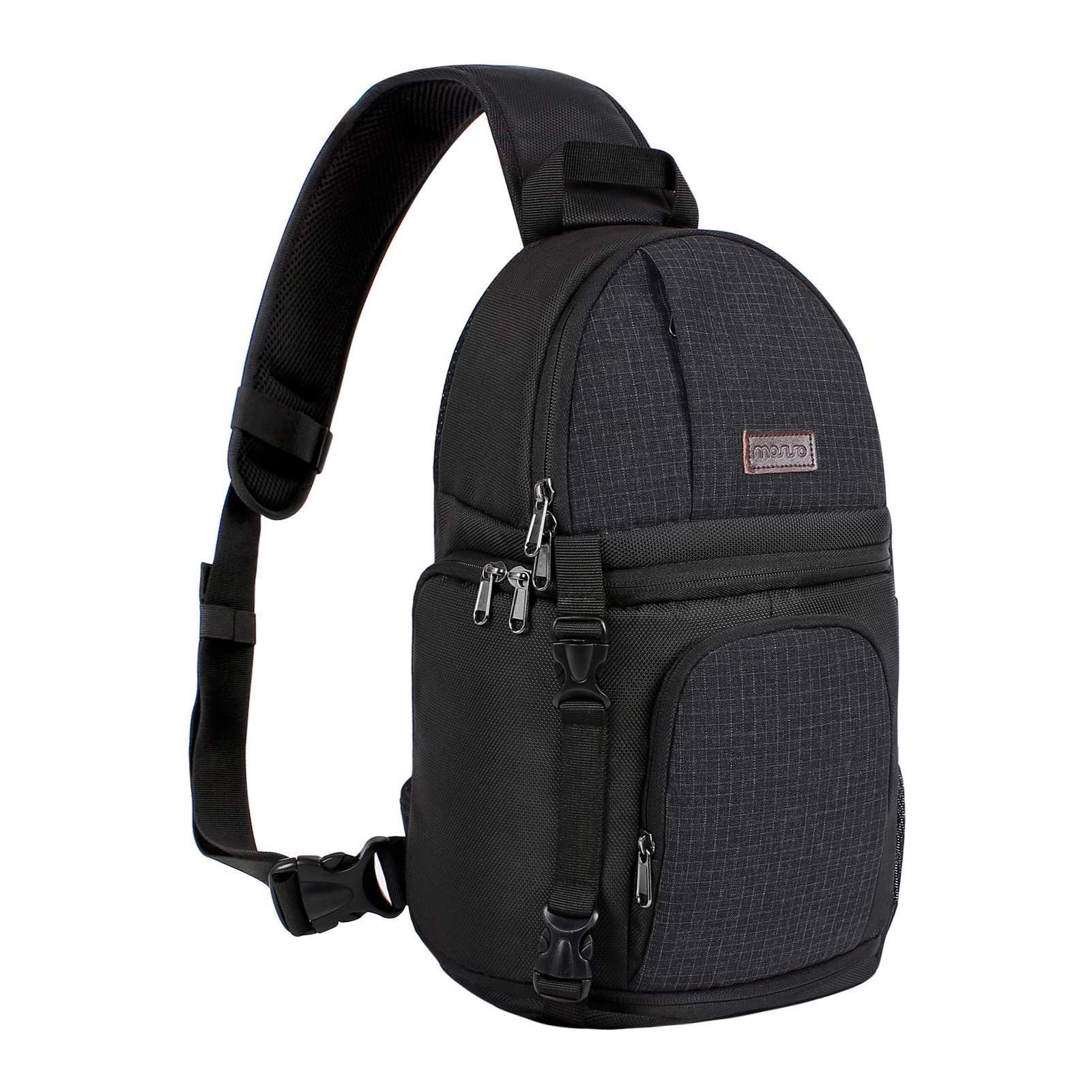
MOSISO Camera Backpack

95 /100
LBD Score Outstanding

Key details

Weight
3.2 lb
Capacity
35 liters
Laptop Fit
15.6 inches
Front Shell
Hard panel
View on Amazon

The MOSISO's hard front panel is the reason to look at it: the shell covers the front of the bag, so the camera compartment has a stiff shield against knocks when the bag is set down or packed into a car. The rest of the bag is soft, which keeps the 35-liter body from feeling like a suitcase.

This makes more sense as a travel bag than a daily walk-around. The 35 liters take a full-frame body with a long lens attached, a second body, a 15.6-inch laptop, and the usual chargers, and the back panel opens flat so you can see the whole kit. The flat opening is also the catch: you need a clean surface to repack.

The hard shell is a front panel, not a full hard case, so treat it as knock protection rather than crush protection. The shoulder straps are the part we trust least; a loaded 35-liter bag puts real strain on them. If you want the protection and the laptop space, it earns its place; if you want a light street bag, the CADeN or the sling is easier.

Pros

  • Hard front panel shields the camera bay
  • 35 liters hold a full travel kit
  • Fits a 15.6-inch laptop
  • Back panel opens flat for packing

Cons

  • 3.2 pounds empty is heavy before gear
Our verdict

For travel and protected transport, this is the hardshell backpack we recommend, provided you can live with a heavier bag and watch the shoulder straps.

Check Latest Price
3

Best Lightweight

K&F Concept Lightweight Backpack

92 /100
LBD Score Outstanding

Key details

Weight
1.96 lb
Capacity
13 liters
Laptop Fit
14 inches
Rain Cover
Included
View on Amazon

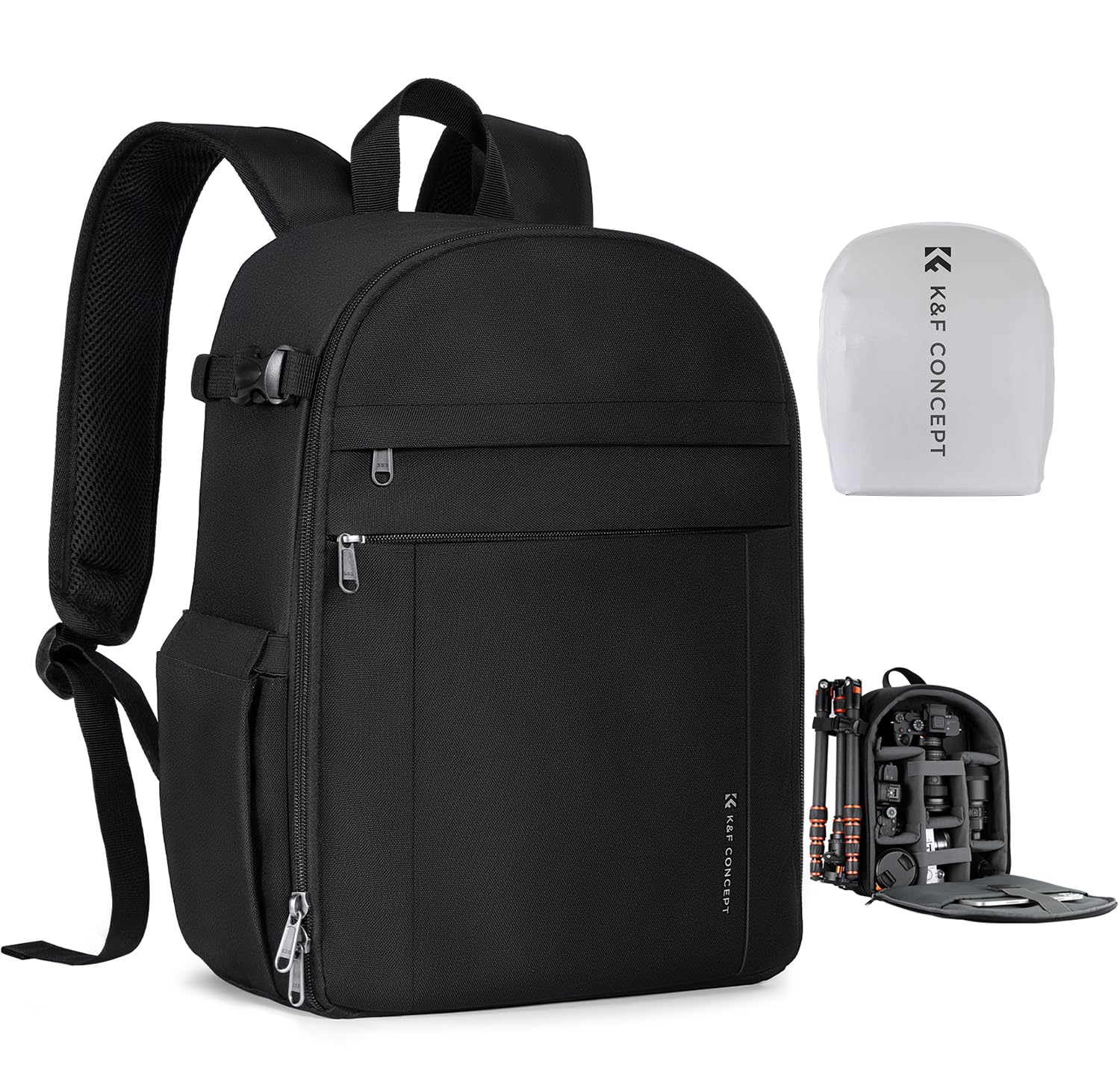
The K&F Concept's 1.96-pound empty weight is the first thing we noticed, and it is the reason the bag earns a spot. On a long day, a pound saved before you add a camera and two lenses is worth more than an extra pocket you never open.

The 13-liter body is built around a compact kit: a mirrorless body with a lens mounted, two or three smaller lenses, a 14-inch laptop, and a front-opening main compartment. The front panel opens wide, so you can work out of the bag without unzipping the whole back, and the five dividers let you reshape the bay for a telephoto or a drone. The included rain cover is a real bonus at this tier.

We think this is the right bag for a mirrorless shooter who wants one light carry and does not need a full-frame two-body kit. The 13-liter capacity is the hard boundary; a 70-200mm lens and a second body will crowd it fast. Within that kit, the low weight and quick front access are the reason to choose it over the bigger packs.

Pros

  • 1.96 pounds empty
  • Front panel opens wide
  • Five adjustable dividers
  • Rain cover included

Cons

  • Soft shell offers less crush protection than hardshell picks
Our verdict

For a mirrorless shooter who wants one light carry, this is the bag to get; just stay within its small-kit limit.

Check Latest Price
4

Best for Working Pros

Lowepro ProTactic BP 450 AW III

84 /100
LBD Score Excellent

Key details

Capacity
28 liters
Laptop Fit
16 inches
Rain Cover
Included
Access Points
4
View on Amazon

Four access points is the reason the ProTactic exists: dual side doors, a top opening for a long lens, and a full back panel. For a working photographer moving between positions, that means the camera can come out without unpacking the whole bag.

The 28-liter body is built around a modular system. The MaxFit dividers can be connected in different ways, and the removable utility belt adds pouches or straps where you need them. The side doors have exterior stretch pockets and tripod support, which suits a bag designed to be worked out of rather than just carried.

The cost is complexity. The divider system takes trial and error, and the four-way access means more zippers and openings to check before you lift the bag. The modular belt is useful only if you actually wear it; otherwise it is extra hardware to manage.

We recommend it for the photographer who needs fast access to a working kit and will use the modular belt, not for someone who wants a simple hike or travel bag. It is the most specialized pack here, and that is its value.

Pros

  • Four access points speed up lens changes
  • 28 liters hold a full assignment
  • MaxFit dividers and removable belt
  • Fits a 16-inch laptop

Cons

  • Shoulder straps disappoint on a heavy carry
Our verdict

For working photographers who need four ways into a loaded kit, this is the most capable bag here; occasional shooters can spend less elsewhere.

Check Latest Price
5

Best Sling

MOSISO Camera Sling Bag

93 /100
LBD Score Outstanding

Key details

Weight
8 oz
Capacity
682.76 cubic inches
Strap Range
19.3 to 38.7 inches
View on Amazon

The swing-to-front move is what makes the MOSISO sling useful: the bag rotates from your back to your chest, so the camera is in front of you without taking the bag off. That is useful for street shooting and crowded markets, where a backpack has to come off and a shoulder bag slides.

At 8 ounces empty, it is the lightest pick here, and the 15.7-inch length takes a full-frame body with a 28-300mm lens attached, plus two or three smaller lenses and the usual cards and batteries. The two-part interior and custom dividers let you separate the camera from a second lens; the strap adjusts from 19.3 to 38.7 inches.

The bag's shape is long and narrow. It fits a body with a long lens, but a second body or a chunky zoom has to go in the other compartment. That is the honest boundary: one camera, two or three lenses, and the rest of your day on your back, not in the bag.

Pros

  • Swings to the front for quick access
  • 8 ounces empty
  • Fits a full-frame body with a long lens
  • Adjustable sling strap

Cons

  • Single strap tires on a full-day carry
  • Strap durability is the weak point
Our verdict

For street and event photographers who want the camera in front of them fast, this is the sling to get; it is not an all-day load carrier.

Check Latest Price
6

Best for Hiking

RAINSMORE Camera Backpack

90 /100
LBD Score Outstanding

Key details

Weight
3.64 lb
Capacity
28 liters
Laptop Fit
15.6 inches
Rain Cover
Included
View on Amazon

MOLLE loops and a full rain cover make the RAINSMORE the most outdoor-ready bag here. The 28-liter body has a quick-access opening to the main camera compartment, a padded back panel, and enough external attachment points to add a pouch, a bottle, or a tripod.

We think the organization is genuinely deep: seven pockets, eight compartments, thick dividers, and a rain cover that covers the whole bag rather than just the top. The 15.6-inch laptop sleeve means it can double as a travel backpack, and the side access lets you pull a camera without setting the bag down.

The trade-off is bulk: the MOLLE exterior can make it feel bigger than a 28-liter bag once you attach a pouch or bottle, and it is worth checking the packed dimensions against carry-on limits before a flight. For a day hike or a dusty shoot, the organization and rain protection are worth the extra bulk.

Pros

  • Full rain cover included
  • 28 liters with deep organization
  • MOLLE exterior for add-ons
  • 15.6-inch laptop sleeve

Cons

  • 1.65 kg empty is heavy before gear
Our verdict

For hikers and outdoor shooters who want a weather-ready, highly organized pack, this is the one; city travelers may find it heavier and bulkier than needed.

Check Latest Price
7

Best Small Shoulder Bag

Lowepro Nova 180 AW II

90 /100
LBD Score Outstanding

Key details

Carry
Shoulder strap and belt loop
Weight
1.48 lb
Kit Fit
DSLR, 3-4 extra lenses
Water Resistance
All-Weather cover
View on Amazon

The Nova 180 AW II is a compact shoulder bag for the photographer who wants one camera and a few lenses, not a backpack. The top opens wide, the interior dividers are flexible, and the All-Weather cover is stored in the bag, so you can keep the kit small and still have rain protection.

The bag is built around a pro-depth DSLR with a lens attached, plus three or four additional lenses and a flash. That is a useful shape for a portrait session or a short location shoot. The adjustable shoulder strap and belt loop let you carry it close, and the 0.67 kg weight means it does not fight you on a walk from the car.

We think it is the right choice when a backpack is overkill and a sling is too casual. The compact shape and weather cover are worth more than extra pockets for a deliberate, small kit. It is a focused bag, and that focus is the appeal.

Pros

  • Fits a DSLR and three or four lenses
  • All-Weather cover included
  • Customizable interior dividers
  • Only 0.67 kg empty

Cons

  • Shoulder-only carry limits long days
Our verdict

For a one-camera, few-lens shoot where you want a compact shoulder bag, this is the pick; it is built for deliberate, light kits.

Check Latest Price
8

Casual City Days

BAGSMART Canvas Crossbody

92 /100
LBD Score Outstanding

Key details

Kit Fit
1 DSLR, 1-2 lenses
Capacity
11 liters
Material
Canvas
Rain Cover
Included
View on Amazon

The vintage canvas is the disguise: the BAGSMART crossbody does not announce a camera inside. The look works for city travel, where a black technical backpack can make you look like a walking equipment ad.

The 11-liter body takes one DSLR with a lens attached and one or two spare lenses, with two detachable padded dividers to keep the camera from sliding into the glass. The front and back pockets handle a phone, cards, and batteries, and the rain cover is a useful addition on a canvas bag.

That capacity is the boundary. It handles a camera and two lenses, but a second body or a long telephoto is out. That makes it a day bag, not a travel workstation.

We recommend it when the camera is part of a day out rather than the whole reason for it. It is the least technical bag here, and that is the point.

Pros

  • Blends in as an everyday canvas bag
  • Fits one DSLR and two lenses
  • Rain cover included
  • Detachable padded dividers

Cons

  • Main closure takes a deliberate snap
Our verdict

For a compact, casual day bag that hides a camera and a couple of lenses, this is our pick; the canvas look is the reason to choose it.

Check Latest Price

How We Tested: Wedding Receptions, Trailheads, and Overhead Bins

We started by rounding up camera bags in three carry styles — backpack, sling, and shoulder bag — then filtered on what changes a shooting day: a real set of padded dividers, a usable tripod attachment, a laptop sleeve deep enough for a 14-inch machine, and a rain cover you can reach without unpacking. That left 11 bags, from lightweight shells to a 28-liter workhorse.

Each one carried the same load — a mirrorless body, three lenses, a flash, a tripod, and a laptop — and got packed and repacked at least a dozen times before it ever left the house. Then we took them into the situations they're built for: a full wedding season of receptions and portrait sessions, a week-long trip with carry-on luggage only, a rainy five-mile hike, and the daily walk to the train.

Closures got the hardest look, because that's where bags fail. We opened and resealed each one one-handed, wearing gloves, twenty times in a row, and noted which zippers snagged at the corner and which flaps gaped when the bag rode on one shoulder. To test the dividers, we turned every bag upside down, shook it, and checked whether lenses had migrated into each other. Rain covers went under a running shower for five minutes while we watched the seams.

Comfort and fit are where spec sheets lie. We weighed each bag loaded and tracked where the strap dug in over a three-mile walk, and whether a taller and a shorter tester both got the back panel to sit right. Every bag was also shoved under an airplane seat and into an overhead bin to check the size claims. After six months we went back and looked at stitching, strap anchors, and whether the zipper pulls still felt crisp.

How to Choose a Camera Bag

Match the bag to your real kit

Camera bag liters are not standardized, and a divider layout can matter more than the headline capacity. A 17-liter pack like the CADeN can take two bodies and four lenses because the bays are efficient; a 35-liter bag gives you more room but also more bulk. Before ordering, measure your largest camera-and-lens combo, add an inch for padding, and check the internal dimensions rather than the external ones. If you carry a gripped body, a 70-200mm lens, or a drone, pack that first in your mind and let the rest follow.

Choose an access pattern you can live with

Backpacks carry weight best; slings put the camera in front of you fastest; shoulder bags split the difference and get uncomfortable sooner. For street shooting, a sling like the MOSISO is easier to work out of than a full backpack. For events, side access on a pack saves time. For travel, a full back panel lets you see everything at once. We prioritize a main opening that exposes the whole kit, because a narrow top zip looks convenient until you are repacking in a hurry.

Decide how much protection you actually need

A hard front panel protects the camera bay from knocks, but it is not a crushproof case; the MOSISO hardshell is reinforced at the front, not all over. Soft bags save weight and conform to your back, while hardshell bags add structure. Weather protection is separate: water-resistant fabric, covered zippers, and a rain cover matter more than the word waterproof. If you shoot in rain or dust, choose a bag with a dedicated cover and check that it covers the whole pack, as the RAINSMORE cover does.

Weigh the empty bag, then the harness

An empty bag that weighs 1.7 pounds leaves more room for lenses before your shoulders complain; one that starts at 3.2 pounds or 1.65 kg makes itself known on a long day. Look for a padded back panel, a wide shoulder strap, and a hip belt if you carry a full kit. Laptop fit belongs in the same decision: a 14-inch sleeve will not take a 16-inch machine, and a 15.6-inch sleeve is not a guarantee for every 16-inch laptop. Measure the laptop, not the screen class.

Frequently Asked Questions

Final Verdict

For most photographers, the CADeN 17-liter backpack is the one to buy: it carries a two-body, four-lens kit, a 14-inch laptop, and a tripod without the weight or bulk of the bigger packs. If you need more protection for travel, the MOSISO hardshell is the upgrade; if you shoot one camera on the street, the MOSISO sling is easier to live with. The Lowepro ProTactic is the specialist choice when four-way access matters more than comfort on a long carry.